Best Platform to Sell Tickets in 2026: 8 Platforms Compared

- 1
 EventbriteIndependent eventsVisit
- 2
 TicketmasterLarge events and toursVisit
- 3
 StubHubTicket resaleVisit
- 4
 SeatGeekSports and concert resaleVisit
- 5
 DiceMusic events mobileVisit
- Eventbrite and Ticket Tailor suit independent organizers, with Eventbrite leaning to discovery and Ticket Tailor to low fees.
- Ticketmaster and Vivid Seats suit large events and resale, with wide reach and established buyer trust.
- StubHub and SeatGeek suit resale and sports, with strong buyer protection and price tools.
- Dice and Universe suit music and curated events, with Dice leaning to mobile-first fans and Universe to flexible event pages.
Quick comparison
| Product | Ideal for | Price from | Free version | |
|---|---|---|---|---|
| Eventbrite | Independent events | See website | Yes | Visit |
| Ticketmaster | Large events and tours | See website | No | Visit |
| StubHub | Ticket resale | See website | No | Visit |
| SeatGeek | Sports and concert resale | See website | No | Visit |
| Dice | Music events mobile | See website | No | Visit |
 Ticket Tailor | Low-fee ticket sales | See website | Yes | Visit |
 Universe | Flexible event pages | See website | Yes | Visit |
 Vivid Seats | Large resale marketplace | See website | No | Visit |
The best platform to sell tickets
We compared official feature pages, pricing pages, and app listings to find ticket platforms with real buyer reach, clear fees, and tools for organizers that work in October 2026.
Eventbrite
Ideal for: Independent events
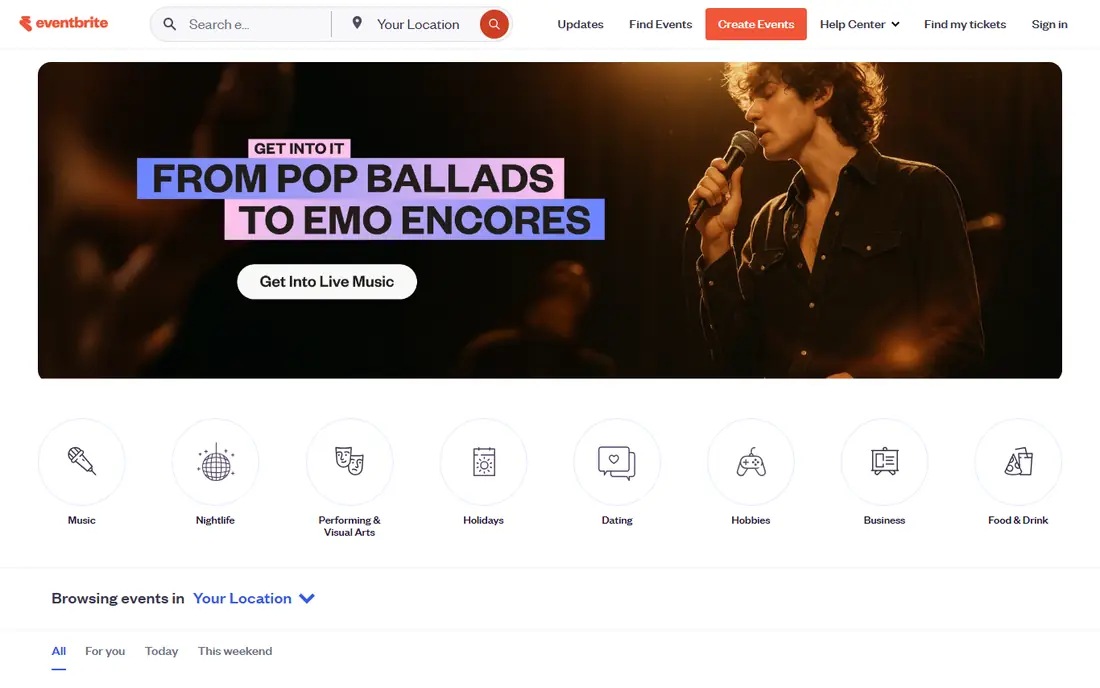
Eventbrite is the go-to platform for independent organizers, with easy event setup, ticketing, marketing tools, and check-in apps for the door. Buyers can discover events by city and category, which helps small organizers reach people beyond their own mailing list. Free events can be listed at no platform cost, while paid tickets carry service fees that you can pass to buyers or absorb.
Discovery varies by city and category, so a niche event may still need its own marketing. Still, for classes, workshops, concerts, and conferences, Eventbrite is our pick for an easy, trusted platform.
- Easy event setup
- Discovery for buyers
- Marketing and check-in tools
- Fees apply to paid tickets
- Discovery varies by city and category
Ticketmaster
Ideal for: Large events and tours
Ticketmaster offers the largest buyer reach for major tours, sports, and arena events, with verified tickets and venue partnerships that give buyers confidence. For large organizers, that reach and trust are hard to match, and the platform handles high-demand sales, queues, and resale in one system. Verified fan and presale tools also help manage demand for popular shows.
Fees are higher than independent platforms, and access is harder for small organizers without a venue or promoter link. Still, for large events, Ticketmaster is our pick for reach and reliability.
- Huge buyer reach
- Verified tickets
- Tour and venue partnerships
- Fees are higher
- Access is harder for small organizers
StubHub
Ideal for: Ticket resale
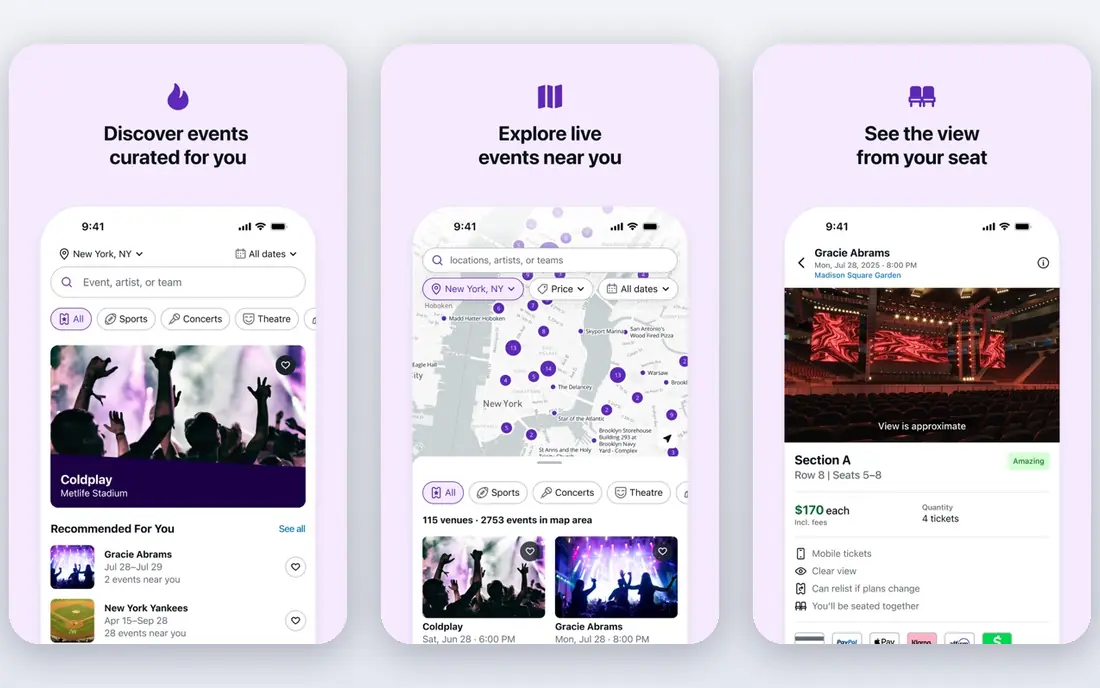
StubHub is a large resale marketplace where sellers can list tickets for concerts, sports, and theater, with a buyer guarantee that builds trust. Price tools show what similar tickets sell for, helping sellers set a fair price rather than guessing. The marketplace reach means tickets often sell faster than on a small local site.
Seller fees apply, and prices vary with demand, so a ticket may sell below face value if demand drops. Still, for resale, StubHub is our pick for reach and buyer protection.
- Large resale marketplace
- Buyer guarantee
- Price tools for sellers
- Fees for sellers
- Prices vary with demand
SeatGeek
Ideal for: Sports and concert resale
SeatGeek aggregates tickets from many sources, including primary sellers and resale marketplaces, and shows a Deal Score that rates value for each ticket. That aggregation helps buyers compare prices in one place, while sellers reach a large audience for sports and concerts. Mobile tickets make entry easy at venues.
Fees apply, and some aggregated listings come from resellers at prices above face value. Still, for sports and concert tickets with price comparison, SeatGeek is our pick.
- Aggregates tickets from many sources
- Deal Score for value
- Mobile tickets
- Fees apply
- Some listings come from resellers with higher prices
Dice
Ideal for: Music events mobile
Dice is a mobile-first platform for music events, with discovery based on your taste and artists you follow. That discovery helps fans find shows they might miss on larger platforms, and organizers reach an audience that actively seeks live music. Fraud prevention, including mobile tickets tied to the buyer, reduces scalping and fake tickets.
The music focus limits other event types, and availability varies by city, with stronger coverage in major music markets. Still, for music organizers and fans, Dice is our pick for a curated, mobile-first experience.
- Mobile-first for music fans
- Discovery by taste
- Fraud prevention
- Music focus limits other events
- Availability varies by city
Ticket Tailor
Ideal for: Low-fee ticket sales
Ticket Tailor charges a low flat fee rather than a high per-ticket commission on many plans, which keeps more revenue with the organizer, especially for small events. Custom event pages and check-in tools cover the basics well, and the platform suits organizers who already have an audience and just need ticketing. A free tier covers basic use for small events.
Discovery is limited compared with Eventbrite, since buyers mainly arrive through the organizer's own links. Still, for organizers who want low fees and control, Ticket Tailor is our pick for value.
- Low flat fees
- No per-ticket commission on some plans
- Custom event pages
- Discovery is limited
- Organizers handle more marketing themselves
Universe
Ideal for: Flexible event pages
Universe, part of the Ticketmaster network, offers flexible event pages with ticketing, discovery, and check-in tools for organizers of many sizes. Event pages can be customized for concerts, festivals, and community events, and discovery through the wider network helps buyers find events. That combination of flexibility and reach suits organizers who outgrow a basic ticketing tool.
Fees apply to paid tickets, and discovery varies by event type. Still, for flexible pages with network reach, Universe is our pick for growing organizers.
- Flexible event pages
- Discovery through Ticketmaster network
- Check-in tools
- Fees apply to paid tickets
- Discovery varies by event type
Vivid Seats
Ideal for: Large resale marketplace
Vivid Seats is a large resale marketplace for concerts, sports, and theater, with a buyer guarantee and a rewards program for repeat buyers. Sellers reach a wide audience, and price tools help set competitive prices. The platform's scale makes it a strong alternative to StubHub for resale, especially in the US.
Fees apply to sellers, and prices vary with demand, so timing matters for both buyers and sellers. Still, for a large, trusted resale marketplace, Vivid Seats is our pick alongside StubHub.
- Large resale marketplace
- Buyer guarantee
- Rewards program
- Fees apply
- Prices vary with demand
How we picked these
We compared official feature pages, pricing pages, and app listings for ticket platforms live in October 2026. We favored platforms with real buyer reach, clear fees, and organizer tools, covering independent events, large tours, and resale. We left out platforms with thin listings or no ticket sales tools.
What to check before you choose
Start with your event type. Independent events suit Eventbrite or Ticket Tailor, large tours suit Ticketmaster, music suits Dice, and resale suits StubHub, SeatGeek, or Vivid Seats. Picking by type avoids paying large-platform fees for a small workshop.
Next, read the full fee schedule, including service fees, payment processing, and payout timing. A low headline fee can hide processing costs, and payout timing matters for cash flow before an event. Compare total cost on your expected ticket price and volume.
Finally, check check-in and refund tools. A good platform should offer mobile check-in, attendee messaging, and clear refund policies for cancellations. Test the buyer flow yourself before going live, since a confusing checkout loses sales.
Before you commit to one option, spend a short trial period with your top two choices from this list. Use each one for a real task from your own work or daily routine, not just a demo, and note where you get stuck, what feels slow, and which features you actually open twice. Check the official pricing page again at that point, since free plans and paid tiers change, and confirm that the plan you need covers the users, projects, or devices you will use. Read the privacy and support pages too, especially for tools that hold personal or work data, and confirm how to export your work if you later switch. A tool that fits your routine in a two-week trial is a far better choice than a more powerful option you avoid opening, so let daily use, not a feature list alone, decide your final pick for best platform to sell tickets.
Frequently asked questions
What is the best platform to sell tickets overall?
Eventbrite is our pick for independent organizers, while Ticketmaster is our pick for large events. Ticket Tailor suits low-fee sales, and StubHub or Vivid Seats suit resale. Pick by event size and type.
Is there a free platform to sell tickets?
Yes, Eventbrite, Ticket Tailor, and Universe offer free tiers for free events or basic use. Paid tickets generally carry service or processing fees on all platforms, so check the full fee schedule for your ticket price.
Which platform has the lowest fees for selling tickets?
Ticket Tailor is our pick for low fees, with flat pricing on many plans rather than high per-ticket commissions. Eventbrite and Universe also offer competitive fees for small events. Compare total fees, including processing, on your expected volume.
Can I sell tickets for a small workshop or class?
Yes, Eventbrite and Ticket Tailor both suit small workshops and classes, with easy setup and check-in tools. Free events can often be listed at no platform cost, while paid events carry fees that you can pass to buyers.
How do I avoid ticket scams when selling?
Use a platform with verified tickets and buyer guarantees, such as Ticketmaster, StubHub, or Vivid Seats for resale. Never sell through unverified social messages, and use mobile tickets tied to the buyer where the platform offers them.
How do I pick between the free and paid plans in this list?
Start with the free plan or trial for any best platform to sell tickets option that offers one, and use it for at least two weeks on real tasks. Upgrade only when you hit a clear limit, such as a missing feature, a user cap, or a storage limit, rather than paying on day one for features you may never use. Compare the paid tier against the next option in this list as well, since a different tool's free plan may already cover what the first tool charges for.