Best Platforms for Artists in 2026: 7 Options Compared

- 1
 BehanceProfessional portfoliosVisit
- 2
 ArtStationConcept and game artVisit
- 3
 DeviantArtArt communityVisit
- 4
 EtsyHandmade and custom salesVisit
- 5
 Saatchi ArtOriginal art salesVisit
- Artist platforms split into portfolio showcases, art communities, and marketplaces that sell originals or printed products.
- Behance and ArtStation lead for professional portfolios, with ArtStation strongest for game, film, and concept art.
- DeviantArt suits community-driven artists who want feedback, groups, and a long-running art gallery culture.
- Etsy, Saatchi Art, Society6, and Redbubble let artists earn, with different models for handmade goods, originals, and print-on-demand.
- Our pick for most artists is a portfolio platform plus one selling platform, matched to the kind of work you make.
Quick comparison
| Product | Ideal for | Price from | Free version | |
|---|---|---|---|---|
| Behance | Professional portfolios | Free | Free | Visit |
| ArtStation | Concept and game art | Free | Free | Visit |
| DeviantArt | Art community | Free | Free | Visit |
| Etsy | Handmade and custom sales | See website | Free plan | Visit |
| Saatchi Art | Original art sales | See website | Free plan | Visit |
 Society6 | Print-on-demand products | Free | Free | Visit |
 Redbubble | Print-on-demand products | Free | Free | Visit |
The best platforms for artists
Artists need different platforms for different goals: a portfolio to win clients, a community for feedback and growth, and a marketplace to sell work. The best platforms for artists cover at least one of those jobs well, and the strongest artist presence usually combines two: a showcase plus a shop.
We compared official feature pages, pricing pages, and public reviews for platforms available in October 2026, looking at portfolio quality, audience, community, selling tools, fees, and ease of use. The seven platforms below cover portfolios, communities, and sales.
Behance
Ideal for: Professional portfolios
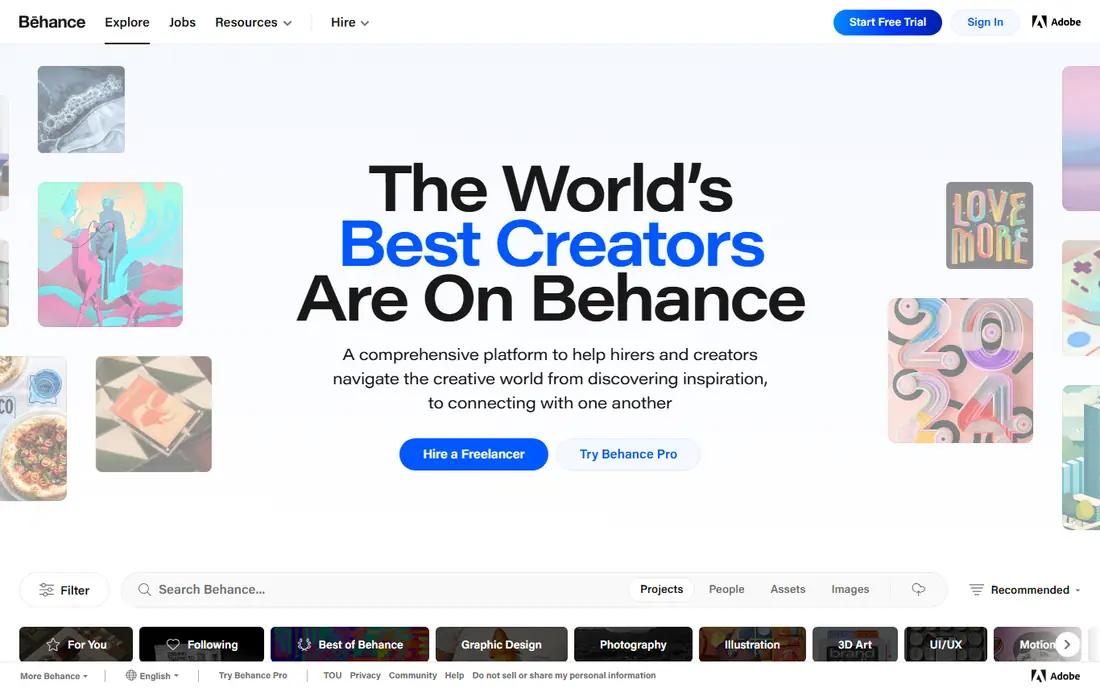
Behance is a showcase platform for creative work, covering photos, videos, logos, illustrations, branding, and more, with projects that collect appreciations and views. Its homepage presents a searchable stream of projects across creative fields, with log-in prompts for viewing more work.
The strength is professional reach: clients, agencies, and studios browse Behance for illustrators, designers, and photographers, and Adobe links make portfolio building straightforward. The trade-off is breadth: fine artists compete for attention with every creative field, and direct selling is secondary. For a professional portfolio that clients trust, Behance is a leading choice.
- Large creative audience
- Project showcases with appreciations and views
- Adobe ecosystem links
- Broad creative focus, not art-only
- Portfolio quality varies
- Selling is not the main job
ArtStation
Ideal for: Concept and game art
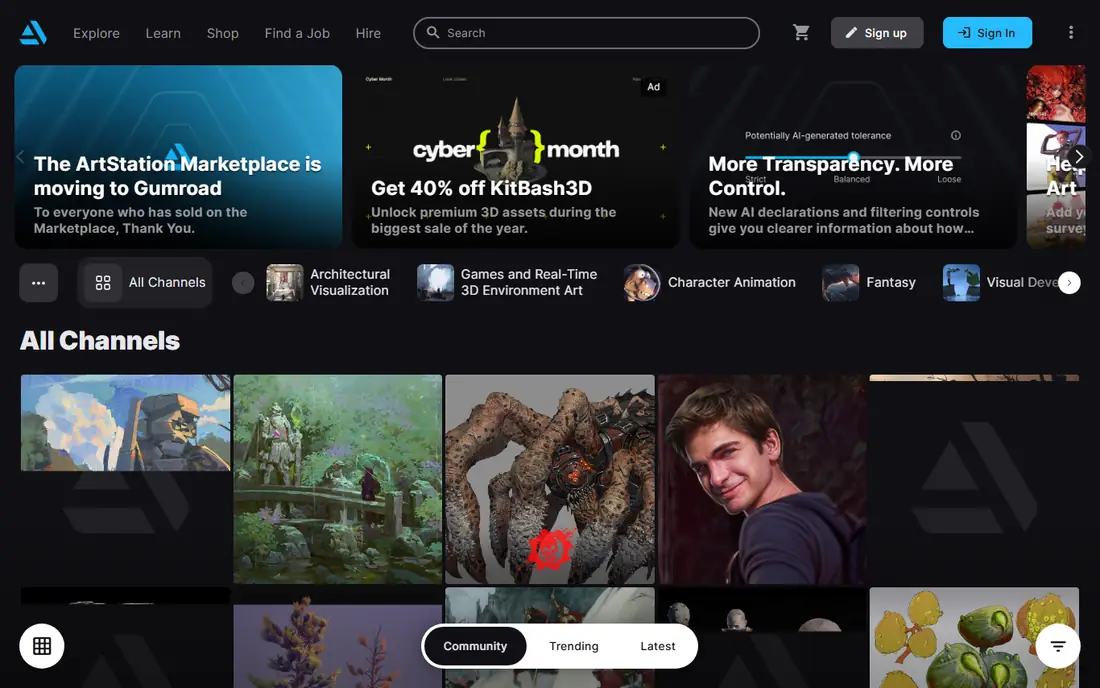
ArtStation describes itself as the leading showcase platform for art and design, with sign-up through Epic Games or Google, a marketplace with seasonal sales, and a strong presence for concept art, illustration, 3D, and game art. Its homepage presents the explore stream, marketplace promotions, and account sign-up for artists.
The strength is industry focus: game studios, film studios, and publishers recruit from ArtStation, and the marketplace lets artists sell prints, tutorials, and digital assets. The trade-off is a game and entertainment lean that suits concept artists more than traditional painters. For concept, game, and digital artists, ArtStation is a leading choice.
- Leading showcase for art and design
- Marketplace for assets and prints
- Epic Games sign-in
- Game and film lean
- Fine art audience smaller
- Marketplace fees apply to sales
DeviantArt
Ideal for: Art community
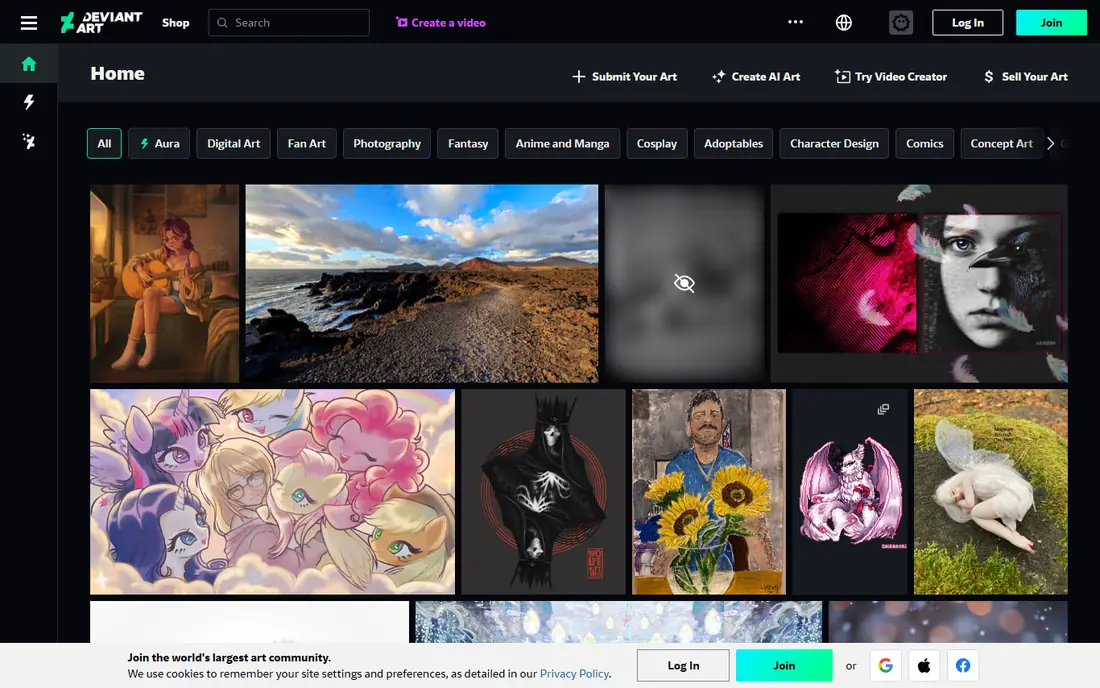
DeviantArt bills itself as the largest online art gallery and community, with journals, community events, ambassador badge challenges, and artist features across illustration, fan art, photography, and traditional media. Its homepage presents community journals, events, and seasonal challenges from the team and ambassadors.
The strength is community: groups, comments, journals, and events give artists feedback, friends, and motivation that portfolio-only platforms lack. The trade-off is that discovery can feel noisy and selling is not the main focus. For artists who want community first, DeviantArt is a strong pick.
- Largest online art gallery and community
- Journals, groups, and events
- Long-running artist culture
- Older interface feel
- Discovery can be noisy
- Selling is secondary to community
Etsy
Ideal for: Handmade and custom sales
Etsy is a global online marketplace where people make, sell, buy, and collect unique items, with a community focused on small businesses and creative entrepreneurs. Its homepage presents handmade, vintage, custom, and unique gifts, featured shops, and seasonal collections, with millions of sellers and no central warehouse.
The strength is buyer traffic: shoppers come to Etsy specifically for handmade and custom work, including original art, prints, and craft goods. The trade-off is fees, competition, and the work of running a shop, from listings to shipping and customer messages. For artists selling handmade or custom work directly, Etsy is a leading choice.
- Global marketplace for handmade, vintage, and custom goods
- Huge buyer traffic
- Seller tools
- Listing and transaction fees
- Competition is intense
- Shop management takes time
Saatchi Art
Ideal for: Original art sales
Saatchi Art is an online gallery for buying original art, including paintings and other original works, with thousands of five-star reviews, 14-day free returns, worldwide shipping included, and a claim of paying artists more than other galleries. Its homepage presents original artworks with prices, curator advice, and buyer reviews praising communication, packing, and delivery.
The strength is original-art positioning: collectors browse Saatchi Art for one-of-a-kind pieces, and curator help matches buyers to work by style, space, and budget. The trade-off is commission and an originals focus that suits painters and sculptors more than print sellers. For artists selling original work online, Saatchi Art is a strong pick.
- Original art marketplace with curator help
- 14-day returns
- Worldwide shipping included
- Commission on sales
- Originals focus, not prints
- Pricing and currency details need care
Society6
Ideal for: Print-on-demand products
Society6 is a marketplace for artist-designed wall art and home decor, where independent artists are at the heart of the platform and every purchase directly supports the artist behind the design. Its homepage presents seasonal collections, artist features, and a trade program, with art applied to functional products.
The strength is hands-off selling: artists upload designs and Society6 handles printing, shipping, and customer service, with no inventory to hold. The trade-off is modest per-sale margins and a product range set by the platform. For artists who want print-on-demand income without logistics, Society6 is a strong pick.
- Artist-designed wall art and home decor
- Every purchase supports the artist
- No inventory needed
- Artist margins are modest
- Product range set by Society6
- Marketing still falls on the artist
Redbubble
Ideal for: Print-on-demand products
Redbubble is a marketplace for products designed by independent artists, with millions of designs on more than 70 high-quality products, from apparel and stickers to wall art and home goods. Its homepage stresses that purchases pay artists directly, with worldwide shipping, secure payments, free returns, and 24/7 support, plus featured artists and fan-art collections.
The strength is scale and simplicity: upload once, sell across dozens of products, and let Redbubble handle production and shipping. The trade-off is modest margins and a huge catalog where standing out takes consistent uploads and outside promotion. For artists who want broad print-on-demand reach free, Redbubble is a strong pick.
- Millions of designs on 70 plus products
- Purchases pay artists directly
- Worldwide shipping
- Artist margins are modest
- Huge catalog means discovery is hard
- Fan-art rules apply
How we picked these
We compared official feature pages, pricing pages, and public reviews for artist platforms available in October 2026. We favored platforms that actively serve artists with portfolios, communities, or sales, and that remain open to new artists. Pricing is listed as "See website" where no starting price was shown on the homepage, and free plans are listed where the platform offers free accounts or free shop setup. We did not claim hands-on testing; this comparison rests on vendor pages and public reviews.
What to check before you pick an artist platform
Start with the goal: portfolio platforms win clients, communities build feedback and motivation, and marketplaces earn income. Most artists need at least two: one showcase and one shop, with social media driving traffic to both.
Next, check the money: marketplace fees, commissions, shipping duties, and payout rules differ widely, so compare what you keep per sale, not just the list price. Check image rights and licensing terms before uploading original work, and keep high-resolution files and records off-platform as a backup.
Finally, plan how buyers will find you. Portfolio platforms and marketplaces bring some built-in traffic, but consistent posting, good titles and tags, and links from your own site or newsletter usually decide whether a shop grows. Start with one showcase and one shop, post regularly for a few months, and judge results by inquiries and sales rather than follower counts alone. If a platform stops fitting your work, move your audience with you by keeping an email list or personal site under your own control. Also review each platform at least once a year: fees change, algorithms shift, and new tools appear that may suit your work better. A yearly review keeps your portfolio current, your shop pricing fair, and your presence focused on the two or three platforms that actually bring clients or sales, rather than scattered across every site you once tried.
Frequently asked questions
What is the best platform for artists to share a portfolio?
Behance suits broad professional portfolios, while ArtStation suits concept, game, and digital art portfolios that studios and publishers browse.
Which platform is best for selling original art?
Saatchi Art suits original paintings and sculpture with curator support and worldwide shipping, while Etsy suits handmade, custom, and smaller original pieces.
Which platform is best for print-on-demand art?
Society6 and Redbubble both offer print-on-demand without inventory. Society6 leans toward wall art and home decor, while Redbubble covers a wider product range.
Is DeviantArt still good for artists?
Yes, for community. DeviantArt offers groups, journals, events, and feedback that portfolio-only platforms lack, though selling is secondary there.
Can artists use several platforms at once?
Yes, and most do. A common setup is a portfolio on Behance or ArtStation, a community presence on DeviantArt, and a shop on Etsy, Saatchi Art, Society6, or Redbubble.
Do artist platforms charge fees?
Most selling platforms charge listing fees, transaction fees, or commissions, while portfolio and community accounts are usually free. Check each platform's fee page before pricing work.