This list puts Amazon S3 first for scalable object storage for data lakes. Look at Microsoft Fabric for AI-powered analytics with data lakes, and at Databricks Lakehouse Platform for unified data engineering, analytics and AI. Prices, free plans and limits for all 5 tools follow.
Choosing platforms for cloud data Lake management usually comes down to price, fit and limits. This Ainotely guide sets 5 tools side by side on those three points, with the facts kept short and checkable.
Key takeaways
Number one here is Amazon S3, a fit for scalable object storage for data lakes.
Pricing across the list, from Amazon S3 to Google BigQuery, is by quote only.
The main caution on Microsoft Fabric: best value within the Microsoft ecosystem.
Google BigQuery is the one to check for autonomous analytics and AI product.
Neither Amazon S3 nor Google BigQuery, nor any of the other 3 tools, has a permanent free plan; trials and quotes are the norm.
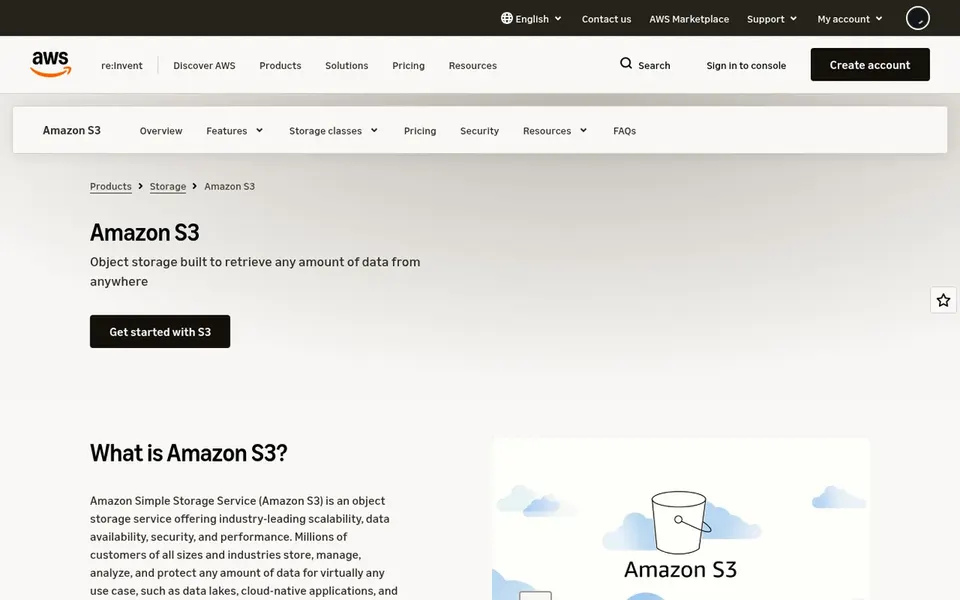
Amazon S3 is built with scalable object storage for data lakes in mind. Amazon S3 is cloud object storage positioned around scalability, data availability, security and performance. Its homepage names data lakes as a primary use case alongside mobile applications, backup and restore, archival, IoT devices, ML and AI, making it a typical foundation layer that other analytics services read from.
The main drawbacks: Access control needs careful configuration.
More specifically, if you want an all-in-one analytics environment instead of a storage base, consider Databricks or Microsoft Fabric instead. In daily use, S3 keeps objects but does not itself offer a SQL interface or a managed lakehouse experience, so query and catalog layers are added separately. Amazon S3 does not show a starting price in this comparison, so check the vendor site for current pricing. Free plan details: Not stated. Reasons to shortlist it: Supports backup, archival.
Microsoft Fabric is aimed squarely at AI-powered analytics with data lakes. The system is wide, so planning governance and workspace structure takes effort, and teams outside the Microsoft ecosystem may find integration less natural.
Limits to weigh: Wide product needs governance planning.
It suits organizations that want a single analytics environment spanning lake storage and data science work, especially those already comfortable with Microsoft tooling and services. Pricing for Microsoft Fabric is not stated here, so ask the vendor for current figures. Free options: Free trial.
Best for: Unified data engineering, analytics and AI
Where Databricks Lakehouse Platform fits: unified data engineering, analytics and AI. The breadth of the product means setup and governance decisions are substantial, and teams without data engineering experience may find it heavy.
Where it falls short: Wide scope can feel complicated to start.
Pricing for Databricks Lakehouse Platform is not stated here, so ask the vendor for current figures. Free plan details: Not stated.
Choose Azure Data Lake Storage for secure storage for big data analytics. The service centers on storage instead of end-to-end analytics, so querying and modeling come from other services.
Check the vendor site for Azure Data Lake Storage pricing; none is listed in this comparison. Free options: Free trial.
Where it falls short: Storage-focused, analytics added separately.
Google BigQuery is a good fit for autonomous analytics and AI system. BigQuery is an analytics product instead of a storage service, so a data lake still needs an object storage layer behind it.
Drawbacks to consider: Costs rely on query patterns.
Check the vendor site for Google BigQuery pricing; none is listed in this comparison. Free plan details: Not stated.
Request quotes from Amazon S3, Google BigQuery and the others; the list shows no fixed prices.
Use real work to test the free trial from Microsoft Fabric and Azure Data Lake Storage, rather than a demo project.
Before choosing Amazon S3, weigh its main limit: Storage only, no built-in query engine.
Confirm you can export your data from Azure Data Lake Storage, so leaving later does not mean losing records.
See whether Microsoft Fabric offers onboarding or training, and whether it is included in the price.
How we picked
The comparison looks at four things: starting price, free access, how well the feature set matches platforms for cloud data Lake management, and the main limit of each tool. Where a vendor does not publish a price, the entry says quote. Where a price depends on seats or billing term, the entry says so. Order on the page follows fit for the typical buyer first, then price transparency and free access. Your own requirements should decide the final pick.
Every price and plan detail on this page comes from the vendors’ own websites. We did not run hands-on tests unless the text says so, and we do not publish star ratings or review scores. See how we score and our disclosure.
Keep your shortlist in one place
Paste prices, trial dates and notes from this guide into Ainotely, our AI note app. It files them into a topic and pulls out tasks like “cancel trial by Friday”. Free 7-day trial, no card needed.
Often, yes. Microsoft Fabric and Azure Data Lake Storage offer a free trial. Use your own data and a real task during the test, and check what the free tier or trial limits before you rely on it.
Is Amazon S3 the right pick for everyone comparing platforms for cloud data Lake management?
No single tool suits every team. Amazon S3 comes first because it fits scalable object storage for data lakes, while Microsoft Fabric suits AI-powered analytics with data lakes and Databricks Lakehouse Platform suits unified data engineering, analytics and AI. Match the tool to your own size, budget and workflow before deciding.
How are the tools for platforms for cloud data Lake management ordered?
Amazon S3 sits first and Google BigQuery last because the order follows typical fit for platforms for cloud data Lake management, then price clarity and free access. It is a judgement call, so read each profile for fit and limits.
Does any tool for platforms for cloud data Lake management here have a free plan?
A permanent free plan is not offered by Amazon S3, Google BigQuery or the other tools here. Microsoft Fabric, Azure Data Lake Storage offer a trial. Plan a short evaluation period instead.