6 Best Platforms for Growth Engineering in GTM Options for 2026

- Number one here is Cargo, a fit for scoring and routing accounts after signals fire.
- Clay is the one to check for building custom enrichment and signal plays.
- What to know about ZoomInfo first: aggressive renewal and upsell reputation.
- The lowest published monthly entry price here is $20 per seat per month, from Unify.
Direct answer
Cargo is the first pick on this list for scoring and routing accounts after signals fire. For a different need, Common Room covers capturing product, community, and web signals and Unify covers signal triggered outbound in one product. Prices, free plans and limits for all 6 tools follow.
Quick comparison
| Product | Ideal for | Price from | Free version | |
|---|---|---|---|---|
 Cargo | Scoring and routing accounts after signals fire | $165 per month | Yes | Visit |
 Common Room | Capturing product, community, and web signals | $2,500 per month | No | Visit |
 Unify | Signal triggered outbound in one product | $20 per seat per month | Yes | Visit |
 ZoomInfo | Enterprise database and intent at scale | See website | No | Visit |
 Apollo.io | Contact data plus built in sequences | See website | Yes | Visit |
 Clay | Building custom enrichment and signal plays | See website | Yes | Visit |
Our 6 picks for platforms for growth engineering in GTM
Short on time? The summary and table above give the quick view of 6 tools for platforms for growth engineering in GTM, and the profiles that follow give the detail behind each entry.
Cargo
Ideal for: Scoring and routing accounts after signals fire
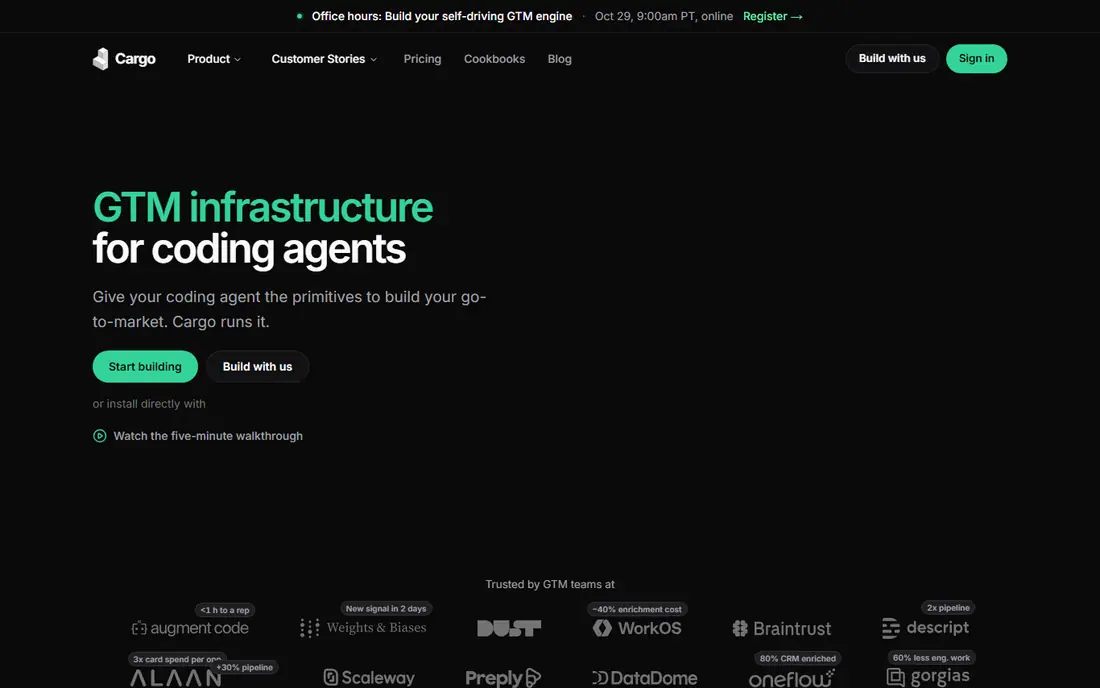
Cargo targets scoring and routing accounts after signals fire. Cargo is where a GTM engineer goes after the signal fires.
It links data sources and CRMs, runs scoring models and AI agents over accounts and people, and routes the results to owners, sequences, or ads. In daily use, if your team has no signals yet, buy the signals first and Cargo second. Price to start with Cargo: $165 per month. Cargo has a free plan.
Where it is weaker: Smaller community than Clay; Best value once signals already exist somewhere.
- Free level with 100 credits
- Workflows and AI agents designed for scoring and routing
- Credit model needs the same care as rivals
Common Room
Ideal for: Capturing product, community, and web signals
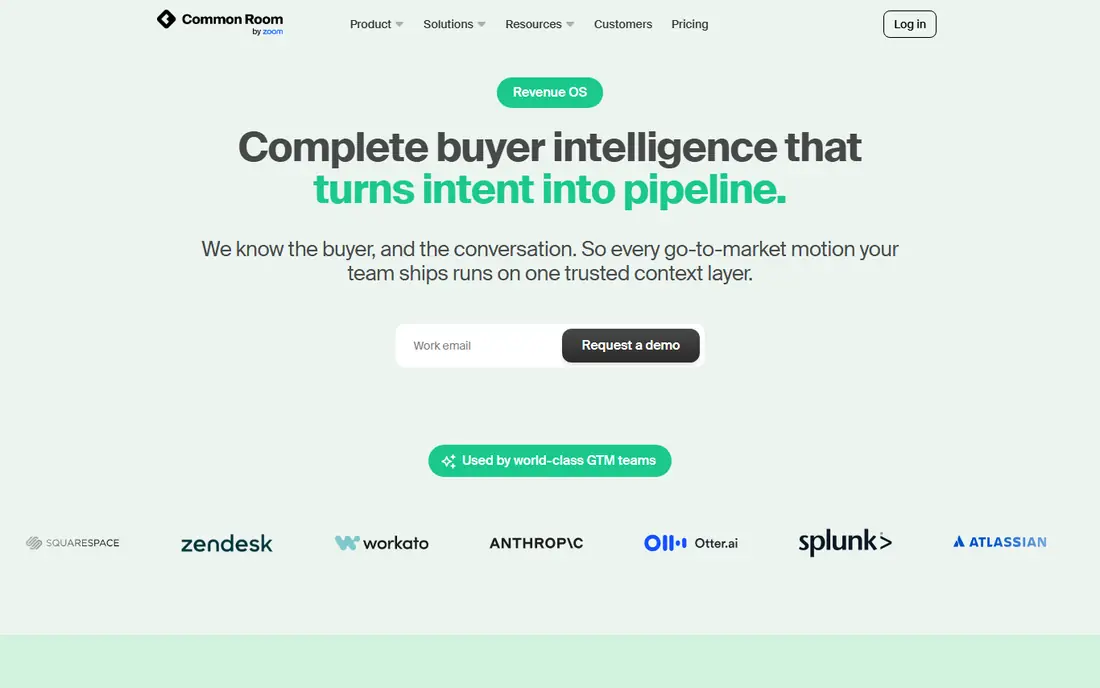
Common Room is aimed squarely at capturing product, community, and web signals. It watches your product usage, your community spaces, your website, and social and job signals, ties them to people and accounts, and hands sales a brief on who is active and why. Its AI layer turns that activity into summaries a rep can act on in minutes.
As for the details, if it does, Common Room sees buying intent your competitors' databases cannot. More specifically, the price is enterprise: listings cite the Essential plan at $2,500 a month billed yearly, and there is no free plan. That only pencils out if your company produces real first party signals, a product people use, a community people post in. On top of that, if it does not, the system has little to watch. Common Room starts at: $2,500 per month. Common Room has no free tier.
Trade-offs to know: Value relies on having product and community data worth capturing; Essential plan cited at $2,500 a month billed yearly.
- Website signals into one buyer graph
- Brings together product usage, community
- Overkill for small pipelines
Unify
Ideal for: Signal triggered outbound in one product
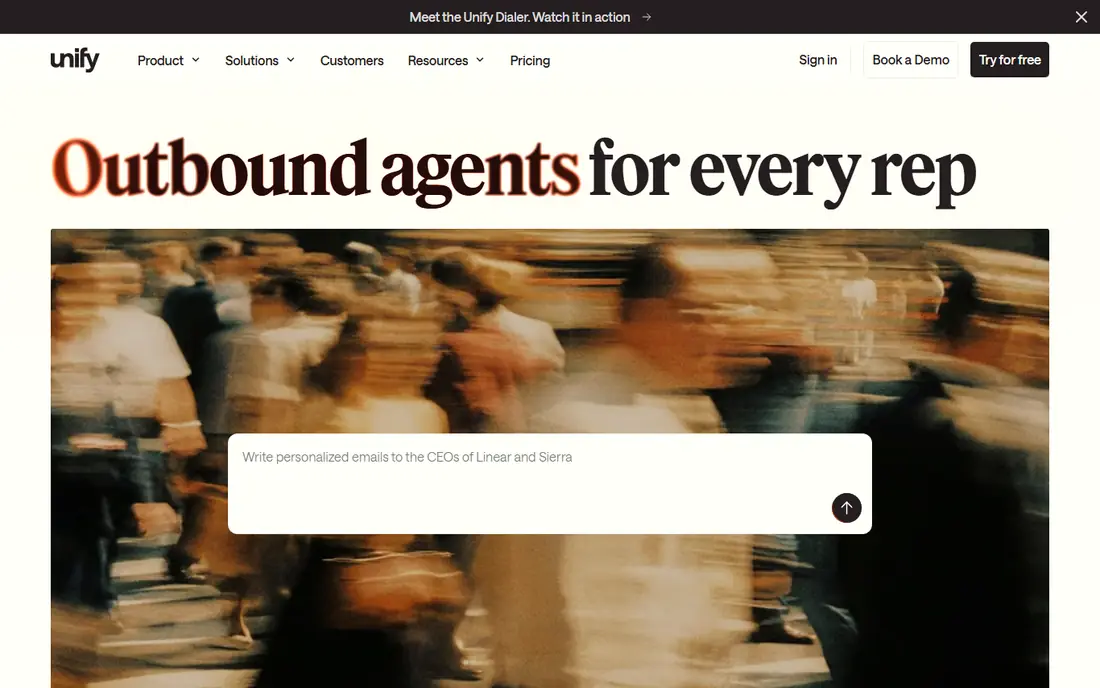
Unify is designed for signal triggered outbound in one product. The trade off is control: Unify's way of working is set, and engineers who want to hand build every logic branch will prefer Clay.
Where it falls short: Smaller data provider bench than Clay's; Opinionated product.
What users get: Cited pricing begins at $20 per seat a month.
Price to start with Unify: $20 per seat per month. A free plan is available with Unify.
- Managed deliverability on higher plans
- Free entry point to test
- Less free form than Clay
ZoomInfo
Ideal for: Enterprise database and intent at scale
ZoomInfo is built with enterprise database and intent at scale in mind. Beyond contacts, it sells intent signals, organisational charts, and workflow tools that push the right accounts to the right reps.
Trade-offs to know: Aggressive renewal and upsell reputation.
Worth adding: GTM engineers at larger firms commonly build on ZoomInfo data even when the plays run in other systems. As for the details, buy ZoomInfo when scale and US data depth matter more than price. ZoomInfo does not show a starting price in this comparison, so check the vendor site for current pricing. There is no free plan with ZoomInfo.
- Workflow tools and chat extend the product
- The incumbent enterprise database, with deep US coverage
- Pricing is never public
Apollo.io
Ideal for: Contact data plus built in sequences
For contact data plus built in sequences, Apollo.io is a natural candidate. Apollo is the workhorse database of outbound teams.
Where it falls short: Deliverability tools are lighter than dedicated senders; Advanced GTM plays need other products around it.
As the low-cost base layer of a GTM stack, though, Apollo is hard to displace. Apollo's weakness is data freshness at the edges: niche roles and regions return stale contacts more commonly than its headline numbers suggest, which is why plenty of teams feed Apollo data into Clay for verification. No starting price is listed for Apollo.io here; confirm pricing on the vendor site. Free access exists with Apollo.io.
Where Apollo.io stands out: Sequences and dialer built in, so data flows straight to outreach.
- Very large contact database with search filters GTM teams know well
- Normally less expensive per seat than enterprise data rivals
- Credits gate the handy exports
Clay
Ideal for: Building custom enrichment and signal plays
Clay works best for building custom enrichment and signal plays. The economics need care. There is a free plan to learn the tool.
In practice, Clay is the tool the GTM engineer job title grew up around. It looks like a spreadsheet and behaves like a data pipeline: pull in accounts, run them through a waterfall of enrichment providers until an email or phone number lands, add AI research columns, score the rows, and push the results to your CRM or sequencer. Without one, it becomes a costly table nobody maintains. Clay does not show a starting price in this comparison, so check the vendor site for current pricing. You can start on Clay without paying.
What Clay does well: Claygent agents research businesses and write inside the table. Downsides: Credit burn is real; failed lookups frequently still cost credits.
- Waterfall enrichment across more than 100 providers lifts match rates
- Free plan with monthly credits to learn on
- Ramp-up time is steep for non technical users
How these tools were picked
Pricing pages, product documentation and feature lists were the main sources, and every entry carries at least one honest drawback. Plan names, prices and limits change often. Treat the figures here as a starting point and verify them with the vendor. The ranking is editorial: typical fit first, then clear pricing, then free access. If your needs are unusual, read the profiles rather than relying on position.
Pre-purchase checklist
- Confirm the entry price on the vendor page. For ZoomInfo, Apollo.io and Clay that means a quote rather than a fixed price.
- Look at free plan limits closely: Cargo, Unify, Apollo.io and Clay have one, and the caps decide whether it is usable for real work.
- Read the limits listed for Cargo first: smaller community than Clay.
- Ask ZoomInfo which support channels and response times come with the plan you would buy.
- Pick one real project and run it in Clay first; a small pilot shows fit faster than a checklist.
Frequently asked questions
Do these tools publish their prices?
Not all of them. ZoomInfo, Apollo.io and Clay publish no starting price, so expect a quote request for those. The rest, Cargo included, show a starting price, though seats and billing terms still change the final cost.
Is Cargo the right pick for everyone comparing platforms for growth engineering in GTM?
No single tool suits every team. Cargo comes first because it fits scoring and routing accounts after signals fire, while Common Room suits capturing product, community, and web signals and Unify suits signal triggered outbound in one platform. Match the tool to your own size, budget and workflow before deciding.
Which options for platforms for growth engineering in GTM have a free plan?
Cargo, Unify, Apollo.io and Clay offer a free plan in this list. Free plans usually cap users, projects or features, so check the limits on the vendor page.
What is the cheapest option for platforms for growth engineering in GTM in this list?
On published monthly entry prices, Unify is the lowest here at $20 per seat per month. Entry price is only part of the cost, because seats, add-ons and billing terms can change the total.