Best Platforms for Influencers in 2026: 8 Platforms Compared

- 1
 AspireBrand marketplaceVisit
- 2
 Creator.coCreator marketplaceVisit
- 3
 GrinE-commerce creatorsVisit
- 4
 CollabstrSmall creator dealsVisit
- 5
 Influencer HeroShopify creatorsVisit
- Aspire and Creator.co suit influencers who want brand marketplaces, while Grin suits e-commerce brands working with creators.
- Collabstr and Influencer Hero are good for smaller creators starting with paid deals.
- Upfluence and Traackr suit agencies and large brands managing many creators at once.
- Most influencer platforms are free for creators to join, with brands paying for access and tools.
- Check payment terms, exclusivity and usage rights before accepting any brand deal, since those terms matter more than the fee.
Quick comparison
| Product | Ideal for | Price from | Free version | |
|---|---|---|---|---|
| Aspire | Brand marketplace | Free | Yes | Visit |
| Creator.co | Creator marketplace | Free | Yes | Visit |
| Grin | E-commerce creators | See website | No | Visit |
| Collabstr | Small creator deals | Free | Yes | Visit |
| Influencer Hero | Shopify creators | Free | Yes | Visit |
 Upfluence | Agencies and brands | See website | No | Visit |
 Traackr | Large brand programmes | See website | No | Visit |
 Later Influence | Campaign management | See website | No | Visit |
The best platforms for influencers
Influencer platforms connect creators with brands, manage campaigns, track content and handle payments, but they serve different sides of the market. Some are marketplaces where creators apply for deals, others are tools for brands to find and manage creators. We compared official feature pages, pricing and public reviews to find platforms that still serve creators and brands well in October 2026.
Aspire
Ideal for: Brand marketplace

Aspire, formerly AspireIQ, is a large influencer marketplace where brands post campaigns and creators apply with their rates and audience data. It covers Instagram, TikTok, YouTube and other channels, with tools for briefs, content approval, tracking and payments. That structure suits creators who want a steady flow of brand opportunities without cold pitching every time.
Larger creators tend to get more deals, and the application process can be competitive, so smaller creators may need to apply widely. Aspire is free for creators to join, with brands paying for the platform, which makes it a low risk place to start looking for paid work.
- Large brand marketplace
- Campaign management
- Content tracking and payments
- Brand focused, so creator experience varies
- Larger creators get more deals
- Application process
Creator.co
Ideal for: Creator marketplace
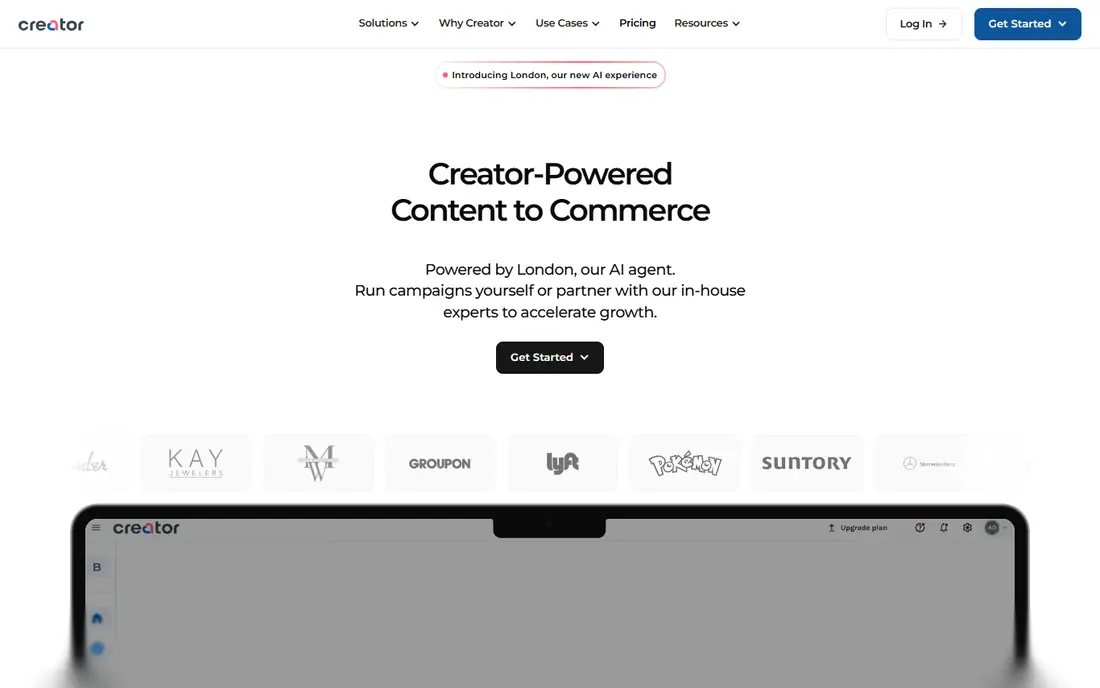
Creator.co is a marketplace that aims to serve creators of many sizes, not just large influencers, with campaigns across Instagram, TikTok and YouTube. Creators build a profile, set rates and apply for campaigns, while brands manage briefs, approvals and payments through the platform. That openness helps smaller creators who are often ignored by larger marketplaces.
Deal volume varies by niche, and brand quality varies, so creators should vet each campaign carefully. Persistence matters, since applying for many relevant campaigns is more effective than waiting for inbound deals, but Creator.co is a good free starting point for new creators.
- Marketplace for creators of many sizes
- Campaign tools
- Free to join for creators
- Deal volume varies by niche
- Brand quality varies
- Smaller creators need persistence
Grin
Ideal for: E-commerce creators
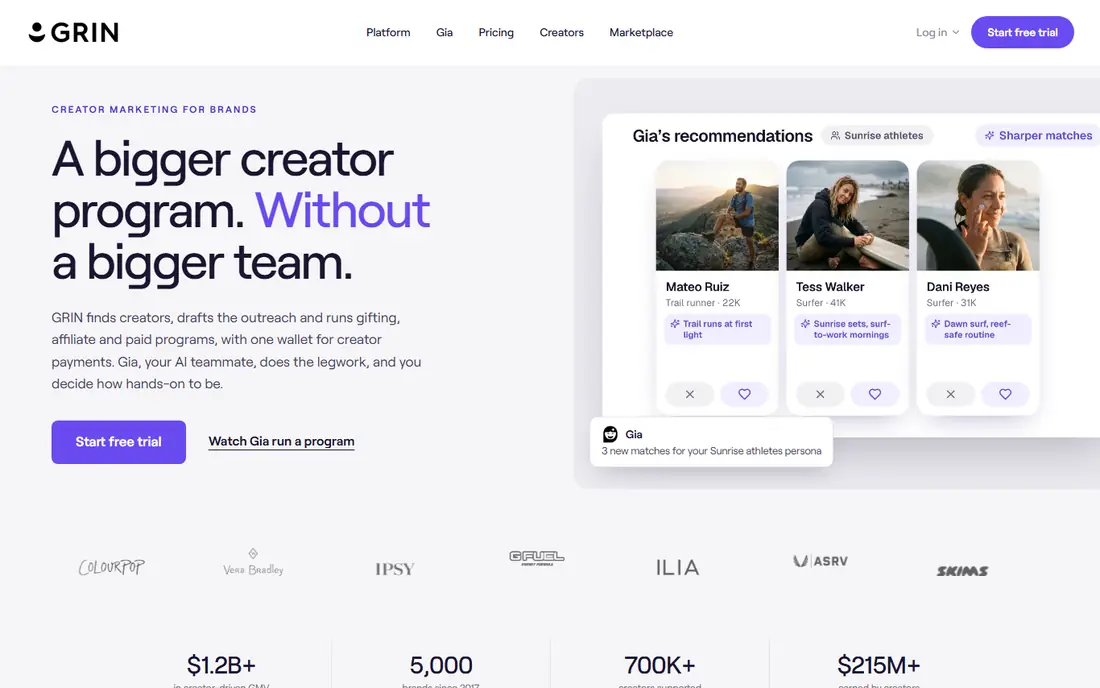
Grin is a creator management platform built for e-commerce brands, especially Shopify stores, with tools for finding creators, managing relationships, seeding products and tracking affiliate sales. Creators usually join Grin through a brand that uses it, rather than applying on an open marketplace, so the experience depends on the brand's programme. That brand side focus makes Grin powerful for long term ambassador programmes.
Creators cannot simply sign up and browse deals the way they can on Aspire, so Grin is less useful as a first marketplace. If you work with e-commerce brands, though, you will likely encounter Grin, and its product seeding and affiliate tools make ongoing partnerships smoother than email based management.
- Strong for e-commerce and Shopify
- Creator CRM
- Product seeding and affiliate tools
- Brand paid platform, so creator access is via brands
- Enterprise pricing
- Learning curve
Collabstr
Ideal for: Small creator deals
Collabstr is a simple marketplace where creators list their services and prices, and brands buy posts, videos and UGC directly. That direct model suits smaller creators who want to set a clear price for a post or video and get paid without a long campaign process. It covers Instagram, TikTok, YouTube and other platforms, with a focus on straightforward deals.
Brand budgets are often smaller than on Aspire or Grin, and campaign management tools are thinner, so Collabstr is best for one off deals rather than long term programmes. For creators starting out, it is an easy way to get first paid work and build a portfolio of brand collaborations.
- Simple marketplace for small deals
- Clear pricing
- Free to join for creators
- Smaller brands and budgets
- Deal quality varies
- Less campaign management than Aspire
Influencer Hero
Ideal for: Shopify creators
Influencer Hero is built for Shopify brands to find creators, run outreach and manage campaigns, with strong integration to Shopify stores for tracking sales and affiliate performance. Creators are usually discovered and invited by brands, rather than browsing an open marketplace, so the platform suits creators who want to work with e-commerce brands on product focused campaigns.
As a creator, you cannot rely on Influencer Hero alone for inbound deals, so pair it with open marketplaces like Aspire and Creator.co. If a Shopify brand invites you through Influencer Hero, the campaign tools and sales tracking can make the partnership smoother than email alone.
- Shopify integration
- Creator discovery
- Outreach and campaign tools
- Brand focused platform
- Creator access via brands
- Pricing for brands varies
Upfluence
Ideal for: Agencies and brands
Upfluence offers a large creator database, campaign management and e-commerce integrations for brands and agencies managing many creators at once. It helps brands search by audience, engagement and niche, then manage outreach, contracts, content and payments in one system. That scale suits agencies with many clients and brands running large programmes.
Creators join Upfluence mainly through brand invitations, so it is not a marketplace to browse for deals. Pricing is enterprise level for brands, which limits its use for small businesses, but creators who work with larger brands will benefit from its organised campaign workflow.
- Large creator database
- Campaign management
- E-commerce integrations
- Enterprise pricing for brands
- Creator access via brands
- Complex for small teams
Traackr
Ideal for: Large brand programmes
Traackr is an influencer relationship management platform for large brands, with global creator data, relationship tracking and reporting that helps teams manage long term creator programmes. It focuses on building lasting relationships rather than one off deals, which suits brands that invest in creators over years, not just campaigns.
Setup is complex and pricing is enterprise level, so small brands and individual creators will not use Traackr directly. Creators who are part of a large brand programme managed on Traackr will benefit from clearer briefs, tracking and payment processes than ad hoc email management.
- Strong for influencer relationship management
- Global creator data
- Reporting for large programmes
- Enterprise pricing
- Brand focused
- Complex setup
Later Influence
Ideal for: Campaign management
Later Influence, from Later, combines influencer campaign management with social media scheduling, which suits brands that want creators and organic social in one platform. It offers creator discovery, campaign briefs, content approval and reporting, plus Later's well known scheduling tools for Instagram, TikTok and other channels. That combination helps small marketing teams manage both sides of social.
Creators access Later Influence through brand campaigns, not an open marketplace, so it is not a primary deal source for individual creators. If a brand you work with uses Later, its campaign tools will make collaboration smoother, but you should still use open marketplaces for finding new deals.
- Campaign management plus social scheduling
- Creator discovery
- Reporting
- Brand paid
- Creator access via brands
- Pricing varies by features
How we picked these
We compared official feature pages, pricing pages and public reviews, and we only included platforms that still connect creators and brands in October 2026. We distinguished between open marketplaces where creators can apply for deals and brand tools where creators are invited, since that difference decides how a creator should use each platform. Where pricing is brand paid and not published, we used See website.
How to get brand deals as an influencer
Build a clear profile with your niche, audience data, past work and rates, since brands shortlist quickly and a vague profile gets skipped. Apply for relevant campaigns on Aspire, Creator.co and Collabstr, and pitch brands directly with a short, specific idea, not a generic media kit. Smaller creators should focus on engagement and niche authority, since brands increasingly value targeted audiences over raw follower counts.
Read every deal carefully before accepting. Check payment terms, deliverables, revision limits, exclusivity periods and usage rights, since a brand may want to reuse your content in ads for months. Get agreements in writing, keep records of payments and content, and do not accept deals that require you to buy products or pay fees upfront, since legitimate brands pay creators, not the other way round.
Frequently asked questions
What is the best platform for influencers to find brand deals?
Aspire and Creator.co are the best open marketplaces for applying for brand deals, while Collabstr is good for smaller, direct deals. Use several marketplaces, since deal volume varies by niche.
Are influencer platforms free for creators?
Yes, most platforms are free for creators to join, with brands paying for access and tools. Creators should never pay a fee to join a legitimate marketplace or to receive a brand deal.
How much do influencers earn per post?
Earnings vary widely by niche, audience size, engagement and platform, from tens of dollars for small creators to thousands for larger ones. Set rates based on your audience and past results, and negotiate usage rights separately.
Should small influencers use influencer platforms?
Yes, platforms like Creator.co and Collabstr welcome smaller creators, and brands increasingly seek niche audiences. Focus on engagement, clear content and a professional profile rather than follower count alone.
What should I check before accepting a brand deal?
Check payment terms, deliverables, revision limits, exclusivity and usage rights, and get the agreement in writing. Avoid deals that ask you to pay fees, buy products upfront or give unlimited usage rights for a single post fee.