Domino Data Lab leads the list, best for enterprise MLOps and model management. Listed starting prices: Hugging Face from $9 per month. Look at Hugging Face for open source model hub and community, and at Databricks for unified data and AI governance. Details, prices and limits for the rest of the 6 tools are below.
Ainotely compared 6 tools for platforms for MLOps for generative AI. The goal is a practical shortlist: published prices, free plan facts, best-fit use cases and honest limits for every entry.
Key takeaways
Top of the list is Domino Data Lab, which targets enterprise MLOps and model management.
Hugging Face is the lowest-priced starter here at $9 per month.
Dataiku is the one to check for collaborative AI orchestration and governance.
Only Hugging Face offers a free plan among these 6 tools.
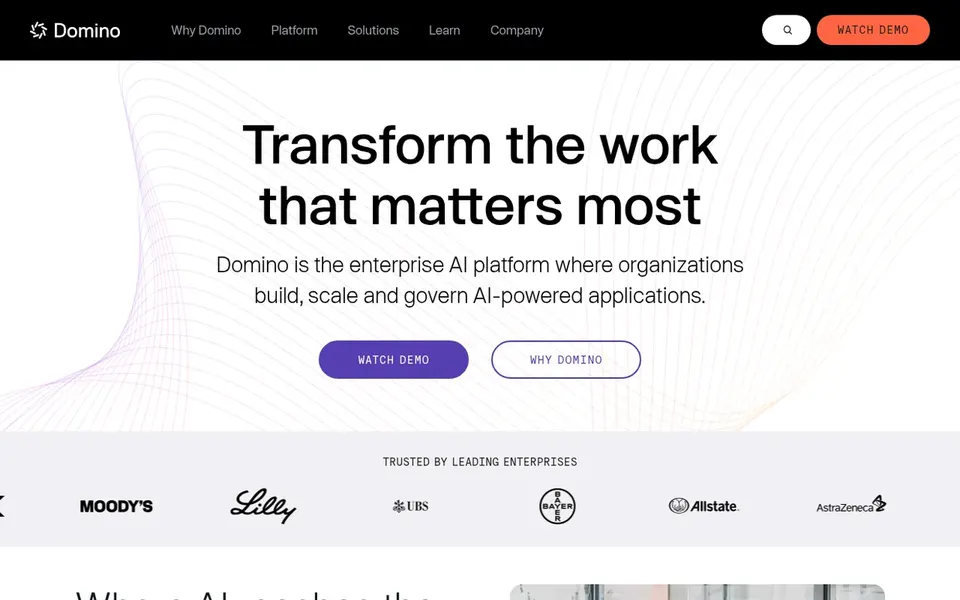
Domino Data Lab is built with enterprise MLOps and model management in mind. It is designed for data science teams that require to collaborate, track experiments, and deploy models reproducibly, making it a candidate for organizations building generative AI applications that need solid lifecycle management.
What to check first: Can be complicated to set up.
This comparison lists no price for Domino Data Lab; ask the vendor. Free plan details: Not stated.
For open source model hub and community, Hugging Face is a natural candidate. Hugging Face is a community product on a journey to advance and democratize artificial intelligence through open source and open science. It is well suited to teams that want access to many different pre-trained models, datasets, and community-driven resources, and it commonly serves as a central hub for generative AI model discovery and experimentation.
Where it falls short: Less emphasis on end-to-end MLOps.
Worth adding: teams needing thorough pipeline management may need to complement it with other tools. In daily use, Whereas Hugging Face provides tools for model hosting and inference, it is not a full-fledged MLOps product for enterprise governance and orchestration. What you pay to start with Hugging Face: $9 per month. A free plan is available with Hugging Face.
Databricks is a good fit for unified data and AI governance. The system's breadth means it can be complicated and may require dedicated resources to handle. Worth adding: teams seeking a lighter, more focused MLOps tool might consider alternatives, but Databricks is a good fit for enterprises already invested in Spark and Delta Lake ecosystems.
Trade-offs to know: Can be complicated for small teams.
For everyday use, Databricks provides a unified product for data, analytics, and AI, emphasizing a data-centric approach. It eases ETL, data warehousing, governance, and AI on the Data + AI Platform, making it a good match for organizations that require tight integration between data engineering and machine learning workflows, particularly for generative AI projects that depend on large datasets and solid governance. Databricks shows no starting price here, so confirm the cost on the vendor site. Free options: Not stated.
IBM watsonx is built with enterprise AI governance and trust in mind. It is best for enterprises that value IBM's governance and data management strengths, but smaller teams might find it overbearing.
Downsides: May need IBM ecosystem integration.
No starting price is listed for IBM watsonx here; confirm pricing on the vendor site. Free options: Not stated.
Google Cloud Vertex AI serves building and governing AI agents. It suits teams that are building generative AI agents and want a managed environment with governance and optimization capabilities, notably those already using Google Cloud infrastructure.
What Google Cloud Vertex AI does well: governing agents.
Where it is weaker: Tied to Google Cloud ecosystem. Teams outside the Google Cloud ecosystem may find integration challenging, so consider it when your infrastructure aligns with Google Cloud. This comparison lists no price for Google Cloud Vertex AI; ask the vendor. Free access: Not stated.
Best for: Collaborative AI orchestration and governance
Dataiku makes the most sense for collaborative AI orchestration and governance. Consider it when cross-team orchestration and outcome measurement are priorities, but evaluate whether its scope aligns with your budget and technical requirements.
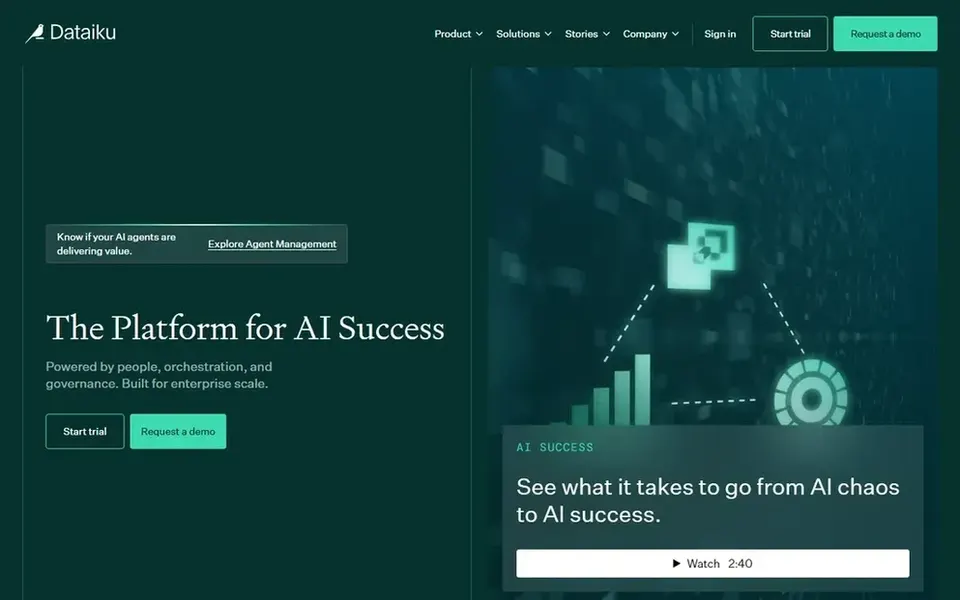
Whereas Dataiku emphasizes collaboration and governance, its broad feature set might be overwhelming for teams with straightforward needs. In daily use, Dataiku is presented as the Platform for AI Success, meant to unite people, orchestration, and governance to turn AI investments into measurable business outcomes. Dataiku shows no starting price here, so confirm the cost on the vendor site. Free plan details: Not stated.
Where it is weaker: Can be expensive for small teams.
Ask Domino Data Lab, Databricks, IBM watsonx and others for a written quote, since no starting price is shown.
Look at the free plan from Hugging Face closely: its caps decide whether it is usable for real work.
Before choosing Domino Data Lab, weigh its main limit: may need significant infrastructure.
Look at the renewal terms for Databricks: auto-renewal, notice periods and price changes can matter more than the first-year price.
Find out whether the entry plan of IBM watsonx covers your must-haves or only a trimmed-down version.
How we picked
Ainotely looked at what each vendor publishes: pricing, plan limits, feature coverage for platforms for MLOps for generative AI and stated drawbacks. No hands-on testing is claimed. Seat minimums, billing terms and add-ons can move the real cost, so the starting prices here are a guide and not a quote. The order reflects how well each tool fits the most common buying scenario for platforms for MLOps for generative AI, then price clarity, then free plan access. It is a starting point, not a verdict.
Every price and plan detail on this page comes from the vendors’ own websites. We did not run hands-on tests unless the text says so, and we do not publish star ratings or review scores. See how we score and our disclosure.
Keep your shortlist in one place
Paste prices, trial dates and notes from this guide into Ainotely, our AI note app. It files them into a topic and pulls out tasks like “cancel trial by Friday”. Free 7-day trial, no card needed.
How are the tools for platforms for MLOps for generative AI ordered?
The order follows typical fit for platforms for MLOps for generative AI, with Domino Data Lab first and Dataiku last, then price clarity and free access. It is editorial judgement, not a score, so another team could rank the tools differently.
What is the cheapest option for platforms for MLOps for generative AI in this list?
On published monthly entry prices, Hugging Face is the lowest here at $9 per month. Entry price is only part of the cost, because seats, add-ons and billing terms can change the total. The 6 tool cards above repeat this per product for platforms for MLOps for Generative AI, with the listed price or "pricing on request".
Can I try these tools before paying?
Often, yes. Hugging Face has a free plan. Use your own data and a real task during the test, and check what the free tier or trial limits before you rely on it. Each of the 6 options in this platforms for MLOps for Generative AI guide has its own card above with the price, free plan and limits.
How do I choose between Databricks and Google Cloud Vertex AI?
Databricks emphasizes unified data and AI with a data-centric approach, whereas Vertex AI centres on building and governing AI agents within Google Cloud. Consider your existing cloud infrastructure and whether you need tight data integration or agent-specific tooling.
Is Domino Data Lab the right pick for everyone comparing platforms for MLOps for generative AI?
No single tool suits every team. Domino Data Lab comes first because it fits enterprise MLOps and model management, while Hugging Face suits open source model hub and community and Databricks suits unified data and AI governance. Match the tool to your own size, budget and workflow before deciding.