6 Strong Platforms for Online Course Creation Choices in 2026

- LearnWorlds sits first on this list: interactive, assessment heavy courses.
- Starting prices begin at $29 per month with LearnWorlds.
- Mighty Networks fits courses inside a premium community.
- Before buying Udemy, weigh this: revenue share is steep, and Udemy's promotions set your price.
Direct answer
This list puts LearnWorlds first for interactive, assessment heavy courses. Look at Udemy for reaching a built in marketplace audience, and at Kajabi for all in one course firms. The full list of 6 tools follows, with prices and free plan facts.
Quick comparison
| Product | Ideal for | Price from | Free version | |
|---|---|---|---|---|
 LearnWorlds | Interactive, assessment heavy courses | $29 a month | No | Visit |
 Udemy | Reaching a built in marketplace audience | Free | Yes | Visit |
 Kajabi | All in one course companies | $179 a month | No | Visit |
 Teachable | First time course creators | $39 per month | No | Visit |
 Circle | Community led courses and memberships | $89 a month | No | Visit |
 Mighty Networks | Courses inside a premium community | $41 per month | No | Visit |
6 options for platforms for online course creation in detail
Ainotely compared 6 tools for platforms for online course creation. The goal is a practical shortlist: published prices, free plan facts, best-fit use cases and honest limits for every entry.
LearnWorlds
Ideal for: Interactive, assessment heavy courses
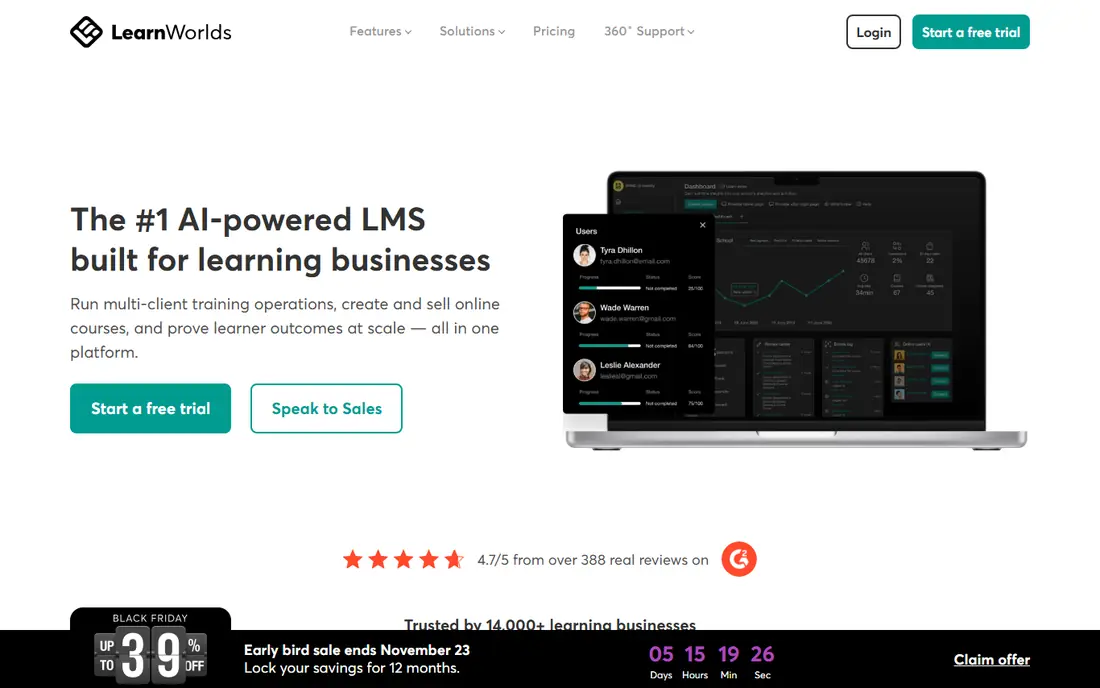
LearnWorlds serves interactive, assessment heavy courses. Consistent sellers should price the Pro Trainer level, which removes the fee, before choosing.
What to check first: Advanced video editing features sit on the top plan; Marketing tools are basic, email is restricted.
Entry price for LearnWorlds: $29 per month. No free plan comes with LearnWorlds.
What LearnWorlds does well: Capable assessment engine and SCORM support.
- Interactive video with questions and notes inside the player
- White label choices and a branded app add on
- Interface terms can confuse new users
Udemy
Ideal for: Reaching a built in marketplace audience
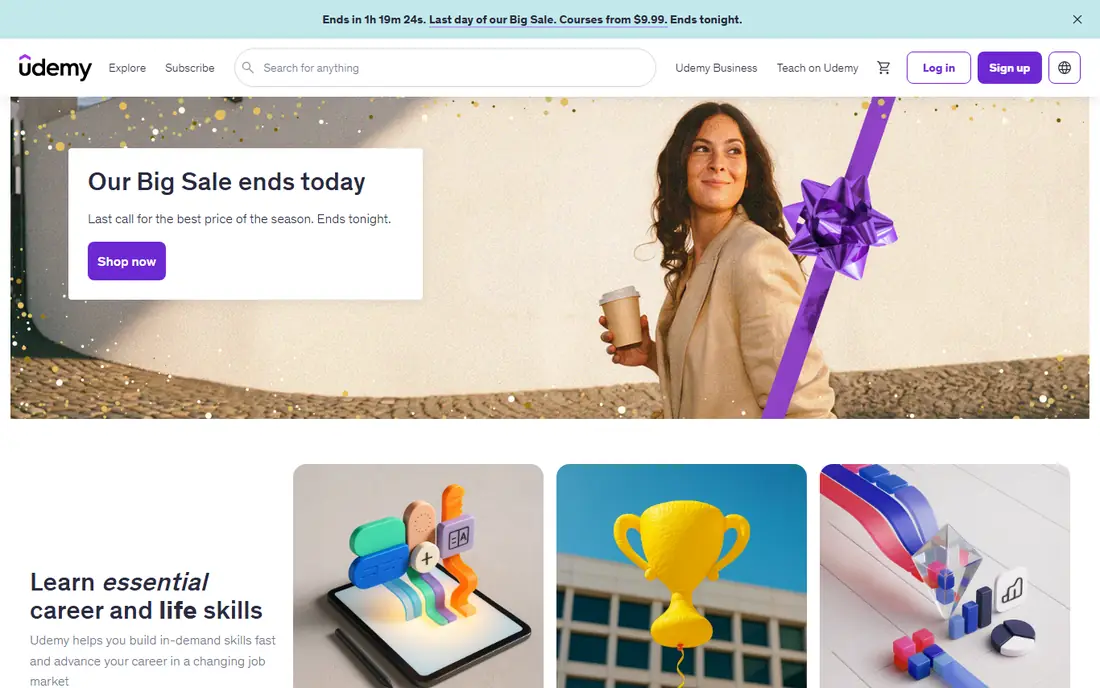
Choose Udemy for reaching a built in marketplace audience. In exchange, Udemy controls pricing, runs deep discount sales, keeps the customer relationship, and shares revenue on terms that leave instructors a minority of numerous sale prices.
For everyday use, as a discovery channel beside your own school, it earns its place. The starting price for Udemy: Free. A free plan is available with Udemy.
Downsides: Udemy's promotions set your price; Heavy discounting trains buyers to wait for sales.
- Udemy takes care of marketing, payments, hosting
- Tens of millions of students already shop there
- Revenue share is steep
Kajabi
Ideal for: All in one course companies
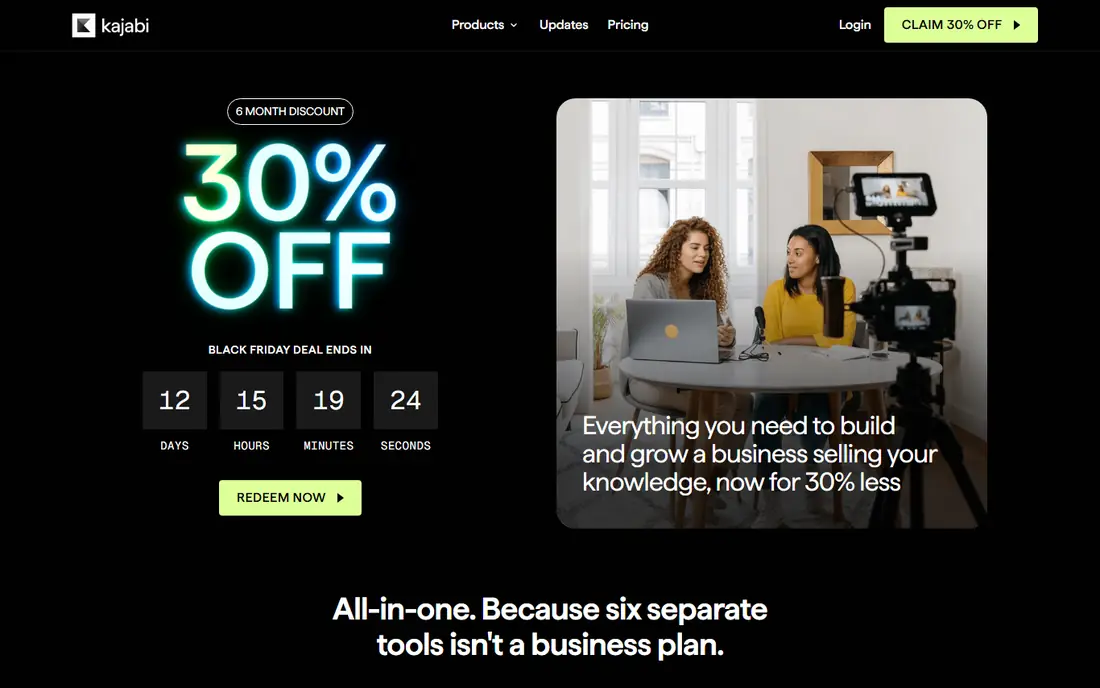
Choose Kajabi for all in one course firms. Kajabi is the premium all in one. For everyday use, a course business on Kajabi runs its site, checkout, email campaigns, automations, and community in one login, and pays one bill.
Add an email product, a funnel builder, and a course host together and Kajabi's number looks less steep. For an established educator with a list and multiple products, it is the tidy choice. Its user base of coaches and experts reflects that. Kajabi pricing: $179 per month. Kajabi has no free plan.
Where it is weaker: cited at $179 a month for Basic; Product and contact caps on lower plans.
- Payments in one system
- Capable automation and pipeline tools
- More system than a single course needs
Teachable
Ideal for: First time course creators
Teachable is designed for first time course creators. Teachable is where numerous course firms start. For a first course with no audience yet, it remains the lowest friction place to begin.
Also, you upload videos, set a price, and sell through its checkout, and the product manages payments, access, and student accounts. Its Starter plan is listed at $39 a month, which sounds cheap until the 7.5 percent transaction fee lands on every sale. Beyond that, above it, the Builder plan at a higher monthly price with no system fee wins rapidly. More specifically, Teachable knows this and prices accordingly. Starting cost for Teachable: $39 per month. There is no free plan with Teachable.
Drawbacks to consider: Email tools are entry-level, so most sellers add another service; No free plan, only a trial.
- Student management
- Course builder a beginner can finish in a weekend
- Starter plan takes 7.5 percent of every sale
Circle
Ideal for: Community led courses and memberships
Choose Circle for community led courses and memberships. Circle is the modern community system that plenty of course firms now build on.
Points against: Course features are more straightforward than LMS specialists; Younger product than the course incumbents.
Circle fits programs where the learning is social: cohorts, masterminds, and memberships with lessons attached. The starting price for Circle: $89 per month. Circle has no permanent free option. Best features of Circle: Workflows and automations on higher plans.
- Modern interface members recognise from social apps
- Clean
- Professional plan cited at $89 a month with a 2 percent transaction fee
Mighty Networks
Ideal for: Courses inside a premium community
Think of Mighty Networks for courses inside a premium community. Mighty Networks begins from the community and brings the course.
What users get: Entry pricing cited at $41 per month.
Choose Mighty Networks when completion through community matters more than curriculum mechanics, since students finish courses other people are taking with them. Members join for the people, the events, and the conversation, and courses sit inside that space as part of membership. The starting price for Mighty Networks: $41 per month. Mighty Networks has no free tier.
Where it falls short: Transaction structure varies by plan and payment setup; Discovery and feed behaviour take tuning.
- Member profiles built in
- Events, challenges
- Course tools are lighter than dedicated LMS systems
Selection criteria
Pricing pages, product documentation and feature lists were the main sources, and every entry carries at least one honest drawback. Prices and plan limits come from vendor pages and can change, so confirm them on the vendor site before you buy. The sequence is a judgement call: typical use case first, then pricing transparency, then free access. Use the profiles to check fit.
Questions to settle before buying
- Prices are a starting point; LearnWorlds shows $29 per month to start, so verify what your seat count would cost.
- Test the free plan from Udemy against your real workload before relying on it.
- Read the limits listed for LearnWorlds first: starter charges $5 per premium enrollment, which punishes cheap courses.
- Ask Mighty Networks which support channels and response times come with the plan you would buy.
- Before rolling out Teachable, verify the integrations your workflow depends on.
Frequently asked questions
Can I try these tools before paying?
Often, yes. Udemy has a free plan. Use your own data and a real task during the test, and check what the free tier or trial limits before you rely on it.
Do these tools publish their prices?
Yes. Every tool from LearnWorlds to Mighty Networks shows a starting price, though seats, add-ons and billing terms still change the final cost.
Can I move my course to another system later?
Videos, files, and student lists export from most products here, though course structure, quizzes, and page design must be rebuilt by hand. Sales history and student progress seldom transfer cleanly.
Is LearnWorlds the right pick for everyone comparing platforms for online course creation?
No single tool suits every team. LearnWorlds comes first because it fits interactive, assessment heavy courses, while Udemy suits reaching a built in marketplace audience and Kajabi suits all in one course businesses. Match the tool to your own size, budget and workflow before deciding.
What is the cheapest option for platforms for online course creation in this list?
On published monthly entry prices, LearnWorlds is the lowest here at $29 per month. Entry price is only part of the cost, because seats, add-ons and billing terms can change the total.