Best Platforms to Advertise Developer Vacancies in 2026: 8 Platforms Compared

- Broad boards like LinkedIn and Indeed deliver volume, while Dice and Wellfound deliver candidates who already work in tech.
- Developer hiring works best when the posting shows salary range, tech stack, and remote policy up front, since engineers filter hard on those details.
- Niche platforms cost more per posting in some cases but tend to cut screening time because applicants are pre-filtered by skill and interest.
- Wellfound is the strongest pick for startups, while LinkedIn remains the safest default for larger companies hiring across roles.
- Our pick for most teams is a mix: LinkedIn for reach, Dice for tech depth, and Wellfound for startup-minded engineers.
Quick comparison
| Product | Ideal for | Price from | Free version | |
|---|---|---|---|---|
 LinkedIn | Broad professional reach | See website | No | Visit |
 Indeed | High application volume | See website | Yes | Visit |
 Dice | Tech-only candidates | See website | No | Visit |
 Wellfound | Startup hiring | See website | Yes | Visit |
 Hired | Vetted tech candidates | See website | No | Visit |
 Arc | Remote developers | See website | No | Visit |
 ZipRecruiter | Fast distribution | See website | Free trial | Visit |
 Glassdoor | Employer brand plus jobs | See website | No | Visit |
The best platforms to advertise developer vacancies
Hiring developers is a different job from hiring for most roles. Engineers are selective, they compare stacks and salary bands before applying, and they notice vague postings fast. The platforms below were compared on candidate quality, reach, screening tools, and how well each one fits different company sizes.
Ideal for: Broad professional reach
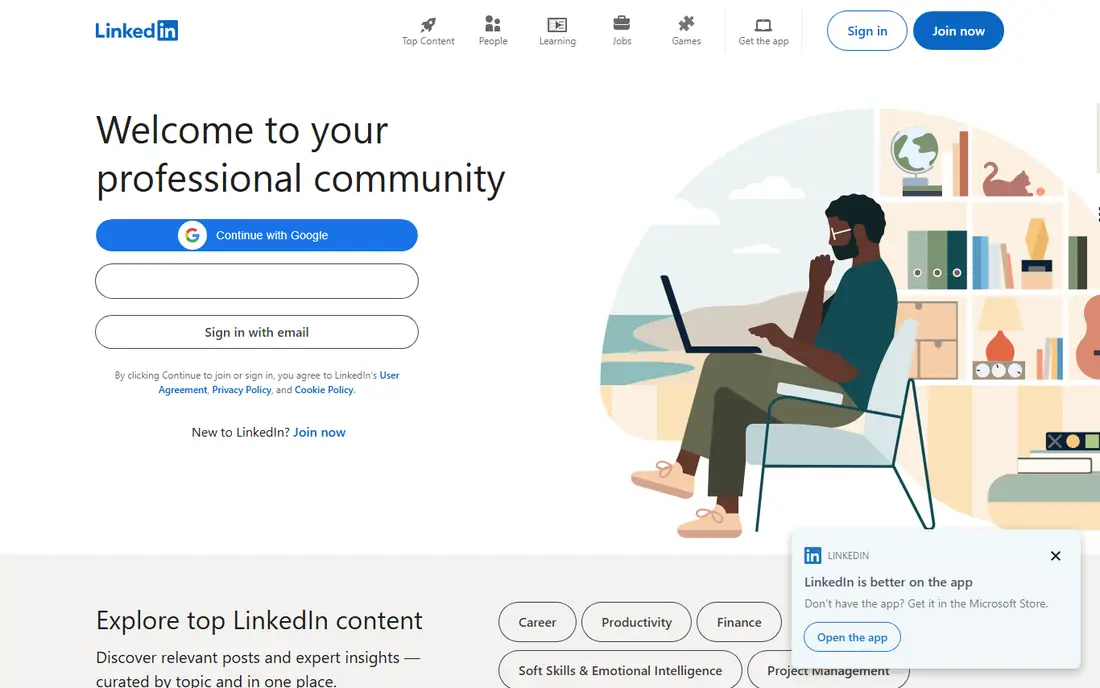
LinkedIn is the default starting point for most developer hiring because that is where employed engineers keep a current profile even when they are not job hunting. Its recruiter tools let hiring teams search by skill, experience, and location, and sponsored job posts put a vacancy in front of passive candidates who would never visit a job board. For companies hiring several roles at once, that reach is hard to replace.
The downside is noise. Popular developer roles attract many applicants, and a large share may not match the stack. Teams need a clear screening step and a posting that states salary range and remote policy plainly, or they will spend the budget on unqualified volume.
- Largest professional network
- Strong targeting and recruiter tools
- Candidates can apply with a profile
- High competition for attention
- Sponsored postings can get expensive
Indeed
Ideal for: High application volume
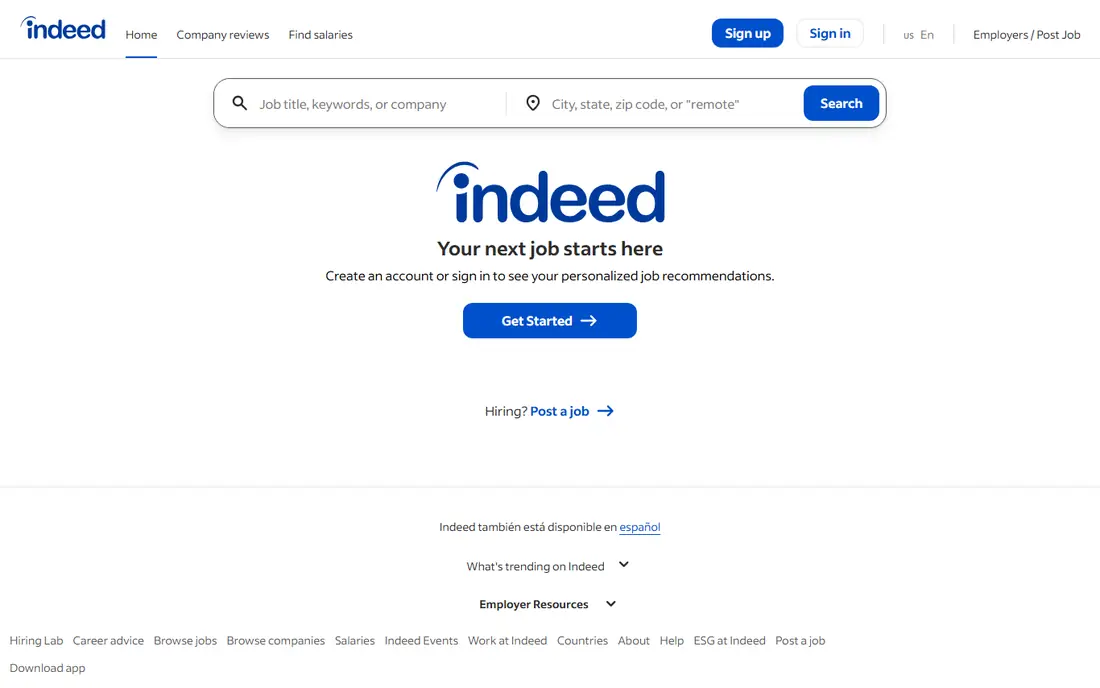
Indeed delivers applications at scale, which helps when a team needs to fill several developer roles quickly or is hiring in a competitive city. Free basic postings lower the barrier to testing a role, and sponsored posts can push a listing higher when applications slow down. Its assessment and screening questions add a first filter before a human reviews the pile.
The trade-off is quality control. Broad reach means many applicants who skim the requirements, so hiring managers should expect to screen carefully. Indeed works best as a volume channel paired with a sharper tech-focused board, rather than as the only source for a senior or specialist hire.
- Very large job seeker audience
- Free basic posting
- Sponsored options to boost visibility
- Volume includes many weak matches
- Screening takes more time
Dice
Ideal for: Tech-only candidates
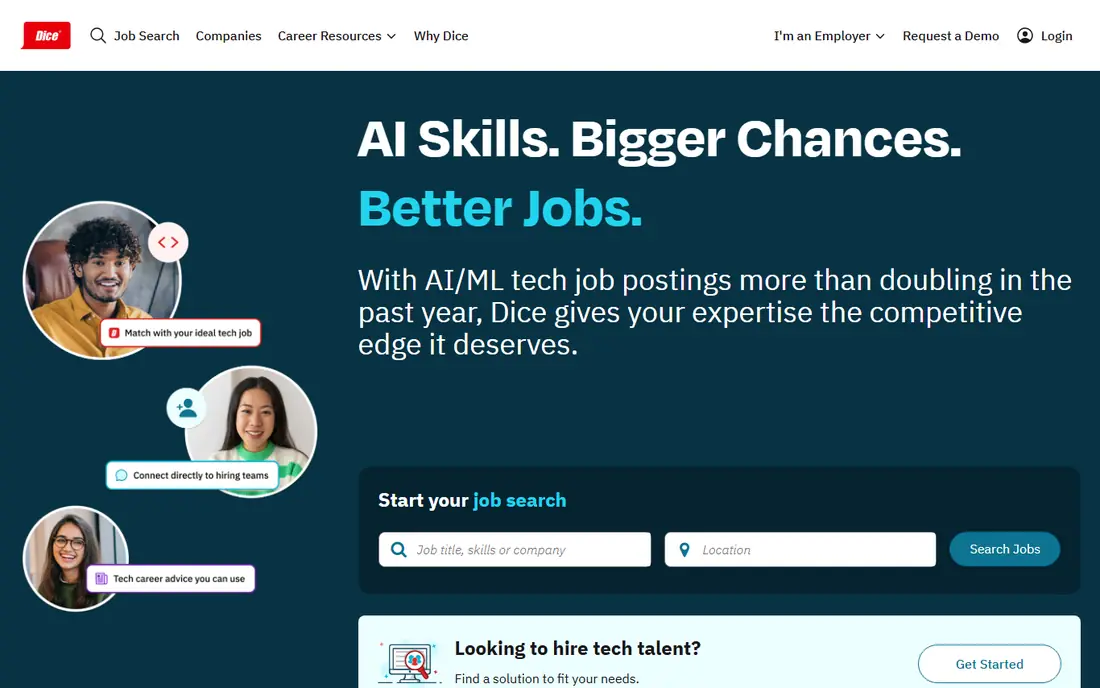
Dice has served tech hiring for years, and its audience is the point: everyone browsing is in technology, so a posting for a backend engineer does not compete with unrelated roles. Its search tools filter by specific skills, certifications, and experience, which shortens the path to a shortlist. Dice also publishes tech career content that keeps its audience engaged between job searches.
Its reach is strongest in the United States, so international hiring needs a second channel. Pricing is also employer-grade rather than casual, which suits companies hiring regularly more than a one-off poster. For steady tech hiring, Dice remains one of the most efficient boards available.
- Audience is tech professionals
- Skill-based search
- Tech career content draws candidates
- US-focused reach
- Pricing is geared to employers, not casual posters
Wellfound
Ideal for: Startup hiring
Wellfound, formerly AngelList Talent, is built for startup hiring. Companies can post jobs for free, and candidates browse with salary and equity expectations visible, which cuts down on mismatched conversations. The pool leans toward engineers who actively want startup work, including early-stage and remote roles, so a small team can attract strong applicants without a large recruiting budget.
Larger companies and very senior specialist searches may find the pool thinner. Wellfound is also less useful for non-tech roles, though that hardly matters when the vacancy is for a developer. For startups, it is the first place we would post.
- Free basic job posting
- Startup-minded candidate pool
- Salary transparency features
- Skews toward startups, not enterprise roles
- Smaller pool for very senior specialists
Hired
Ideal for: Vetted tech candidates
Hired flips the usual flow: vetted engineers set their preferences and salary expectations, then employers request interviews with matches. That structure saves screening time, since candidates have already passed an initial vetting step and have stated what they will accept. For teams hiring mid-level to senior engineers, the quality of the first conversation tends to be higher than on open boards.
The pool is smaller than LinkedIn or Indeed, and coverage varies by city and specialty. Hired works best as a complement to a broad posting strategy, used for roles where a few strong candidates matter more than a large pile of applications.
- Candidates are screened before matching
- Salary-first matching
- Employer fee model
- Smaller candidate pool than broad boards
- Availability varies by market
Arc
Ideal for: Remote developers
Arc specializes in remote developer hiring, with vetting and matching for full-time and freelance engineers. Companies describe the role and stack, and Arc surfaces developers who have been screened for skill and remote readiness. That is valuable for distributed teams that cannot easily assess candidates across time zones on their own.
Arc is not the right channel for an office-only role in one city, since its strength is global remote talent. Its fee model also means costs land on successful hires rather than postings, which suits teams that prefer paying for outcomes over paying for listings.
- Focus on remote engineering talent
- Vetting and matching support
- Global candidate pool
- Remote-only focus limits local hiring
- Fees apply on successful hires
ZipRecruiter
Ideal for: Fast distribution
ZipRecruiter takes one job posting and distributes it across a network of job boards, then uses matching to surface candidates to employers. For a team that wants speed and does not want to manage five separate listings, that distribution is convenient. Its alerts also notify employers when strong matches appear, which helps when hiring moves fast.
The audience is broad, so a niche posting such as a Rust systems engineer will still need a tech-specific board alongside it. The free trial is useful for testing, but teams should watch the renewal terms. As a distribution layer, ZipRecruiter is practical and low friction.
- Distributes one posting to many boards
- Candidate matching alerts
- Easy posting flow
- Broad audience means mixed fit for specialist roles
- Trial converts to a paid plan
Glassdoor
Ideal for: Employer brand plus jobs
Glassdoor combines job listings with the company reviews and salary information that developers read before applying. Posting there puts a vacancy in front of candidates at the exact moment they are researching an employer, which helps companies with a good reputation stand out. Its employer branding tools also let teams respond to reviews and present culture and benefits clearly.
The catch is that the review side needs attention. A company with unanswered negative reviews will feel that drag on every posting, and posting fees are employer-grade. For teams that already manage their employer brand, Glassdoor turns that work into a hiring channel.
- Job postings sit beside company reviews and salary data
- Strong brand visibility for candidates researching employers
- Posting costs add up
- Review content needs active employer management
How we picked these
We compared official feature pages, pricing pages, and employer documentation for job platforms, focusing on where developers actually look, how candidates are screened, and what each platform costs to use. We favored platforms with a clear tech audience or a proven distribution model, and we noted where a platform serves a niche, such as startups or remote hiring, rather than every employer.
What to check before you post
Write the posting before choosing the platform. Salary range, tech stack, remote policy, and interview steps should be stated plainly, because developers filter on those details first and vague posts attract weak applications on every board. Then match the platform to the role: broad boards for volume, tech boards for specialist skills, and startup boards for early-stage teams.
Track source quality, not just application count. A board that sends twenty strong candidates beats one that sends two hundred weak ones, and that difference only shows up if you record where hires came from. Finally, set a response time goal: developers move fast in a competitive market, and slow replies lose candidates no matter where the posting lives.
One more factor worth weighing is how the option you choose will feel after the first month, not just on day one. A tool or service that looks strong in a demo can become a burden if setup is fiddly, support is slow, or everyday tasks take more clicks than they should. That is why we suggest using a trial with your real workload, your real data, and the people who will actually use it every day. Watch for friction in the first week, since that friction rarely disappears on its own. Also consider what happens when your needs change: can you upgrade, downgrade, or leave without losing your work? A flexible option that grows with you is usually worth more than a slightly cheaper one that locks you into a plan you will outgrow. Finally, talk to at least one current user if you can, since a short honest conversation often reveals more than a polished sales page.
Frequently asked questions
Where should a startup post a developer vacancy first?
Wellfound is the natural first post for startups, since posting is free and the audience wants startup work. Add LinkedIn for reach once the role is live, and Dice if the stack is specialist.
Is LinkedIn or Indeed better for developer hiring?
LinkedIn is better for reaching passive, employed engineers and for recruiter-led search. Indeed is better for sheer application volume and for filling several roles quickly. Most teams use both and judge them on hire quality, not clicks.
Do developers care about salary transparency in postings?
Yes, strongly. Postings that state a salary range and remote policy tend to attract better-matched applicants and fewer wasted conversations. Platforms like Wellfound and Hired build that transparency into the flow, which is part of their appeal.
How much does it cost to advertise a developer vacancy?
Costs vary widely, from free basic postings on Wellfound and Indeed to employer-grade subscriptions on Dice and LinkedIn. Check the current pricing page before budgeting, since sponsored visibility and recruiter seats change the total quickly.
Should a company use a niche board or a broad board?
Use both for most roles. Broad boards supply volume and passive candidates, while niche boards like Dice or Arc supply pre-filtered tech talent. For a senior or specialist role, the niche board often delivers the hire even though the broad board delivers more applications.
What is the first step when choosing best platforms to advertise developer vacancies?
Start by writing down what you need the product or service to do, how many people will use it, and what budget you can sustain for a year. That short brief makes comparisons far easier, since you can test each option against the same requirements instead of being swayed by the longest feature list. Then run a trial of your top two or three choices with real tasks, and pick the one your team actually enjoys using, since adoption matters as much as features.