Best Predictive Pricing Software in 2026: 8 Tools Compared

- 1
 PricefxB2B firms that want full price optimizationVisit
- 2
 PROSLarge firms that need AI pricing at scaleVisit
- 3
 ZilliantB2B firms focused on price guidance in CRMVisit
- 4
 VendavoManufacturers and distributors with complex pricingVisit
- 5
 PricemoovRetailers and distributors that want price optimization plus guardrailsVisit
- Pricefx stands out for b2b firms that want full price optimization, which makes it a strong starting point for that need.
- PROS stands out for large firms that need ai pricing at scale, which makes it a strong starting point for that need.
- Zilliant stands out for b2b firms focused on price guidance in crm, which makes it a strong starting point for that need.
- Vendavo stands out for manufacturers and distributors with complex pricing, which makes it a strong starting point for that need.
- Prices and free plans vary widely across this list, so check the vendor pricing page for your team size or usage before you commit.
Please note: This article is for general information only and is not financial advice. Pricing decisions affect margins and revenue, so test models carefully and speak to a qualified professional before you rely on them.
Quick comparison
| Product | Ideal for | Price from | Free version | |
|---|---|---|---|---|
| Pricefx | B2B firms that want full price optimization | See website | No | Visit |
| PROS | Large firms that need AI pricing at scale | See website | No | Visit |
| Zilliant | B2B firms focused on price guidance in CRM | See website | No | Visit |
| Vendavo | Manufacturers and distributors with complex pricing | See website | No | Visit |
| Pricemoov | Retailers and distributors that want price optimization plus guardrails | See website | No | Visit |
 Omnia Retail | Retailers that want dynamic pricing and market data | See website | No | Visit |
 BlackCurve | Smaller retailers that want affordable price optimization | See website | No | Visit |
 PriceEdge | B2B firms that want cloud price management | See website | No | Visit |
The best predictive pricing software
We compared official feature pages, pricing pages, app store listings, privacy policies, and public reviews to build this list, and we focused on tools that truly fit best predictive pricing software rather than general tools with a passing connection. The eight options below cover different budgets, team sizes, and priorities, so start with the best-for notes and read the full write-up for any tool that matches your situation.
Pricefx
Ideal for: B2B firms that want full price optimization
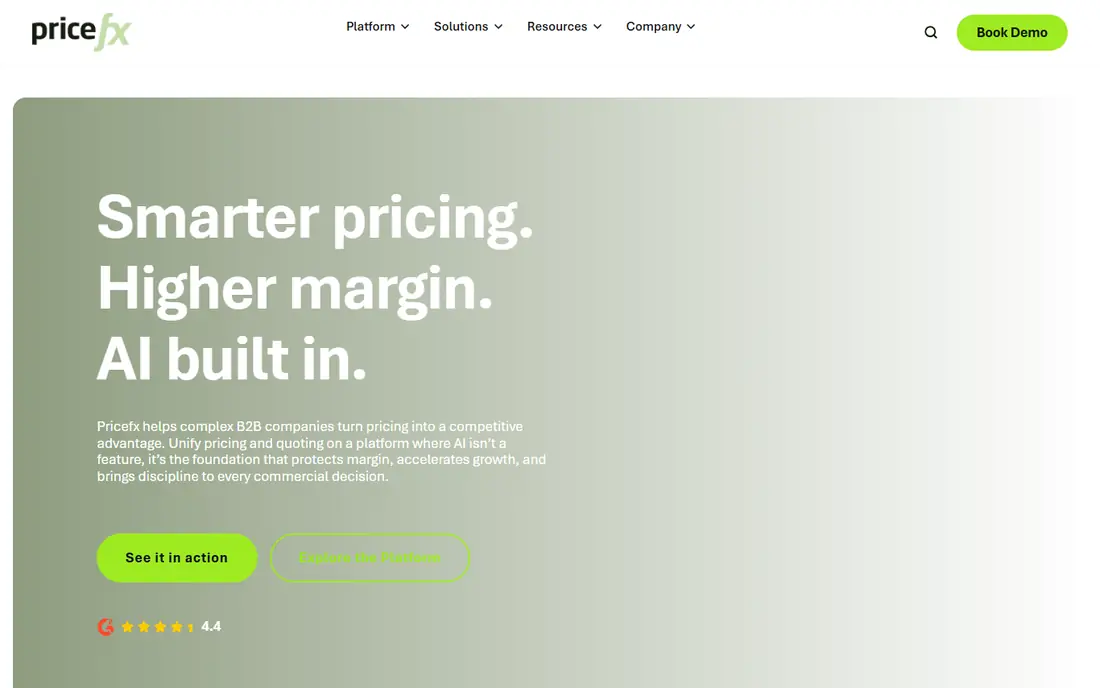
Pricefx offers price optimization, quoting, and rebate management for B2B companies, especially manufacturers and distributors. Its models suggest prices based on costs, customer value, and market data, and guardrails keep quotes inside approved margins. That control matters when sales teams discount freely.
Pricefx is enterprise software with quote-based pricing, and it works best when a company has pricing staff to own it. For B2B firms whose margins leak through discounting, the optimization and guardrail tools are the core value. Plan time for data cleanup and model tuning.
Before you commit, check the current pricing page and trial terms for your team size, since plans change and the right tier depends on how many people will actually use the tool daily.
- Price optimization, CPQ, and rebate tools
- Strong for B2B manufacturing
- Enterprise pricing
- Implementation needs pricing expertise
PROS
Ideal for: Large firms that need AI pricing at scale
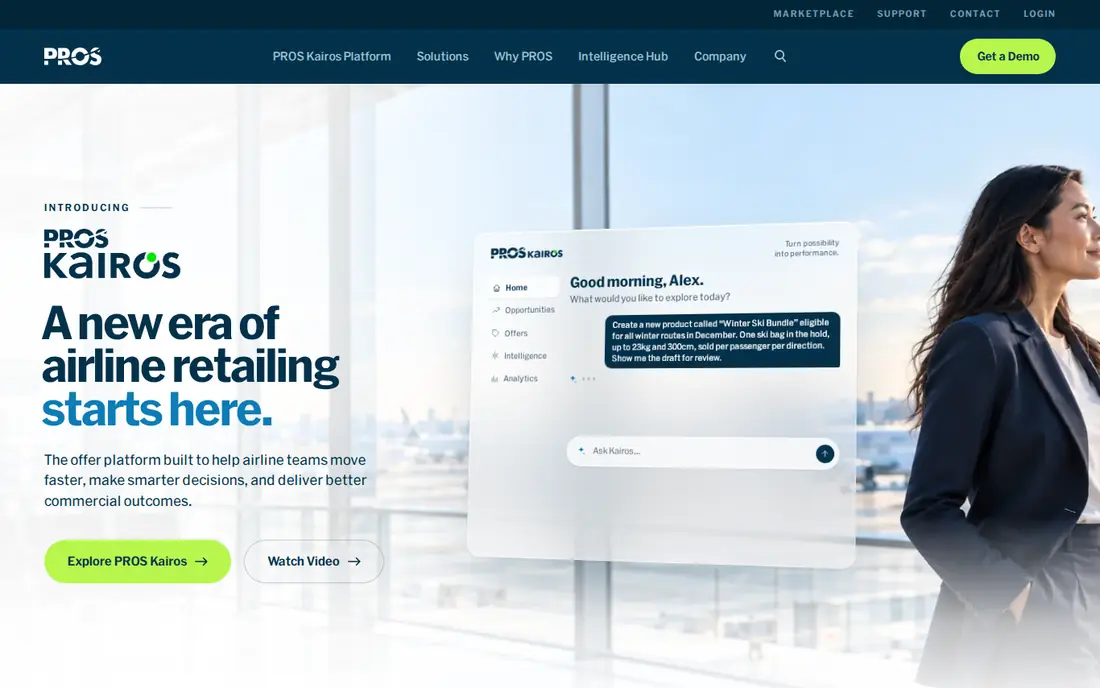
PROS brings AI-driven price optimization to B2B companies and travel firms, with models that weigh demand, costs, and customer segments. Its science team and analytics depth suit large firms with complex price lists and many products. Airlines and manufacturers use it to set prices that protect margin while staying competitive.
The trade-off is enterprise scale and cost. Smaller firms will find PROS heavy, and implementation needs data and pricing expertise. For large firms where small price changes move millions, the model depth justifies the investment.
Before you buy, run a short trial with your real data and your real workflow, since a demo with sample data hides the friction points that matter once the whole team is involved.
- AI price optimization for B2B and travel
- Strong science and analytics
- Enterprise pricing and implementation
- Best for large firms
Zilliant
Ideal for: B2B firms focused on price guidance in CRM
Zilliant puts price guidance where salespeople work, inside CRM and quoting tools. Reps see recommended prices, discount floors, and deal scores as they quote, which reduces margin leakage without slowing deals. It suits distributors and manufacturers whose pricing problems live in the sales process.
Value depends on CRM use. If reps do not work in CRM, guidance goes unseen, and enterprise pricing needs a quote. For B2B firms with CRM-based selling, Zilliant guidance is practical and measurable. Track win rates and margins before and after rollout.
Before you decide, confirm integration with the tools you already use and check what support hours and onboarding help are included, since those details matter more than a feature list once you are live.
- Price guidance inside sales workflows
- Strong for distributors and manufacturers
- Enterprise pricing
- Value depends on CRM adoption
Vendavo
Ideal for: Manufacturers and distributors with complex pricing
Vendavo serves manufacturers and distributors with complex pricing, including agreements, rebates, and channel pricing. Its tools manage price lists, optimize margins, and guide deals, all in one platform. That breadth suits firms whose pricing spans contracts, distributors, and direct sales.
Vendavo is enterprise software, so implementation and pricing reflect that. Smaller firms may find it more than they need. For complex B2B pricing, the combination of management, optimization, and rebate handling in one system stands out.
Before you commit, ask for a quote that covers every user, module, and add-on you need, and compare that total against at least one other tool on this list for the same scope.
- Price management and optimization for complex B2B
- Rebate and deal tools
- Enterprise scope
- Implementation is a project
Pricemoov
Ideal for: Retailers and distributors that want price optimization plus guardrails
Pricemoov gives retailers and distributors price management, AI-driven optimization, and margin guardrails in one platform. Teams centralize price lists, set approval workflows and margin floors, then let the system recommend and apply price changes based on demand and competitor signals. Deployment is designed to take weeks rather than months.
The focus is retail and distribution, so pure B2B manufacturers may find less fit. Pricing is quote-based. For retailers that need optimization without a long enterprise rollout, Pricemoov is a practical, modern pick. Start with your most competitive categories and expand from there.
Before you commit, check the current pricing page and trial terms for your team size, since plans change and the right tier depends on how many people will actually use the tool daily.
- Price management, AI optimization, and margin guardrails
- Fast deployment
- Retail and distribution focus
- Pricing requires a quote
Omnia Retail
Ideal for: Retailers that want dynamic pricing and market data
Omnia Retail combines competitor data, dynamic pricing, and margin rules for retailers and brands. Merchandisers can set strategies per category, such as matching a key competitor or holding a margin floor, and the system reprices accordingly. That mix of automation and control suits retailers balancing competitiveness with profit.
Omnia is retail-focused, so B2B firms should look at Pricefx or Vendavo instead. Pricing is quote-based. For retailers that reprice often, the category strategies and competitor data make pricing a managed process rather than a weekly scramble.
Before you buy, run a short trial with your real data and your real workflow, since a demo with sample data hides the friction points that matter once the whole team is involved.
- Dynamic pricing, competitor data, and margin rules for retailers
- Retail and e-commerce focus
- Pricing requires a quote
BlackCurve
Ideal for: Smaller retailers that want affordable price optimization
BlackCurve gives smaller e-commerce retailers price optimization, competitor tracking, and repricing rules at a lower price point than enterprise tools. It suits shops that need to watch competitors and adjust prices without hiring a pricing team. Rules keep margins protected while prices move.
The vendor is smaller and enterprise depth is lighter, so large retailers may need more. For small and mid-size online stores, BlackCurve offers a practical entry into data-driven pricing. Check integration with your e-commerce platform before buying.
Before you decide, confirm integration with the tools you already use and check what support hours and onboarding help are included, since those details matter more than a feature list once you are live.
- Affordable pricing tools for e-commerce
- Competitor tracking and rules
- Smaller vendor
- Less enterprise depth than PROS or Pricefx
PriceEdge
Ideal for: B2B firms that want cloud price management
PriceEdge offers cloud-based price management and optimization for B2B firms, with tools for price lists, agreements, and margin analysis. Its setup is more straightforward than larger enterprise platforms, which suits mid-size manufacturers and distributors. Teams can manage prices centrally instead of in spreadsheets.
Breadth is less than Vendavo or Pricefx, and the vendor is smaller. For mid-size B2B firms that need solid price management without enterprise complexity, PriceEdge is a sensible middle ground. Confirm your pricing workflows fit in a trial.
Before you commit, ask for a quote that covers every user, module, and add-on you need, and compare that total against at least one other tool on this list for the same scope.
- Cloud price management and optimization for B2B
- Straightforward setup
- Smaller vendor
- Breadth less than Vendavo or Pricefx
How we picked these
We started from the topic itself and looked for products that genuinely serve it, not tools that mention it in passing. For each candidate we checked the vendor's own feature and pricing pages, app store listings where relevant, privacy and security pages, and public user reviews, and we dropped any product we could not verify as real and available in October 2026.
We then compared the remaining tools on fit for the stated need, pricing transparency, free or trial options, ease of adoption, and honest weaknesses. Every list below mixes well-known leaders with strong smaller options, and every write-up names a real trade-off, since no tool is best for every team.
Using price models without losing control
Start with clean cost and transaction data. Pricing models are only as good as the costs, discounts, and sales history fed into them, so audit those before buying. A model built on messy discount data will recommend prices that repeat past mistakes.
Next, set guardrails before you automate. Margin floors, competitor matching limits, and approval rules for large discounts keep automation safe. Let the system reprice low-risk products first and keep key accounts or flagship products under human review.
Finally, measure margin and win rate together. Price changes that raise sales but cut margin are not wins, and higher margins with collapsing volume are not either. Track both weekly, review model recommendations monthly, and adjust rules as markets change.
Frequently asked questions
What is predictive pricing software?
It uses data on costs, demand, competitors, and customer behavior to recommend prices that balance sales and margin. Instead of guessing or copying competitors, firms set prices from models and guardrails.
How is it different from dynamic pricing?
Dynamic pricing changes prices often, sometimes automatically. Predictive pricing is the intelligence behind those changes, forecasting demand and elasticity so price moves are planned rather than reactive.
Do small retailers need predictive pricing?
Small shops with a few products may not, but online retailers with large catalogs or strong competition benefit from tools like BlackCurve or Pricemoov. Start with your most competitive products.
Can pricing software hurt margins?
Yes, if rules are wrong. Bad competitor data or missing cost data can drive prices too low. Guardrails, margin floors, and human review for key products prevent costly mistakes.
How long before pricing software pays off?
Results depend on data quality and catalog size. Retailers often see effects within weeks on repriced categories, while B2B firms need months for models, adoption, and deal data to mature.