Best prepaid phone company in 2026: 7 Options Compared

- 1
 Mint Mobilebudget buyers prepaying for savingsVisit
- 2
 Visiblesimple unlimited prepaidVisit
- 3
 Cricket WirelessAT&T network prepaid with storesVisit
- 4
 Metro by T-MobileT-Mobile prepaid with store supportVisit
- 5
 Boost Mobilebudget prepaid with wide retail presenceVisit
- Prepaid plans use major networks, so coverage is often the same as postpaid.
- Data deprioritization can slow speeds at busy times on cheaper plans.
- Multi-month prepayment lowers the monthly price but locks money in.
- Phone deals are thinner on prepaid, so buying a phone outright often works better.
- Check data allowances against real use, since overage policies vary.
Quick comparison
| Product | Ideal for | Price from | Free version | |
|---|---|---|---|---|
| Mint Mobile | budget buyers prepaying for savings | See website | No | Visit |
| Visible | simple unlimited prepaid | See website | No | Visit |
| Cricket Wireless | AT&T network prepaid with stores | See website | No | Visit |
| Metro by T-Mobile | T-Mobile prepaid with store support | See website | No | Visit |
| Boost Mobile | budget prepaid with wide retail presence | See website | No | Visit |
 US Mobile | flexible prepaid plans | See website | No | Visit |
 Tello Mobile | light users wanting custom plans | See website | No | Visit |
The best prepaid phone companies
Prepaid phone plans cut the contract and the credit check, and they often cost far less than postpaid plans for the same coverage. The trade-off is usually deprioritization during congestion and fewer phone financing deals. We compared prepaid carriers on price, data allowances, network, and plan flexibility. The seven options below cover major-network prepaid brands and independent value carriers.
Mint Mobile
Ideal for: budget buyers prepaying for savings
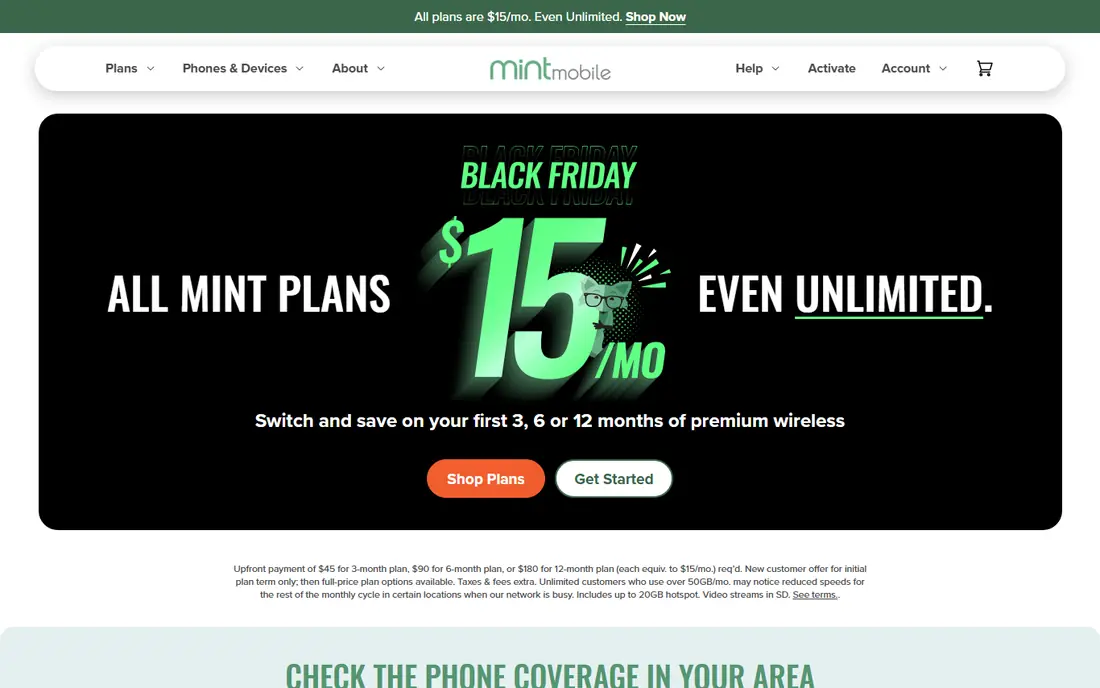
For buyers weighing the options, Mint Mobile stands out for budget buyers prepaying for savings. Mint Mobile suits budget buyers happy to prepay for months at a time. Its prices undercut most rivals for moderate data use.
The honest catch is this: bulk prepayment locks money in, and support is online only. That matters most when budgets or timelines are tight, so weigh it against the strengths above. On pricing, the listing shows See website with a free option of No. If that trade-off works for you, Mint Mobile is a sensible shortlist pick, and if it does not, the other options in this list cover the same need from a different angle. Before you commit, confirm the current price and terms on the official site, since plans change and the details that matter most are the ones in force on the day you buy.
- Low prepaid prices
- T-Mobile network
- Simple plans
- Bulk prepayment for best prices
- Support is online only
Visible
Ideal for: simple unlimited prepaid
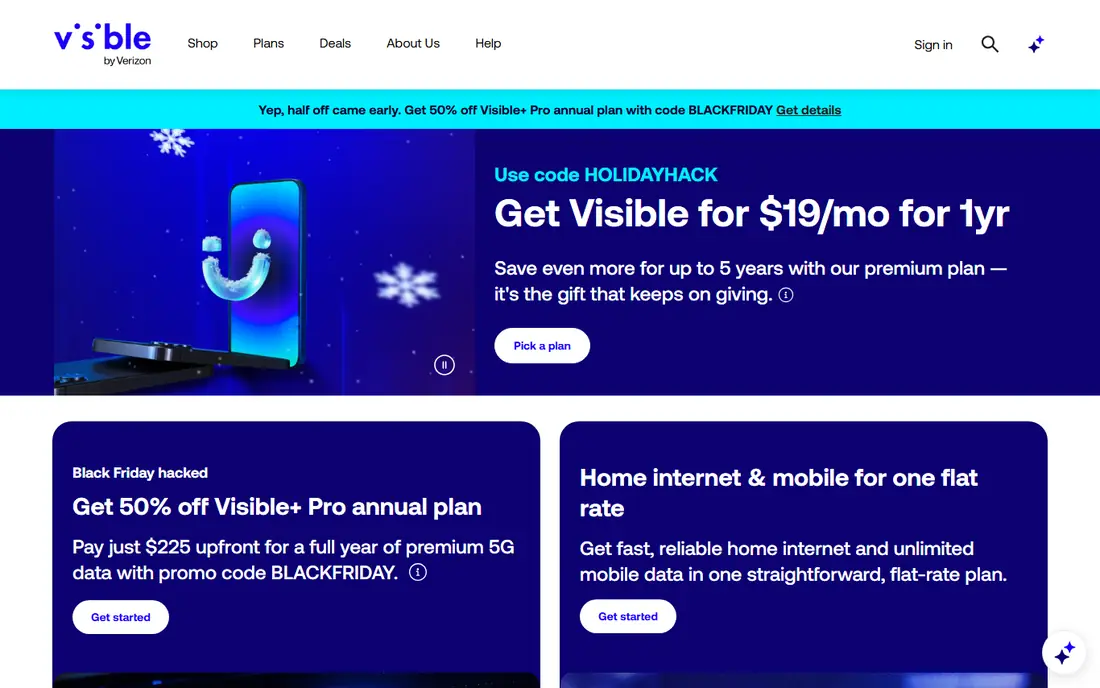
Our view of Visible starts with its fit for simple unlimited prepaid. Visible suits buyers who want simple unlimited prepaid on Verizon. Its plans avoid the complexity of tiered data.
There is a trade-off to note: congestion can slow speeds, and family options are limited. Even so, the core fit for simple unlimited prepaid remains clear, and the price picture is See website with a free option of No. Readers who can live with that drawback will get solid value here, while readers who cannot should look at the next entries for a closer match. Before you commit, confirm the current price and terms on the official site, since plans change and the details that matter most are the ones in force on the day you buy.
- Simple unlimited plans
- Verizon network
- No contracts
- Speeds can slow during congestion
- Single-line focus
Cricket Wireless
Ideal for: AT&T network prepaid with stores
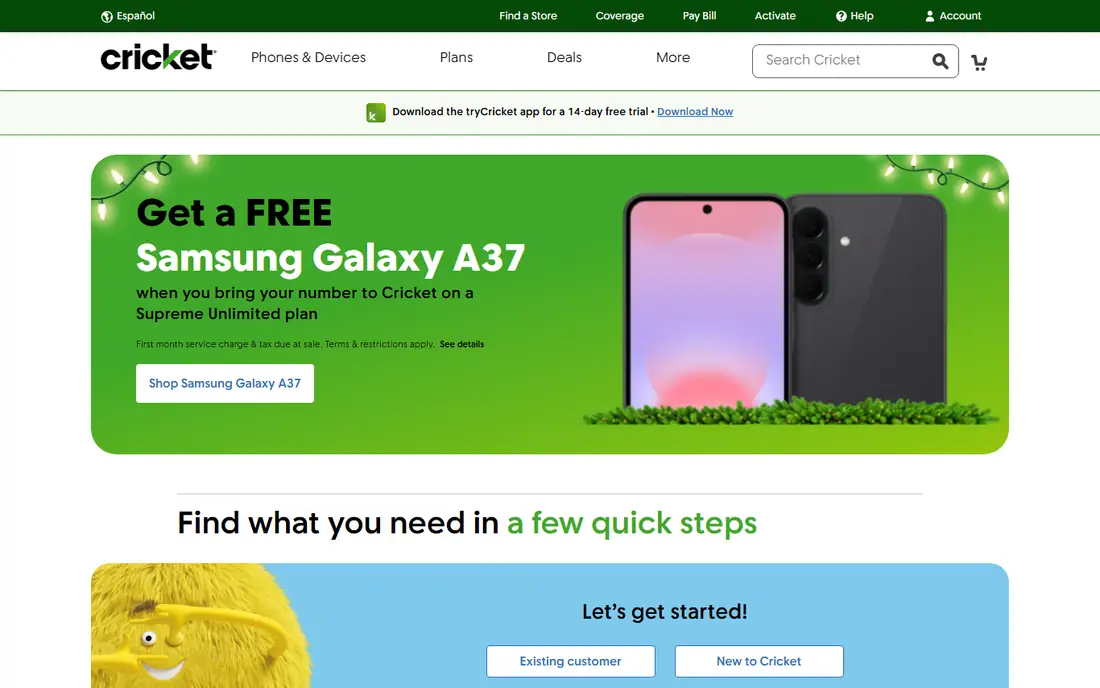
Cricket Wireless earns its place here mainly because it suits AT&T network prepaid with stores. Cricket suits buyers who want AT&T coverage with store help. Its family discounts help multi-line households.
No option is perfect, and here the limit is that speed caps on some plans limit heavy users. Set against a starting price of See website and a free option of No, that is a fair deal for many buyers but not for everyone. Put Cricket Wireless on your shortlist when AT&T network prepaid with stores matters more than that drawback, and move on when it does not. Before you commit, confirm the current price and terms on the official site, since plans change and the details that matter most are the ones in force on the day you buy.
- AT&T network
- Store support
- Family plan discounts
- Data speeds capped on some plans
- Prices are mid-range
Metro by T-Mobile
Ideal for: T-Mobile prepaid with store support
If T-Mobile prepaid with store support is the priority, Metro by T-Mobile deserves a close look. Metro by T-Mobile suits buyers who want T-Mobile prepaid with stores. Its store network helps buyers who prefer in-person help.
The drawback worth knowing is that mid-range prices mean cheaper online rivals exist. With pricing listed as See website and a free option of No, the value case still holds for the right buyer. Our advice is simple: compare this one directly with two others in this list before deciding, since small differences in terms can change the total cost. Before you commit, confirm the current price and terms on the official site, since plans change and the details that matter most are the ones in force on the day you buy.
- T-Mobile network
- Store locations
- Perks on some plans
- Prices are mid-range
- Perks change over time
Boost Mobile
Ideal for: budget prepaid with wide retail presence
Boost Mobile is a strong match for budget prepaid with wide retail presence. Boost Mobile suits budget buyers who want retail availability. Its low-cost plans cover light and moderate users.
Watch out for one thing: network changes over time mean checking current coverage matters. Beyond that, the offer is priced at See website with a free option of No, which keeps it competitive for budget prepaid with wide retail presence. It will suit buyers who accept that limit, and it will frustrate buyers who need more flexibility, so check the details before committing. Before you commit, confirm the current price and terms on the official site, since plans change and the details that matter most are the ones in force on the day you buy.
- Low-cost plans
- Wide retail presence
- Multi-network options
- Network and plan details have changed over time
- Support varies
US Mobile
Ideal for: flexible prepaid plans
We include US Mobile for readers focused on flexible prepaid plans. US Mobile suits buyers who want flexible prepaid tiers. Its network choice and data tiers fit varied use.
The main weakness is that support is smaller, and device compatibility checks matter. Pricing sits at See website with a free option of No, so the decision comes down to priorities. For flexible prepaid plans, this remains a credible choice, but readers who rank flexibility first may prefer a different entry in this list. Before you commit, confirm the current price and terms on the official site, since plans change and the details that matter most are the ones in force on the day you buy.
- Flexible data tiers
- Network choice
- Competitive pricing
- Support is smaller than majors
- Device checks needed
Tello Mobile
Ideal for: light users wanting custom plans
Among the options we compared, Tello Mobile fits light users wanting custom plans well. Tello suits light users who want a custom plan. Its build-your-own approach avoids paying for unused data.
One limitation stands out: its T-Mobile-only network and light-user focus limit heavy users. Given a starting price of See website and a free option of No, the overall package is still worth considering for light users wanting custom plans. Compare the terms side by side with at least one alternative, since the best choice often turns on a single detail. Before you commit, confirm the current price and terms on the official site, since plans change and the details that matter most are the ones in force on the day you buy.
- Custom talk and data combos
- Low prices
- No contracts
- T-Mobile network only
- Data allowances suit light users best
How we picked these
We compared official feature pages, pricing pages, app store listings, privacy policies, and public reviews for each option in this list. We kept only products that exist and work in October 2026 and that truly fit this topic, and we left out options that did not meet that bar even when they were well known. Where a price or free tier could not be confirmed on the vendor site, we wrote See website rather than guessing.
Our shortlist mixes established leaders with smaller options that serve a specific need well. That mix matters because the best-known name is not always the best fit for a given budget, team size, or use case. Use the comparison table to narrow the field, then read the full write-ups for the two or three options closest to your needs.
Choosing a prepaid phone company
What to check before you decide
Start with fit, not fame. Write down the one job this purchase must do, the budget you can sustain, and any must-have feature. Then check pricing pages, contract length, and what happens if you cancel. A cheaper headline price can cost more once fees, add-ons, or renewal terms are added.
How to compare the shortlist
Pick three options from this list and compare them on the same points: total cost over a year, ease of setup, support quality, and limits on the plan you would actually buy. Read recent public reviews for patterns, not single complaints, and confirm any claim that matters to you on the vendor site before paying.
Mistakes that cost time and money
The most common mistake is buying for a feature you will never use while missing a limit you will hit every week. Another is skipping the terms on renewals, refunds, and data handling. Take an hour to test the free plan or trial where one exists, and keep notes so the final choice rests on evidence, not marketing.
Frequently asked questions
How do I choose the best best prepaid phone company?
Start with the job you need done and the budget you can sustain, then compare three options on total cost, limits, and support. Free plans and trials help you test the fit before paying, and recent public reviews can reveal patterns worth checking on the vendor site.
Is there a free option for best prepaid phone company?
Some options in this list offer a free plan or trial, and the comparison table shows which ones do. Free tiers usually carry limits, so check what is included before relying on one for daily use.
How much should I expect to pay?
Costs vary with the plan, the features you need, and any usage-based fees, so treat the starting prices in this list as a starting point. Always check the vendor pricing page for the full fee schedule and renewal terms before committing.
What should I check before signing up?
Confirm pricing, contract length, cancellation terms, and support options on the official site. For services that handle personal or financial details, also read the privacy policy and check how your data is stored and shared.
Can I switch later if my first choice does not work out?
In most cases yes, but switching costs time and sometimes money, especially if data must move or a contract is involved. Ask about export options and exit terms before you commit, and keep a backup of anything important.