Best Private Messaging Apps in 2026: 8 Apps Compared

- Our pick for most people is Signal, because it balances price, features and ease of use for the widest group of readers.
- Free plans are real here, but the limits matter: check what Telegram and WhatsApp actually include before you commit.
- Prices in this guide come from vendor pricing pages and current comparisons checked in October 2026, and they can change, so confirm the plan on the vendor site before you buy.
- The best choice depends on your budget, your experience level and how much support you want, not on which brand is most famous.
Quick comparison
| Product | Ideal for | Price from | Free version | |
|---|---|---|---|---|
 Signal | Users who want strong encryption by default | Free | Yes | Visit |
 Telegram | Users who want large groups and channels | Free | Yes | Visit |
 WhatsApp | Users who want encrypted messaging with wide reach | Free | Yes | Visit |
 Session | Users who want messaging without a phone number | Free | Yes | Visit |
 Threema | Users who want paid, privacy-first messaging | See website | No | Visit |
 Wire | Businesses that want secure team messaging | See website | Free trial | Visit |
 Element | Users who want decentralised messaging | Free | Yes | Visit |
 Briar | Users who want messaging without central servers | Free | Yes | Visit |
The best Private Messaging Apps in 2026
We compared official feature pages, pricing pages, app store listings, privacy policies and public reviews to build this list for best private messaging apps. Every option below exists and works today, and each one earns its place for a different kind of reader. We did not claim hands-on testing we did not do; our comparison rests on the published material above, and we note the honest limits of each option as we go.
Signal
Ideal for: Users who want strong encryption by default
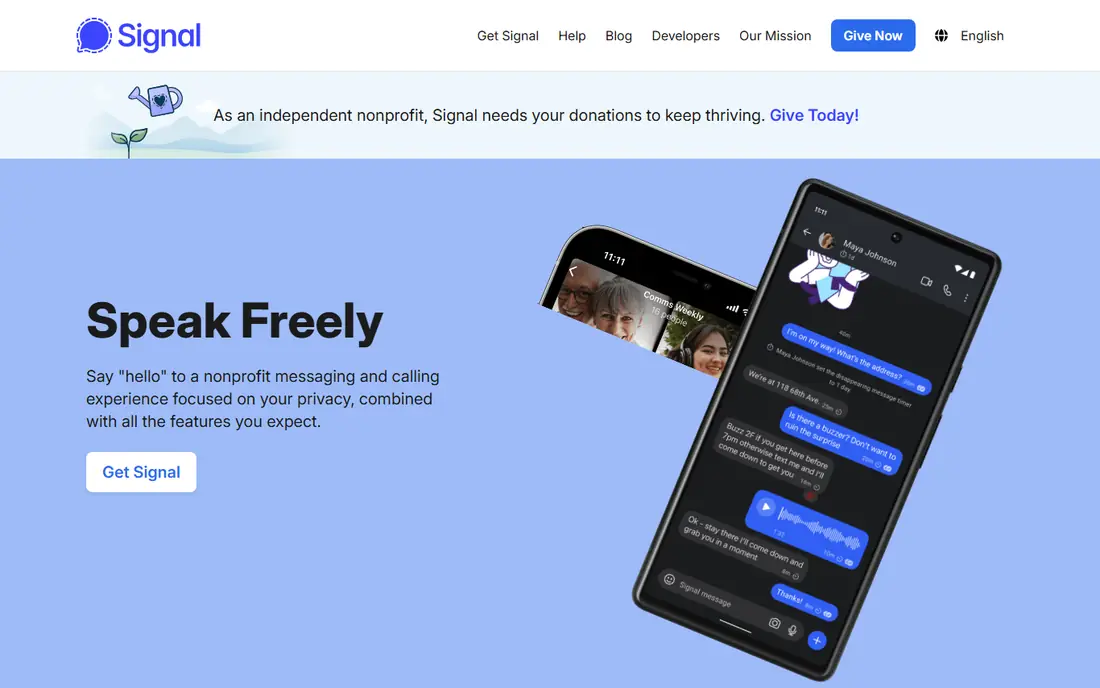
Here is the short version. Signal offers end-to-end encryption by default in an open source app with no ads, which suits users who want privacy without changing settings. It fits readers who want users who want strong encryption by default, and its published feature set matches that promise rather than trying to cover every possible use case at once. When we weighed it against the rest of this list, the balance of price, scope and support stood out for that group, and that is why it earned a place here. The price picture is free, with a free plan status of yes. The catch is reach: it needs a phone number and has fewer users than WhatsApp, so your contacts may not all be there. Before you sign up, check the current plan limits on the official site, because caps on users, usage or features are where most buyers get surprised after the first month, and a short trial will usually reveal them.
- End-to-end encryption by default
- Open source
- No ads
- Needs a phone number
- Fewer users than WhatsApp
Telegram
Ideal for: Users who want large groups and channels

Start here if you want the safe default. Telegram suits users who want large groups, channels and cloud sync, with bots and media sharing that go beyond simple messaging. It fits readers who want users who want large groups and channels, and its published feature set matches that promise rather than trying to cover every possible use case at once. When we weighed it against the rest of this list, the balance of price, scope and support stood out for that group, and that is why it earned a place here. The price picture is free, with a free plan status of yes. The catch is encryption defaults: secret chats are end-to-end encrypted, but ordinary chats are not, so check the chat type before sharing sensitive messages. Before you sign up, check the current plan limits on the official site, because caps on users, usage or features are where most buyers get surprised after the first month, and a short trial will usually reveal them.
- Large groups and channels
- Cloud sync
- Bots
- End-to-end encryption is not default for all chats
- Privacy settings need care
Ideal for: Users who want encrypted messaging with wide reach
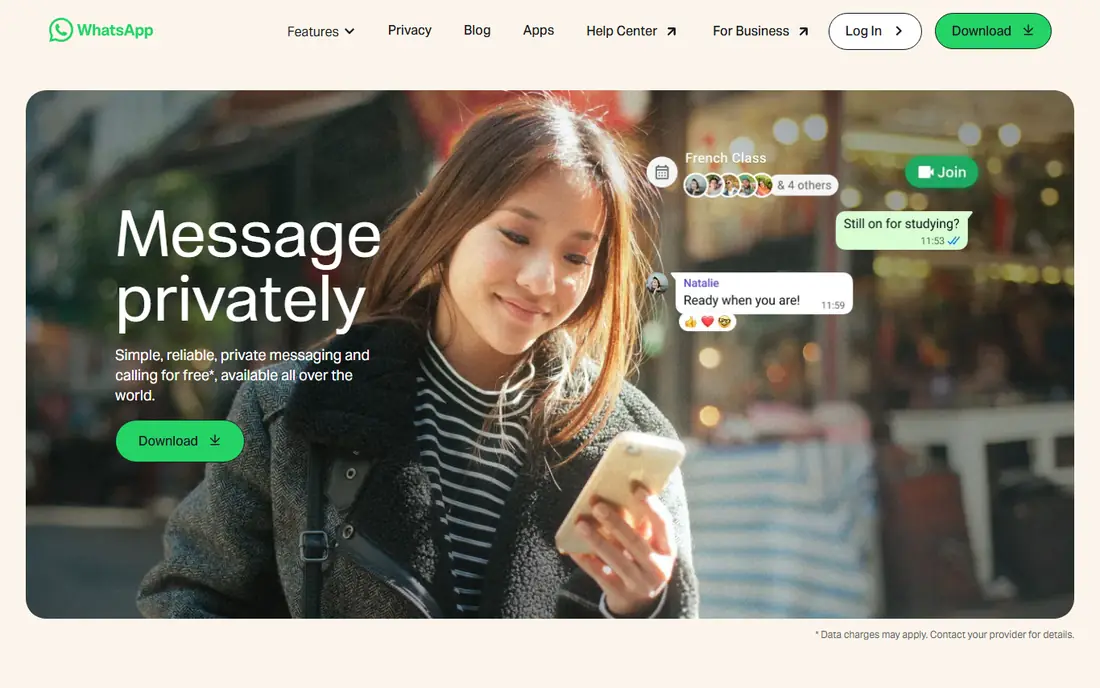
This one suits a specific kind of reader. WhatsApp offers end-to-end encryption by default with a huge user base, which suits users who want privacy and reach together. It fits readers who want users who want encrypted messaging with wide reach, and its published feature set matches that promise rather than trying to cover every possible use case at once. When we weighed it against the rest of this list, the balance of price, scope and support stood out for that group, and that is why it earned a place here. The price picture is free, with a free plan status of yes. The catch is ownership: Meta ownership and metadata handling concern some privacy users, so read the privacy policy if that matters to you. Before you sign up, check the current plan limits on the official site, because caps on users, usage or features are where most buyers get surprised after the first month, and a short trial will usually reveal them.
- End-to-end encryption by default
- Huge user base
- Voice and video calls
- Owned by Meta
- Metadata concerns some privacy users
Session
Ideal for: Users who want messaging without a phone number
Consider this if the top picks do not fit. Session offers messaging without a phone number, using onion routing, which suits users who want to avoid sharing a phone number to chat. It fits readers who want users who want messaging without a phone number, and its published feature set matches that promise rather than trying to cover every possible use case at once. When we weighed it against the rest of this list, the balance of price, scope and support stood out for that group, and that is why it earned a place here. The price picture is free, with a free plan status of yes. The catch is scale: the user base is smaller and delivery can be slower, so it suits privacy-first users rather than general chat. Before you sign up, check the current plan limits on the official site, because caps on users, usage or features are where most buyers get surprised after the first month, and a short trial will usually reveal them.
- No phone number needed
- Onion routing
- Open source
- Smaller user base
- Message delivery can be slower
Threema
Ideal for: Users who want paid, privacy-first messaging
A strong option for a narrower need. Threema is a paid, privacy-first messenger that does not need a phone number, with a Swiss privacy focus, which suits users who prefer paying for privacy. It fits readers who want users who want paid, privacy-first messaging, and its published feature set matches that promise rather than trying to cover every possible use case at once. When we weighed it against the rest of this list, the balance of price, scope and support stood out for that group, and that is why it earned a place here. The price picture is see website, with a free plan status of no. The catch is the paid model and smaller user base, so check whether your contacts will install it. Before you sign up, check the current plan limits on the official site, because caps on users, usage or features are where most buyers get surprised after the first month, and a short trial will usually reveal them.
- No phone number needed
- Swiss privacy focus
- Open source code parts
- Paid app
- Smaller user base
Wire
Ideal for: Businesses that want secure team messaging
Worth a close look before you decide. Wire offers end-to-end encrypted messaging with team features and business plans, which suits businesses that need secure internal chat. It fits readers who want businesses that want secure team messaging, and its published feature set matches that promise rather than trying to cover every possible use case at once. When we weighed it against the rest of this list, the balance of price, scope and support stood out for that group, and that is why it earned a place here. The price picture is see website, with a free plan status of free trial. The catch is consumer reach: it is business focused, so friends and family are less likely to already use it. Before you sign up, check the current plan limits on the official site, because caps on users, usage or features are where most buyers get surprised after the first month, and a short trial will usually reveal them.
- End-to-end encryption
- Team features
- Business plans
- Free tier is limited
- Smaller consumer base
Element
Ideal for: Users who want decentralised messaging
This belongs on the shortlist for a reason. Element is built on the decentralised Matrix protocol, with bridges to other services, which suits users who want control over their messaging server. It fits readers who want users who want decentralised messaging, and its published feature set matches that promise rather than trying to cover every possible use case at once. When we weighed it against the rest of this list, the balance of price, scope and support stood out for that group, and that is why it earned a place here. The price picture is free, with a free plan status of yes. The catch is technical feel: setup and server choice can confuse new users, so start with the default server first. Before you sign up, check the current plan limits on the official site, because caps on users, usage or features are where most buyers get surprised after the first month, and a short trial will usually reveal them.
- Decentralised Matrix protocol
- Bridges
- Open source
- Setup can feel technical
- User experience varies by server
Briar
Ideal for: Users who want messaging without central servers
Do not overlook this one. Briar offers peer-to-peer messaging that can work without central servers, even via Bluetooth and Wi-Fi when the internet is unavailable. It fits readers who want users who want messaging without central servers, and its published feature set matches that promise rather than trying to cover every possible use case at once. When we weighed it against the rest of this list, the balance of price, scope and support stood out for that group, and that is why it earned a place here. The price picture is free, with a free plan status of yes. The catch is Android only and a smaller user base, so it suits specific privacy and resilience needs rather than everyday chat. Before you sign up, check the current plan limits on the official site, because caps on users, usage or features are where most buyers get surprised after the first month, and a short trial will usually reveal them.
- Peer-to-peer messaging
- Works without internet via Bluetooth and Wi-Fi
- Open source
- Android only
- Smaller user base
- Delivery needs nearby peers or Tor
How we picked these
We started from official feature pages and pricing pages, then checked app store listings, privacy policies and public reviews to confirm each product still works and still fits the topic. Products that could not be verified, or that only partly matched the topic, were left out, even when they were well known. We favoured a mix of established leaders and strong smaller options, and we weighted price transparency, a usable free tier or trial, and honest limits more heavily than marketing claims. No product on this list paid for its place, and our pick for most people is the one we would suggest to a friend with ordinary needs and an ordinary budget.
Checking what encrypted really means
Start with the outcome you want, not with the brand you have heard of most. Encryption claims differ, so check whether encryption is default, what metadata is kept, and whether chats are backed up unencrypted. Write down the two or three features you will use every week, because a product that does those well is worth more than a product that does twenty things poorly. Then check the price for your actual usage, not the advertised starting price, since user counts, message volumes and storage limits change the bill quickly. Test your shortlist before you pay for a year in advance. A free tier or trial shows you the real interface, the real speed and the real limits, and it also shows you how support responds when you ask a question. Keep an eye on privacy and export options too, because a product that respects your data and lets you leave is usually a safer long term choice.
Frequently asked questions
What is the best best private messaging apps?
There is no single answer for everyone, because the right choice depends on your budget, your experience and the features you will actually use. Signal is our pick for most people, while Telegram is a strong alternative when the top pick does not fit. Compare the free tier, the plan limits and the support before you decide.
Is there a free best private messaging apps option?
Yes, several options in this guide offer a free tier or a free trial, but the limits vary a lot, so check what is included before you rely on it. Free plans often cap users, usage or key features, and the paid tier is where the full product lives. Start free, test with a real task, and upgrade only when the limit gets in your way.
How much does best private messaging apps cost?
Prices vary widely across this list, from free tiers to paid plans priced per user, per month or per transaction, so check the vendor pricing page for the current figure. We list starting prices where we could verify them and write See website where the price depends on your plan or volume. Always confirm the total cost, including any add-ons, before you buy.
How do I choose between these options?
Start with the job you need done, then shortlist two or three options that fit that job and ignore the rest. Test the shortlist with a real task, check the plan limits and the export options, and read recent public reviews for complaints about support or billing. The option that fits your daily routine is usually better than the one with the longest feature list.
What should I check before signing up?
Check the plan limits, the renewal and cancellation terms, the privacy policy and how your data can be exported. For business tools, also check user limits and support hours, and for consumer apps, check the permissions the app asks for. A careful ten minute check now can save a painful switch later.