Best Procurement Software to Streamline Payments in 2026: 8 Options Compared

- Tipalti leads for global supplier payments with tax compliance.
- Airbase and Ramp suit mid-market teams that want purchasing plus payments together.
- Coupa suits enterprises with complex, multi-entity payments.
- Check payment coverage by country and method before shortlisting.
Quick comparison
| Product | Ideal for | Price from | Free version | |
|---|---|---|---|---|
 Tipalti | global supplier payments with tax compliance | See website | No | Visit |
 Airbase | mid-market purchasing plus payments | See website | No | Visit |
 Ramp | US teams wanting free core spend plus payments | Free | Yes | Visit |
 Coupa | enterprises with complex multi-entity payments | See website | No | Visit |
 Brex | startups wanting cards plus bill payments | See website | No | Visit |
 Procurify | mid-sized firms needing budget control through payment | See website | No | Visit |
 Zip | teams whose bottleneck is intake before payment | See website | No | Visit |
 AvidXchange | mid-market firms automating supplier invoices and payments | See website | No | Visit |
The best procurement software to streamline payments
Procurement software that streamlines payments connects the purchase request to the invoice and the payment, so finance teams stop chasing approvals and suppliers stop chasing status. The best tools combine intake, approval, invoice matching, and payment rails. We compared platforms that cover that full chain.
Tipalti
Ideal for: global supplier payments with tax compliance
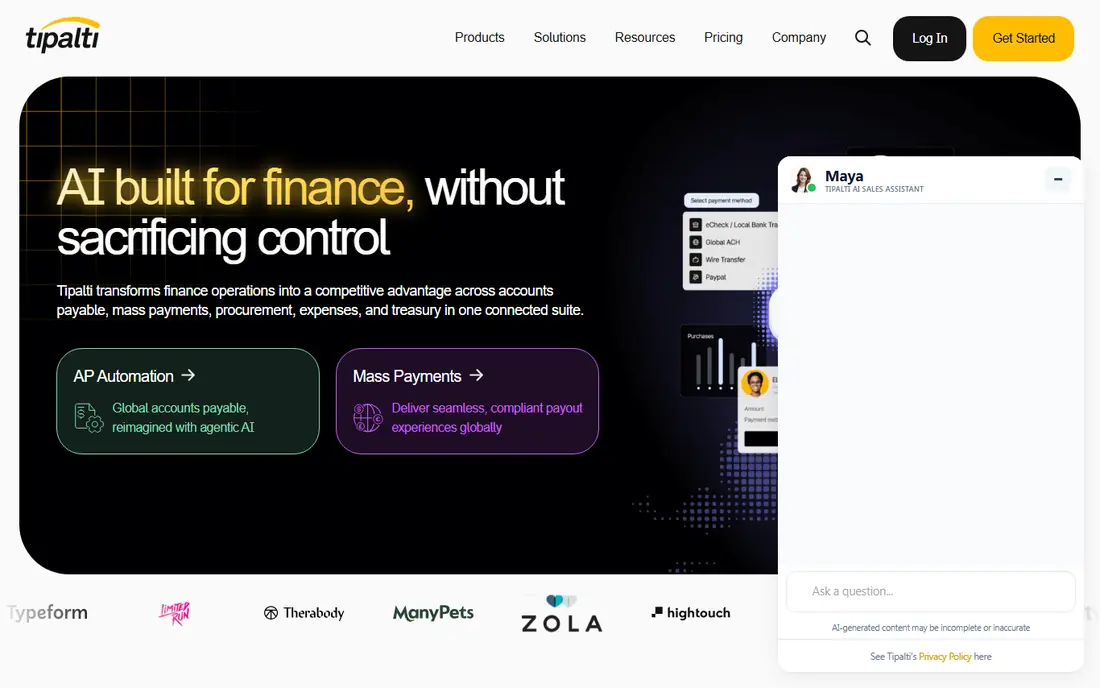
Tipalti automates supplier onboarding, tax compliance, invoice processing, and global payments across many countries and methods. It suits companies paying many suppliers internationally. Pricing is quoted and setup needs finance involvement. That focus makes it a practical match for global supplier payments with tax compliance. On pricing, the starting point is see website, and the free plan status is no. Its strengths include global payments and tax forms; supplier onboarding; ap automation. The trade-off to weigh is pricing by quote; implementation takes planning. We suggest checking the current plan limits on the vendor site before you commit, since tiers and trial terms change, and confirming that the plan you pick covers the seats, storage, or usage your team actually needs.
- Global payments and tax forms
- Supplier onboarding
- AP automation
- Pricing by quote
- Implementation takes planning
Airbase
Ideal for: mid-market purchasing plus payments
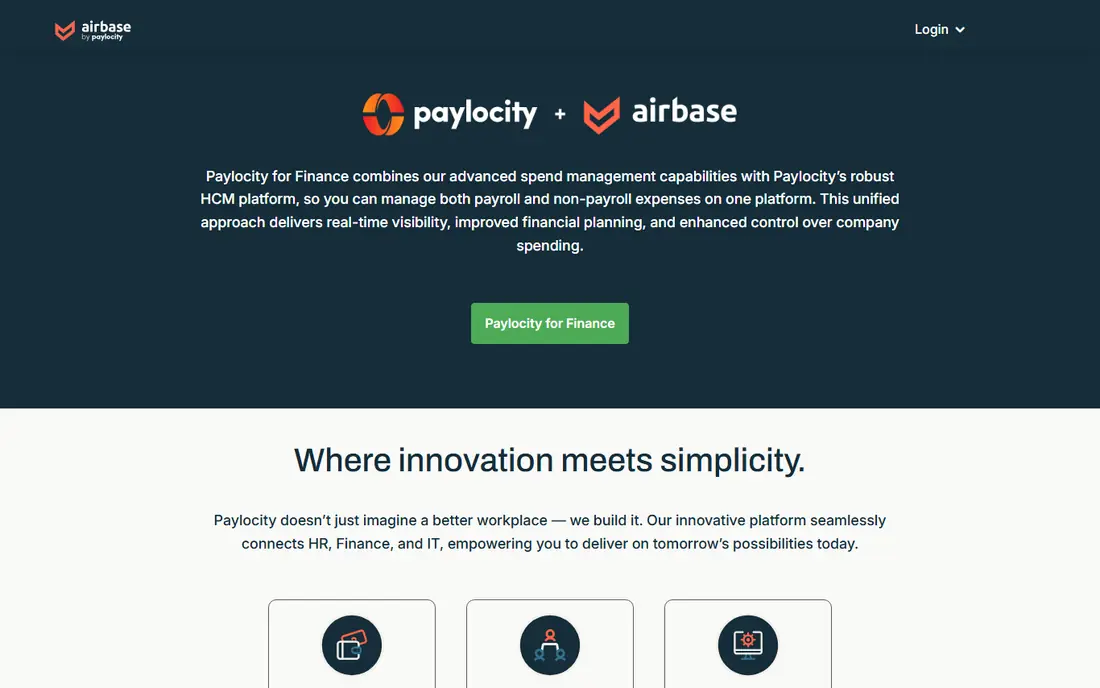
Airbase combines guided purchasing, bill payments, corporate cards, and expense approvals, so finance sees the full path from request to payment. It suits mid-market teams that want one approval trail. Check international payment coverage for your needs. That focus makes it a practical match for mid-market purchasing plus payments. On pricing, the starting point is see website, and the free plan status is no. Its strengths include guided purchasing; bill pay; cards and approvals in one flow. The trade-off to weigh is quote-based pricing; some payment features are us-focused. We suggest checking the current plan limits on the vendor site before you commit, since tiers and trial terms change, and confirming that the plan you pick covers the seats, storage, or usage your team actually needs.
- Guided purchasing
- Bill pay
- Cards and approvals in one flow
- Quote-based pricing
- Some payment features are US-focused
Ramp
Ideal for: US teams wanting free core spend plus payments
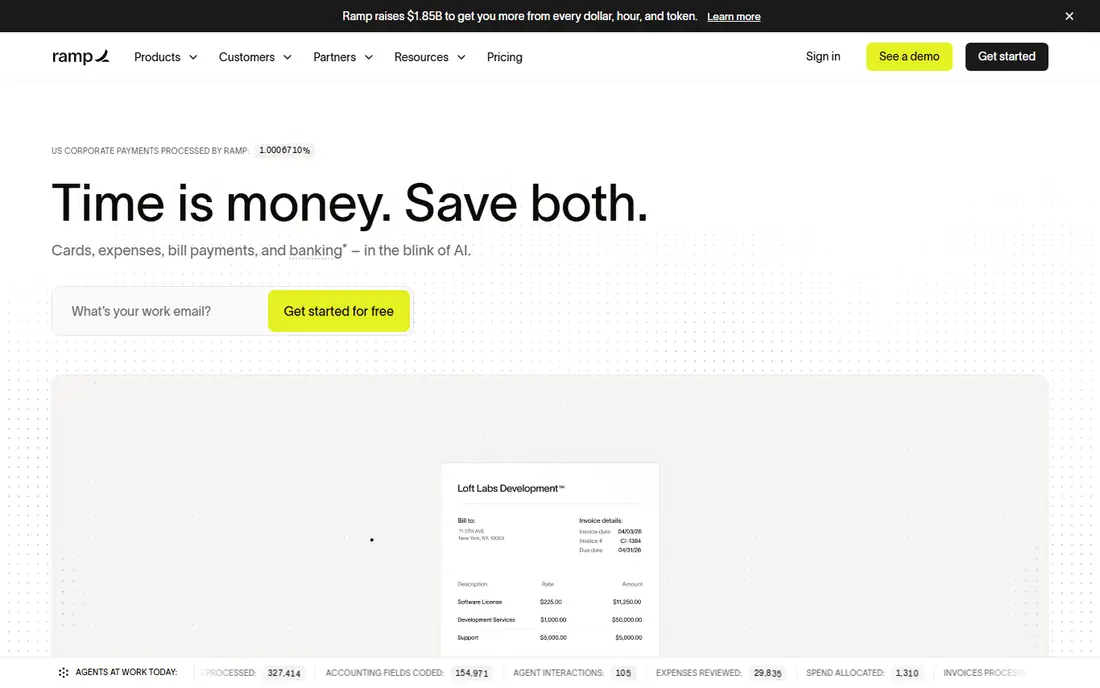
Ramp offers free corporate cards, bill pay, and expense management, with procurement workflows as a paid add-on. It suits US startups and mid-market teams that want spend control fast. Non-US payment coverage needs checking. That focus makes it a practical match for US teams wanting free core spend plus payments. On pricing, the starting point is free, and the free plan status is yes. Its strengths include free cards and bill pay; expense automation; accounting integrations. The trade-off to weigh is procurement add-ons are paid; some features are us-focused. We suggest checking the current plan limits on the vendor site before you commit, since tiers and trial terms change, and confirming that the plan you pick covers the seats, storage, or usage your team actually needs.
- Free cards and bill pay
- Expense automation
- Accounting integrations
- Procurement add-ons are paid
- Some features are US-focused
Coupa
Ideal for: enterprises with complex multi-entity payments
Coupa covers sourcing, procurement, invoicing, and payments for large, multi-entity companies with complex approval and compliance needs. It suits enterprises running a spend program at scale. Smaller firms will find it heavy. That focus makes it a practical match for enterprises with complex multi-entity payments. On pricing, the starting point is see website, and the free plan status is no. Its strengths include full source-to-pay; invoicing and payments; global scale. The trade-off to weigh is enterprise pricing; implementation takes months. We suggest checking the current plan limits on the vendor site before you commit, since tiers and trial terms change, and confirming that the plan you pick covers the seats, storage, or usage your team actually needs.
- Full source-to-pay
- Invoicing and payments
- Global scale
- Enterprise pricing
- Implementation takes months
Brex
Ideal for: startups wanting cards plus bill payments
Brex combines corporate cards, bill pay, and expense management for startups and growing companies. It suits teams that want fast spend tools with modern controls. Deep procurement workflows are thinner than specialist platforms. That focus makes it a practical match for startups wanting cards plus bill payments. On pricing, the starting point is see website, and the free plan status is no. Its strengths include corporate cards; bill pay; expense automation. The trade-off to weigh is some features are us-focused; procurement depth varies. We suggest checking the current plan limits on the vendor site before you commit, since tiers and trial terms change, and confirming that the plan you pick covers the seats, storage, or usage your team actually needs.
- Corporate cards
- Bill pay
- Expense automation
- Some features are US-focused
- Procurement depth varies
Procurify
Ideal for: mid-sized firms needing budget control through payment
Procurify tracks budgets live as requests move toward payment, with approvals and virtual cards for controlled spending. It suits finance teams whose main pain is budget overruns. Check payment options for your region. That focus makes it a practical match for mid-sized firms needing budget control through payment. On pricing, the starting point is see website, and the free plan status is no. Its strengths include live budget visibility; approvals; virtual cards. The trade-off to weigh is quote-based pricing; payment rails vary by region. We suggest checking the current plan limits on the vendor site before you commit, since tiers and trial terms change, and confirming that the plan you pick covers the seats, storage, or usage your team actually needs.
- Live budget visibility
- Approvals
- Virtual cards
- Quote-based pricing
- Payment rails vary by region
Zip
Ideal for: teams whose bottleneck is intake before payment
Zip streamlines intake and approvals before invoices reach AP, connecting to ERP and payment tools rather than replacing them. It suits teams where approval delays, not payment rails, cause the pain. Pair it with your AP and payment system. That focus makes it a practical match for teams whose bottleneck is intake before payment. On pricing, the starting point is see website, and the free plan status is no. Its strengths include fast intake and approvals; erp and ap connections; spend visibility. The trade-off to weigh is quote-based pricing; not a payment rail itself. We suggest checking the current plan limits on the vendor site before you commit, since tiers and trial terms change, and confirming that the plan you pick covers the seats, storage, or usage your team actually needs.
- Fast intake and approvals
- ERP and AP connections
- Spend visibility
- Quote-based pricing
- Not a payment rail itself
AvidXchange
Ideal for: mid-market firms automating supplier invoices and payments
AvidXchange automates supplier invoice capture, approval, and payment for mid-market companies, with a large supplier network. It suits finance teams drowning in paper and manual AP work. Its focus is strongest in the US market. That focus makes it a practical match for mid-market firms automating supplier invoices and payments. On pricing, the starting point is see website, and the free plan status is no. Its strengths include ap automation; supplier payments; invoice capture. The trade-off to weigh is pricing by quote; us focus. We suggest checking the current plan limits on the vendor site before you commit, since tiers and trial terms change, and confirming that the plan you pick covers the seats, storage, or usage your team actually needs.
- AP automation
- Supplier payments
- Invoice capture
- Pricing by quote
- US focus
How we picked these
We compared official feature pages, pricing pages, app store listings, privacy policies, and public reviews for each option, and we kept only products that exist, work in October 2026, and fit the topic directly. We did not claim hands-on testing we did not do, and we left out products whose fit was weak even when they are well known in a nearby category. Price and plan details change often, so where a vendor does not publish a clear price we write See website rather than guessing. The notes below reflect what each vendor publishes about its own product, not a promise about results for any single team.
How to choose procurement software for payments
Map the full payment journey, from request and approval through purchase order, goods receipt, invoice matching, and payment, and find where delays actually happen. If approvals stall, intake tools help most, while if invoice matching stalls, AP automation matters more. A tool that fixes only one stage will leave the bottleneck in place. Check payment methods and countries, including ACH, wire, card, and local rails, plus tax forms, fraud controls, and approval limits. Ask how supplier onboarding works, since slow onboarding delays first payments, and confirm accounting integration so payments reconcile without manual entry. Start with one supplier group and one payment type, measure cycle time and error rates, and expand only when reconciliation is clean. Publish payment timing expectations to suppliers, since predictable payments reduce status inquiries more than any portal feature.
Frequently asked questions
What does procurement software do for payments?
It links purchase requests, approvals, purchase orders, and invoices to payments, so finance can match, approve, and pay in one flow with an audit trail. It reduces manual entry, duplicate payments, and approval delays.
What is three-way matching?
Three-way matching checks that the purchase order, goods receipt, and supplier invoice agree on items, quantities, and prices before payment. It catches errors and overbilling before money leaves the company.
Can procurement software pay suppliers globally?
Some tools can, including Tipalti, with local payment methods and tax compliance across many countries. Check coverage for your supplier countries and payment methods before buying.
Do I need separate AP software?
Many procurement platforms include AP automation, while others pair with a dedicated AP tool. If invoice volume is high or matching is complex, a dedicated AP layer may still help.
How much does payment-focused procurement software cost?
Pricing varies from free core spend platforms to quoted enterprise suites, with some vendors charging per payment or per supplier. Model your transaction volume, not just seats, when comparing.