Best Product Development Software in 2026: 8 Options Compared

- 1
 Jira Product DiscoveryTeams already using Jira for deliveryVisit
- 2
 ProductboardProduct teams focused on discovery and prioritizationVisit
- 3
 AhaProduct teams that want full roadmapping and strategyVisit
- 4
 MondayTeams that want flexible visual product planningVisit
- 5
 ClickUpTeams that want tasks, docs, and goals in one placeVisit
- Productboard and Aha are strongest for dedicated product discovery and roadmaps.
- Jira Product Discovery suits teams already using Jira for delivery.
- Monday, ClickUp, Notion, and Asana suit smaller teams that want flexible planning.
- Pick the tool that matches your delivery workflow, not only your roadmap style.
Quick comparison
| Product | Ideal for | Price from | Free version | |
|---|---|---|---|---|
| Jira Product Discovery | Teams already using Jira for delivery | See website | Free trial | Visit |
| Productboard | Product teams focused on discovery and prioritization | See website | Free trial | Visit |
| Aha | Product teams that want full roadmapping and strategy | See website | Free trial | Visit |
| Monday | Teams that want flexible visual product planning | See website | Free trial | Visit |
| ClickUp | Teams that want tasks, docs, and goals in one place | See website | Yes | Visit |
 Notion | Small teams that want docs and planning together | See website | Yes | Visit |
 Asana | Teams that want clear task ownership and timelines | See website | Yes | Visit |
 Roadmunk | Teams that want clear visual roadmaps fast | See website | Free trial | Visit |
The best product development software
Product development software helps teams turn ideas into a planned, testable product, covering discovery, roadmaps, tasks, and feedback. The best tools keep the plan visible to the whole team without turning every update into a meeting.
We compared discovery and roadmap tools with general work tools that many product teams adapt. If you need deep discovery work, a dedicated tool will help. If you need simple task tracking, a general tool may be enough.
Jira Product Discovery
Ideal for: Teams already using Jira for delivery
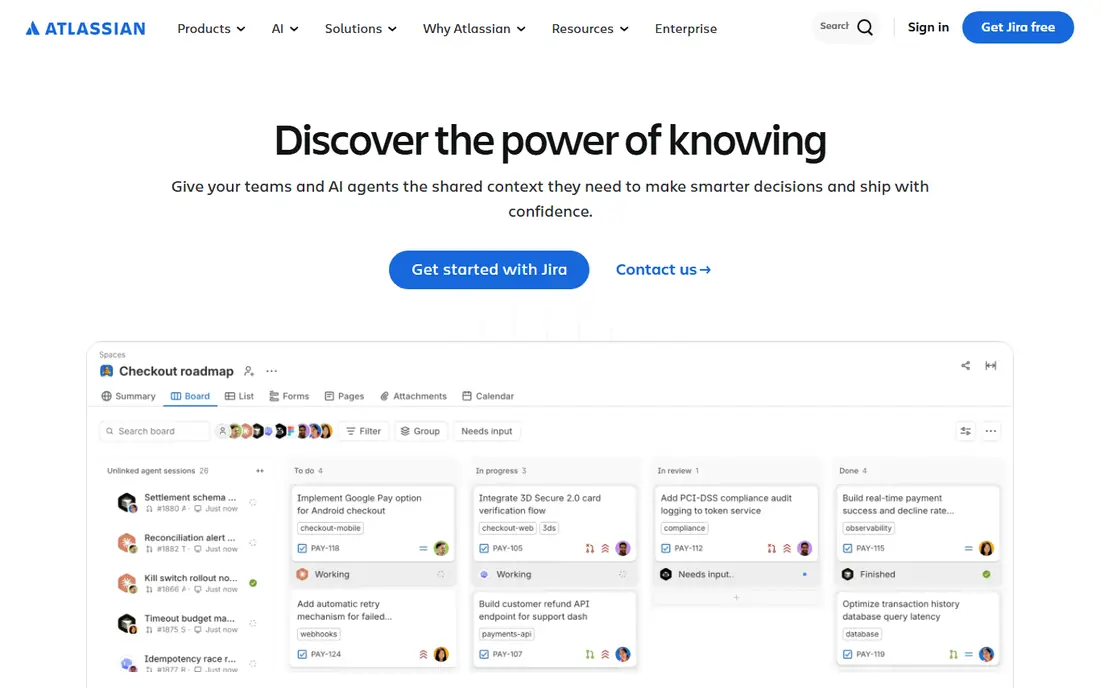
Jira Product Discovery is a strong fit for teams already using Jira for delivery. Its strengths include strong Jira links, clear idea prioritization, and good roadmaps. That combination is why it earned a place on this list, and why it may suit you if those points match your priorities. When we lined up the official feature pages, this one stood out for the balance it strikes between depth and ease of use. Pricing is listed as see website, and the free plan is free trial, so check the vendor page for the current details that apply to your team size and region. The trade-off is worth naming plainly. Watch for best inside Atlassian workflow, and for setup needs planning. If neither of those is a deal breaker for you, Jira Product Discovery is a sensible shortlist candidate, and a short trial with a real task will tell you more than any feature list can.
- Strong Jira links
- Clear idea prioritization
- Good roadmaps
- Best inside Atlassian workflow
- Setup needs planning
Productboard
Ideal for: Product teams focused on discovery and prioritization
Productboard is a strong fit for product teams focused on discovery and prioritization. Its strengths include clear customer insight tools, strong prioritization, and good roadmaps. That combination is why it earned a place on this list, and why it may suit you if those points match your priorities. On paper, the feature set looks broad, and the pricing page is the place to confirm what sits behind each tier before you commit. Pricing is listed as see website, and the free plan is free trial, so check the vendor page for the current details that apply to your team size and region. The trade-off is worth naming plainly. Watch for pricing is by quote for larger teams, and for learning curve for new teams. If neither of those is a deal breaker for you, Productboard is a sensible shortlist candidate, and a short trial with a real task will tell you more than any feature list can.
- Clear customer insight tools
- Strong prioritization
- Good roadmaps
- Pricing is by quote for larger teams
- Learning curve for new teams
Aha
Ideal for: Product teams that want full roadmapping and strategy
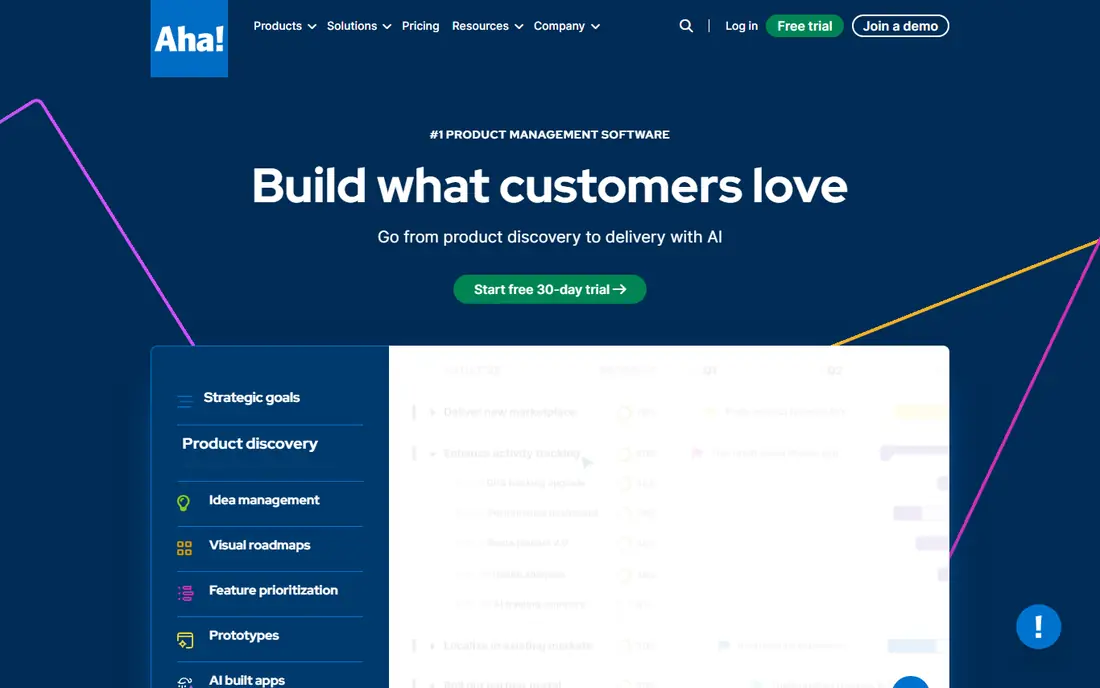
Aha is a strong fit for product teams that want full roadmapping and strategy. Its strengths include broad roadmap views, strong strategy tools, and good idea management. That combination is why it earned a place on this list, and why it may suit you if those points match your priorities. We paid close attention to how clearly the vendor explains limits, because a tool that hides its limits tends to disappoint later. Pricing is listed as see website, and the free plan is free trial, so check the vendor page for the current details that apply to your team size and region. The trade-off is worth naming plainly. Watch for pricing can be high, and for breadth needs onboarding time. If neither of those is a deal breaker for you, Aha is a sensible shortlist candidate, and a short trial with a real task will tell you more than any feature list can.
- Broad roadmap views
- Strong strategy tools
- Good idea management
- Pricing can be high
- Breadth needs onboarding time
Monday
Ideal for: Teams that want flexible visual product planning
Monday is a strong fit for teams that want flexible visual product planning. Its strengths include flexible boards and views, simple automation, and good templates. That combination is why it earned a place on this list, and why it may suit you if those points match your priorities. Compared with the other options here, this one takes a narrower approach, and that focus is either a strength or a limit depending on your needs. Pricing is listed as see website, and the free plan is free trial, so check the vendor page for the current details that apply to your team size and region. The trade-off is worth naming plainly. Watch for per-user pricing adds up, and for deep product features need setup. If neither of those is a deal breaker for you, Monday is a sensible shortlist candidate, and a short trial with a real task will tell you more than any feature list can.
- Flexible boards and views
- Simple automation
- Good templates
- Per-user pricing adds up
- Deep product features need setup
ClickUp
Ideal for: Teams that want tasks, docs, and goals in one place
ClickUp is a strong fit for teams that want tasks, docs, and goals in one place. Its strengths include broad task and doc tools, flexible views, and useful free tier. That combination is why it earned a place on this list, and why it may suit you if those points match your priorities. The public reviews we read tended to praise the core workflow while noting the same trade-offs we list below. Pricing is listed as see website, and the free plan is yes, so check the vendor page for the current details that apply to your team size and region. The trade-off is worth naming plainly. Watch for breadth can feel busy, and for setup needs discipline. If neither of those is a deal breaker for you, ClickUp is a sensible shortlist candidate, and a short trial with a real task will tell you more than any feature list can.
- Broad task and doc tools
- Flexible views
- Useful free tier
- Breadth can feel busy
- Setup needs discipline
Notion
Ideal for: Small teams that want docs and planning together
Notion is a strong fit for small teams that want docs and planning together. Its strengths include flexible docs and databases, simple sharing, and useful free tier. That combination is why it earned a place on this list, and why it may suit you if those points match your priorities. For a team that wants to start small, the free tier or trial is worth testing with a real task before any wider rollout. Pricing is listed as see website, and the free plan is yes, so check the vendor page for the current details that apply to your team size and region. The trade-off is worth naming plainly. Watch for roadmap features need manual setup, and for large plans need care. If neither of those is a deal breaker for you, Notion is a sensible shortlist candidate, and a short trial with a real task will tell you more than any feature list can.
- Flexible docs and databases
- Simple sharing
- Useful free tier
- Roadmap features need manual setup
- Large plans need care
Asana
Ideal for: Teams that want clear task ownership and timelines
Asana is a strong fit for teams that want clear task ownership and timelines. Its strengths include clear task tracking, good timeline views, and simple collaboration. That combination is why it earned a place on this list, and why it may suit you if those points match your priorities. We looked at integrations and support options as well, since a tool rarely works alone in a real workflow. Pricing is listed as see website, and the free plan is yes, so check the vendor page for the current details that apply to your team size and region. The trade-off is worth naming plainly. Watch for product discovery features are lighter, and for paid tiers for advanced use. If neither of those is a deal breaker for you, Asana is a sensible shortlist candidate, and a short trial with a real task will tell you more than any feature list can.
- Clear task tracking
- Good timeline views
- Simple collaboration
- Product discovery features are lighter
- Paid tiers for advanced use
Roadmunk
Ideal for: Teams that want clear visual roadmaps fast
Roadmunk is a strong fit for teams that want clear visual roadmaps fast. Its strengths include clear roadmap visuals, simple sharing, and good stakeholder views. That combination is why it earned a place on this list, and why it may suit you if those points match your priorities. The documentation and help pages gave us a good sense of how much setup this one needs in the first week. Pricing is listed as see website, and the free plan is free trial, so check the vendor page for the current details that apply to your team size and region. The trade-off is worth naming plainly. Watch for narrower than full suites, and for now part of a wider platform. If neither of those is a deal breaker for you, Roadmunk is a sensible shortlist candidate, and a short trial with a real task will tell you more than any feature list can.
- Clear roadmap visuals
- Simple sharing
- Good stakeholder views
- Narrower than full suites
- Now part of a wider platform
How we picked these
We compared official feature pages, pricing pages, app store listings, privacy policies, and public reviews for each option. We kept only products that exist and work in October 2026 and that truly fit the topic, and we left out options whose pricing or core features we could not verify. Where a price was unclear, we wrote See website rather than guessing a number. We also weighed who each product is really for, how clear its limits are, and how it handles privacy and support. Our pick for most people is the option that balances those points best, not the one with the longest feature list. Your shortlist should still reflect your budget, your team size, and the one task you need done every week.
How to narrow the list to one winner
Start with the decision you need to make each week. If the hard part is choosing what to build next, a discovery tool with scoring and customer insight will help more than another task board. If the hard part is delivery, a work tool with clear ownership is the better pick. Keep the roadmap honest. A roadmap that shows every idea as a promise will disappoint stakeholders when priorities change. Use themes and time horizons where you can, mark uncertain items clearly, and review the plan on a fixed rhythm. Connect feedback to the plan. Collect customer notes, support themes, and usage signals in the same place as your roadmap, so prioritization reflects real evidence rather than the loudest request. A tool that makes that link easy will age better than one that only draws timelines.
Frequently asked questions
What is product development software?
It is software that helps teams discover ideas, prioritize features, plan roadmaps, and track delivery. Some tools cover the full chain, while others focus on one stage.
Which tool is best for product development?
Productboard and Aha are strong dedicated choices, while Jira Product Discovery suits Atlassian teams. Monday, ClickUp, and Notion suit smaller teams that want flexibility.
Do I need a dedicated roadmap tool?
You do if stakeholders need clear roadmap views and you prioritize from customer insight often. For a small team, a general work tool with a timeline view may be enough.
How much does it cost?
Most tools here offer a free tier or trial, with paid plans priced per user or by quote. Check the vendor site for the tier that covers your team size.