If you need integration with SAP business applications, SAP Product Content Management is the first tool to look at here. For a different need, Contentserv Product Experience Platform covers AI-fueled product experience management and Pimcore covers integrated data and experience management. The remaining 3 options are covered below with prices and limits.
Choosing product information management systems for enterprise usually comes down to price, fit and limits. This Ainotely guide sets 6 tools side by side on those three points, with the facts kept short and checkable.
Key takeaways
This list starts with SAP Product Content Management, which is built for integration with SAP business applications.
None of the 6 tools, from SAP Product Content Management to Stibo Systems STEP, has a free plan, so budget for a subscription or use a trial.
Stibo Systems STEP is the one to check for Master data management and governance.
No starting price is shown for any of the 6 tools, SAP Product Content Management and Stibo Systems STEP included, so plan time for sales calls.
One limit worth knowing about Pimcore: wide feature set may need configuration.
Best for: Integration with SAP business applications
Choose SAP Product Content Management for integration with SAP business applications. SAP Product Content Management is an option within SAP's portfolio of business applications and technology. It is built to help enterprises handle product content as part of their broader SAP environment.
Watch-outs: Could need SAP expertise to implement.
In practice, choose it when deep integration with SAP applications is a key requirement for your product data management. In practice, implementation generally needs SAP expertise. Check the vendor site for SAP Product Content Management pricing; none is listed in this comparison. Free access: Not stated.
Contentserv Product Experience Platform targets AI-fueled product experience management. The system is suited for enterprises looking to unify product content management with AI-driven insights to enhance product experiences.
Contentserv Product Experience Platform is an option for managing all content across a centralized, AI-fueled product experience cloud. It is now part of Centric Software, which may bring extra capabilities. This comparison lists no price for Contentserv Product Experience Platform; ask the vendor. Free options: Not stated.
Best for: Integrated data and experience management
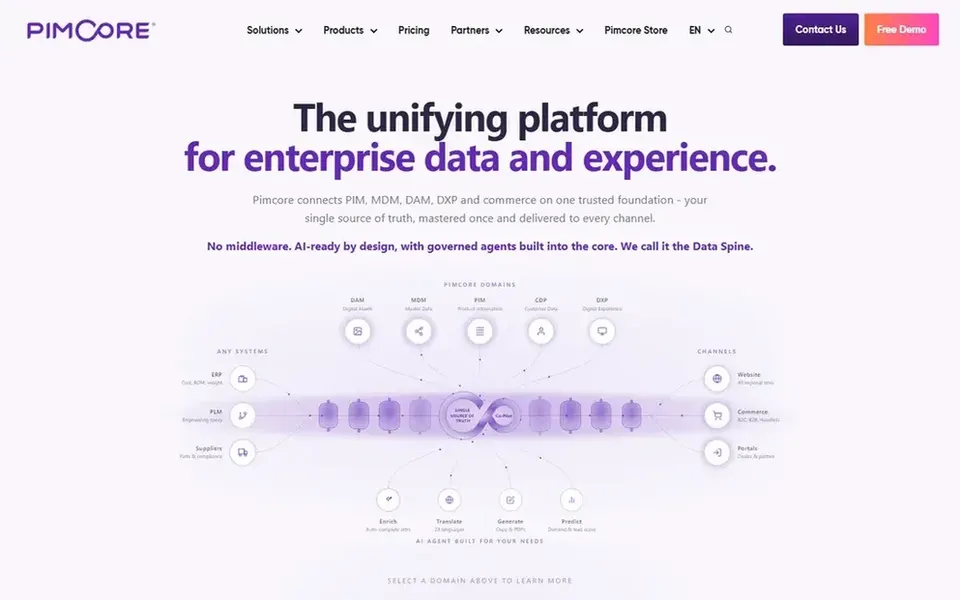
Pimcore serves integrated data and experience management. Pimcore is an enterprise data and experience management product that integrates PIM, MDM, DAM, DXP/CMS, CDP, and digital commerce capabilities. In daily use, since Pimcore includes numerous areas, implementation can be involved and may benefit from expert guidance.
Downsides: Can be complex to implement without partner support.
The system aims to accelerate time-to-market and support rapid digitization efforts across several data domains. Choose Pimcore when you want a consolidated system for data and experience management instead of a standalone PIM. Pimcore shows no starting price here, so confirm the cost on the vendor site. Free plan details: Not stated.
Best for: Omnichannel product data enrichment and syndication
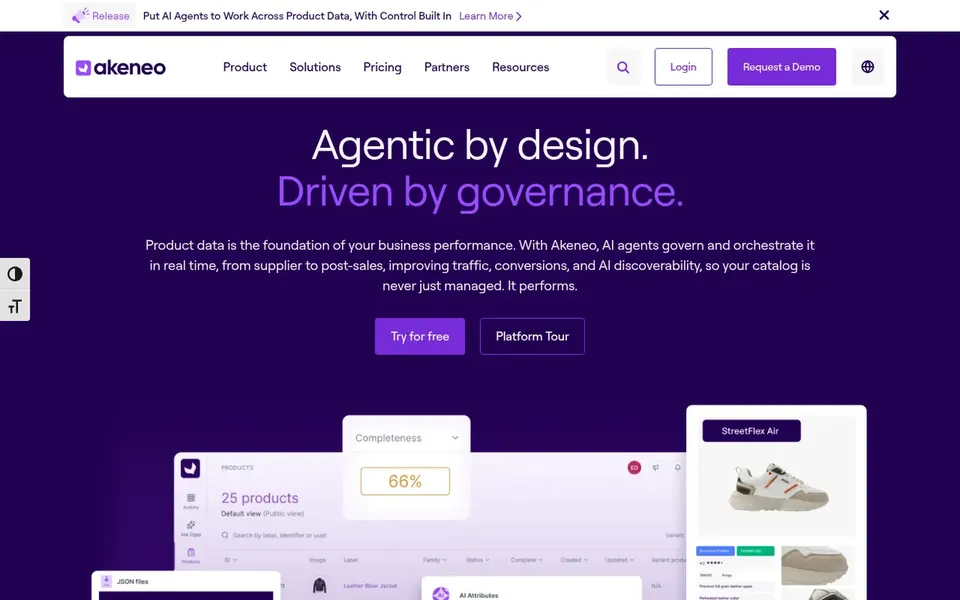
Akeneo Product Information Management makes the most sense for omnichannel product data enrichment and syndication. Akeneo Product Information Management is a system built to centralize, enrich, and syndicate product data, helping enterprises deliver consistent omnichannel experiences.
Enterprises with complicated governance requirements might have to integrate extra tools. In daily use, the system emphasizes data enrichment and syndication, making it a solid fit for retailers and brands concentrated on product content quality. This comparison lists no price for Akeneo Product Information Management; ask the vendor. Trial and free access: Free trial.
Watch-outs: Enterprise focus could mean a steeper setup.
Best for: Enterprise product data management within a broader data suite
Informatica Product 360 targets enterprise product data management within a broader data suite. Informatica Product 360 is a product information management option offered within Informatica's broader enterprise cloud data management portfolio. It is targeted at organizations that require to handle product data as part of a bigger data strategy, including AI-ready data initiatives.
Drawbacks to consider: May need the broader Informatica ecosystem.
From a buyer's view, standalone PIM deployments might find the ecosystem overhead significant. As part of a bigger suite, Informatica Product 360 may be most beneficial when integrated with other Informatica offerings. This comparison lists no price for Informatica Product 360; ask the vendor. Free access: Not stated.
Stibo Systems STEP is built with Master data management and governance in mind. Stibo Systems STEP is an enterprise master data management option that brings disconnected data sources together for optimized data governance.
Points against: May be complicated for straightforward PIM needs.
It is made for organizations with complex data landscapes that need solid governance and master data management. This comparison lists no price for Stibo Systems STEP; ask the vendor. Free access: Not stated.
Ask each vendor, from SAP Product Content Management to Stibo Systems STEP, for a written quote; none of them publishes a starting price.
Run a trial of Akeneo Product Information Management with real work before paying for a year; your own workflow is the best test.
Read the limits listed for SAP Product Content Management first: may be most beneficial for SAP-centric organizations.
Before you load data into SAP Product Content Management, check what an export looks like and who can run it.
Look at the help docs and support options for Informatica Product 360 before you commit.
How we picked
Selection started from tools commonly considered for product information management systems for enterprise, then narrowed to 6 that have clear pricing information or a clear quote process. Where a vendor does not publish a price, the entry says quote. Where a price depends on seats or billing term, the entry says so. The sequence is a judgement call: typical use case first, then pricing transparency, then free access. Use the profiles to check fit.
Every price and plan detail on this page comes from the vendors’ own websites. We did not run hands-on tests unless the text says so, and we do not publish star ratings or review scores. See how we score and our disclosure.
Keep your shortlist in one place
Paste prices, trial dates and notes from this guide into Ainotely, our AI note app. It files them into a topic and pulls out tasks like “cancel trial by Friday”. Free 7-day trial, no card needed.
Often, yes. Akeneo Product Information Management offers a free trial. Use your own data and a real task during the test, and check what the free tier or trial limits before you rely on it. All 6 picks in this product information management systems for enterprise comparison show their pricing, free plan details and main limits on the cards above.
How are the tools for product information management systems for enterprise ordered?
SAP Product Content Management sits first and Stibo Systems STEP last because the order follows typical fit for product information management systems for enterprise, then price clarity and free access. It is a judgement call, so read each profile for fit and limits.
Do these tools publish their prices?
No. None of the tools, from SAP Product Content Management to Stibo Systems STEP, shows a fixed starting price here, so budget time for quotes.
Does any tool for product information management systems for enterprise here have a free plan?
A permanent free plan is not offered by SAP Product Content Management, Stibo Systems STEP or the other tools here. Akeneo Product Information Management offer a trial. Plan a short evaluation period instead.
What should enterprises consider when choosing a PIM system?
Enterprises should evaluate integration with existing systems, scalability for large data volumes, data governance features, and vendor support. It is also important to consider whether a standalone PIM or a broader MDM suite better suits your strategy.