Best product review app in 2026: 7 Options Compared

- 1
 Yotpostores that want reviews plus loyaltyVisit
- 2
 Judge.mestores that want strong reviews at a clear priceVisit
- 3
 Stampedstores that want reviews plus loyaltyVisit
- 4
 Reviews.iostores that want verified company reviewsVisit
- 5
 Trustpilotbrands that want public review trustVisit
- Yotpo and Stamped suit stores that want reviews plus loyalty and marketing in one place.
- Judge.me and Reviews.io suit stores that want strong review collection at a clear price.
- Trustpilot suits brands that want reviews visible on a public platform shoppers trust.
- Bazaarvoice and Feefo suit larger brands that need syndication and verified reviews.
Quick comparison
| Product | Ideal for | Price from | Free version | |
|---|---|---|---|---|
| Yotpo | stores that want reviews plus loyalty | See website | Free trial | Visit |
| Judge.me | stores that want strong reviews at a clear price | See website | Yes | Visit |
| Stamped | stores that want reviews plus loyalty | See website | Free trial | Visit |
| Reviews.io | stores that want verified company reviews | See website | Free trial | Visit |
| Trustpilot | brands that want public review trust | See website | Yes | Visit |
 Bazaarvoice | larger brands that want syndication | See website | No | Visit |
 Feefo | brands that want verified service reviews | See website | No | Visit |
The best product review app
Product review apps collect customer reviews, display them on product pages and share them with search engines, which helps shoppers trust a store. We compared official product pages, pricing pages, app listings and public reviews, focusing on collection, display, moderation, syndication and pricing model. Fake reviews harm trust and break platform rules, so only collect reviews from real customers and never pay for false ratings.
Yotpo
Ideal for: stores that want reviews plus loyalty
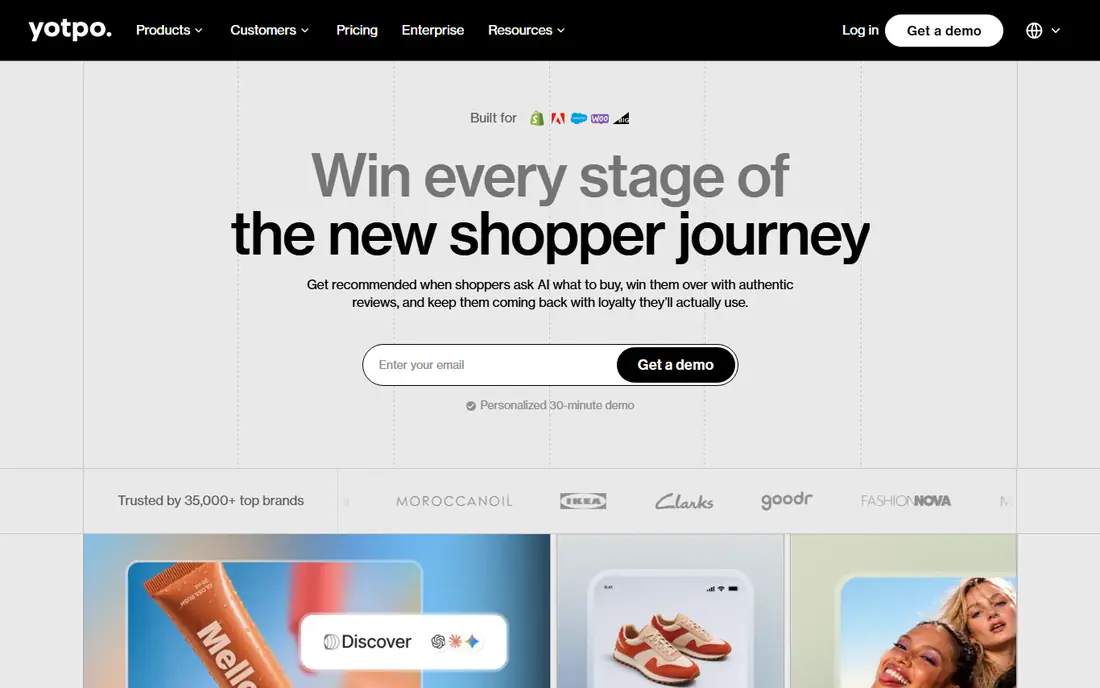
Yotpo combines product reviews with loyalty, referrals and user generated content, which suits stores that want one platform for retention marketing. Review request emails, photo reviews and on site display widgets help new shoppers see real customer experience. Its integrations cover major ecommerce platforms.
Before you pay, check the limits that apply to your own use, including seats, storage, monthly usage and support hours. A plan that looks generous on the headline page can still cap the one feature you rely on most, so read the plan comparison page rather than the marketing summary. A trial or free tier is the safest way to test this, and it also shows whether support answers promptly when you need help.
Pricing scales with order volume, so a growing store should forecast cost, and setup takes time to get widgets and emails right. Check which features sit inside your plan, and test review display on mobile where most shoppers browse.
- Reviews plus loyalty
- Many integrations
- AI summaries
- Pricing scales with orders
- Setup takes time
Judge.me
Ideal for: stores that want strong reviews at a clear price
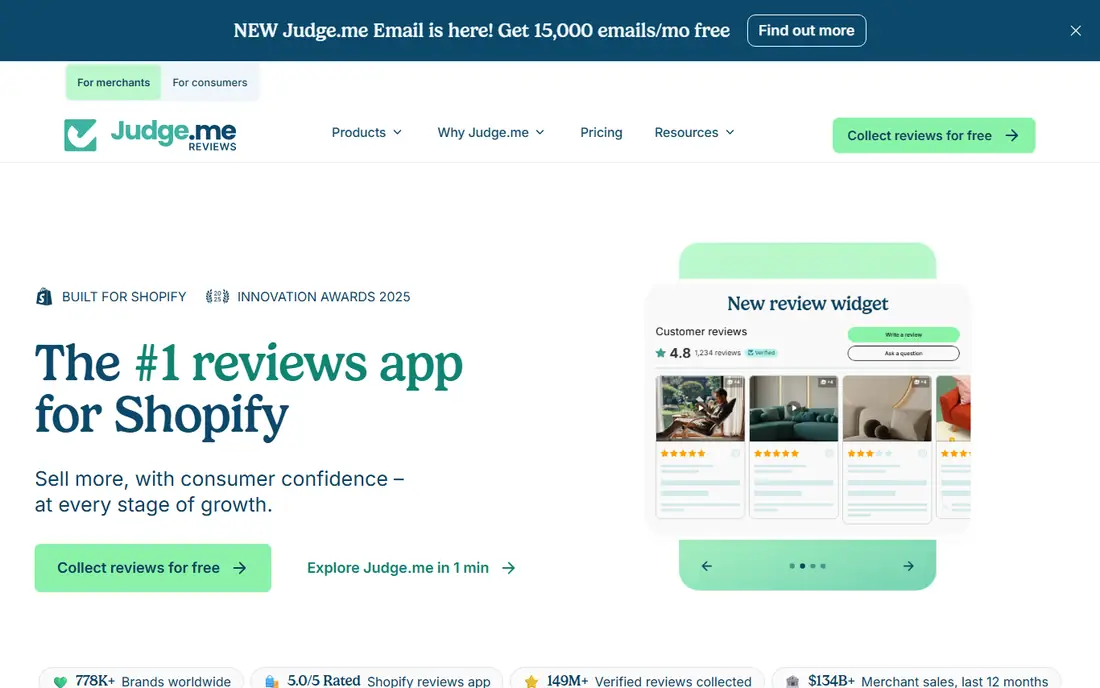
Judge.me is popular with Shopify stores for unlimited review request emails, photo and video reviews, and clear pricing. Its widgets display stars, review counts and question and answer sections on product pages. That focus suits stores that want strong review collection without a large marketing suite.
The price on the headline page is only part of the cost, so check renewal pricing, per-seat charges and any paid add-ons before you commit. Free tiers help for light use, but they often cap the features that matter once work grows, and trials end on a fixed date whether you have finished testing or not. Set a reminder before a trial ends, and confirm cancellation steps in advance so you are not locked into a plan you no longer need.
Design customisation takes care to match a premium theme, and its integration range is smaller than Yotpo. Trial the widgets on your theme, and confirm review import options if you move from another app.
- Unlimited review requests
- Photo and video
- Clear pricing
- Design customisation needs care
- Smaller app range
Stamped
Ideal for: stores that want reviews plus loyalty
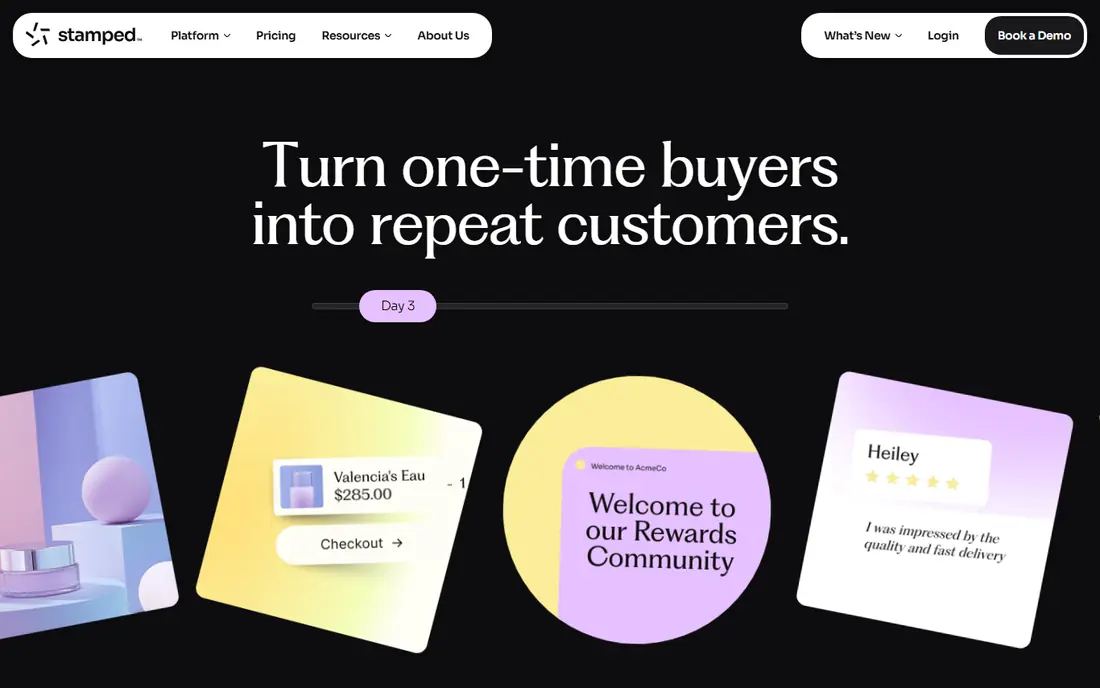
Stamped offers product reviews, ratings, loyalty and visual user generated content, with review display at checkout and on product pages. Its galleries of customer photos help shoppers see products in real use. That mix suits fashion, beauty and home stores where photos influence buying.
Pricing is where many readers get caught out, so look past the headline figure and check what the plan actually includes for your level of use. Seats, usage limits, add-ons and renewal terms can change the real monthly cost, and a cheaper plan that lacks one feature you need is not a saving. If a free tier or trial is offered, use it for real work before paying, and confirm how cancellation works while you still have time to change your mind.
Pricing scales with orders, and some features sit on higher plans, so check the plan that includes loyalty and checkout display. Test photo review moderation, since visual reviews need a clear approval workflow.
- Reviews and loyalty
- Visual galleries
- Checkout display
- Pricing scales with orders
- Feature depth varies by plan
Reviews.io
Ideal for: stores that want verified company reviews
Reviews.io collects verified company and product reviews, with widgets, badges and Google seller rating integration. That public verification suits stores that want reviews visible beyond their own site, including in search results. Its invite system helps ensure reviews come from real customers.
Before you pay, check the limits that apply to your own use, including seats, storage, monthly usage and support hours. A plan that looks generous on the headline page can still cap the one feature you rely on most, so read the plan comparison page rather than the marketing summary. A trial or free tier is the safest way to test this, and it also shows whether support answers promptly when you need help.
Pricing is plan based, and results depend on sending review invites consistently after delivery. Set up automated invites, monitor negative reviews promptly, and respond publicly with a fix where appropriate.
- Verified reviews
- Company plus product
- Google integration
- Pricing is plan based
- Setup needs review invites
Trustpilot
Ideal for: brands that want public review trust
Trustpilot is a public review platform where customers review companies, and its stars often appear in search results, which builds trust before a shopper reaches your site. Businesses can invite reviews, respond publicly and display widgets. That public visibility suits brands that want independent proof of service quality.
The price on the headline page is only part of the cost, so check renewal pricing, per-seat charges and any paid add-ons before you commit. Free tiers help for light use, but they often cap the features that matter once work grows, and trials end on a fixed date whether you have finished testing or not. Set a reminder before a trial ends, and confirm cancellation steps in advance so you are not locked into a plan you no longer need.
Reviews are public and cannot be removed simply because they are negative, so service problems show openly. Respond calmly and helpfully to criticism, fix genuine issues, and never attempt to fake or suppress reviews.
- Public review platform
- Strong search visibility
- Widgets
- Company focus
- Negative reviews are public
Bazaarvoice
Ideal for: larger brands that want syndication
Bazaarvoice helps larger brands collect reviews and syndicate them to retailer sites, so a product review appears where shoppers actually buy. Its moderation, sampling and insights tools suit brands with many products and retail partners. That network effect is hard to match with a store only review app.
Pricing is where many readers get caught out, so look past the headline figure and check what the plan actually includes for your level of use. Seats, usage limits, add-ons and renewal terms can change the real monthly cost, and a cheaper plan that lacks one feature you need is not a saving. If a free tier or trial is offered, use it for real work before paying, and confirm how cancellation works while you still have time to change your mind.
Pricing is enterprise level, so small stores will find it heavy. Ask for a pilot on a product range, and confirm which retailers are included in syndication for your market.
- Review syndication
- Large retailer network
- Moderation
- Enterprise pricing
- Best for larger brands
Feefo
Ideal for: brands that want verified service reviews
Feefo collects verified reviews from real customers after purchase, covering both service and product experience, with widgets and insight reports. Its verification model suits brands that want to prove reviews come from genuine buyers. Service reviews help a store show delivery and support quality, not just product quality.
Before you pay, check the limits that apply to your own use, including seats, storage, monthly usage and support hours. A plan that looks generous on the headline page can still cap the one feature you rely on most, so read the plan comparison page rather than the marketing summary. A trial or free tier is the safest way to test this, and it also shows whether support answers promptly when you need help.
Pricing is quoted, and its app ecosystem is smaller than Shopify native review apps. Check integration with your store platform, and confirm how review invites and moderation work before committing.
- Verified reviews
- Service plus product
- Insights
- Pricing is quote based
- Smaller app ecosystem
How we picked these
We compared official feature pages, pricing pages, app store listings, privacy policies and public reviews for each option in this guide. We kept only products that exist and work in October 2026 and that fit the topic directly, and we checked that each official homepage loads and belongs to the product named. Prices and free tiers are taken from the vendor site where we could verify them, and we wrote See website where a price could not be confirmed, rather than guessing. Our pick in each guide reflects fit for ordinary readers, not a claim of hands-on testing, and we note the honest limits of each option alongside its strengths.
How to choose a product review app
Start with where shoppers see reviews: on your product pages, in search results, or on retailer sites. A store only app suits most small shops, while Trustpilot suits public trust and Bazaarvoice suits retailer syndication. Check collection methods, including post purchase email timing, photo reviews and question and answer features.
Compare pricing on your order volume, and check moderation, import and export options before you commit. Set up automated invites after delivery, respond to negative reviews with a fix, and never offer incentives for positive reviews in a way that breaks platform rules. A steady flow of honest reviews, including critical ones with good responses, builds more trust than a perfect score.
Frequently asked questions
What is the best product review app?
Yotpo and Stamped suit stores that want reviews plus loyalty, while Judge.me suits clear priced collection. Reviews.io and Trustpilot suit verified public reviews, and Bazaarvoice and Feefo suit larger brands. Choose by where shoppers need to see reviews.
How do I get more product reviews?
Send a post purchase email after delivery, keep the request short, and make reviewing easy on a phone with photo upload. Offer a small thank you that does not depend on a positive rating, and follow up once if needed. Consistent invites matter more than any single campaign.
Are product reviews good for SEO?
Yes, review content adds fresh, relevant text to product pages, and structured data can help stars appear in search results. Use a review app that supports review schema, and avoid duplicate or fake review content, which can harm trust and rankings.
Should I respond to negative reviews?
Yes, respond calmly, acknowledge the issue, and offer a concrete fix or contact route. A helpful public response reassures future shoppers more than the complaint itself harms you. Never argue, blame the customer, or ask for a review to be removed unless it breaks platform rules.
Can I import reviews from another app?
Most review apps offer import from common platforms, including CSV import and direct migration from rivals. Check import format, photo handling and verified status before switching, and keep a backup of your existing reviews.