Best Programmatic Ad Services for Small Businesses in 2026: 8 Services Compared

- 1
 AdRollSmall business retargetingVisit
- 2
 ChoozleSelf-serve programmaticVisit
- 3
 StackAdaptNative and display programmaticVisit
- 4
 Simpli.fiLocal programmatic targetingVisit
- 5
 Basis TechnologiesFull programmatic platformVisit
- Programmatic advertising buys ad placements automatically, targeting audiences across websites and apps rather than buying one site at a time.
- AdRoll and Choozle suit small businesses best, thanks to self-serve tools and manageable budgets, while StackAdapt and Simpli.fi suit growing advertisers.
- Small businesses should start with retargeting and a clear audience, rather than broad prospecting that burns budget fast.
- Creative quality and landing page fit matter as much as targeting: a good ad sent to a weak page still wastes money.
- Our pick for most small businesses is AdRoll, with Choozle as the pick for teams that want a simpler self-serve platform.
Quick comparison
| Product | Ideal for | Price from | Free version | |
|---|---|---|---|---|
| AdRoll | Small business retargeting | See website | Free trial | Visit |
| Choozle | Self-serve programmatic | See website | No | Visit |
| StackAdapt | Native and display programmatic | See website | No | Visit |
| Simpli.fi | Local programmatic targeting | See website | No | Visit |
| Basis Technologies | Full programmatic platform | See website | No | Visit |
 AdCritter | Small business display ads | See website | No | Visit |
 Smartly | Social and programmatic ads | See website | No | Visit |
 Criteo | Retargeting and commerce ads | See website | Free trial | Visit |
The best programmatic ad services for small businesses
Programmatic advertising can feel built for big brands, but several platforms now serve small businesses with self-serve tools, modest minimums, and guided setup. The services below were compared on ease of use, minimum budgets, targeting options, creative tools, and reporting clarity.
AdRoll
Ideal for: Small business retargeting

AdRoll is a practical entry point to programmatic ads for small businesses, especially for retargeting: showing ads to people who visited your site but did not buy. Its setup is straightforward, its e-commerce integrations help stores track results, and its tools cover display, social, and email in one place. For a small store or service business, retargeting is often the highest-return programmatic tactic, and AdRoll makes it accessible.
Broad prospecting needs more care and budget, since targeting new audiences is less efficient than retargeting warm visitors. Pricing also scales with ad spend. For a small business starting with programmatic, AdRoll's retargeting focus is the right place to begin.
- Strong retargeting for small businesses
- Easy setup
- Integrates with e-commerce platforms
- Prospecting beyond retargeting needs care
- Pricing scales with ad spend
Choozle
Ideal for: Self-serve programmatic
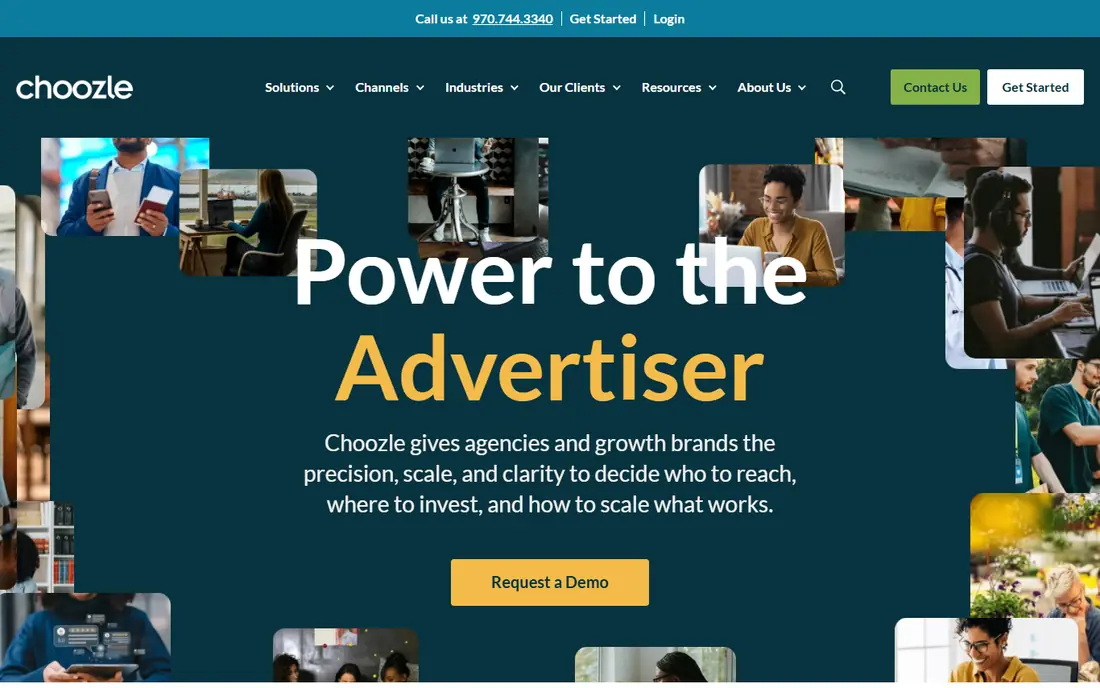
Choozle offers a self-serve programmatic platform designed for small and mid-size advertisers, with guided setup, audience targeting, and transparent reporting. Its interface lets a small team build campaigns, choose audiences, and see where ads ran and what they delivered, without needing a media agency. That transparency appeals to businesses that want control over their spend.
Minimum budgets apply, and self-serve means less hand-holding than a managed service. For a small business with someone willing to learn the platform, Choozle offers a good balance of control and simplicity.
- Self-serve platform with guided setup
- Good targeting options
- Transparent reporting
- Minimum budgets apply
- Less hand-holding than managed services
StackAdapt
Ideal for: Native and display programmatic
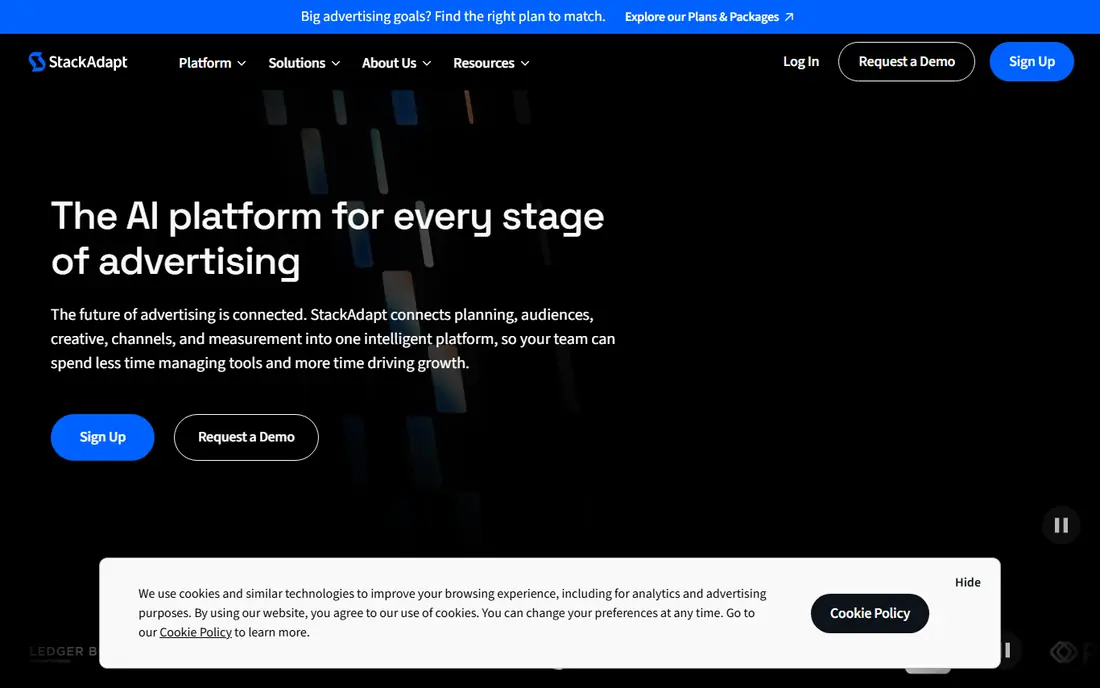
StackAdapt is a programmatic platform known for native, display, and video ads, with audience tools and creative features that suit growing advertisers. Its native ads blend into content sites, which can outperform standard banners for some businesses, and its reporting helps teams see what works. Agencies and mid-size advertisers use it widely.
Its minimums and complexity suit growing advertisers more than the smallest businesses, so a very small budget may fit AdRoll or Choozle better. For a business ready to scale programmatic beyond retargeting, StackAdapt is a strong next step.
- Strong native and display ads
- Good audience tools
- Creative and reporting features
- Better suited to growing advertisers
- Minimums are higher than AdRoll
Simpli.fi
Ideal for: Local programmatic targeting
Simpli.fi specializes in localized programmatic advertising, with geo-targeting and addressable audience tools that suit multi-location businesses, franchises, and local service companies. Its platform can target by location, behavior, and household data, helping a local business reach nearby customers efficiently. That local strength is its main advantage.
It works mainly through partners and agencies, so direct self-serve access for the smallest businesses is less straightforward. For a business with several locations or a strong local focus, Simpli.fi is worth reaching through a partner.
- Strong local and geo-targeting
- Good for multi-location businesses
- Addressable audience tools
- Works mainly through partners and agencies
- Less direct self-serve for tiny businesses
Basis Technologies
Ideal for: Full programmatic platform
Basis Technologies, formerly Centro, offers a full programmatic platform with automation, workflow, and reporting tools for agencies and growing brands. Its platform handles display, video, social, and search in one system, with automation that reduces manual campaign work. Agencies managing many small-business clients often use it as their central platform.
Its complexity exceeds what a single small business usually needs, and pricing is quote-based. For a growing brand or an agency serving small businesses, Basis offers a comprehensive platform.
- Full programmatic platform with automation
- Good for agencies and growing brands
- Workflow tools
- More complex than small-business tools
- Pricing is quote-based
AdCritter
Ideal for: Small business display ads
AdCritter is built specifically for small businesses, offering display advertising with both managed and self-serve options and simple pricing. Its team helps small advertisers set up campaigns, choose targeting, and create ads, which suits businesses without marketing staff. That small-business focus is its main selling point.
Its platform is smaller than the leaders, with fewer advanced targeting options. For a small business that wants programmatic ads without learning a complex platform, AdCritter's guided approach is appealing.
- Built for small businesses
- Managed and self-serve options
- Simple pricing
- Smaller platform than leaders
- Fewer advanced targeting options
Smartly
Ideal for: Social and programmatic ads
Smartly, formerly Smartly.io, focuses on social advertising automation, with creative tools and campaign management for advertisers running large social campaigns. Its automation helps e-commerce businesses test many ad variations and scale winners efficiently. For a small business whose customers live on social platforms, that focus fits well.
It is social-focused rather than a pure display programmatic platform, and pricing is quote-based. For a business that wants programmatic-style automation applied to social ads, Smartly is a strong option.
- Strong social ad automation
- Creative tools
- Good for e-commerce advertisers
- Social-focused, less of a pure display programmatic tool
- Pricing is quote-based
Criteo
Ideal for: Retargeting and commerce ads
Criteo is known for commerce retargeting, using a large shopper data network to show ads to people likely to buy. E-commerce businesses benefit most, since its ads target shoppers based on browsing and purchase intent, and its performance for online stores is well proven. For a store with steady traffic, Criteo retargeting can recover lost sales effectively.
It is less suited to lead generation or local services, where purchase intent data is thinner. For e-commerce retargeting, though, Criteo is one of the strongest platforms available.
- Strong commerce retargeting
- Large shopper data network
- Good for e-commerce
- Best for e-commerce
- Less suited to lead generation or local services
How we picked these
We compared official product pages, pricing pages, and platform documentation for programmatic advertising services, focusing on small-business fit, minimum budgets, ease of use, targeting options, and reporting clarity. We favored platforms with real small-business use and included both self-serve and managed options.
What to check before you spend
Start with retargeting and a single clear goal, such as recovering abandoned carts or booking consultations, rather than broad awareness campaigns that are hard to measure. Set a test budget and a time limit, and judge results on conversions or leads, not just impressions or clicks. Also check where your ads will run and what brand safety controls exist, since programmatic ads can appear in unexpected places without proper settings.
Make sure your landing page matches the ad promise, since a good ad that lands on a confusing page wastes the click. Finally, review reports weekly at first, and pause what does not work rather than letting a weak campaign run on hope.
One more factor worth weighing is how the option you choose will feel after the first month, not just on day one. A tool or service that looks strong in a demo can become a burden if setup is fiddly, support is slow, or everyday tasks take more clicks than they should. That is why we suggest using a trial with your real workload, your real data, and the people who will actually use it every day. Watch for friction in the first week, since that friction rarely disappears on its own. Also consider what happens when your needs change: can you upgrade, downgrade, or leave without losing your work? A flexible option that grows with you is usually worth more than a slightly cheaper one that locks you into a plan you will outgrow. Finally, talk to at least one current user if you can, since a short honest conversation often reveals more than a polished sales page.
Frequently asked questions
What is programmatic advertising?
It is the automated buying of ad placements across many websites and apps, using data to target audiences, rather than negotiating with each publisher separately. Software handles bidding, placement, and optimization in real time.
How much should a small business spend on programmatic ads?
Start with a modest test budget that you can afford to learn from, and scale only when results justify it. Check each platform's minimums, since they vary, and judge success on leads or sales, not impressions.
Is retargeting better than prospecting for small businesses?
Usually yes at first. Retargeting reaches people who already visited your site, so conversion rates are higher and budgets go further. Prospecting to new audiences works better once retargeting is profitable.
Do I need an agency for programmatic ads?
Not necessarily. Self-serve platforms like AdRoll and Choozle let small businesses run campaigns directly, while managed options like AdCritter add help. An agency makes sense when budgets grow or campaigns get complex.
How do I measure programmatic ad success?
Track conversions, cost per lead or sale, and return on ad spend, not just clicks or impressions. Make sure conversion tracking is set up before launch, or you will not know what worked.
What is the first step when choosing best programmatic ad services for small business?
Start by writing down what you need the product or service to do, how many people will use it, and what budget you can sustain for a year. That short brief makes comparisons far easier, since you can test each option against the same requirements instead of being swayed by the longest feature list. Then run a trial of your top two or three choices with real tasks, and pick the one your team actually enjoys using, since adoption matters as much as features.