7 Project Controls Software, Compared by Cost and Features

- 1
 ProcoreField-to-office project managementVisit
- 2
 ContruentLifecycle cost managementVisit
- 3
 Primavera P6Large-scale CPM schedulingVisit
- 4
 Octave Sequence EnterpriseEnterprise project performance managementVisit
- 5
 InEightIntegrated capital construction productVisit
- This list starts with Procore, which is built for field-to-office project management.
- Cleopatra Enterprise fits cost engineering and turnarounds.
- What to know about Octave Sequence Enterprise first: hexagon spin-off branding is confusing.
- No starting price is shown for any of the 7 tools, Procore and Cleopatra Enterprise included, so plan time for sales calls.
- None of the 7 tools, from Procore to Cleopatra Enterprise, has a free plan, so budget for a subscription or use a trial.
Direct answer
Our first pick is Procore, best for field-to-office project management. Contruent is the stronger choice for lifecycle cost management, while Primavera P6 suits large-scale CPM scheduling. Prices, free plans and limits for all 7 tools follow.
Quick comparison
| Product | Ideal for | Price from | Free version | |
|---|---|---|---|---|
| Procore | Field-to-office project management | See website | No | Visit |
| Contruent | Lifecycle cost management | See website | No | Visit |
| Primavera P6 | Large-scale CPM scheduling | See website | No | Visit |
| Octave Sequence Enterprise | Enterprise project performance management | See website | No | Visit |
| InEight | Integrated capital construction product | See website | No | Visit |
 Asta Powerproject | Construction planners | See website | No | Visit |
 Cleopatra Enterprise | Cost engineering and turnarounds | See website | No | Visit |
Our 7 picks for project controls software
Choosing project controls software usually comes down to price, fit and limits. This Ainotely guide sets 7 tools side by side on those three points, with the facts kept short and checkable.
Procore
Ideal for: Field-to-office project management
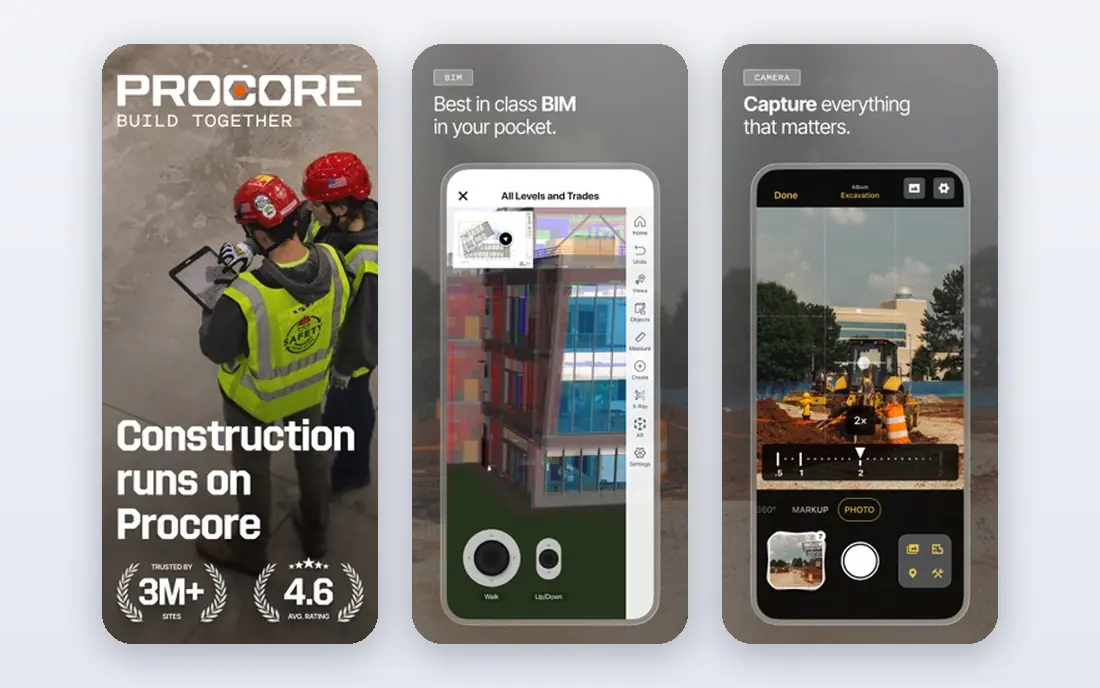
Think of Procore for field-to-office project management. The honest framing: Procore is construction project management, not project controls in the EVM sense. But it is where the field lives, and field data is where controls go to die when the systems do not link.
Procore is the #1 end-to-end construction management product, with 3 million+ projects run on it and deep adoption among general contractors. It links field operations (daily logs, photos, RFIs, punch lists) with financial management (budgets, commitments, change orders, cost codes). Its volume-based pricing comes with unlimited users instead of per-seat licenses. If your problem is visibility from the trailer to the office, start here. Check the vendor site for Procore pricing; none is listed in this comparison. Procore has no permanent free option.
Where it is weaker: EVM and schedule depth lag the specialists.
- Solid field mobile tools
- The dominant construction management product
- Pricing scales with construction volume
Contruent
Ideal for: Lifecycle cost management
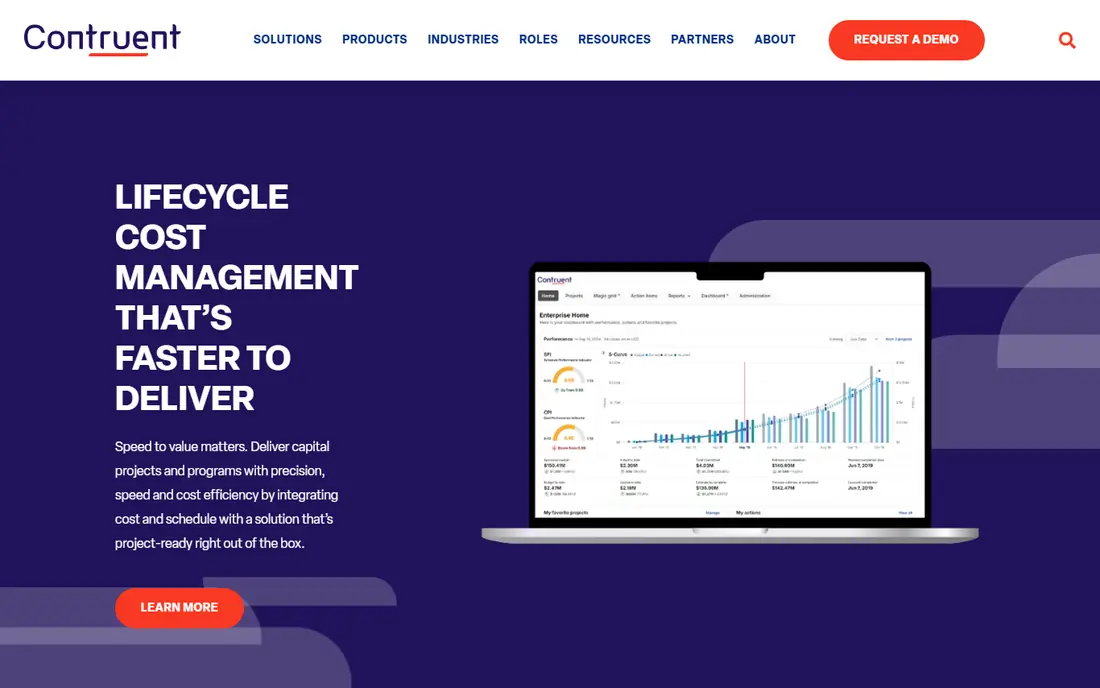
For lifecycle cost management, Contruent is a natural candidate. The company rebranded from ARES PRISM, so older references will still use the old name. Contruent, formerly ARES PRISM, is lifecycle cost management software aimed at complicated capital projects across mining, oil and gas, transportation, and infrastructure on six continents.
Downsides: Less schedule depth than P6.
It includes estimating, procurement, cost management with earned value, change and contract management, and field management in one SaaS system, with 200+ pre-built dashboards and live stakeholder views. Worth adding: the vendor claims fixed-fee go-lives in under four months, which is quick for this category. The SaaS delivery model is a genuine advantage over legacy on-premise competitors. No starting price is listed for Contruent here; confirm pricing on the vendor site. No free plan comes with Contruent.
- SaaS-based with quicker implementation
- Capable estimating-through-closeout coverage
- Mid-market teams may find it heavy
Primavera P6
Ideal for: Large-scale CPM scheduling
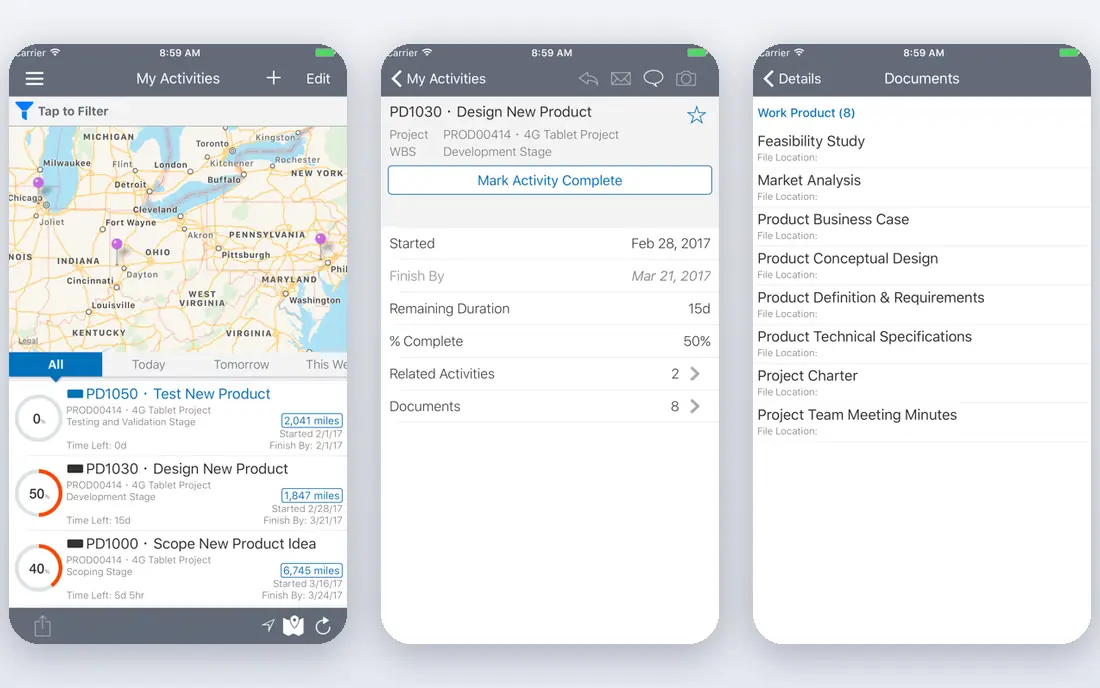
Where Primavera P6 fits: large-scale CPM scheduling. For large-scale programs and portfolios, its CPM engine, resource and role management, and multi-project scheduling remain unmatched. Oracle's current version is P6 EPPM, cloud-capable.
On top of that, for small contractors or straightforward builds, it is overkill. But for EPCs, owners, and infrastructure programs where a missed dependency costs millions, P6 is the answer most of the industry has already chosen. Primavera P6 does not show a starting price in this comparison, so check the vendor site for current pricing. Primavera P6 has no free tier.
Points against: Dated interface. Reasons to shortlist it: multi-user architecture.
- Multi-project
- Deep cost-schedule integration with Unifier
- Costly and implementation-heavy
Octave Sequence Enterprise
Ideal for: Enterprise project performance management
Octave Sequence Enterprise serves enterprise project performance management. The product plugs into SAP, Oracle, and other ERP systems for live cost data.
This is a tool for organizations standardizing controls across numerous projects, not for a single build. Octave Sequence Enterprise shows no starting price here, so confirm the cost on the vendor site. Octave Sequence Enterprise has no permanent free option.
Watch-outs: Best at scale.
- No-code configurability
- Full-lifecycle controls in one system
- Enterprise pricing and implementation
InEight
Ideal for: Integrated capital construction product
InEight is designed for integrated capital construction product. The honest catch: this is still enterprise software with enterprise pricing and a serious implementation.
Reasons to shortlist it: start-small design.
InEight does not show a starting price in this comparison, so check the vendor site for current pricing. No free plan comes with InEight.
Where it falls short: Enterprise pricing.
- Solid owner and EPC references
- Modular
- Implementation is a real project
Asta Powerproject
Ideal for: Construction planners
For construction planners, Asta Powerproject is a natural candidate. Asta Powerproject is the construction planner's scheduler: designed around the way planners actually work, with 4D BIM modules that link tasks to 3D model components for visual scheduling. A Site Progress mobile app for field updates.
Honest limits: Company rebranded to Eleco, which confuses searches.
Worth adding: more than 100,000 professionals use it worldwide, and it is the UK's leading construction planning tool. Beyond that, for planners who find P6 heavy, it is the credible construction-native alternative. Powerproject plays well with Acumen for risk analysis and plugs into P6. For everyday use, the honest note: it is more solid in the UK and Europe than in North America, and licensing is enterprise-style. No starting price is listed for Asta Powerproject here; confirm pricing on the vendor site. Asta Powerproject has no permanent free option.
- 100,000+ professionals worldwide
- Designed for construction planners
- More solid in UK/Europe than the US
Cleopatra Enterprise
Ideal for: Cost engineering and turnarounds
Cleopatra Enterprise is designed for cost engineering and turnarounds. The "zero overruns, zero delays" marketing is aspirational, but the product's cost-engineering depth is real: estimate databases, historical benchmarking, and turnaround-specific workflows that generic tools lack.
Pricing for Cleopatra Enterprise is not stated here, so ask the vendor for current figures. There is no free plan with Cleopatra Enterprise.
The main drawbacks: Quote-based enterprise pricing.
- Cost control, benchmarking
- Integrated estimating, scheduling
- Smaller US presence than some rivals
How we compared the tools
Ainotely used vendor pricing pages and product documentation as the base, then compared plans, free access and documented limits for 7 tools. Plan names, prices and limits change often. Treat the figures here as a starting point and verify them with the vendor. The sequence is a judgement call: typical use case first, then pricing transparency, then free access. Use the profiles to check fit.
Pre-purchase checklist
- Ask each vendor, from Procore to Cleopatra Enterprise, for a written quote; none of them publishes a starting price.
- Before choosing Procore, weigh its main limit: more management than controls.
- Total up the real monthly cost of Primavera P6, including add-ons, extra users and usage-based fees.
- Map your must-have features to a specific Octave Sequence Enterprise plan before you compare prices.
- Test the integrations you rely on with InEight before committing; some connectors sit on upper tiers.
Frequently asked questions
Do these tools publish their prices?
No. None of the tools, from Procore to Cleopatra Enterprise, shows a fixed starting price here, so budget time for quotes.
Is Procore the right pick for everyone comparing project controls software?
No single tool suits every team. Procore comes first because it fits field-to-office project management, while Contruent suits lifecycle cost management and Primavera P6 suits large-scale CPM scheduling. Match the tool to your own size, budget and workflow before deciding.
Do I need project controls software or just a scheduler?
You need project controls software when you have several concurrent projects, need earned value reporting, run complicated cost breakdowns, face contractual reporting requirements, or have suffered cost overruns you could not explain. The trigger is typically a painful post-mortem.
Can I try these options before paying?
Not by default. None of the tools, from Procore to Cleopatra Enterprise, lists a free plan or a free trial here, so ask each vendor for a demo before committing.
What is the difference between Primavera P6 and MS Project?
Primavera P6 is designed for large, complicated, multi-project environments with enterprise resource management, multi-user access, and portfolio-level control. P6 is the standard for EPCs, owners, and government programs; MS Project is the standard for more straightforward commercial work.
Does any tool for project controls software here have a free plan?
A permanent free plan is not offered by Procore, Cleopatra Enterprise or the other tools here. Plan a short evaluation period instead.