Best project management apps for teams in 2026: 7 Options Compared

- Start with how your team already works: boards, lists, timelines, or docs.
- Check guest and collaborator access if clients or contractors join projects.
- Automations save time, but only if someone owns and maintains them.
- Free tiers help small teams start, but seat pricing matters as teams grow.
Quick comparison
| Product | Ideal for | Price from | Free version | |
|---|---|---|---|---|
 Asana | Teams that want clear task ownership | Free | Yes | Visit |
 Monday Work Management | Visual project tracking for varied teams | Free | Yes | Visit |
 ClickUp | Teams that want many views in one tool | Free | Yes | Visit |
 Trello | Simple board-based task tracking | Free | Yes | Visit |
 Notion | Docs, wikis, and projects in one place | Free | Yes | Visit |
 Jira | Software teams running agile work | Free | Yes | Visit |
 Wrike | Larger teams with approvals and reporting | Free | Yes | Visit |
The best project management apps for teams
Project tools fail when the team does not use them, so ease of adoption matters as much as features. We compared official feature pages and pricing for tools that cover tasks, timelines, and team collaboration.
Asana
Ideal for: Teams that want clear task ownership

For readers weighing options, Asana deserves a close look. Asana fits teams that want everyone to know who owns what and when it is due. Tasks, timelines, and goals give managers a clear view without constant status meetings.
On pricing, the starting point is listed as Free, with a free plan status of Yes. That pricing picture should be checked on the vendor site before you commit, since tiers and limits change. In daily use, the strengths above are what most buyers will notice first, and they explain why this option keeps appearing in comparisons of best project management apps for teams.
The honest catch is this: The catch is structure: tiny teams may find it more formal than a simple board. Weigh that against the strengths before you sign up, and use a trial or free tier first when one is offered. Our pick for most people is not always the same as the best pick for you, so match the trade-off to your own budget, team size, and patience for setup.
- Clear tasks, timelines, and goals
- Templates
- Strong integrations
- Advanced features need paid plans
- Can feel structured for tiny teams
Monday Work Management
Ideal for: Visual project tracking for varied teams

Monday Work Management is the pick to consider first if visual project tracking for varied teams is your priority. Monday Work Management fits teams that like visual boards and dashboards for tracking work. Boards, timelines, and dashboards make progress visible at a glance.
On pricing, the starting point is listed as Free, with a free plan status of Yes. That pricing picture should be checked on the vendor site before you commit, since tiers and limits change. In daily use, the strengths above are what most buyers will notice first, and they explain why this option keeps appearing in comparisons of best project management apps for teams.
The honest catch is this: The trade-off is seat pricing, which grows with the team, so check the tier you need. Weigh that against the strengths before you sign up, and use a trial or free tier first when one is offered. Our pick for most people is not always the same as the best pick for you, so match the trade-off to your own budget, team size, and patience for setup.
- Visual boards and dashboards
- Automations
- Many templates
- Pricing per seat adds up
- Some features need higher tiers
ClickUp
Ideal for: Teams that want many views in one tool
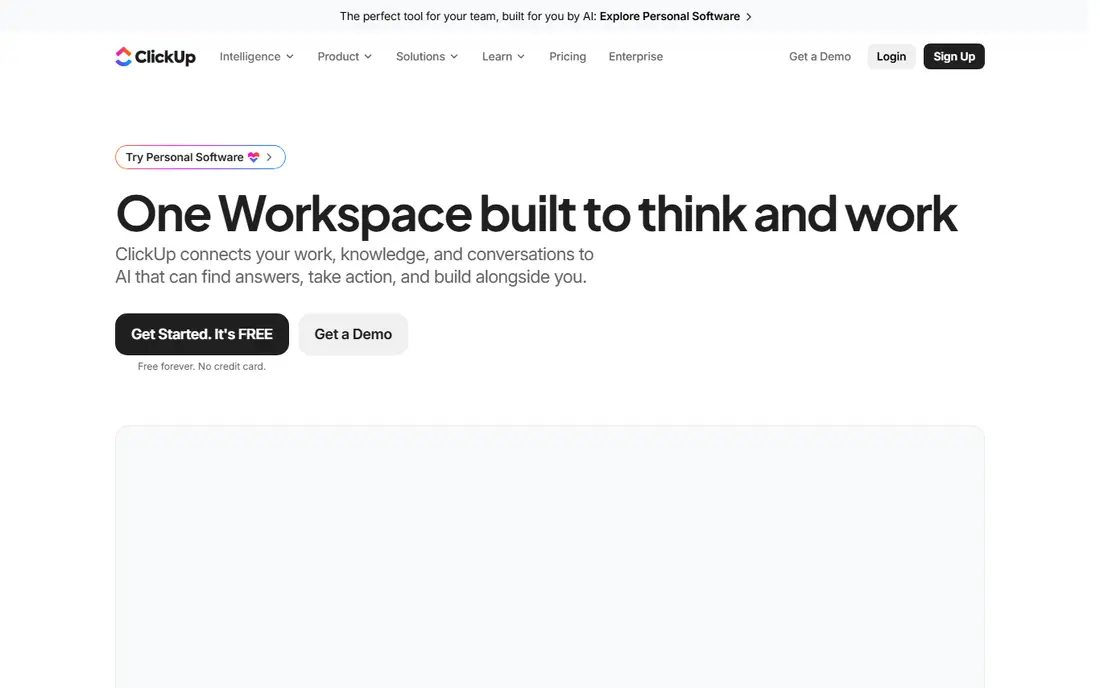
What sets ClickUp apart is how well it handles teams that want many views in one tool. ClickUp fits teams that want lists, boards, docs, and goals in a single tool. Its view options suit different work styles inside one team.
On pricing, the starting point is listed as Free, with a free plan status of Yes. That pricing picture should be checked on the vendor site before you commit, since tiers and limits change. In daily use, the strengths above are what most buyers will notice first, and they explain why this option keeps appearing in comparisons of best project management apps for teams.
The honest catch is this: The catch is breadth: new users face many options, so allow onboarding time. Weigh that against the strengths before you sign up, and use a trial or free tier first when one is offered. Our pick for most people is not always the same as the best pick for you, so match the trade-off to your own budget, team size, and patience for setup.
- Many views including lists, boards, and docs
- Goals and automations
- Generous free tier
- Feature breadth can overwhelm new users
- Setup takes time
Trello
Ideal for: Simple board-based task tracking
If simple board-based task tracking matters most to you, Trello belongs on your shortlist. Trello fits small teams that want a simple board and nothing more. Boards and cards are easy to learn, and most people are productive within an hour.
On pricing, the starting point is listed as Free, with a free plan status of Yes. That pricing picture should be checked on the vendor site before you commit, since tiers and limits change. In daily use, the strengths above are what most buyers will notice first, and they explain why this option keeps appearing in comparisons of best project management apps for teams.
The honest catch is this: The trade-off is depth: complex projects with dependencies may need a fuller tool. Weigh that against the strengths before you sign up, and use a trial or free tier first when one is offered. Our pick for most people is not always the same as the best pick for you, so match the trade-off to your own budget, team size, and patience for setup.
- Simple Kanban boards
- Easy to learn
- Power-Ups for extras
- Depth is limited for complex projects
- Reporting needs paid features
Notion
Ideal for: Docs, wikis, and projects in one place
Notion earns its place here by doing docs, wikis, and projects in one place well. Notion fits teams that want project tracking alongside docs and wikis in one workspace. Combining notes and tasks means context stays with the work instead of living in separate apps.
On pricing, the starting point is listed as Free, with a free plan status of Yes. That pricing picture should be checked on the vendor site before you commit, since tiers and limits change. In daily use, the strengths above are what most buyers will notice first, and they explain why this option keeps appearing in comparisons of best project management apps for teams.
The honest catch is this: The catch is focus: dedicated project tools offer deeper timelines and workload views. Weigh that against the strengths before you sign up, and use a trial or free tier first when one is offered. Our pick for most people is not always the same as the best pick for you, so match the trade-off to your own budget, team size, and patience for setup.
- Docs, databases, and project tracking combined
- Flexible templates
- Free tier
- Project features are lighter than dedicated tools
- Setup freedom can slow teams
Jira
Ideal for: Software teams running agile work
Start with Jira when software teams running agile work is the main job to be done. Jira fits software teams running sprints, backlogs, and releases. Agile boards and dev integrations tie planning to code work closely.
On pricing, the starting point is listed as Free, with a free plan status of Yes. That pricing picture should be checked on the vendor site before you commit, since tiers and limits change. In daily use, the strengths above are what most buyers will notice first, and they explain why this option keeps appearing in comparisons of best project management apps for teams.
The honest catch is this: Non-software teams may find it heavy, and configuration takes real effort. Weigh that against the strengths before you sign up, and use a trial or free tier first when one is offered. Our pick for most people is not always the same as the best pick for you, so match the trade-off to your own budget, team size, and patience for setup.
- Agile boards, sprints, and backlogs
- Strong dev integrations
- Reporting
- Complexity for non-software teams
- Configuration takes effort
Wrike
Ideal for: Larger teams with approvals and reporting
Wrike is worth your attention for anyone focused on larger teams with approvals and reporting. Wrike fits larger teams that need approvals, workload views, and reporting across projects. Workflow and approval features suit organizations with formal review steps.
On pricing, the starting point is listed as Free, with a free plan status of Yes. That pricing picture should be checked on the vendor site before you commit, since tiers and limits change. In daily use, the strengths above are what most buyers will notice first, and they explain why this option keeps appearing in comparisons of best project management apps for teams.
The honest catch is this: The trade-off is learning curve: smaller teams may prefer a simpler tool. Weigh that against the strengths before you sign up, and use a trial or free tier first when one is offered. Our pick for most people is not always the same as the best pick for you, so match the trade-off to your own budget, team size, and patience for setup.
- Workflows, approvals, and reporting
- Resource management
- Enterprise controls
- Learning curve
- Pricing scales with seats and features
How we picked these
We compared official feature pages, pricing pages, app store listings, privacy policies, and public reviews for best project management apps for teams. We kept only products that exist and work in October 2026 and truly fit the topic, and we favored options with clear pricing, a usable free tier or trial where one is offered, and honest weaknesses we could name. We did not claim hands-on testing we did not do, and where a price could not be verified from the vendor, we wrote See website instead of guessing.
Picking a project tool your team will use
Start by writing down the one job this purchase must do well. For best project management apps for teams, that job decides most of the choice, since the options above trade depth for simplicity in different ways. A tool that does everything may still be the wrong pick if its everyday workflow feels heavy for your team or household.
Next, test the shortlist in real conditions. Use a free tier or trial, invite the people who will use it daily, and run one realistic task end to end. Watch for friction in setup, billing, and support, since those are the costs that show up after the first week. Also check data export and cancellation terms before you build a habit around a tool.
Finally, compare total cost, not just the starting price. Seat counts, usage limits, add-ons, and renewal rates can move the monthly total well past the advertised figure. A slightly plainer tool at a fair price often beats a feature-rich option that nobody on your team enjoys using.
Frequently asked questions
Which best project management apps for teams is best for most people?
There is no single winner for everyone, since the best pick depends on budget and needs. From this list, start with the options whose best-for notes match your main job, then test two or three on a free tier or trial before deciding. The comparison table above is a good place to narrow the field.
Is there a free best project management apps for teams option?
Yes, several options in this list offer a free tier or a free trial, and the table shows which ones. Free tiers usually limit features, usage, or seats, so check those limits against your actual use before relying on a free plan for important work.
How much does best project management apps for teams cost?
Costs vary widely across this list, from free tiers to enterprise pricing by quote. The starting price column gives the vendor position where we could state it plainly, and See website means you should check the vendor pricing page for current figures. Always check renewal rates as well as first-year prices.
Can I switch later if I pick the wrong best project management apps for teams?
In most cases yes, but switching costs time and sometimes data migration work. Before committing, check export options and contract terms, and avoid storing everything in a format only one vendor can read. A short trial first reduces the chance you need to switch at all.
What should I check before signing up?
Check pricing tiers, free limits, support hours, privacy terms, and cancellation rules on the vendor site. For team tools, also check seat pricing and permission controls. Reading those pages takes minutes and prevents most common regrets.