Best Property Management Software Reviews in 2026: 8 Tools Reviewed

- Public reviews praise AppFolio and Buildium for breadth, DoorLoop for modern design, and RentRedi and TurboTenant for landlord-friendly simplicity.
- Common complaints across tools include per-unit pricing growth, payment processing fees, and learning curves for complex accounting features.
- Hemlane and Innago appeal to landlords who want management help or a free starting point, while TenantCloud suits small portfolios on a budget.
- The best-reviewed tool for your portfolio depends on size: reviews from managers with similar unit counts are far more useful than overall scores.
Quick comparison
| Product | Ideal for | Price from | Free version | |
|---|---|---|---|---|
 AppFolio | Larger portfolios, reviewed well | See website | No | Visit |
 Buildium | Mid-size managers, reviewed well | See website | Free trial | Visit |
 DoorLoop | Modern design, growing managers | See website | Free trial | Visit |
 RentRedi | Landlord-friendly simplicity | See website | Free trial | Visit |
 TurboTenant | Free landlord tools | Free | Yes | Visit |
 Hemlane | Landlords wanting management help | See website | Free trial | Visit |
 Innago | Free landlord management | Free | Yes | Visit |
 TenantCloud | Small landlords on a budget | Free | Yes | Visit |
The best property management software reviews
This review roundup looks at property management software through the lens of public user reviews, not just vendor feature lists. We compared official feature pages with themes from public reviews on sites such as G2, Capterra, and Software Advice, focusing on what users praise, what they complain about, and which portfolio sizes each tool suits. Review scores change over time, so treat these as themes rather than exact ratings.
AppFolio
Ideal for: Larger portfolios, reviewed well
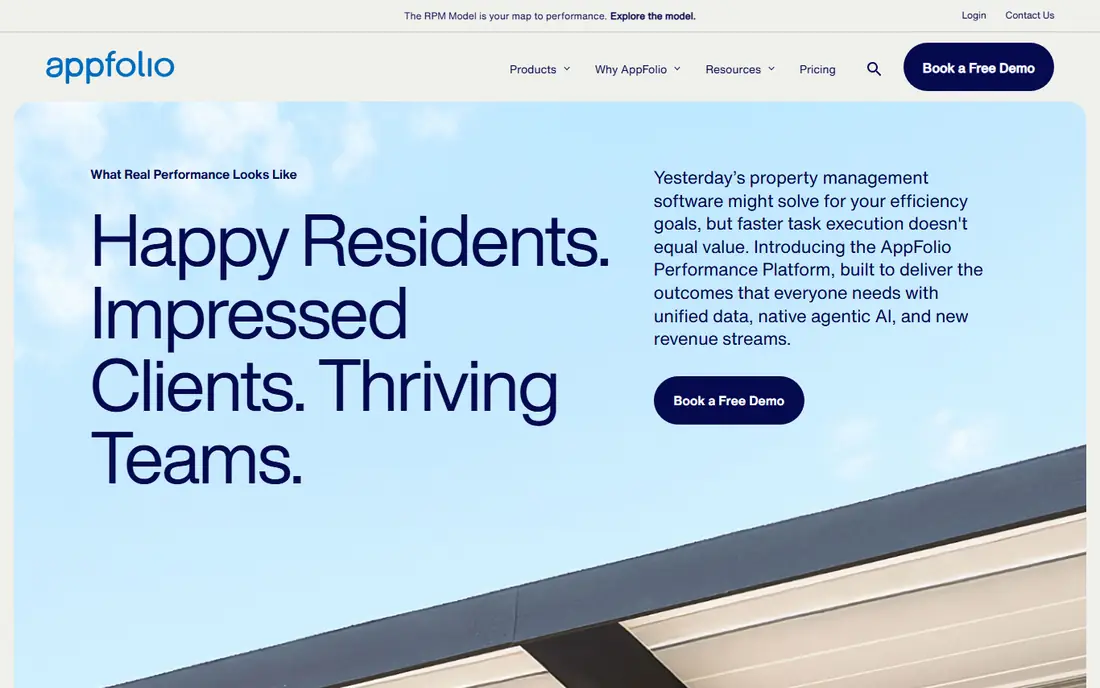
Reviewers consistently praise AppFolio for covering the full management workflow in one system, from marketing and leasing to accounting and owner reporting, with reliable rent collection and reporting. Mobile apps for tenants and managers also earn positive comments. That breadth is why larger managers often rate it highly despite its price.
The recurring complaints are cost and onboarding: per-unit pricing grows with portfolio size, and large migrations take planning and support time. Smaller landlords often say AppFolio is more than they need. For larger portfolios, reviews support AppFolio as a leading choice.
- Praised for broad features and reliability
- Strong rent, screening, and reporting
- Good mobile apps
- Reviewers note per-unit pricing growth
- Onboarding can take time for large portfolios
Buildium
Ideal for: Mid-size managers, reviewed well
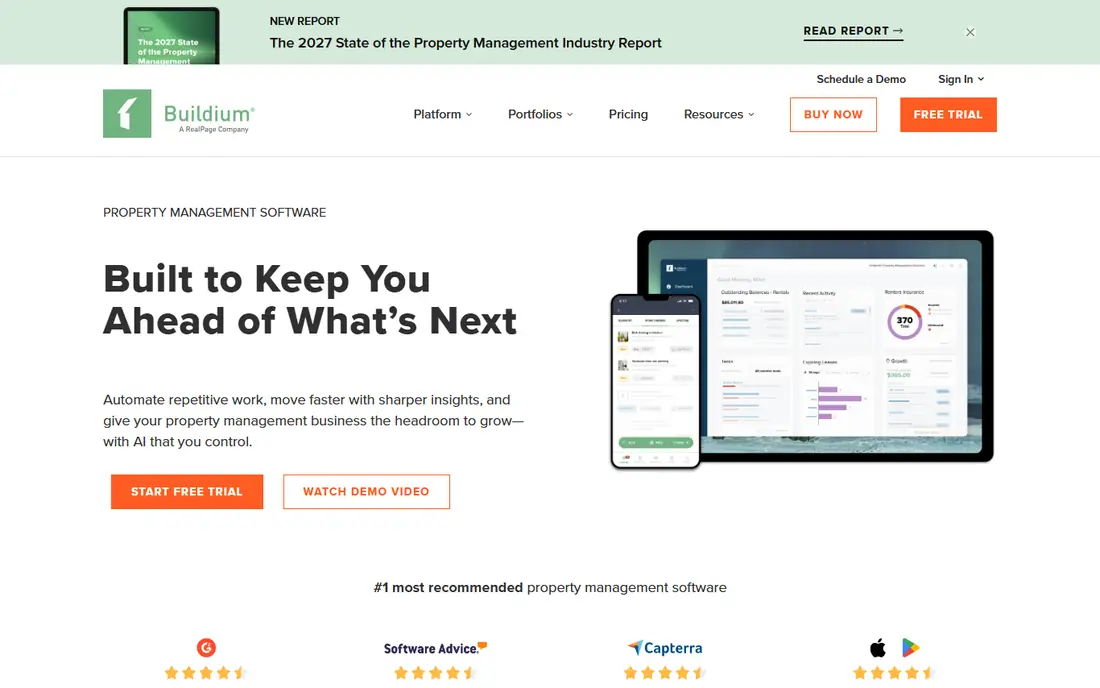
Buildium reviews often highlight balance: it covers rent, leasing, maintenance, accounting, and owner reporting without feeling as enterprise-heavy as larger platforms, and support earns positive mentions. Owner portals and accounting are frequent praise points, which matter for managers serving investor clients. That balance explains its popularity with mid-size managers.
Complaints center on pricing tiers, payment processing fees, and features gated to higher plans. Reviewers also note a learning curve for accounting depth. For mid-size managers, Buildium remains one of the best-reviewed options.
- Praised for all-round balance
- Good owner portal and accounting
- Helpful support in reviews
- Reviewers note pricing tiers and payment fees
- Some advanced features need higher plans
DoorLoop
Ideal for: Modern design, growing managers
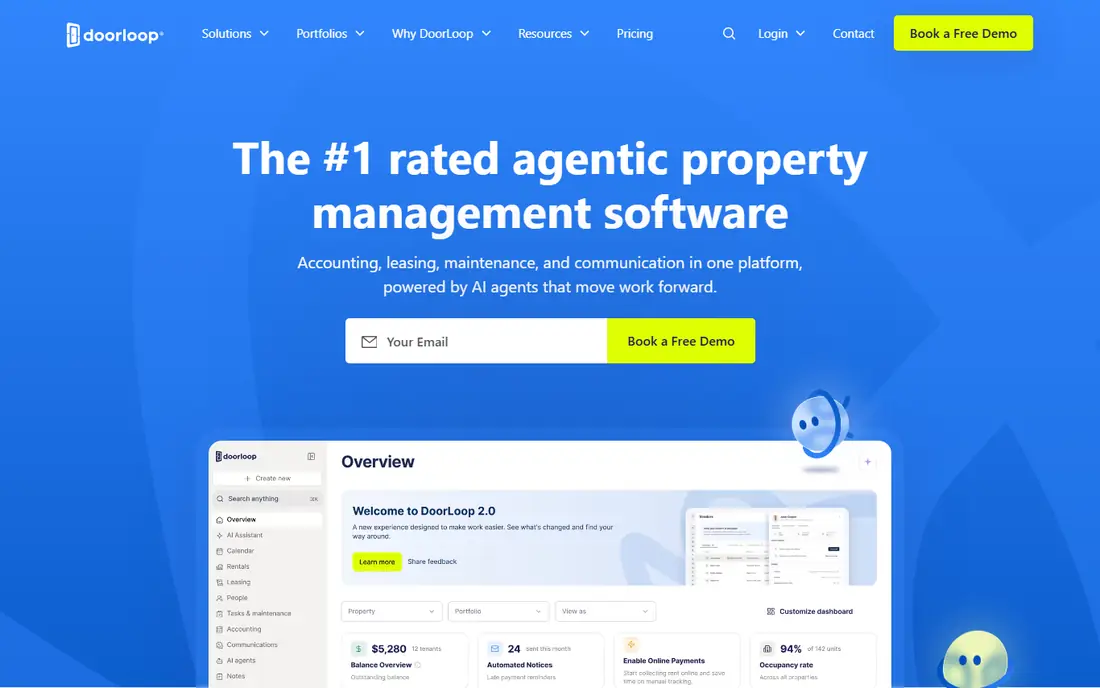
DoorLoop reviews praise its modern, easy-to-use interface and fast setup, with rent collection, screening, and maintenance workflows that feel straightforward for growing managers. Users moving from spreadsheets or older tools often comment on how much easier daily work feels. That design focus is DoorLoop's main review advantage.
The flip side is feature depth: reviewers sometimes note gaps compared with long-running platforms such as AppFolio, Buildium, or RentManager, especially for complex portfolios. As a newer vendor, its track record is shorter. For growing managers that value design and ease, DoorLoop reviews well.
- Praised for modern interface and ease of use
- Good rent and maintenance workflows
- Fast setup
- Reviewers note feature gaps versus older platforms
- Newer vendor with shorter track record
RentRedi
Ideal for: Landlord-friendly simplicity
RentRedi reviews highlight affordability, a good mobile app, and simplicity for independent landlords, with rent, screening, and maintenance that do not require a management background to use. Landlords often praise the value compared with per-unit enterprise pricing. That landlord focus is its strength in reviews.
Accounting depth and large-portfolio features earn more mixed comments, and larger managers may find it limiting. For independent landlords, RentRedi is one of the best-reviewed affordable options.
- Praised for affordability and mobile app
- Simple rent, screening, and maintenance
- Good for landlords
- Reviewers note lighter accounting depth
- Less suited to large portfolios
TurboTenant
Ideal for: Free landlord tools
TurboTenant reviews praise its free core tools for landlords, including rental listings, applications, screening, leases, and rent collection, with a workflow that guides DIY landlords step by step. That free entry and guided setup earn positive comments from first-time landlords. It is a popular starting point for self-managing owners.
Paid add-ons for some payment and premium features, and lighter management depth than Buildium, are common notes. For DIY landlords who want free core tools, TurboTenant reviews well.
- Praised for free core tools
- Easy listings, screening, and leases
- Good for DIY landlords
- Reviewers note paid add-ons for payments and premium features
- Management depth is lighter
Hemlane
Ideal for: Landlords wanting management help
Hemlane combines software with local licensed agents who can help with leasing, showings, maintenance coordination, and tenant communication, which appeals to landlords who want management help without hiring a full management company. Reviews praise that human support alongside software tools for rent and leases. That hybrid model is distinct in this list.
Pricing and agent availability vary by area, and landlords who want pure self-serve software may find Hemlane less flexible. For landlords who want help as well as software, Hemlane is a well-reviewed hybrid option.
- Praised for local agent support and management help
- Rent, leasing, and maintenance coordination
- Reviewers note pricing and service availability by area
- Less self-serve than pure software
Innago
Ideal for: Free landlord management
Innago reviews praise its free core property management tools, covering rent collection, leases, maintenance, and tenant communication for small landlords. That free entry, without a monthly subscription for core features, earns positive comments from landlords with a few units. Simplicity is a recurring praise point.
Paid features for screening, payments, and premium tools, plus a smaller feature range than professional platforms, are common notes. For small landlords who want free core management, Innago is a strong reviewed choice.
- Praised for free core management
- Rent, leases, and maintenance
- Simple for small landlords
- Reviewers note paid features for screening and payments
- Smaller feature range than Buildium
TenantCloud
Ideal for: Small landlords on a budget
TenantCloud reviews praise its free tier and budget value for small landlords, with rent, leases, maintenance, and a tenant portal covering the basics without an immediate cost. That low-cost entry suits landlords testing software for the first time. Paid plans add accounting and screening depth.
Free tier limits, paid upgrades, and variable support response are common review notes. For small landlords on a budget, TenantCloud remains a well-reviewed starting point, especially when compared with paid-only platforms.
- Praised for free tier and budget value
- Rent, leases, and maintenance basics
- Tenant portal
- Reviewers note free tier limits and paid upgrades
- Support response varies in reviews
How we picked these
We compared official feature pages with public review themes for property management software, focusing on what users with similar portfolio sizes praise and complain about. We included tools across landlord and manager segments, from free landlord tools to enterprise platforms, and we treated review scores as moving targets, reporting themes rather than exact ratings. Tools with no clear review presence were left out.
What to check before you trust property software reviews
Start with reviewers like you. A five-star review from a landlord with two units says little about a manager with two hundred, and vice versa, so filter reviews by portfolio size and property type where review sites allow it. Look for patterns across many reviews, such as pricing, support, or payment fees, rather than single complaints or praise.
Next, test the workflows reviewers mention most: rent collection, maintenance, accounting, and owner reporting, with your real portfolio data if possible. Confirm pricing at your unit count, including payment and screening fees, since those costs appear often in critical reviews. Finally, check support hours and onboarding help, since reviewers frequently link satisfaction to support quality during migration, not just features.
Also note that review sentiment often shifts after major pricing or feature changes, so check review dates as well as scores. A tool praised two years ago may have changed plans, support, or ownership since, and recent reviews will reflect that. Look at the most recent year of reviews for the clearest picture, and weigh detailed reviews that describe specific workflows over short star-only ratings.
Frequently asked questions
What is the best-reviewed property management software?
AppFolio and Buildium earn strong reviews from professional managers, DoorLoop earns praise for modern design, and RentRedi, TurboTenant, and Innago earn praise from landlords for simplicity and value. The best-reviewed tool depends on portfolio size and management style.
Are free property management tools good enough?
For small landlords, free core tools from TurboTenant, Innago, TenantCloud, and Avail often cover listings, leases, rent, and maintenance well. Larger portfolios usually need paid platforms for accounting depth, owner reporting, and scale.
Why do property software reviews mention pricing so often?
Most professional tools charge per unit per month, so costs grow with portfolio size, and payment processing and screening fees add to the bill. Reviewers often praise a tool's features but criticize total cost, so model pricing at your unit count before choosing.
How do I compare property software reviews fairly?
Filter reviews by portfolio size, property type, and use case, and look for repeated themes across many reviews rather than single outliers. Test shortlisted tools with your real workflows, since review scores alone do not show fit for your portfolio.
Should I switch property management software?
Switching is worthwhile when your current tool limits growth, lacks accounting depth, or costs more than a better-fitting alternative, but migration takes planning for tenant, lease, and financial data. Ask vendors about migration support, timeline, and data checks before committing.