Best CRMs for the service industry in 2026: 8 Compared

- 1
 Jobberfield service CRM and schedulingVisit
- 2
 Housecall Prohome service CRMVisit
- 3
 ServiceTitanlarge service business CRMVisit
- 4
 Zoho CRMvalue CRM for service firmsVisit
- 5
 HubSpot CRMall round service CRMVisit
- Our pick for most readers is Jobber, because it fits best-rated crm for service industry directly and covers the core need without unnecessary extras.
- Housecall Pro is the strongest alternative when home service CRM matters more than a single all purpose choice, so compare it side by side with our pick.
- Pricing varies widely across this list, so check the official pricing page before you commit, and treat any figure marked See website as quote based or usage based.
- The best choice depends on your budget, your team size, and how often you will use it, which is why we list 8 options for best-rated crm for service industry rather than a single winner for everyone.
Quick comparison
| Product | Ideal for | Price from | Free version | |
|---|---|---|---|---|
| Jobber | field service CRM and scheduling | See website | Free trial | Visit |
| Housecall Pro | home service CRM | See website | Free trial | Visit |
| ServiceTitan | large service business CRM | See website | No | Visit |
| Zoho CRM | value CRM for service firms | See website | Free trial | Visit |
| HubSpot CRM | all round service CRM | Free | Yes | Visit |
 Freshsales | sales CRM for service teams | See website | Free trial | Visit |
 Thryv | small service business CRM | See website | Free trial | Visit |
 Keap | CRM plus automation for small firms | See website | Free trial | Visit |
The best CRMs for the service industry
We compared official feature pages, pricing pages, app store listings where relevant, privacy policies, and public reviews for best-rated crm for service industry. The 8 options below cover the main ways readers approach this topic, from well known leaders to smaller specialists worth considering.
Jobber
Ideal for: field service CRM and scheduling
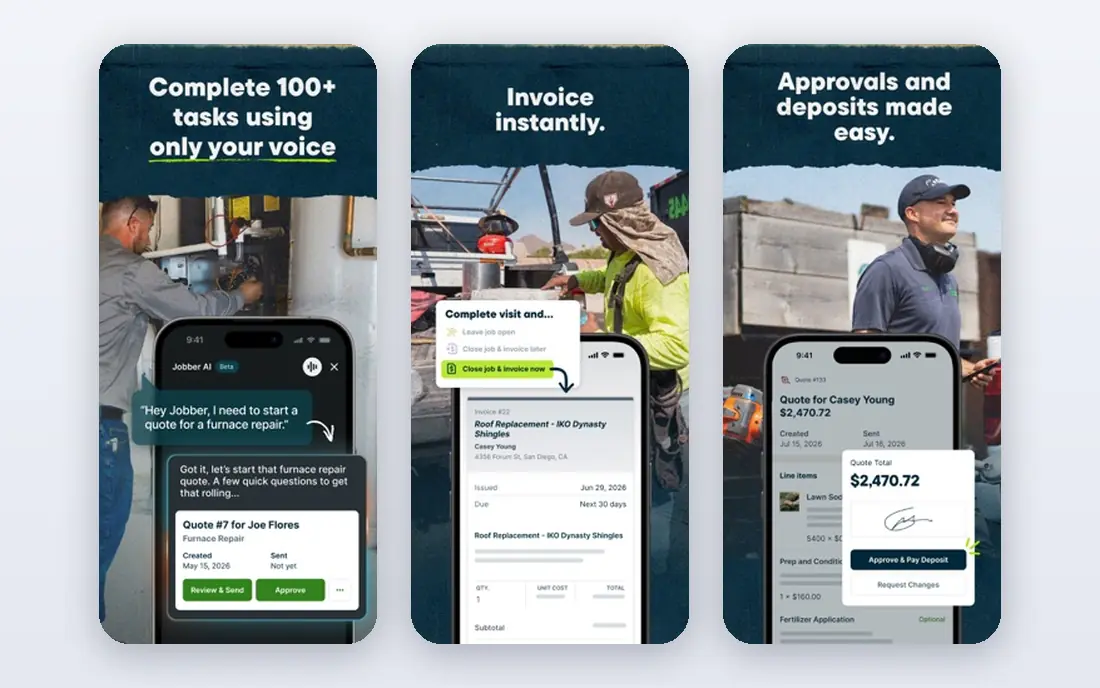
For readers whose main need is field service CRM and scheduling, Jobber is worth a close look. It is aimed at that use case first, which keeps the decision clearer than a general tool that tries to cover everything. That focus matters in daily use, because it affects cost, setup time, and how much help you need from the provider. On the plus side, it offers quotes, scheduling and invoicing together and good mobile app. Those points matter in daily use, because they affect setup time, ongoing cost, and how much support you need from the provider. It also offers client reminders. The limits to weigh are pricing is per user tiers and marketing tools are basic. If either one clashes with how you work, another option on this list may fit better. Our view is to weigh those limits against the strengths above, and to check the official pricing page before you commit, since plans change.
- Quotes, scheduling and invoicing together
- Good mobile app
- Client reminders
- Pricing is per user tiers
- Marketing tools are basic
Housecall Pro
Ideal for: home service CRM
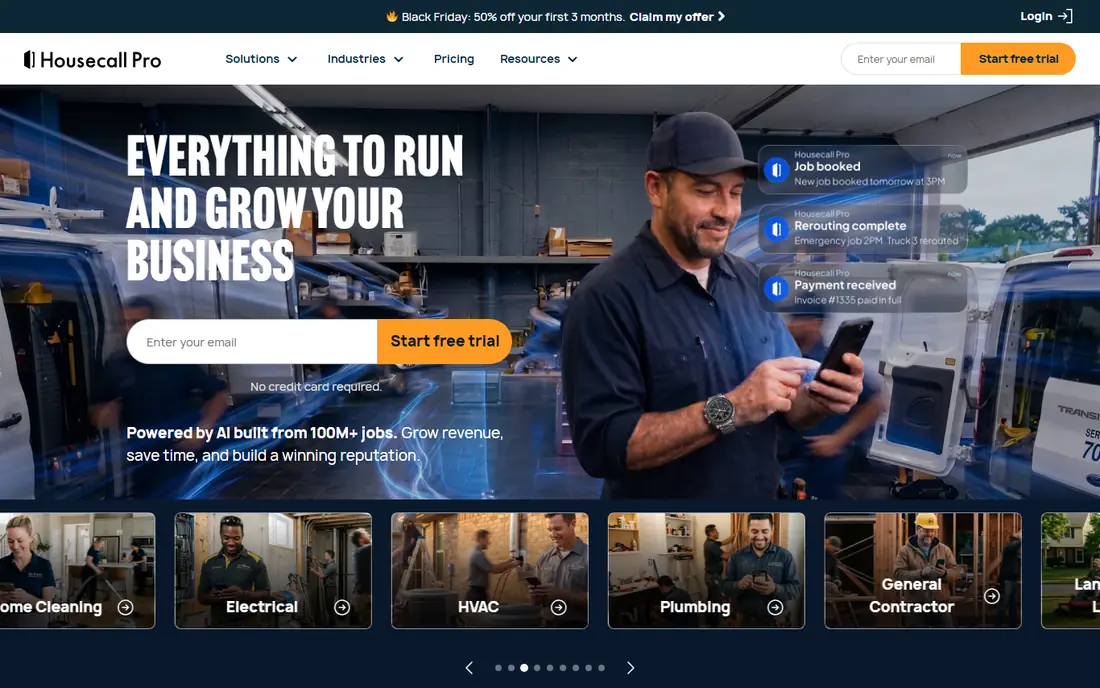
Housecall Pro stands out first for home service CRM, and that focus shapes the whole experience. It is aimed at that use case first, which keeps the decision clearer than a general tool that tries to cover everything. That focus matters in daily use, because it affects cost, setup time, and how much help you need from the provider. On the plus side, it offers scheduling and dispatch and online booking. Those points matter in daily use, because they affect setup time, ongoing cost, and how much support you need from the provider. It also offers invoicing and payments. The limits to weigh are add ons raise cost and some features need higher plans. If either one clashes with how you work, another option on this list may fit better. Our view is to weigh those limits against the strengths above, and to check the official pricing page before you commit, since plans change.
- Scheduling and dispatch
- Online booking
- Invoicing and payments
- Add ons raise cost
- Some features need higher plans
ServiceTitan
Ideal for: large service business CRM
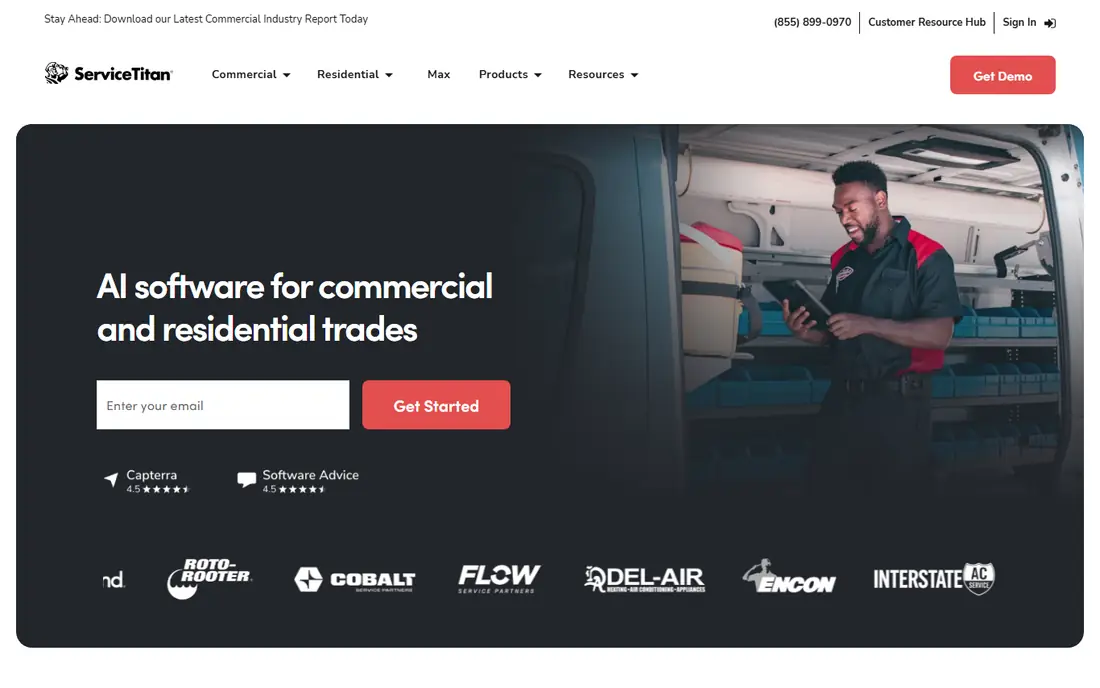
If large service business CRM is your priority, ServiceTitan deserves a place on your shortlist. It is aimed at that use case first, which keeps the decision clearer than a general tool that tries to cover everything. That focus matters in daily use, because it affects cost, setup time, and how much help you need from the provider. On the plus side, it offers full job management and strong reporting. Those points matter in daily use, because they affect setup time, ongoing cost, and how much support you need from the provider. It also offers marketing Pro tools. The limits to weigh are pricing is high for small firms and onboarding takes time. If either one clashes with how you work, another option on this list may fit better. Our view is to weigh those limits against the strengths above, and to check the official pricing page before you commit, since plans change.
- Full job management
- Strong reporting
- Marketing Pro tools
- Pricing is high for small firms
- Onboarding takes time
Zoho CRM
Ideal for: value CRM for service firms
We put Zoho CRM on this list mainly for value CRM for service firms, where it covers the basics well. It is aimed at that use case first, which keeps the decision clearer than a general tool that tries to cover everything. That focus matters in daily use, because it affects cost, setup time, and how much help you need from the provider. On the plus side, it offers good price for features and automation options. Those points matter in daily use, because they affect setup time, ongoing cost, and how much support you need from the provider. It also offers email tools built in. The limits to weigh are interface can feel busy and some features need add ons. If either one clashes with how you work, another option on this list may fit better. Our view is to weigh those limits against the strengths above, and to check the official pricing page before you commit, since plans change.
- Good price for features
- Automation options
- Email tools built in
- Interface can feel busy
- Some features need add ons
HubSpot CRM
Ideal for: all round service CRM
For readers whose main need is all round service CRM, HubSpot CRM is worth a close look. It is aimed at that use case first, which keeps the decision clearer than a general tool that tries to cover everything. That focus matters in daily use, because it affects cost, setup time, and how much help you need from the provider. On the plus side, it offers free core CRM and contact and deal tracking. Those points matter in daily use, because they affect setup time, ongoing cost, and how much support you need from the provider. It also offers large integrations. The limits to weigh are paid hubs get costly and field service tools need integrations. If either one clashes with how you work, another option on this list may fit better. Our view is to weigh those limits against the strengths above, and to check the official pricing page before you commit, since plans change.
- Free core CRM
- Contact and deal tracking
- Large integrations
- Paid hubs get costly
- Field service tools need integrations
Freshsales
Ideal for: sales CRM for service teams
Freshsales stands out first for sales CRM for service teams, and that focus shapes the whole experience. It is aimed at that use case first, which keeps the decision clearer than a general tool that tries to cover everything. That focus matters in daily use, because it affects cost, setup time, and how much help you need from the provider. On the plus side, it offers phone and email built in and lead scoring. Those points matter in daily use, because they affect setup time, ongoing cost, and how much support you need from the provider. It also offers clean interface. The limits to weigh are free tier is limited and field scheduling needs other tools. If either one clashes with how you work, another option on this list may fit better. Our view is to weigh those limits against the strengths above, and to check the official pricing page before you commit, since plans change.
- Phone and email built in
- Lead scoring
- Clean interface
- Free tier is limited
- Field scheduling needs other tools
Thryv
Ideal for: small service business CRM
If small service business CRM is your priority, Thryv deserves a place on your shortlist. It is aimed at that use case first, which keeps the decision clearer than a general tool that tries to cover everything. That focus matters in daily use, because it affects cost, setup time, and how much help you need from the provider. On the plus side, it offers client management plus marketing and online booking. Those points matter in daily use, because they affect setup time, ongoing cost, and how much support you need from the provider. It also offers payments included. The limits to weigh are pricing varies by bundle and some tools are basic. If either one clashes with how you work, another option on this list may fit better. Our view is to weigh those limits against the strengths above, and to check the official pricing page before you commit, since plans change.
- Client management plus marketing
- Online booking
- Payments included
- Pricing varies by bundle
- Some tools are basic
Keap
Ideal for: CRM plus automation for small firms
We put Keap on this list mainly for CRM plus automation for small firms, where it covers the basics well. It is aimed at that use case first, which keeps the decision clearer than a general tool that tries to cover everything. That focus matters in daily use, because it affects cost, setup time, and how much help you need from the provider. On the plus side, it offers automation and campaigns and appointment tools. Those points matter in daily use, because they affect setup time, ongoing cost, and how much support you need from the provider. It also offers small business focus. The limits to weigh are learning curve for automation and prices rise with contacts. If either one clashes with how you work, another option on this list may fit better. Our view is to weigh those limits against the strengths above, and to check the official pricing page before you commit, since plans change.
- Automation and campaigns
- Appointment tools
- Small business focus
- Learning curve for automation
- Prices rise with contacts
How we picked these
We started with products and services that exist and work in October 2026 and that truly fit best-rated crm for service industry, then we compared their official feature pages, pricing pages, app store listings where relevant, privacy policies, and public reviews. We left out options that did not fit the topic, even when they were popular elsewhere, and we marked prices as See website whenever the vendor did not publish a simple starting price we could verify. We mixed well known leaders with smaller specialists, because the best known name is not always the best fit for a particular budget, team size, or use case. We did not claim hands-on testing we did not do. Instead, we weighed published features, pricing, limits, and reported problems, and we kept the honest weakness of each option next to its strengths so readers can judge the trade off for themselves.
What to check before you choose
Start with the job you actually need done, not the longest feature list. Write down your budget, how often you will use the service, who else needs access, and what must work on day one. Then match that short list against two or three options here, rather than comparing all eight in full detail at once. Check the total cost, not just the headline price. Look for setup fees, per user charges, usage limits, renewal prices, and cancellation terms on the official pricing page. A low starting price can still be costly if the plan you need sits two tiers higher, and a higher price can be fair value if it removes a separate tool you already pay for. - Total cost over a full year, including renewal pricing and add ons. - Limits that matter to you, such as users, volume, storage, or locations covered. - Support hours and channels, and whether help is included or charged extra. - Contract length, cancellation terms, and what happens to your data if you leave. Finally, confirm availability for your location and your situation before you pay. Some services vary by state, country, or plan, and some offers depend on eligibility checks. A quick check of the official terms page now saves a refund request later, and it keeps the choice grounded in what you will actually receive.
Frequently asked questions
Which CRMs for the service industry is best for most people?
Our pick for most readers is Jobber, because it covers the core need for best-rated crm for service industry without unnecessary extras. That said, the right pick depends on your budget and how often you will use it, so compare our pick with Housecall Pro before you decide. Both are strong, and they suit different priorities.
How much do CRMs for the service industry cost?
Prices vary widely across this list, and several vendors use quote based or usage based pricing, which is why some entries say See website. Check the official pricing page for the plan that matches your volume and team size, and add up renewal prices and add ons before you compare totals.
Is there a free CRMs for the service industry option?
Yes. HubSpot CRM offer a free tier, although free tiers usually limit features, volume, or support, so check what is included before you rely on one.
How do I choose between these CRMs for the service industry?
Start with your must have features, your budget, and how often you will use the service, then narrow the list to two or three options that meet those needs. Read the strengths and limits for each one, check the official pricing page, and use a trial or a small first order when one is offered.
Can I switch CRMs for the service industry later?
In most cases, yes, but switching can take time if you have data, settings, or a contract tied to your current choice. Check contract length, export options, and cancellation terms before you sign up, and keep a copy of your data where the service allows it.