7 Best Rated Web Crawling Tools for Automation Options for 2026

- 1
 Bright DataEnterprises running large-scale data collectionVisit
- 2
 DiffbotStructured extraction and a queryable knowledge graphVisit
- 3
 ApifyTeams that want crawlers, proxies and scheduling on one productVisit
- 4
 OxylabsProxy infrastructure with a scraping API on topVisit
- 5
 ScrapyPython teams building custom crawlers they completely controlVisit
- Top of the list is Bright Data, which targets enterprises running large-scale data collection.
- For developers who want a straightforward API for hard pages, ScrapingBee is worth a look.
- Starting prices begin at $30/month with Oxylabs.
- 3 of 7 tools offer a free plan: Diffbot, Oxylabs, Scrapy.
- Before buying Apify, weigh this: pricing page did not render publicly in our check, so costs need the vendor site or a call to confirm.
Direct answer
Bright Data leads the list, best for enterprises running large-scale data collection. Look at Diffbot for structured extraction and a queryable knowledge graph, and at Apify for teams that want crawlers, proxies and scheduling on one system. Details, prices and limits for the rest of the 7 tools are below.
Quick comparison
| Product | Ideal for | Price from | Free version | |
|---|---|---|---|---|
| Bright Data | Enterprises running large-scale data collection | See website | No | Visit |
| Diffbot | Structured extraction and a queryable knowledge graph | From $299/month | Yes | Visit |
| Apify | Teams that want crawlers, proxies and scheduling on one product | See website | No | Visit |
| Oxylabs | Proxy infrastructure with a scraping API on top | From $30/month | Yes | Visit |
| Scrapy | Python teams building custom crawlers they completely control | Free | Yes | Visit |
 Octoparse | Non-developers who require visual point-and-click scraping | See website | No | Visit |
 ScrapingBee | Developers who want a straightforward API for hard pages | See website | No | Visit |
The full rated web crawling tools for automation list
This Ainotely guide covers 7 options for rated web crawling tools for automation. Each profile lists a starting price, free plan details, strengths and drawbacks, so you can drop poor fits quickly.
Bright Data
Ideal for: Enterprises running large-scale data collection
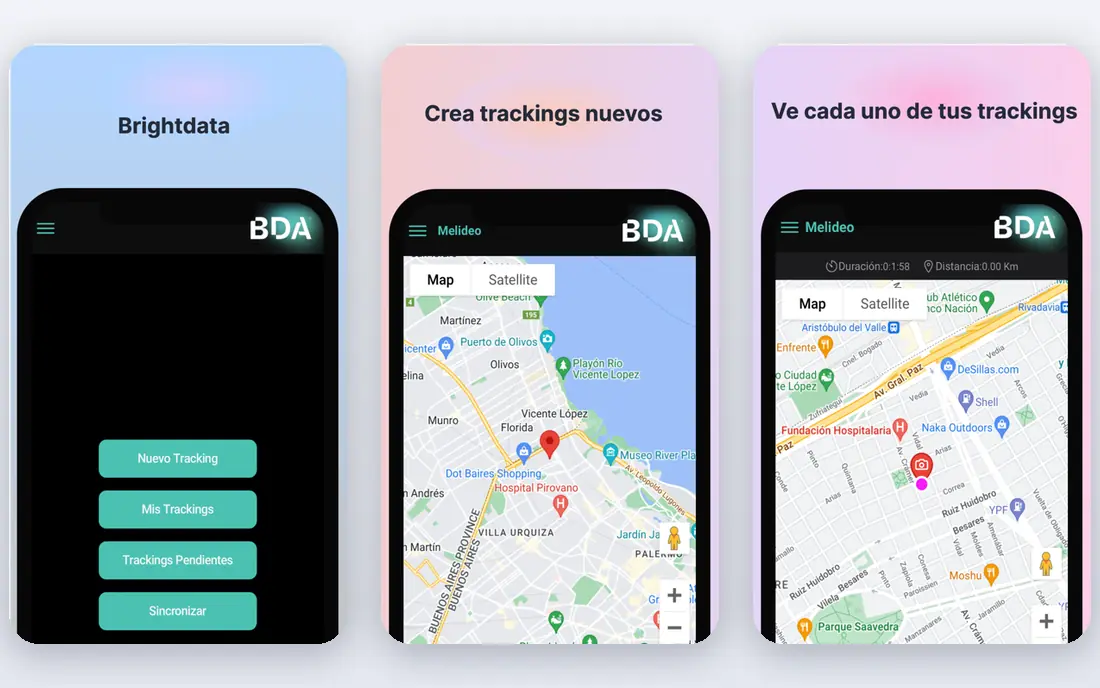
Choose Bright Data for enterprises running large-scale data collection. Bright Data is the infrastructure heavyweight: a massive proxy network, scraping APIs, ready-made datasets and a managed data collection service. From a buyer's view, the pricing and buying experience reflect that enterprise focus.
Where it falls short: Pricing page did not render publicly in our check.
From a buyer's view, if you need serious scale with compliance handle, it is worth the process. Worth adding: the compliance tooling and documentation are more mature than most competitors. This comparison lists no price for Bright Data; ask the vendor. Bright Data has no permanent free option.
Where it shines: Scraping APIs.
- Capable compliance posture
- Datasets and managed collection under one roof
- Enterprise sales motion, not self-serve friendly
Diffbot
Ideal for: Structured extraction and a queryable knowledge graph
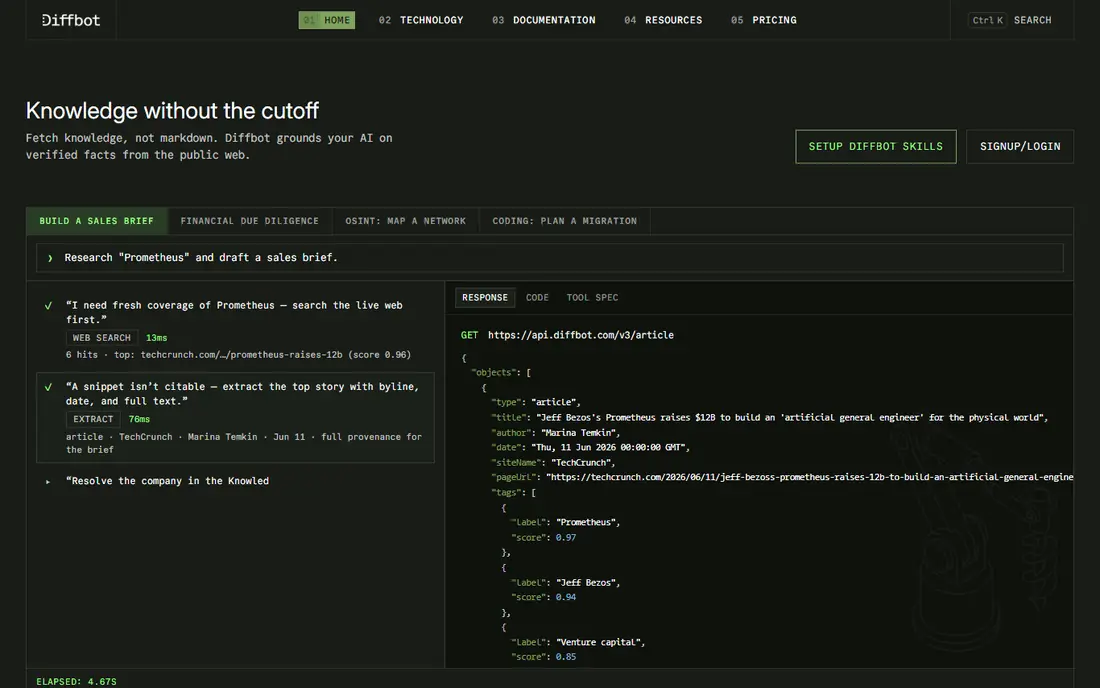
Diffbot is aimed squarely at structured extraction and a queryable knowledge graph. The pricing page is refreshingly clear: a Free plan with 10,000 monthly credits, Startup at $299 per month with 250,000 credits, Plus at $899, and custom Enterprise. It does not just fetch pages: it extracts structured, opinionated data from them, resolves entities, and maintains a knowledge graph of the public web you can query straight.
Credits map to actions like page extractions and entity queries, so model your workload with the on-page calculator. On top of that, for AI applications that require grounded facts instead of raw HTML, that is a different and valuable proposition. What you pay to start with Diffbot: From $299/month. Diffbot offers a free plan.
Limits to weigh: premium plans start high at $299 per month.
- Patented extraction technology
- Extraction plus knowledge graph plus web search
- Credit model takes effort to map to your workload
Apify
Ideal for: Teams that want crawlers, proxies and scheduling on one product
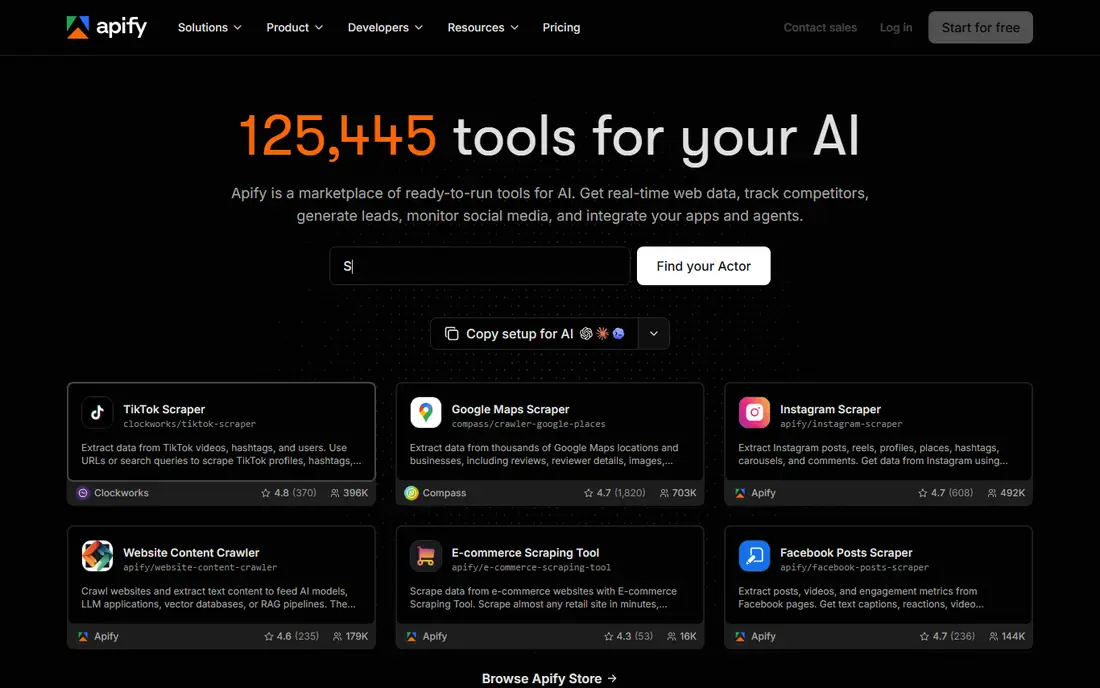
Apify is designed for teams that want crawlers, proxies and scheduling on one platform. Apify is the closest thing to a full-stack crawling product.
Worth adding: if you need one URL scraped on a schedule, a lighter API may be less expensive and quicker. No starting price is listed for Apify here; confirm pricing on the vendor site. Apify does not include a free plan.
- Marketplace of ready-made actors
- Built-in proxies
- Pricing page did not render publicly in our check, so costs need the vendor site or a call to confirm
Oxylabs
Ideal for: Proxy infrastructure with a scraping API on top
Oxylabs is a good fit for proxy infrastructure with a scraping API on top. The proxy network, 177 million-plus IPs, is the backbone.
Trade-offs to know: The full product catalog is broad, so picking the right service takes work.
The newer browser and dataset products round out a genuinely full stack for data operations. Oxylabs pricing: From $30/month. Oxylabs has a free plan.
- Published pricing from $30 per month
- 177M-plus IP proxy network
- Usage-based costs scale quick
Scrapy
Ideal for: Python teams building custom crawlers they completely control
Where Scrapy fits: Python teams building custom crawlers they completely control. Spiders are Python classes that follow links, extract data with CSS or XPath selectors and yield structured items. On top of that, for teams with Python skills and specific requirements no API can meet, it remains the best answer.
For everyday use, the cost is engineering time. From a buyer's view, everyone else should price the engineering time honestly against a managed API. On cost, Scrapy starts like this: Free. A free plan is available with Scrapy.
Trade-offs to know: You supply the proxies, browsers, scheduling and monitoring.
- The most-used open-source extraction framework
- 15-plus years in production
- JavaScript-heavy sites need additional tooling
Octoparse
Ideal for: Non-developers who require visual point-and-click scraping
Octoparse is aimed squarely at non-developers who require visual point-and-click scraping. We could not verify plan rates from Octoparse's public pages during this check, so confirm pricing on the vendor site.
In practice, complicated multi-step flows, aggressive anti-bot protection and very large crawls will strain it, and that is where the API-first tools take over. In daily use, the limits are the usual ones for visual scrapers. This comparison lists no price for Octoparse; ask the vendor. Octoparse has no free plan.
Honest limits: Pricing page did not render publicly in our check.
- Cloud extraction with scheduling
- Templates for widely used sites
- Visual builders hit limits on complicated or heavily protected sites
ScrapingBee
Ideal for: Developers who want a straightforward API for hard pages
ScrapingBee is designed for developers who want a straightforward API for hard pages. There is no crawler framework to learn and no browser fleet to maintain. For teams whose scraping needs are really "get this page dependably," that focus is the appeal.
What to check first: Less of a system than Apify or Bright Data.
Worth adding: we could not verify plan rates from ScrapingBee's public pages during this check, so get the numbers from the vendor site before committing. Worth adding: the product is narrower by design. It does not offer a crawler marketplace, scheduling dashboards or managed datasets, so bigger programs end up bolting those on. This comparison lists no price for ScrapingBee; ask the vendor. There is no free plan with ScrapingBee.
- Decent documentation
- Handles headless browsers and proxies behind one endpoint
- Pricing page did not render publicly in our check
How the list was put together
Pricing pages, product documentation and feature lists were the main sources, and every entry carries at least one honest drawback. Treat prices as a snapshot: vendors change plans often, so check the vendor site for the figure that applies today. The ranking is editorial: typical fit first, then clear pricing, then free access. If your needs are unusual, read the profiles rather than relying on position.
Things to verify first
- Confirm the entry price on the vendor page. For Bright Data, Apify, Octoparse and ScrapingBee that means a quote rather than a fixed price.
- Look at free plan limits closely: Diffbot, Oxylabs and Scrapy have one, and the caps decide whether it is usable for real work.
- Read the limits listed for Bright Data first: pricing page did not render publicly in our check.
- Confirm minimum seats and billing terms with ScrapingBee before you commit to an annual plan.
- Run a one or two week pilot of Apify with the people who will use it every day.
Frequently asked questions
Do these tools publish their prices?
Not all of them. Bright Data, Apify, Octoparse and ScrapingBee publish no starting price, so expect a quote request for those. The rest, Diffbot included, show a starting price, though seats and billing terms still change the final cost.
Is Bright Data the right pick for everyone comparing rated web crawling tools for automation?
No single tool suits every team. Bright Data comes first because it fits enterprises running large-scale data collection, while Diffbot suits structured extraction and a queryable knowledge graph and Apify suits teams that want crawlers, proxies and scheduling on one platform. Match the tool to your own size, budget and workflow before deciding.
Do I need proxies for web crawling?
Normally, yes, for anything beyond a handful of pages. That is the central reason managed APIs exist: they bundle the access handling you would otherwise build yourself.
Is web crawling legal?
Public data is broadly crawlable in numerous jurisdictions, but terms of service, robots.txt, rate limits and data protection regulations all constrain the practice.
What is the cheapest option for rated web crawling tools for automation in this list?
On published monthly entry prices, Oxylabs is the lowest here at $30/month. Entry price is only part of the cost, because seats, add-ons and billing terms can change the total.
How are the tools for rated web crawling tools for automation ordered?
Bright Data sits first and ScrapingBee last because the order follows typical fit for rated web crawling tools for automation, then price clarity and free access. It is a judgement call, so read each profile for fit and limits.