Recruitment Marketing Platforms in 2026: A Guide to 6 Tools

- 1
 AppcastEmployers that want job-ad spend managed against hiring outcomesVisit
- 2
 Symphony TalentEmployers that want creative services bundled with the technologyVisit
- 3
 GemRecruiting teams that source proactively and run multi-touch outreachVisit
- 4
 JoveoTeams wanting AI-driven programmatic advertising plus campaign creativeVisit
- 5
 RadancyGlobal employers that want career sites, CRM, programmatic media and analytics on one productVisit
- The list opens with Appcast, aimed at employers that want job-ad spend managed against hiring outcomes.
- PandoLogic fits high-volume employers running programmatic recruitment at scale.
- Pricing across the list, from Appcast to PandoLogic, is by quote only.
- The main caution on Joveo: newer full-platform positioning means less analyst track record than Radancy or Phenom.
- Appcast, PandoLogic and the 4 others all need a premium plan or a trial, since no free plan is listed.
Direct answer
Start with Appcast if you need employers that want job-ad spend managed against hiring outcomes. Alternatives: Symphony Talent for employers that want creative services bundled with the technology, and Gem for recruiting teams that source proactively and run multi-touch outreach. The full list of 6 tools follows, with prices and free plan facts.
Quick comparison
| Product | Ideal for | Price from | Free version | |
|---|---|---|---|---|
| Appcast | Employers that want job-ad spend managed against hiring outcomes | See website (performance-based pricing) | No | Visit |
| Symphony Talent | Employers that want creative services bundled with the technology | See website (custom quote) | No | Visit |
| Gem | Recruiting teams that source proactively and run multi-touch outreach | See website (custom quote) | No | Visit |
| Joveo | Teams wanting AI-driven programmatic advertising plus campaign creative | See website (custom quote) | No | Visit |
| Radancy | Global employers that want career sites, CRM, programmatic media and analytics on one product | See website (custom quote) | No | Visit |
 PandoLogic | High-volume employers running programmatic recruitment at scale | See website (custom quote) | No | Visit |
The 6 tools in detail
Ainotely put together this guide to recruitment marketing platforms for readers who want a clear shortlist without reading every vendor page. It compares 6 tools on starting price, free plans, who each one suits and where each one falls short.
Appcast
Ideal for: Employers that want job-ad spend managed against hiring outcomes
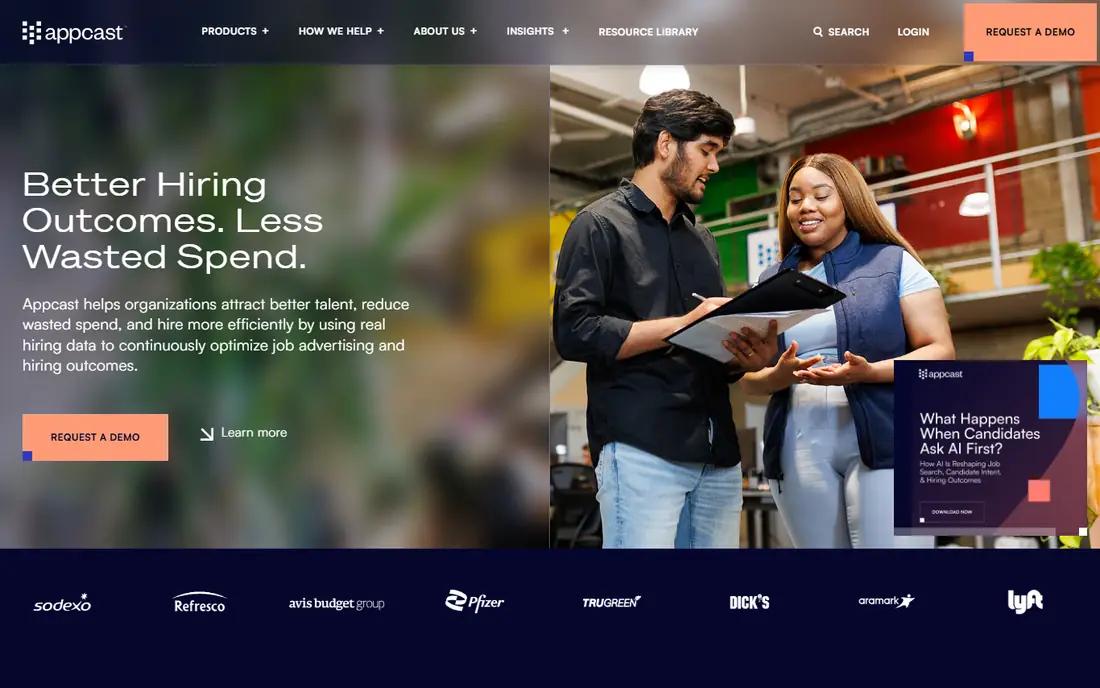
Appcast is designed for employers that want job-ad spend managed against hiring outcomes. Appcast answers a narrower question than the suites above: where should the next job-ad dollar go? Its programmatic system distributes spend across job boards and automatically shifts budget toward the roles and channels producing quality applicants, measured against ATS outcomes instead of clicks.
Where it falls short: It is a media optimization product.
For everyday use, what it does not do is the rest of recruitment marketing. Also, for employers already spending five or six figures per year on job ads, that reallocation is usually worth more than another dashboard. Worth adding: there is no talent CRM here and no career site CMS; Appcast assumes you have somewhere to send the candidates it finds. Check the vendor site for Appcast pricing; none is listed in this comparison. Appcast has no permanent free option.
- Managed service choice with recruitment marketing experts
- Programmatic engine allocates budget to the roles and channels that produce hires
- Not a CRM or career site builder
Symphony Talent
Ideal for: Employers that want creative services bundled with the technology
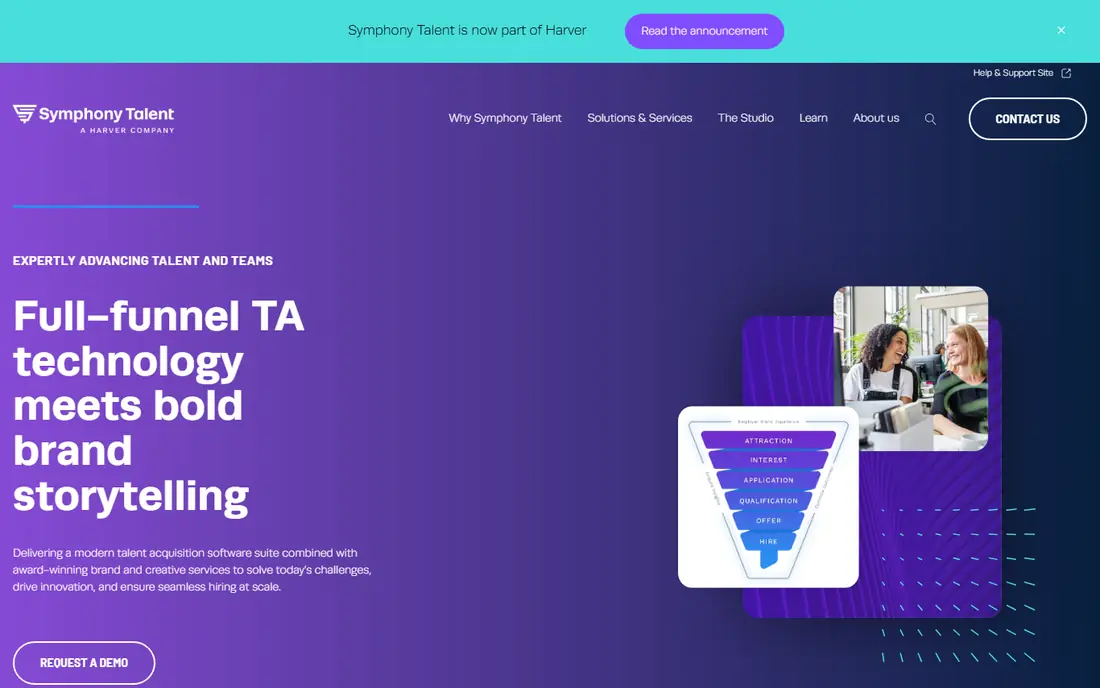
Pick Symphony Talent if this describes you: employers that want creative services bundled with the technology. Pricing is custom, and the full-funnel analytics pitch only pays off if you actually run the full funnel on the product. Worth adding: the main limit is the same as the pitch: the value proposition assumes you want both the tech and the creative.
For businesses where the career site and brand creative are the bottleneck, having both under one roof removes the usual agency-vendor friction. For everyday use, the SmashFly heritage displays in the CRM, which remains one of the stronger talent relationship tools here. Symphony Talent does not show a starting price in this comparison, so check the vendor site for current pricing. Symphony Talent has no free plan.
Best features of Symphony Talent: Solid in high-volume hiring; In-house creative agency (The Studio) for employer brand work.
Downsides: Best value comes from buying the full suite, which not every team needs.
- Programmatic media
- SFX suite spans CRM
- Custom pricing only
Gem
Ideal for: Recruiting teams that source proactively and run multi-touch outreach
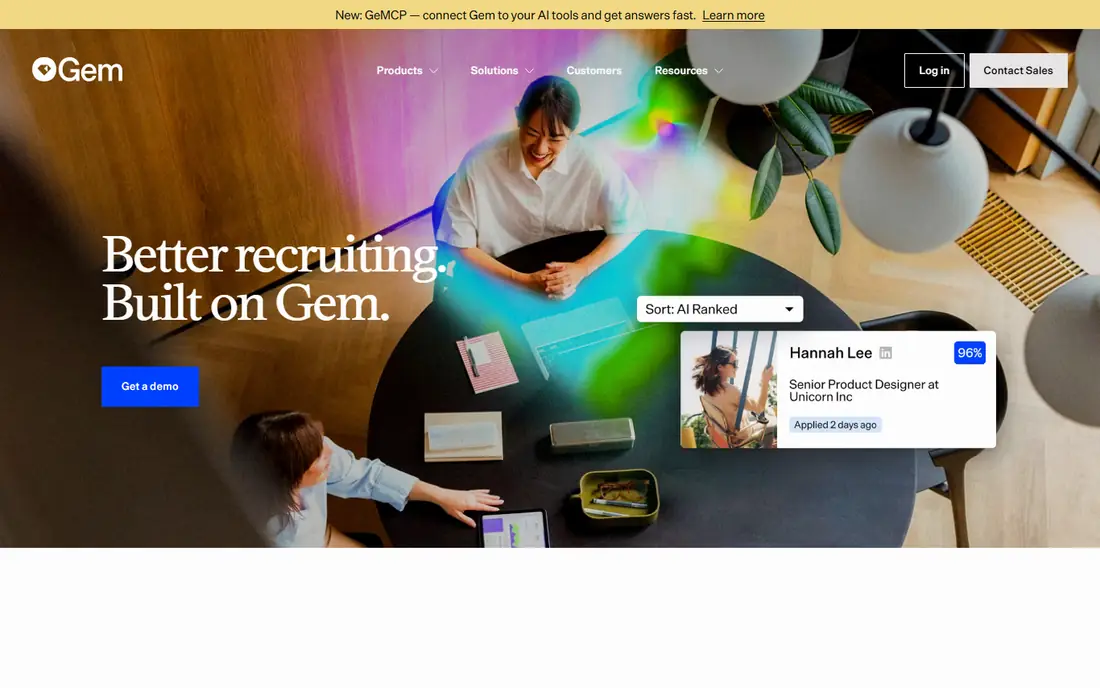
Pick Gem if this describes you: recruiting teams that source proactively and run multi-touch outreach. Gem is the tool for teams that hire through outbound. As for the details, pricing is entirely custom, and the pricing page lists product levels without numbers, so every deal goes through sales.
Where it shines: Talent rediscovery and pipeline analytics.
Worth adding: the 1-click sourcing from dozens of sites and unlimited email finding are the concrete reasons sourcing teams pick it over a generic CRM. As for the details, Gem will not build your employer brand or run your career site content strategy. It assumes candidates exist to be found. Gem shows no starting price here, so confirm the cost on the vendor site. No free plan comes with Gem. Drawbacks to consider: No published pricing at all.
- Solid ATS integrations
- 1-click sourcing from 20+ sites and unlimited email finding
- Centered on outbound sourcing, so inbound career-site and brand features are thinner
Joveo
Ideal for: Teams wanting AI-driven programmatic advertising plus campaign creative
Joveo makes the most sense for teams wanting AI-driven programmatic advertising plus campaign creative. The programmatic engine is proven; the newer AI career-site and chatbot layers have less public proof.
Joveo shows no starting price here, so confirm the cost on the vendor site. No free plan comes with Joveo.
Trade-offs to know: Custom pricing.
- Programmatic job advertising with AI bid and budget management
- AI-generated career sites and landing pages
- Newer full-platform positioning means less analyst track record than Radancy or Phenom
Radancy
Ideal for: Global employers that want career sites, CRM, programmatic media and analytics on one product
Radancy was built for global employers that want career sites, CRM, programmatic media and analytics on one system. Radancy, formerly TMP Worldwide, is the closest thing this category has to a default enterprise pick. From a buyer's view, mid-market teams should confirm which modules are actually included in their quote, since the full cloud is more than most businesses under 1,000 employees need.
Worth adding: acquisitions of Ascendify (CRM), Brazen (hiring events) and Firstbird (referrals) filled out the suite, so fewer point tools are needed around it. On top of that, the honest catch is the buying motion. This is a system sale with a product timeline: scoping, creative services onboarding and integrations take months, not weeks, and every price is negotiated. Check the vendor site for Radancy pricing; none is listed in this comparison. Radancy has no permanent free option.
Limits to weigh: Pricing is completely custom with no public starting point.
What users get: Agentic AI layer for screening.
- Scheduling and insights
- Deep analytics tying spend to hires
- Enterprise-grade scope means enterprise-grade contracts and implementation timelines
PandoLogic
Ideal for: High-volume employers running programmatic recruitment at scale
PandoLogic was built for high-volume employers running programmatic recruitment at scale. PandoLogic, now operating as Veritone Hire, is one of the pioneers of programmatic recruitment, with its pandoIQ product automating job-ad placement across thousands of sites since the late 2000s. As for the details, the acquisition is the thing to diligence.
Veritone bought PandoLogic and folded it into Veritone Hire. The pandologic.com site still serves the product, but buyers should get roadmap commitments in writing instead of assuming the standalone product continues unchanged. It remains a capable pick for high-volume hourly and frontline hiring where programmatic scale matters most. This comparison lists no price for PandoLogic; ask the vendor. PandoLogic does not include a free plan.
Limits to weigh: No public pricing.
- PandoIQ product with a long programmatic track record
- Conversational AI for candidate communication
- Acquired by Veritone and rebranded as Veritone Hire, so confirm the product roadmap in your contract
What went into this list
Each tool was reviewed on what its vendor publishes: price, plan limits, core features and stated drawbacks. We did not run hands-on tests. Seat minimums, billing terms and add-ons can move the real cost, so the starting prices here are a guide and not a quote. Position on the page reflects fit for a typical buyer first, with price clarity and free access breaking ties. Treat it as a guide, not a ruling.
Pre-purchase checklist
- Request quotes from Appcast, PandoLogic and the others; the list shows no fixed prices.
- Read the limits listed for Appcast first: it is a media optimization platform, not a CRM or career site builder.
- Run a one or two week pilot of Radancy with the people who will use it every day.
- Confirm you can export your data from PandoLogic, so leaving later does not mean losing records.
- List the apps you already depend on and check that Joveo supports each one on the plan you would buy.
Frequently asked questions
How are the tools for recruitment marketing platforms ordered?
Appcast sits first and PandoLogic last because the order follows typical fit for recruitment marketing platforms, then price clarity and free access. It is a judgement call, so read each profile for fit and limits.
Can I try these options before paying?
Not by default. None of the tools, from Appcast to PandoLogic, lists a free plan or a free trial here, so ask each vendor for a demo before committing.
Do these tools publish their prices?
No. None of the tools, from Appcast to PandoLogic, shows a fixed starting price here, so budget time for quotes.
Does any tool for recruitment marketing platforms here have a free plan?
No tool in this list, Appcast and PandoLogic included, has a permanent free plan. Trials and quotes are the usual route, so plan a short evaluation period.
Can small businesses use these products?
Most of these are made for mid-market and enterprise teams, and the sales process reflects that. Smaller teams typically get more value from a lighter CRM like Gem plus job-board spend they run themselves, or from their ATS vendor's built-in CRM features, until hiring volume justifies a dedicated product.