Huma is the first pick on this list for regulated AI system foundation. For a different need, Cadence covers AI-driven chronic disease management and Current Health covers advanced therapies outside the hospital. The remaining 2 options are covered below with prices and limits.
Choosing remote patient monitoring software for startups usually comes down to price, fit and limits. This Ainotely guide sets 5 tools side by side on those three points, with the facts kept short and checkable.
Key takeaways
This list starts with Huma, which is built for regulated AI product foundation.
Huma comes with a trade-off: general positioning needs scoping.
No starting price is shown for any of the 5 tools, Huma and Health Recovery Solutions included, so plan time for sales calls.
Health Recovery Solutions is the one to check for wide RPM plus chronic care management.
Where Huma fits: regulated AI system foundation. Huma describes itself as an operating system for AI in regulated industries.
Since the homepage positions the product broadly, startups should confirm which monitoring and care workflows are documented for their use case before committing. Huma shows no starting price here, so confirm the cost on the vendor site. On free options: Not stated.
Limits to weigh: General positioning needs scoping.
Choose Cadence for AI-driven chronic disease management. The AI-first positioning means startups should confirm how recommendations are generated and reviewed by clinicians before relying on them.
Its pitch of intelligent senior care that works ahead recommends proactive outreach driven by data. Cadence does not show a starting price in this comparison, so check the vendor site for current pricing. Trial and free access: Not stated.
Think of Current Health for advanced therapies outside the hospital. Current Health helps providers deliver CAR-T, bispecifics and other advanced therapies outside the hospital, and helps pharma and biotech expand access.
In daily use, evaluate it when your clinical model centers on advanced therapy patients and you need a partner experienced in that setting. Also, the specialization means the product is not targeted at general primary care monitoring, so startups in that space may find better alignment elsewhere. Current Health does not show a starting price in this comparison, so check the vendor site for current pricing. Free options: Not stated.
Honest limits: Less suited to routine primary care RPM.
Best for: Provider teams wanting nurse-led support
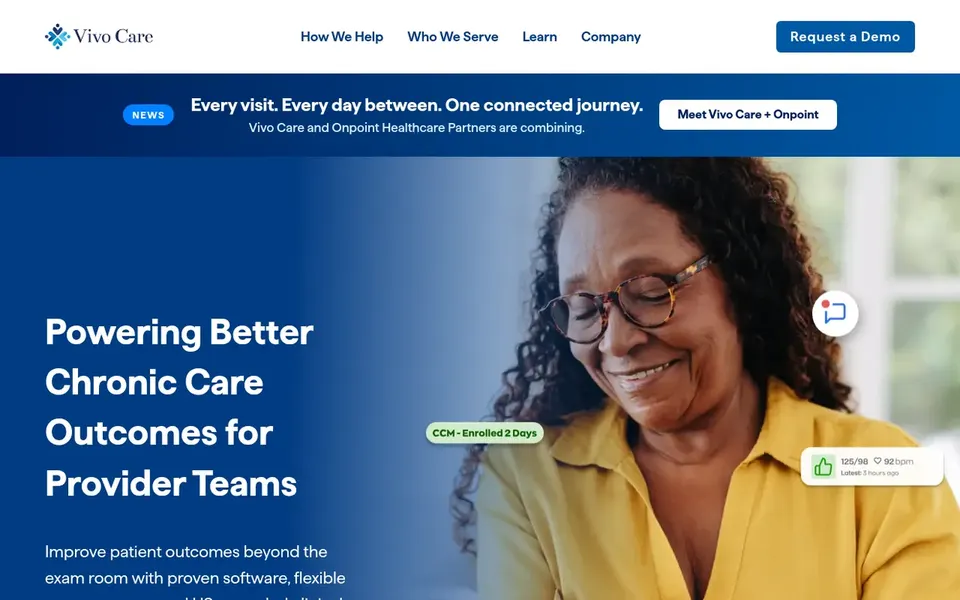
Think of Optimize Health for provider teams wanting nurse-led support. Optimize Health, presented under the Vivo Care name, powers chronic care management, remote patient monitoring and advanced primary care management for provider teams. Its distinguishing feature is nurse-led clinical support, which helps startups that want to launch a care program without building a clinical operations team first.
Honest limits: Clinical service model may limit pure software use.
Teams focused on pharma, research or advanced therapy monitoring should weigh other systems whose documentation centers on those settings. Worth adding: since the offering leans on a service model, startups seeking only a software layer to embed in their own product may find it a partial fit. No starting price is listed for Optimize Health here; confirm pricing on the vendor site. Trial and free access: Not stated.
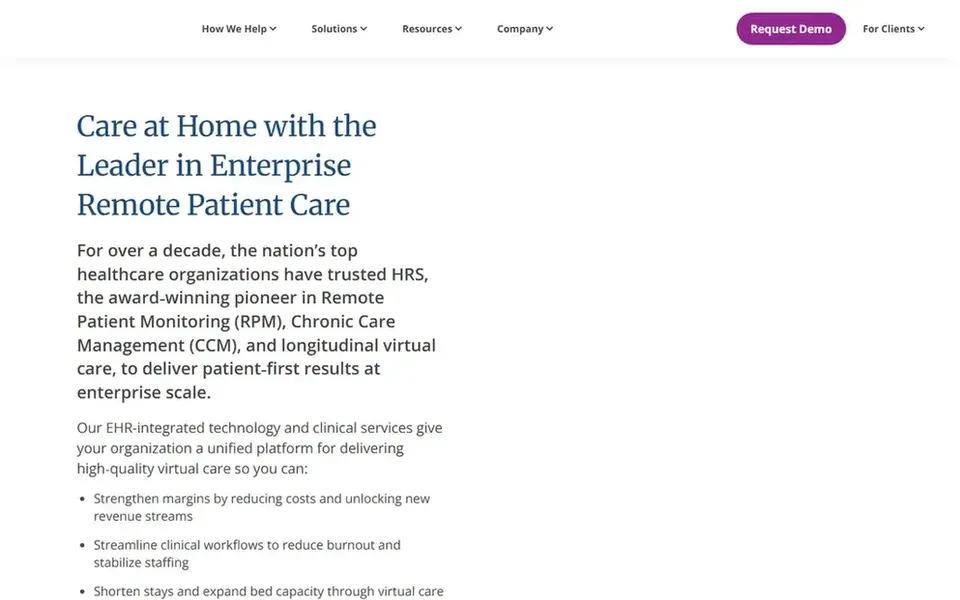
Health Recovery Solutions targets wide RPM plus chronic care management. Health Recovery Solutions presents itself as a system for remote patient monitoring, chronic care management, longitudinal virtual care and telehealth.
Points against: Enterprise orientation can feel heavy for early teams.
It suits teams that expect to serve healthcare organizations and want a mature, multi-module foundation from the start. Check the vendor site for Health Recovery Solutions pricing; none is listed in this comparison. On free options: Not stated.
Ask each vendor, from Huma to Health Recovery Solutions, for a written quote; none of them publishes a starting price.
Before choosing Huma, weigh its main limit: general positioning needs scoping.
Before you load data into Health Recovery Solutions, check what an export looks like and who can run it.
Find out what support Optimize Health includes on your plan, and whether onboarding help costs extra.
A short pilot of Huma with your real workflow tells you more than a feature table.
How we picked
Ainotely used vendor pricing pages and product documentation as the base, then compared plans, free access and documented limits for 5 tools. Seat minimums, billing terms and add-ons can move the real cost, so the starting prices here are a guide and not a quote. The sequence is a judgement call: typical use case first, then pricing transparency, then free access. Use the profiles to check fit. That approach shaped the order of the 5 remote patient monitoring software for startups tools listed here.
Every price and plan detail on this page comes from the vendors’ own websites. We did not run hands-on tests unless the text says so, and we do not publish star ratings or review scores. See how we score and our disclosure.
Keep your shortlist in one place
Paste prices, trial dates and notes from this guide into Ainotely, our AI note app. It files them into a topic and pulls out tasks like “cancel trial by Friday”. Free 7-day trial, no card needed.
Is Huma the right pick for everyone comparing remote patient monitoring software for startups?
No single tool suits every team. Huma comes first because it fits regulated AI platform foundation, while Cadence suits AI-driven chronic disease management and Current Health suits advanced therapies outside the hospital. Match the tool to your own size, budget and workflow before deciding.
Do these tools publish their prices?
No. None of the tools, from Huma to Health Recovery Solutions, shows a fixed starting price here, so budget time for quotes.
Does any tool for remote patient monitoring software for startups here have a free plan?
No tool in this list, Huma and Health Recovery Solutions included, has a permanent free plan. Trials and quotes are the usual route, so plan a short evaluation period.
How are the tools for remote patient monitoring software for startups ordered?
The order follows typical fit for remote patient monitoring software for startups, with Huma first and Health Recovery Solutions last, then price clarity and free access. It is editorial judgement, not a score, so another team could rank the tools differently.