Repair Shop Software: 8 Options Side by Side (2026)

- 1
 Mitchell 1Repair data plus managementVisit
- 2
 AutoFluentCommunication-focused shopsVisit
- 3
 Torque360Budget shop managementVisit
- 4
 Shop-WareDigital inspections and workflowVisit
- 5
 ShopmonkeyModern all-in-one shop managementVisit
- Top of the list is Mitchell 1, which targets repair data plus management.
- No starting price is shown for any of the 8 tools, Mitchell 1 and ARI included, so plan time for sales calls.
- ARI is the one to check for low-cost mobile-friendly management.
- A permanent free plan is missing from all 8 tools, Mitchell 1 and ARI included; plan for a trial or a premium start.
- A fair warning about Mitchell 1: interface reflects its age.
Direct answer
For repair data plus management, Mitchell 1 is where this list starts. If your case is different, AutoFluent suits communication-focused shops and Torque360 suits budget shop management. Details, prices and limits for the rest of the 8 tools are below.
Quick comparison
| Product | Ideal for | Price from | Free version | |
|---|---|---|---|---|
| Mitchell 1 | Repair data plus management | See website | No | Visit |
| AutoFluent | Communication-focused shops | See website | No | Visit |
| Torque360 | Budget shop management | See website | No | Visit |
| Shop-Ware | Digital inspections and workflow | See website | No | Visit |
| Shopmonkey | Modern all-in-one shop management | See website | No | Visit |
 GaragePlug | Straightforward low-cost operations | See website | No | Visit |
 Tekmetric | Cloud-native shop operations | See website | No | Visit |
 ARI | Budget-friendly mobile-friendly management | See website | No | Visit |
The full repair shop software list
Ainotely put together this guide to repair shop software for readers who want a clear shortlist without reading every vendor page. It compares 8 tools on starting price, free plans, who each one suits and where each one falls short.
Mitchell 1
Ideal for: Repair data plus management
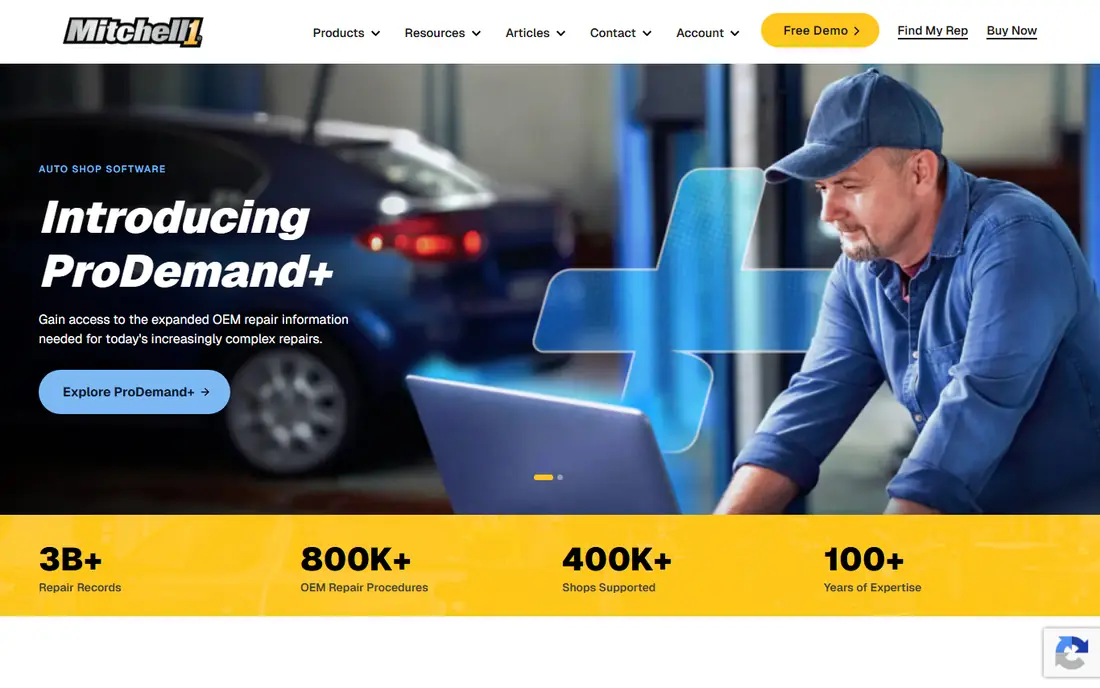
Mitchell 1 is designed for repair data plus management. Decades of OEM repair data, wiring diagrams, and labor estimating live alongside the Manager SE shop management system, so technicians diagnose and estimate from the same product that runs the business.
But for shops where accurate repair information and labor times straight affect profitability, Mitchell 1's data moat is the reason to choose it. Check the vendor site for Mitchell 1 pricing; none is listed in this comparison. There is no free plan with Mitchell 1.
Watch-outs: Pricing is enterprise-style.
- Manager SE is proven
- Unmatched repair information library
- Interface reflects its age
AutoFluent
Ideal for: Communication-focused shops
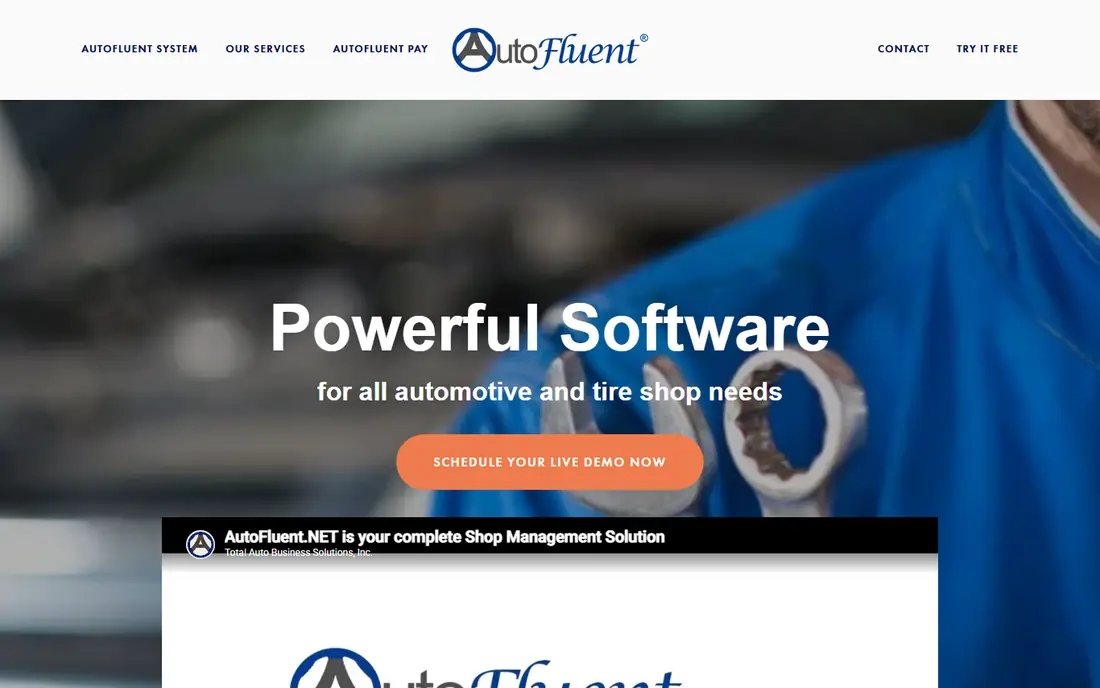
For communication-focused shops, AutoFluent is a natural candidate. AutoFluent includes the full shop management checklist with particular attention to customer communication: automatic reminders, follow-ups, and messaging that keep bays full.
From a buyer's view, repair orders, inventory, scheduling, and accounting round out a complete package. More specifically, value-conscious shops should contain it in evaluations. AutoFluent does not show a starting price in this comparison, so check the vendor site for current pricing. No free plan comes with AutoFluent.
Drawbacks to consider: Less modern interface.
- Solid customer communication
- Established product
- Marketing is quieter
Torque360
Ideal for: Budget shop management
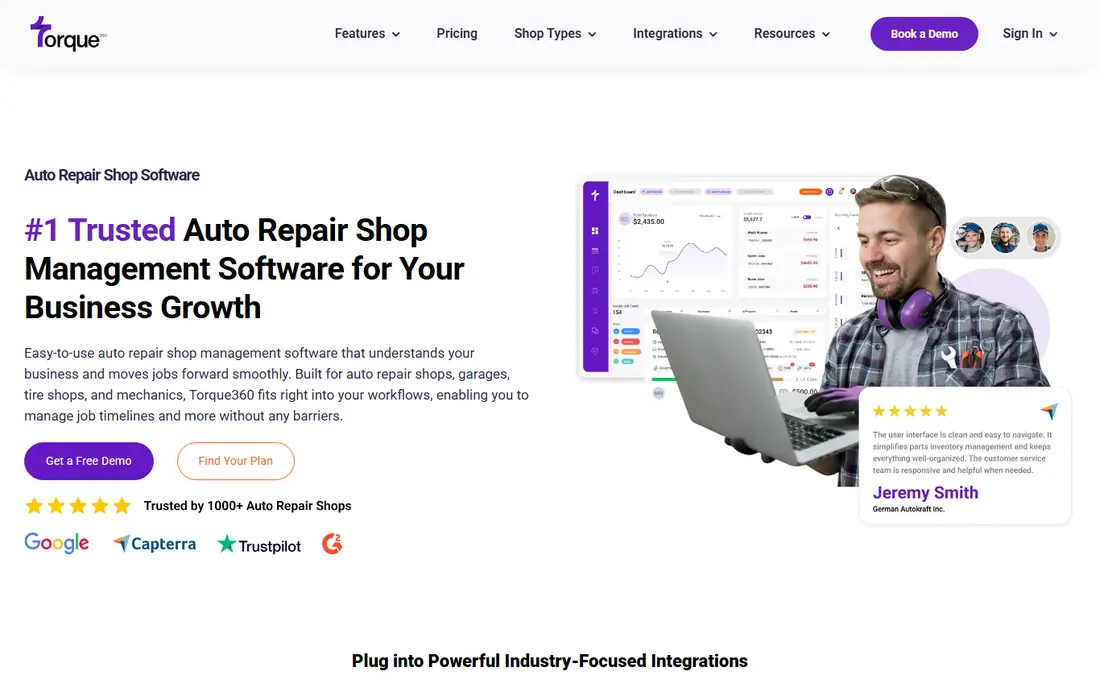
Choose Torque360 for budget shop management. Torque360 targets the budget end with straightforward shop management: repair orders, invoicing, customer and vehicle records, and entry-level inventory at accessible prices.
Beyond that, for a small operation moving off paper or spreadsheets, Torque360's simplicity and price make the jump painless. As for the details, advanced features (deep reporting, sophisticated marketing, complicated integrations) are thinner than the leaders. Check the vendor site for Torque360 pricing; none is listed in this comparison. Torque360 has no permanent free option.
Watch-outs: Fewer advanced features.
- Straightforward to start
- Handles core workflows
- Smaller support resources
Shop-Ware
Ideal for: Digital inspections and workflow
Shop-Ware serves digital inspections and workflow. The cloud product includes the standard management features with a workflow-first design that shops find easy-to-learn. For everyday use, when the inspection sells the job, the software pays for itself.
What to check first: Premium pricing.
Beyond that, pricing is premium, and the integration ecosystem is smaller than Shopmonkey's or Tekmetric's. But shops that sell work through inspections (which is most profitable shops) find Shop-Ware's presentation tools straight affect approval rates. Pricing for Shop-Ware is not stated here, so ask the vendor for current figures. Shop-Ware does not include a free plan.
- Very good digital vehicle inspections
- Cloud-based
- Smaller ecosystem than leaders
Shopmonkey
Ideal for: Modern all-in-one shop management
Pick Shopmonkey if this describes you: modern all-in-one shop management. Shopmonkey has become the reference point for modern shop management software.
The cloud system includes the full workflow: online scheduling, digital inspections, estimates, repair orders, inventory, payments, and customer messaging. Implementation needs proper attention: importing customer and vehicle data, setting up labor rates, and training techs. This comparison lists no price for Shopmonkey; ask the vendor. Shopmonkey has no permanent free option.
Points against: Pricing layers on up with extras.
- Widely used with standalone operators
- Capable integrations
- Implementation takes attention
GaragePlug
Ideal for: Straightforward low-cost operations
In short, GaragePlug is for straightforward low-cost operations. GaragePlug keeps shop management straightforward: job cards, estimates, invoices, inventory basics, and customer records in an interface staff learn rapidly.
What to check first: Restricted advanced features.
The pricing fits small garages, and the feature set includes daily operations without overwhelming anyone. No starting price is listed for GaragePlug here; confirm pricing on the vendor site. GaragePlug does not include a free plan.
- Simple to pick up
- Low-cost
- Less for multi-shop operations
Tekmetric
Ideal for: Cloud-native shop operations
Where Tekmetric fits: cloud-native shop operations. Tekmetric was designed as a cloud-native system, and it presents in the details: live dashboards, solid reporting on technician efficiency and profitability, and customer communication tools (text updates, digital inspections, online payments) that modern drivers expect. Smaller shops should weigh the cost against more straightforward alternatives.
But for expanding operations that run on data, Tekmetric's reporting and cloud architecture make a solid case. In practice, multi-shop operations handle locations from one account. It sits at the premium end of pricing, and some capabilities are only available on higher levels. Tekmetric shows no starting price here, so confirm the cost on the vendor site. No free plan comes with Tekmetric.
Points against: Some features need higher levels.
- Aimed at the cloud from day one
- Solid reporting
- Premium pricing
ARI
Ideal for: Budget-friendly mobile-friendly management
Think of ARI for low-cost mobile-friendly management. ARI is the value disruptor: cloud-based shop management with estimates, invoices, inspections, inventory, and payments at a fraction of the leaders' prices. The mobile app lets owners and techs run the shop from their phones, which fits mobile mechanics particularly well.
What to check first: Newer company.
As a newer company, ARI's reporting depth and polish trail the established players. But the price-to-feature ratio is exceptional. ARI shows no starting price here, so confirm the cost on the vendor site. ARI does not include a free plan.
- Very low-cost
- Ample limits
- Reports could be deeper
Our selection method
The comparison looks at four things: starting price, free access, how well the feature set matches repair shop software, and the main limit of each tool. Treat prices as a snapshot: vendors change plans often, so check the vendor site for the figure that applies today. The ranking is editorial: typical fit first, then clear pricing, then free access. If your needs are unusual, read the profiles rather than relying on position.
Things to verify first
- Confirm the entry price with every vendor: no tool from Mitchell 1 to ARI shows a fixed starting price.
- Before choosing Mitchell 1, weigh its main limit: interface reflects its age.
- Test how quickly Shopmonkey answers a pre-sales question; it hints at how support will feel later.
- Confirm the exact Mitchell 1 plan that includes your must-have features.
- Let daily users try Shop-Ware on real work; their feedback beats any feature checklist.
Frequently asked questions
How are the tools for repair shop software ordered?
Mitchell 1 sits first and ARI last because the order follows typical fit for repair shop software, then price clarity and free access. It is a judgement call, so read each profile for fit and limits.
Is Mitchell 1 the right pick for everyone comparing repair shop software?
No single tool suits every team. Mitchell 1 comes first because it fits repair data plus management, while AutoFluent suits communication-focused shops and Torque360 suits budget shop management. Match the tool to your own size, budget and workflow before deciding.
Does any tool for repair shop software here have a free plan?
A permanent free plan is not offered by Mitchell 1, ARI or the other tools here. Plan a short evaluation period instead.
Can I try these options before paying?
Not by default. None of the tools, from Mitchell 1 to ARI, lists a free plan or a free trial here, so ask each vendor for a demo before committing.
Do I need digital vehicle inspections?
If you want to sell recommended work effectively, yes. Photo and video inspections shown to customers on their phones dramatically increase approval rates compared to verbal recommendations.