Best Restaurant Delivery Service in 2026: 8 Services Compared

- DoorDash is the best all-round restaurant delivery service in the US, with the widest restaurant choice and fast delivery in most cities.
- Uber Eats suits people who already use Uber, with a large restaurant list and grocery delivery in the same app.
- Grubhub remains strong in many cities, especially for local restaurants and campus areas, with frequent deals.
- ChowNow and Slice help local restaurants directly, with lower fees for restaurants and ordering that supports independents.
- Delivery fees, tips, and menu prices vary by service and restaurant. Compare the total at checkout, not just the delivery fee, before ordering.
Quick comparison
| Product | Ideal for | Price from | Free version | |
|---|---|---|---|---|
 DoorDash | Widest restaurant choice | See website | Free trial | Visit |
 Uber Eats | Large choice plus groceries | See website | Free trial | Visit |
 Grubhub | Local restaurants and deals | See website | Free trial | Visit |
 ChowNow | Ordering that supports local restaurants | See website | Free trial | Visit |
 Slice | Local pizza shops | See website | Free trial | Visit |
 Deliveroo | Delivery in the UK and abroad | See website | Free trial | Visit |
 Just Eat | Wide choice in many countries | See website | Free trial | Visit |
 foodpanda | Delivery across Asia and Europe | See website | Free trial | Visit |
The best restaurant delivery services
We compared official feature pages, pricing pages, app store listings, and public reviews for the services below. Our pick for most people in the US is DoorDash, because it offers the widest restaurant choice, reliable delivery tracking, and membership savings for frequent orders.
DoorDash
Ideal for: Widest restaurant choice
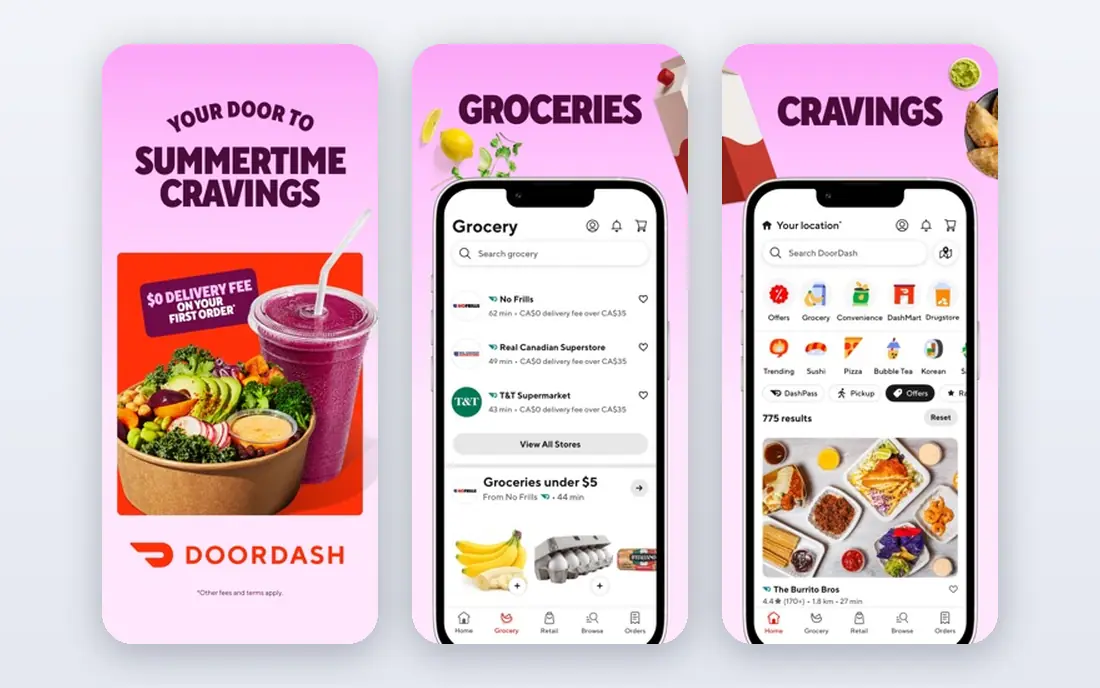
DoorDash covers more restaurants than any rival in most US cities, from national chains to local spots, plus groceries, convenience items, and alcohol where allowed. Live tracking shows your order from kitchen to door, and DashPass membership reduces delivery fees and service fees for frequent users.
The total cost is the catch. Delivery fees, service fees, tips, and menu markups can push an order well above the restaurant price, and small orders may carry extra fees. For choice and reliability, DoorDash is still the default for most US diners.
- Largest restaurant selection in most US cities
- Live order tracking
- DashPass membership cuts fees for frequent orders
- Fees and menu markups add up
- Delivery quality varies by driver and restaurant
- Small order fees can apply
Uber Eats
Ideal for: Large choice plus groceries
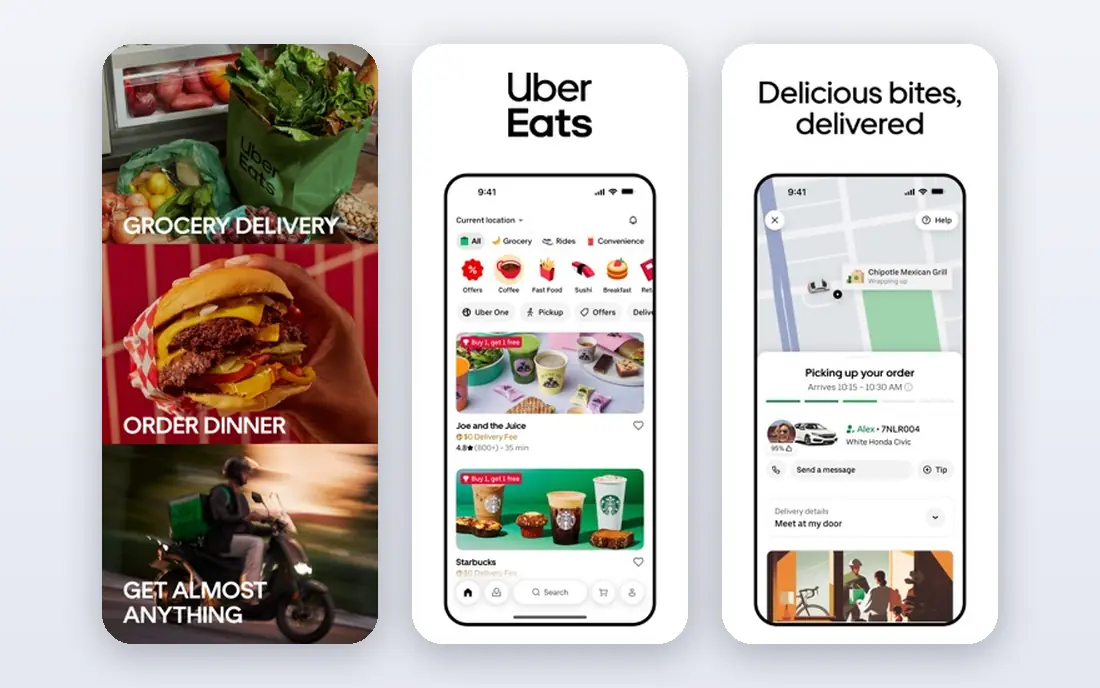
Uber Eats pairs restaurant delivery with grocery, convenience, and alcohol delivery in one app, which suits households that order food and essentials together. If you already use Uber for rides, the shared account and payment setup make ordering fast, and Uber One membership cuts fees for frequent orders.
Fees depend on the restaurant, order size, and demand, and busy periods can raise costs. Restaurant choice is strong in cities but thinner than DoorDash in some smaller markets. For Uber users and combined food and grocery orders, Uber Eats is a natural pick.
- Large restaurant and grocery selection
- Easy ordering inside the Uber app
- Uber One membership savings
- Fees vary by restaurant and order size
- Surge pricing can raise costs
- Some areas have fewer restaurants than DoorDash
Grubhub
Ideal for: Local restaurants and deals
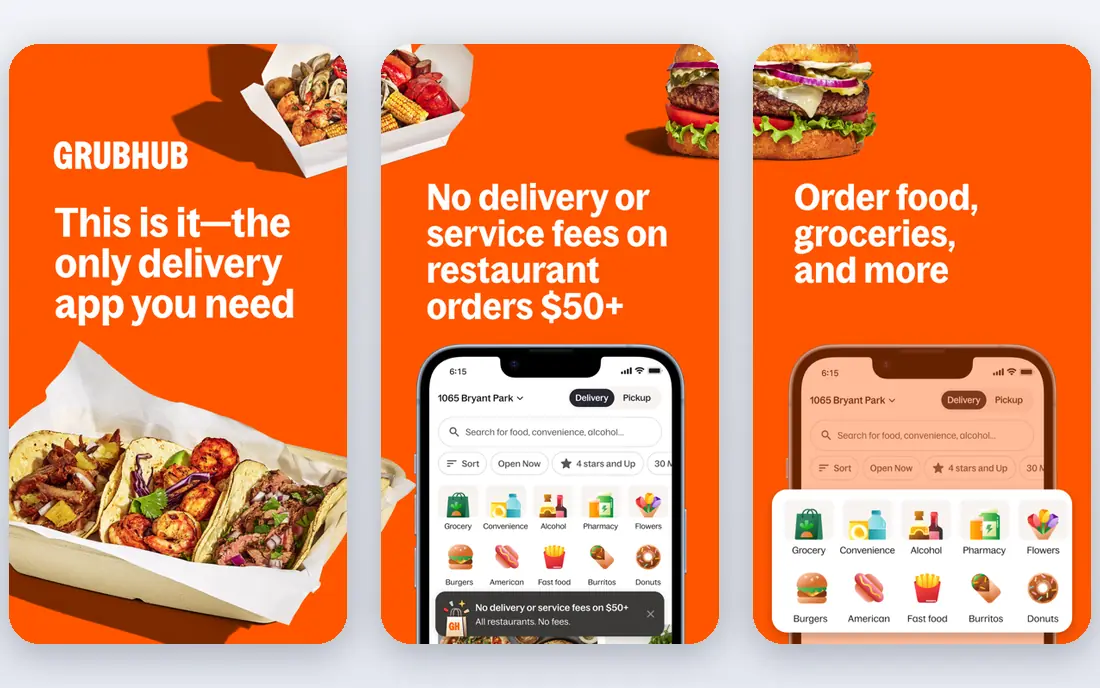
Grubhub has served US diners for years, with strong coverage of local restaurants and campus areas, plus regular deals, coupons, and a rewards program. Grubhub+ membership offers free delivery on eligible orders, which helps frequent users save.
Choice is thinner than DoorDash in some markets, and the app is simpler than newer rivals. For diners who value local restaurants and deals, especially in cities where Grubhub is strong, it remains a solid option.
- Strong local restaurant coverage in many cities
- Frequent deals and coupons
- Grubhub+ membership for free delivery
- Restaurant choice varies by city
- App experience is simpler than rivals
- Delivery times can vary
ChowNow
Ideal for: Ordering that supports local restaurants
ChowNow is built to help local restaurants keep more of their money. Its ordering system charges restaurants lower fees than major marketplaces, and many restaurants use it for commission-free direct orders through their own websites and apps. That model appeals to diners who want to support independents.
The trade-off is choice. ChowNow lists fewer restaurants than the big marketplaces, and coverage varies by city. For diners who have a favorite local spot on ChowNow, ordering direct is often better for the restaurant and sometimes cheaper for you.
- Restaurants keep more of each order
- Commission-free ordering options for restaurants
- Local restaurant focus
- Smaller restaurant list than DoorDash or Uber Eats
- Coverage varies by city
- Fewer grocery and convenience options
Slice
Ideal for: Local pizza shops
Slice is the delivery service for independent pizza shops. It helps local pizzerias take online orders with lower fees than general marketplaces, and it gives pizza lovers rewards, deals, and a focused menu of neighborhood shops rather than chains alone.
It only covers pizza, so it complements rather than replaces a general delivery app. For Friday pizza night from a local shop, Slice is the best way to order while supporting an independent business.
- Focused on independent pizza shops
- Lower fees for pizzerias
- Rewards and deals for pizza lovers
- Pizza only, so it does not cover other cuisines
- Coverage varies by city
- App is simpler than general delivery apps
Deliveroo
Ideal for: Delivery in the UK and abroad
Deliveroo is a leading delivery service in the UK and many international markets, with restaurant meals, groceries, and convenience items. Its Plus membership cuts delivery fees for frequent orders, and the app is polished and easy to use.
It does not operate in the US, so American readers should skip it. For readers in the UK, Ireland, France, and other Deliveroo markets, it is one of the best delivery options available.
- Strong coverage in the UK, Europe, and parts of Asia
- Restaurant and grocery delivery
- Deliveroo Plus membership savings
- Not available in the US
- Fees vary by restaurant
- Coverage is city-dependent
Just Eat
Ideal for: Wide choice in many countries
Just Eat, part of Just Eat Takeaway, is one of the largest delivery services in the world, with deep coverage in the UK, Germany, the Netherlands, and many other countries. Local brands and restaurant choice vary by market, and deals and loyalty offers reward frequent orders.
It does not serve the US market, where Grubhub was formerly part of the same group. For international readers, Just Eat is often the default delivery app in their country.
- Huge restaurant choice across Europe and beyond
- Local brands in each market
- Deals and loyalty offers
- Not available in the US
- Experience varies by country
- Fees depend on local market
foodpanda
Ideal for: Delivery across Asia and Europe
foodpanda delivers food, groceries, and shop items across many Asian markets and parts of Europe, with frequent vouchers and a subscription option in some countries. Its pink branding and broad coverage make it a familiar sight in cities from Singapore to Berlin.
It does not operate in the US, and coverage, fees, and minimums vary by market. For readers in foodpanda countries, it is a strong all-round delivery choice.
- Wide coverage across Asia and parts of Europe
- Food, groceries, and shops in one app
- Frequent vouchers and deals
- Not available in the US
- Coverage varies by city
- Fees and minimums vary by market
How we picked these
We compared official feature pages, pricing pages, app store listings, and public reviews for each service, and we favored services still operating in October 2026 that deliver restaurant meals to consumers. We left out grocery-only services and courier tools with no restaurant ordering. Note that homepage checks for this article were limited by a browser rate-limit error during our work, so readers should confirm current fees and coverage in their city before ordering.
Saving money on delivery
Compare totals, not fees. A service with free delivery can still cost more if menu prices are marked up, so check the final checkout total across two apps for the same order. Memberships like DashPass, Uber One, and Grubhub+ pay off if you order several times a month, but not for occasional orders.
Order directly when you can. Many restaurants offer pickup or direct delivery through ChowNow or their own sites with lower fees, and pickup always beats delivery on price. Finally, tip fairly but check the breakdown: tips go to drivers, while service fees go to the platform, so a big service fee does not mean a big driver payout.
Delivery fees are only part of the real cost. Service fees, small order fees, tips, and menu markups all add up, so compare the final checkout total across services for the same order before you pick a default. Some services offer membership plans that waive delivery fees, which pay off if you order weekly but waste money if you order monthly. Restaurant choice also varies by neighborhood, so the best service in one city may have thin coverage in yours, and new restaurants appear and disappear often.
Order accuracy and support matter when things go wrong. Missing items, cold food, and wrong orders happen on every platform, so check how easy it is to report a problem and get a refund without a long chat. Delivery time estimates are often optimistic during rain or peak hours, so order earlier than you think you need to for guests or deadlines. For regular orders, saving favorite restaurants and repeat orders cuts friction, and tipping fairly keeps drivers willing to accept your orders during busy periods.
Frequently asked questions
What is the best restaurant delivery service?
DoorDash is our pick for most US diners, with the widest restaurant choice and reliable tracking. Uber Eats suits Uber users and grocery orders, while Grubhub suits local restaurants and deals.
Is DoorDash or Uber Eats cheaper?
It depends on the restaurant, order size, and current deals. Compare the final checkout total, including fees, tips, and menu markups, since the cheapest delivery fee does not always mean the cheapest order.
How can I support local restaurants when ordering delivery?
Order directly from the restaurant website or through ChowNow or Slice where available, since those channels charge restaurants lower fees than major marketplaces. Pickup is even better for the restaurant.
Do delivery memberships save money?
Memberships like DashPass, Uber One, and Grubhub+ save money if you order several times a month, by cutting delivery and service fees. For occasional orders, pay-as-you-go is usually cheaper.
Why do delivery prices differ from restaurant prices?
Many services mark up menu prices above in-store prices, and add delivery fees, service fees, and taxes on top. Always check the checkout total before confirming an order.