Best Restaurant Inventory Software in 2026: 7 Options Compared

- 1
 MarketManRestaurants managing suppliers and stockVisit
- 2
 xtraCHEFRestaurants that want invoice automationVisit
- 3
 MarginEdgeRestaurants focused on food costVisit
- 4
 Restaurant365Restaurant groups needing full back officeVisit
- 5
 BevSpotBars managing drink inventoryVisit
- Our top pick for most readers is MarketMan, because it fits restaurants managing suppliers and stock and covers the core features well.
- No product on this list offers a full free plan, so budget for a paid plan or a trial before you commit.
- Prices vary widely, and several vendors do not publish a simple starting price, so check the official pricing page for the current figure before you decide.
- The honest catch matters as much as the headline feature, so read the cons for each product and match them against the work you do most often.
Quick comparison
| Product | Ideal for | Price from | Free version | |
|---|---|---|---|---|
| MarketMan | Restaurants managing suppliers and stock | See website | Free trial | Visit |
| xtraCHEF | Restaurants that want invoice automation | See website | Free trial | Visit |
| MarginEdge | Restaurants focused on food cost | See website | Free trial | Visit |
| Restaurant365 | Restaurant groups needing full back office | See website | No | Visit |
| BevSpot | Bars managing drink inventory | See website | Free trial | Visit |
 Foodics | Restaurants in the Middle East and beyond | See website | Free trial | Visit |
 SimpleOrder | Restaurants that want purchasing control | See website | Free trial | Visit |
The best restaurant inventory software
We compared 7 options for best restaurant inventory software, looking at official feature pages, pricing, app store listings, privacy policies, and public reviews, and we did not claim hands on testing we did not do.
MarketMan
Ideal for: Restaurants managing suppliers and stock
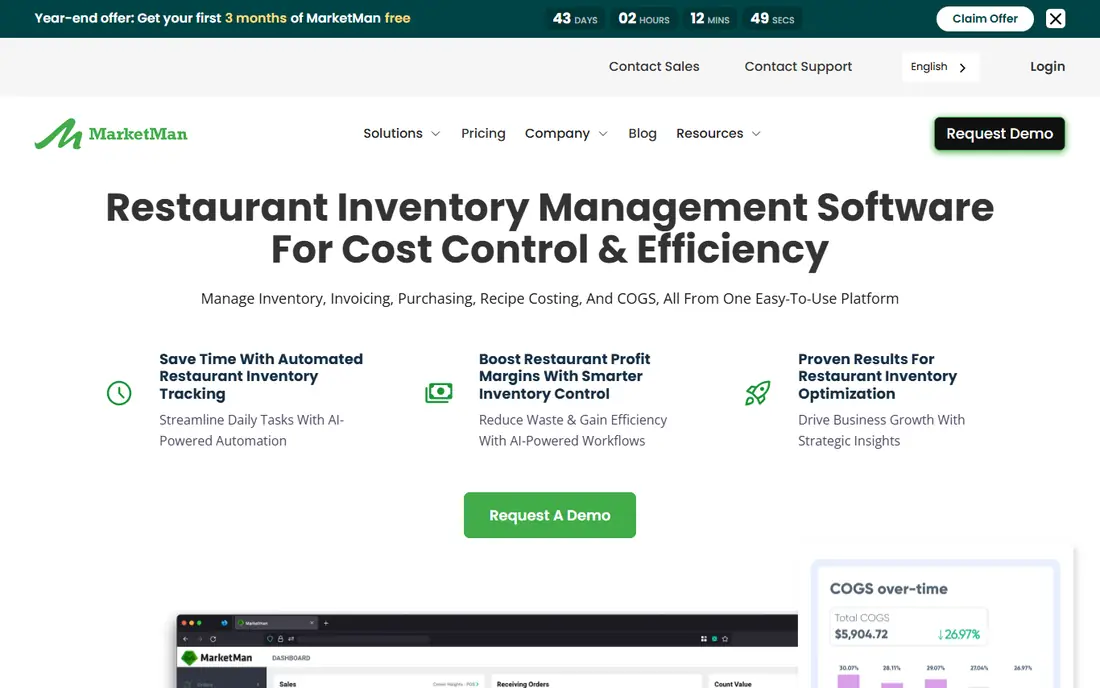
MarketMan ties supplier orders, deliveries, and stock counts together, so managers can see food cost without spreadsheets. It is best for restaurants managing suppliers and stock. We put MarketMan near the top because it fits its audience well.
On pricing, we list the starting price as See website, and the free plan field as Free trial. Where a price is shown as See website, that means the vendor does not publish a simple starting price, or the price depends on seats, usage, or a quote, so check the official pricing page for the current figure.
The honest catch is pricing is not published; onboarding takes time. Before you commit, try the free plan or trial if one is offered, and check that the features you need are on the plan you pick. Our view is that MarketMan is worth a close look if its best fit matches your situation, and worth skipping if the catch touches the part of the work you do most often.
- Supplier and order management
- Inventory counts
- Reporting
- Pricing is not published
- Onboarding takes time
xtraCHEF
Ideal for: Restaurants that want invoice automation
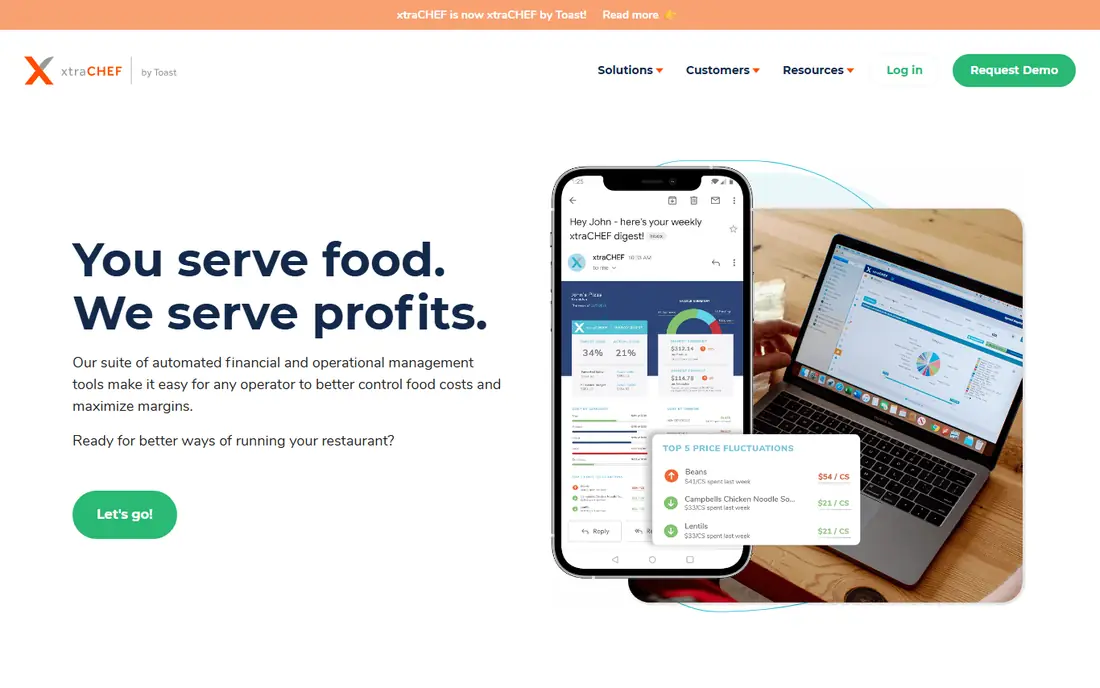
xtraCHEF automates invoice entry and turns it into cost reports, which cuts the manual work that makes inventory slip. It is best for restaurants that want invoice automation. For many readers, xtraCHEF is the practical choice in this list.
On pricing, we list the starting price as See website, and the free plan field as Free trial. Where a price is shown as See website, that means the vendor does not publish a simple starting price, or the price depends on seats, usage, or a quote, so check the official pricing page for the current figure.
The honest catch is needs supplier cooperation for full value; pricing is not published. A short trial run with your own data or workflow will tell you more than any feature list, so test the fit before paying. Our view is that xtraCHEF is worth a close look if its best fit matches your situation, and worth skipping if the catch touches the part of the work you do most often.
- Invoice capture and automation
- Cost reporting
- Supplier data
- Needs supplier cooperation for full value
- Pricing is not published
MarginEdge
Ideal for: Restaurants focused on food cost
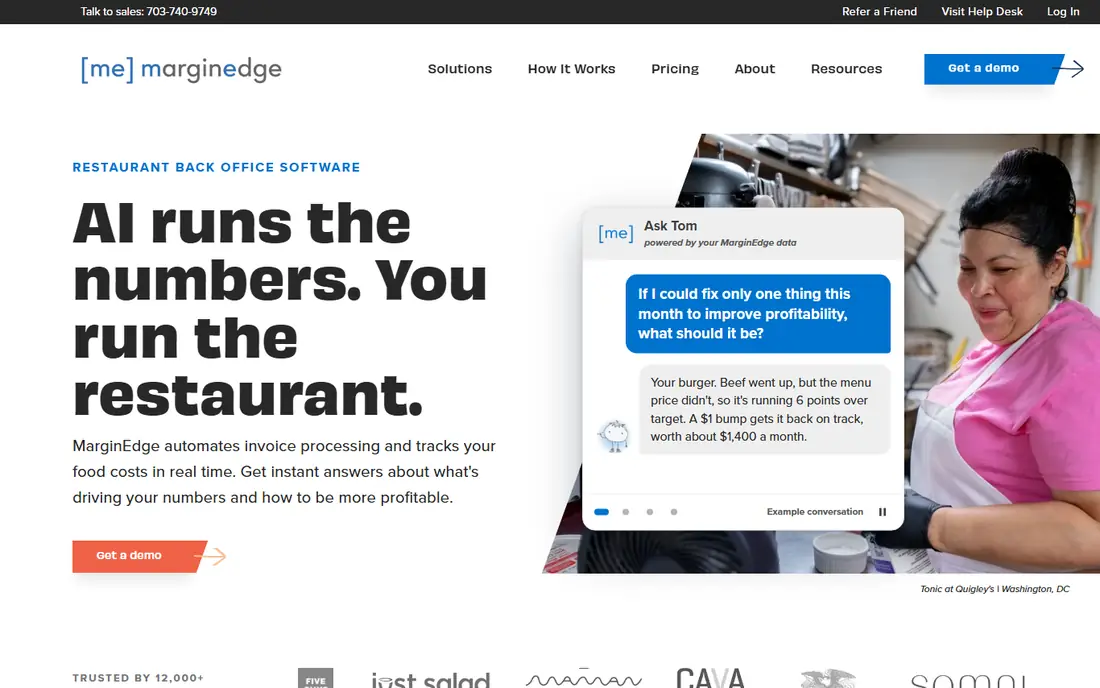
MarginEdge shows food cost as sales happen, which helps managers catch a rising cost before the month ends. It is best for restaurants focused on food cost. What stands out about MarginEdge is how clearly it states its purpose.
On pricing, we list the starting price as See website, and the free plan field as Free trial. Where a price is shown as See website, that means the vendor does not publish a simple starting price, or the price depends on seats, usage, or a quote, so check the official pricing page for the current figure.
The honest catch is pricing is not published; setup needs point of sale access. Check the pricing page and the plan limits carefully, since the details that matter most are often in the plan notes. Our view is that MarginEdge is worth a close look if its best fit matches your situation, and worth skipping if the catch touches the part of the work you do most often.
- Real time food cost
- Invoice processing
- Sales integration
- Pricing is not published
- Setup needs point of sale access
Restaurant365
Ideal for: Restaurant groups needing full back office
Restaurant365 combines accounting, inventory, and scheduling for restaurant groups that need one back office system. It is best for restaurant groups needing full back office. We kept Restaurant365 on the list because it solves a specific problem well.
On pricing, we list the starting price as See website, and the free plan field as No. Where a price is shown as See website, that means the vendor does not publish a simple starting price, or the price depends on seats, usage, or a quote, so check the official pricing page for the current figure.
The honest catch is enterprise pricing; implementation takes time. If you are unsure, start small and upgrade only when you hit a real limit in daily use. Our view is that Restaurant365 is worth a close look if its best fit matches your situation, and worth skipping if the catch touches the part of the work you do most often.
- Accounting plus inventory and scheduling
- Multi location support
- Reporting
- Enterprise pricing
- Implementation takes time
BevSpot
Ideal for: Bars managing drink inventory
BevSpot is built for bars, with drink counts, order sheets, and variance reports that match how bars actually work. It is best for bars managing drink inventory. Among the options here, BevSpot earns its place for steady, focused tools.
On pricing, we list the starting price as See website, and the free plan field as Free trial. Where a price is shown as See website, that means the vendor does not publish a simple starting price, or the price depends on seats, usage, or a quote, so check the official pricing page for the current figure.
The honest catch is food inventory is thinner; smaller user base. Ask support a direct question before you buy, since the answer often reveals how the service treats customers after signup. Our view is that BevSpot is worth a close look if its best fit matches your situation, and worth skipping if the catch touches the part of the work you do most often.
- Bar focused inventory
- Order sheets
- Variance reports
- Food inventory is thinner
- Smaller user base
Foodics
Ideal for: Restaurants in the Middle East and beyond
Foodics combines point of sale and inventory for restaurants, with multi branch tools for growing groups. It is best for restaurants in the Middle East and beyond. Readers who want a focused option should look closely at Foodics.
On pricing, we list the starting price as See website, and the free plan field as Free trial. Where a price is shown as See website, that means the vendor does not publish a simple starting price, or the price depends on seats, usage, or a quote, so check the official pricing page for the current figure.
The honest catch is regional focus; some features vary by country. Compare the total cost over a year, not just the monthly figure, since add ons and seat counts change the picture. Our view is that Foodics is worth a close look if its best fit matches your situation, and worth skipping if the catch touches the part of the work you do most often.
- Point of sale plus inventory
- Multi branch tools
- Online ordering
- Regional focus
- Some features vary by country
SimpleOrder
Ideal for: Restaurants that want purchasing control
SimpleOrder focuses on purchasing and stock control, giving managers one place to approve orders and track costs. It is best for restaurants that want purchasing control. We like SimpleOrder for readers who know what they need and want to get started.
On pricing, we list the starting price as See website, and the free plan field as Free trial. Where a price is shown as See website, that means the vendor does not publish a simple starting price, or the price depends on seats, usage, or a quote, so check the official pricing page for the current figure.
The honest catch is smaller presence in the US; pricing is not published. Make sure the tool works with the systems you already use, since a good product that does not connect can slow you down. Our view is that SimpleOrder is worth a close look if its best fit matches your situation, and worth skipping if the catch touches the part of the work you do most often.
- Purchasing and inventory
- Supplier management
- Cost analytics
- Smaller presence in the US
- Pricing is not published
How we picked these
We started from the topic itself and looked for products that exist and work in October 2026 and truly fit it, rather than padding the list with near misses. For each product we checked its official homepage, its feature pages, its pricing page or app store listing, and its privacy policy where one mattered, and we used public reviews to spot common complaints. Where we could not verify a price from the vendor, we wrote See website instead of guessing, and where a homepage could not be confirmed we dropped or replaced that product. We favored a mix of well known leaders and strong smaller options, and we weighed who each product is really for, one concrete strength, and one honest weakness. That mix matters, because the best product for a large team is rarely the best product for a solo user, and a low price means little if the plan limits block the work you do daily.
How to choose the right option
What to check before you pay
Start with the job you need done, not the feature list. Write down the three tasks you will do every week, then check that each one is covered on the plan you would actually buy, not just on the top plan. Ask about setup time, data import, and how you leave if the fit is wrong, since exit costs matter as much as entry price. Read the pricing page for seat counts, usage limits, and support hours, and treat any figure that is not on the official page as unconfirmed.
How to run a fair trial
Give each finalist the same real task and the same week, and judge by the result, not by the demo. Invite the people who will use the tool daily, since a system chosen by one manager and disliked by the team rarely lasts. Keep notes on what slowed you down, what needed support, and what felt obvious, then compare those notes before you sign anything.
Mistakes worth avoiding
The most common mistake is paying for a large plan before the team has used the basic one. Another is choosing on price alone, then finding that support, limits, or missing connections cost more time than the saving was worth. A third is skipping the contract terms, especially renewal, data export, and what happens to your data if you cancel. Avoid all three by trialing first, reading the plan notes, and asking direct questions in writing.
Frequently asked questions
What is the best restaurant inventory software for most people?
For most readers we point to MarketMan, since it fits restaurants managing suppliers and stock and covers the core features without a steep learning curve. That said, the right pick depends on your budget, your team size, and the features you will use weekly, so compare the top two or three on this list before you decide. If you also search for best inventory app for restaurants, the same shortlist applies, since it covers that need too.
Are there free restaurant inventory software options?
Yes, in most cases, though free plans limit features. On this list, no product offers a full free plan, so a trial is the closest free start offer free access in some form. Read the free plan limits before you rely on them, since storage, seats, or exports are often capped.
How much does restaurant inventory software cost?
It varies by product and plan, and several vendors on this list do not publish a simple starting price. We list See website where the price depends on seats, usage, or a quote, and we recommend checking the official pricing page for the current figure. Add up the yearly cost, including any add ons, before you compare monthly figures.
What should I check before choosing a restaurant inventory software option?
Check the plan limits, the support hours, the privacy policy, and whether the product works with the tools you already use. Run a short trial with a real task, and judge by the result rather than the demo. If the product will hold your data, check export options early, so you are not trapped if you switch later.
Can I switch later if I pick the wrong restaurant inventory software option?
In most cases yes, but switching costs time and sometimes data. Check export tools, contract terms, and cancellation rules before you commit, and keep a copy of your data outside the product. Starting with a trial or a monthly plan, rather than a long contract, keeps switching cheap if the fit is wrong.