If you need root-cause analysis and AI action, BoostUp is the first tool to look at here. For a different need, Salesloft covers signal-driven sales engagement and Gong covers wide revenue AI operating system. All 5 tools are compared below on price, free plan and limits.
Ainotely put together this guide to revenue AI platforms for startups for readers who want a clear shortlist without reading every vendor page. It compares 5 tools on starting price, free plans, who each one suits and where each one falls short.
Key takeaways
BoostUp takes the first slot, best suited to root-cause analysis and AI action.
For Salesforce-centered revenue decisions, Revenue.io is worth a look.
Every tool from BoostUp to Revenue.io works by quote, with no list price shown.
Check the limits for Clari before you commit: forecasting focus may not handle all execution needs.
Neither BoostUp nor Revenue.io, nor any of the other 3 tools, has a permanent free plan; trials and quotes are the norm.
BoostUp works best for root-cause analysis and AI action. BoostUp, presented on its site as Terret, positions itself as an answer-to-action engine for revenue teams. Its homepage flags root-cause analysis from a Revenue Graph plus AI agents for execution.
Watch-outs: Smaller footprint than bigger vendors.
Teams wanting a household-name vendor with a very wide application suite may lean elsewhere. For everyday use, BoostUp is worth a look when diagnostic insight tied to follow-through matters more than brand familiarity. BoostUp does not show a starting price in this comparison, so check the vendor site for current pricing. Free access: Not stated.
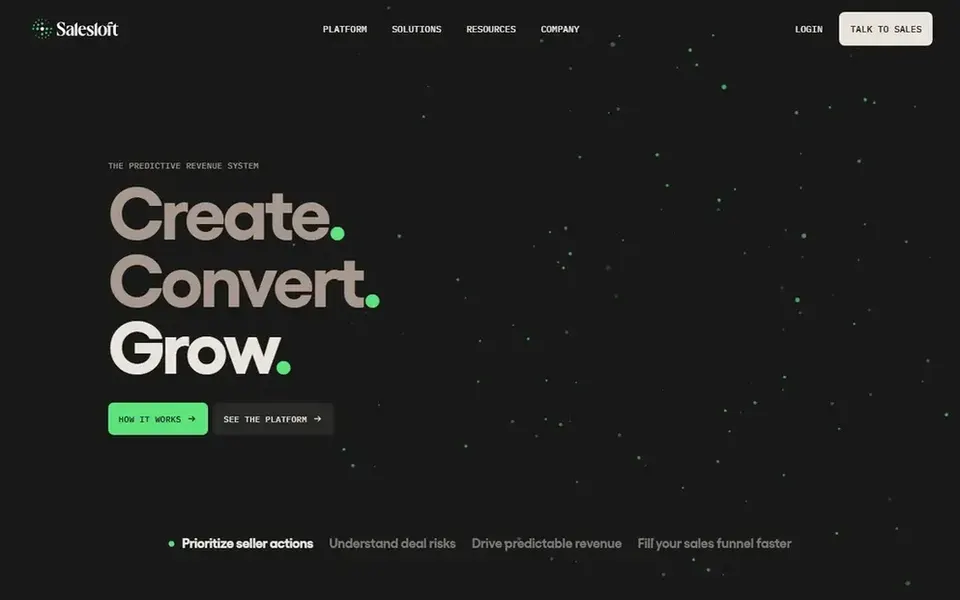
Salesloft is aimed squarely at signal-driven sales engagement. Salesloft markets itself as a leading predictive revenue system that helps revenue teams turn buyer signals into action and close deals quicker.
The main drawbacks: Overlaps with other engagement tools.
From a buyer's view, choose Salesloft when structured engagement plus signal-driven prioritization is the core need, and compare it against Clari given their similar positioning. Worth adding: for startups building a repeatable sales motion, it is a natural candidate when engagement workflows and signal-based prioritization matter more than deep forecasting alone. No starting price is listed for Salesloft here; confirm pricing on the vendor site. As for free access: Not stated.
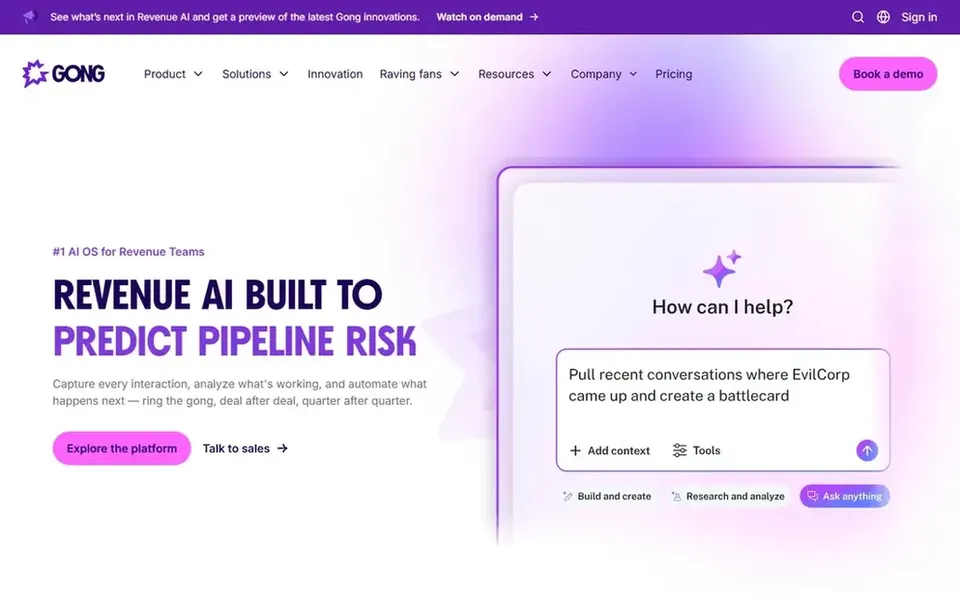
Gong is a good fit for wide revenue AI operating system. Teams that chiefly want outbound sequencing or straightforward forecasting may find a narrower tool simpler to run.
From a buyer's view, the breadth that makes Gong appealing can also mean a longer setup and more configuration than a lean startup needs on day one. No starting price is listed for Gong here; confirm pricing on the vendor site. Trial and free access: Not stated.
Where it falls short: May exceed the needs of very small teams.
Best for: Predictive revenue forecasting and signals
Clari makes the most sense for predictive revenue forecasting and signals. Teams whose central gap is outbound execution instead of forecasting may prefer a sales engagement system.
In practice, pick Clari when forecast confidence and signal-driven prioritization are the problems you most have to solve. Pricing for Clari is not stated here, so ask the vendor for current figures. Free options: Not stated.
Points against: Needs clean pipeline data to be handy.
Think of Revenue.io for Salesforce-centered revenue decisions. Revenue.io describes itself as a revenue product for better decisions, connecting sales engagement, conversation intelligence and AI with Salesforce context. On top of that, startups already standardized on Salesforce commonly favor this approach since the intelligence lands where reps and managers already work.
The Salesforce emphasis means teams on other CRMs will get less from the system. Its scope is also narrower than full revenue operating systems, so very ambitious go-to-market plans may need extra tools. Revenue.io does not show a starting price in this comparison, so check the vendor site for current pricing. On free options: Not stated.
What to check first: Narrower scope than full revenue suites.
Confirm the entry price with every vendor: no tool from BoostUp to Revenue.io shows a fixed starting price.
Before choosing BoostUp, weigh its main limit: smaller footprint than bigger vendors.
Ask Salesloft how an export works before you move any records in; an easy exit lowers the risk.
Confirm minimum seats and billing terms with Revenue.io before you commit to an annual plan.
A short pilot of Clari with your real workflow tells you more than a feature table.
How we picked
Selection started from tools commonly considered for revenue AI platforms for startups, then narrowed to 5 that have clear pricing information or a clear quote process. Plan names, prices and limits change often. Treat the figures here as a starting point and verify them with the vendor. Tools are placed by general fit for revenue AI platforms for startups, with price clarity and free access as tie-breakers. A different team can reasonably rank them differently.
Every price and plan detail on this page comes from the vendors’ own websites. We did not run hands-on tests unless the text says so, and we do not publish star ratings or review scores. See how we score and our disclosure.
Keep your shortlist in one place
Paste prices, trial dates and notes from this guide into Ainotely, our AI note app. It files them into a topic and pulls out tasks like “cancel trial by Friday”. Free 7-day trial, no card needed.
These products capture signals from calls, emails and CRM activity, then use AI to guide forecasting, coaching and deal prioritization. For startups, the appeal is typically replacing multiple disconnected tools with one place where revenue decisions are made.
Do these tools publish their prices?
No. None of the tools, from BoostUp to Revenue.io, shows a fixed starting price here, so budget time for quotes.
Can I try these tools before paying?
Not by default. None of the tools, from BoostUp to Revenue.io, lists a free plan or a free trial here, so ask each vendor for a demo before committing.
How should a small team choose between Gong and Clari?
Gong is framed as a wide Revenue AI OS spanning signals, agents and applications, whereas Clari centers on predictive revenue and buyer signals. From a buyer's view, if forecast accuracy is the pressing problem, start with Clari and compare the two straight.
Is BoostUp the right pick for everyone comparing revenue AI platforms for startups?
No single tool suits every team. BoostUp comes first because it fits root-cause analysis and AI action, while Salesloft suits signal-driven sales engagement and Gong suits broad revenue AI operating system. Match the tool to your own size, budget and workflow before deciding.
Does any tool for revenue AI platforms for startups here have a free plan?
A permanent free plan is not offered by BoostUp, Revenue.io or the other tools here. Plan a short evaluation period instead.