Best Revenue Marketing Platforms

- 1
 HubSpot Marketing HubAll-in-one CRM marketingVisit
- 2
 Adobe Marketo EngageEnterprise B2B automationVisit
- 3
 6senseIntent-based account targetingVisit
- 4
 DemandbaseUnified ABM suiteVisit
- 5
 Salesforce Marketing Cloud Account EngagementSalesforce-first B2B teamsVisit
- Most enterprise revenue marketing platforms do not publish a price, so five of the eight tools in this guide are quote only, and you should budget for a sales conversation before you get a number.
- HubSpot Marketing Hub is the easiest starting point for a small team, with a free plan and a Starter price of $20 per seat per month, while Attribution is the lowest cost way to get multi-touch attribution, from $199 per month.
- 6sense and Demandbase lead on intent data and account targeting, but both need a large annual contract and a team that acts on account signals every week.
- Salesforce Marketing Cloud Account Engagement fits best when your sales team already lives in Salesforce, because its scoring and nurture run on native CRM records.
- Check attribution limits, contact limits, and onboarding fees before you sign, because those move the real cost more than the headline price.
Quick comparison
| Product | Ideal for | Price from | Free version | |
|---|---|---|---|---|
| HubSpot Marketing Hub | All-in-one CRM marketing | $20 per seat/month | Yes | Visit |
| Adobe Marketo Engage | Enterprise B2B automation | quote only | No | Visit |
| 6sense | Intent-based account targeting | quote only | No | Visit |
| Demandbase | Unified ABM suite | quote only | No | Visit |
| Salesforce Marketing Cloud Account Engagement | Salesforce-first B2B teams | $1,250 per org/month (billed annually) | No | Visit |
 RollWorks | Mid-market ABM advertising | quote only | Yes | Visit |
 Metadata.io | Automated B2B campaign execution | quote only | No | Visit |
 Attribution | Multi-touch revenue attribution | $199 per month | Free trial (14 days) | Visit |
Best Revenue Marketing Platforms
HubSpot Marketing Hub
Ideal for: All-in-one CRM marketing
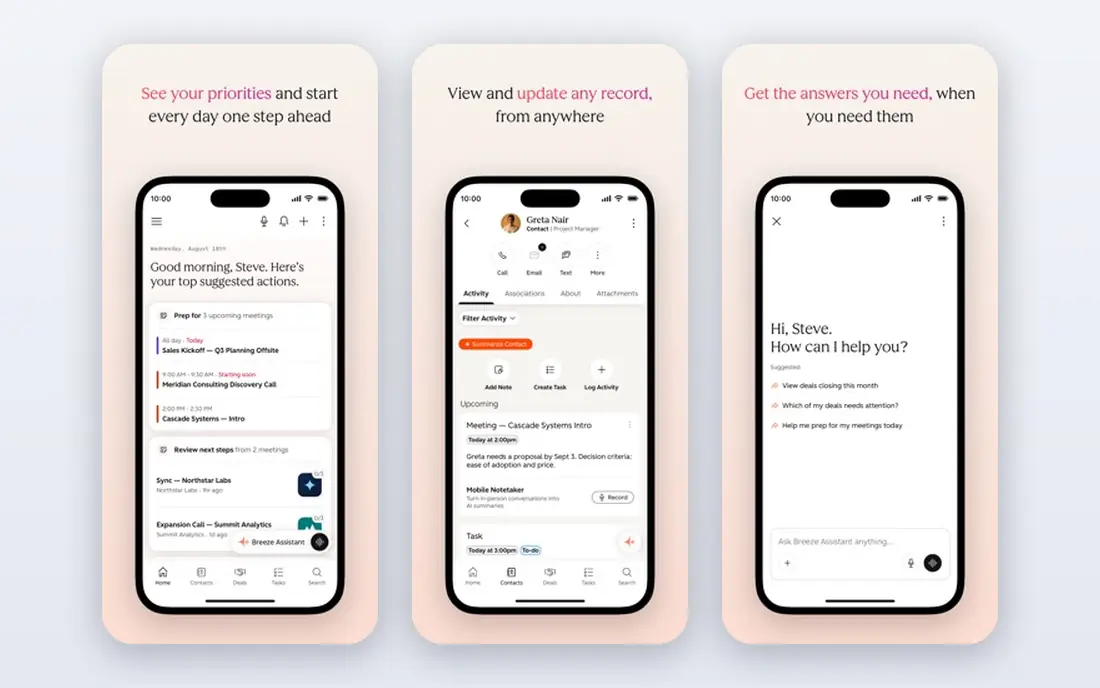
HubSpot Marketing Hub suits teams that want marketing automation and CRM in one system, without stitching together separate tools for email, forms, landing pages, and reporting. The free plan costs $0 per month and covers email marketing, lead capture forms, and live chat for up to two users. Starter starts at $20 per seat per month, with a limited time new customer offer of $10 per seat per month shown on the HubSpot product page on 12 November 2026, and it includes 1,000 marketing contacts.
Professional starts at $890 per month with three core seats, 2,000 marketing contacts, and 3,000 HubSpot Credits, while Enterprise starts at $3,600 per month with five core seats, 10,000 marketing contacts, and 5,000 credits. The step that matters most is attribution, because HubSpot lists multi-touch revenue attribution and customer journey analytics as Enterprise features only. Read the plan table against your reporting needs before you choose a tier.
- Built-in CRM keeps contact and deal data in one place
- Free plan covers basic email, forms, and live chat
- Multi-touch revenue attribution needs Enterprise
- Professional onboarding costs $3,000 and Enterprise onboarding costs $7,000
Adobe Marketo Engage
Ideal for: Enterprise B2B automation
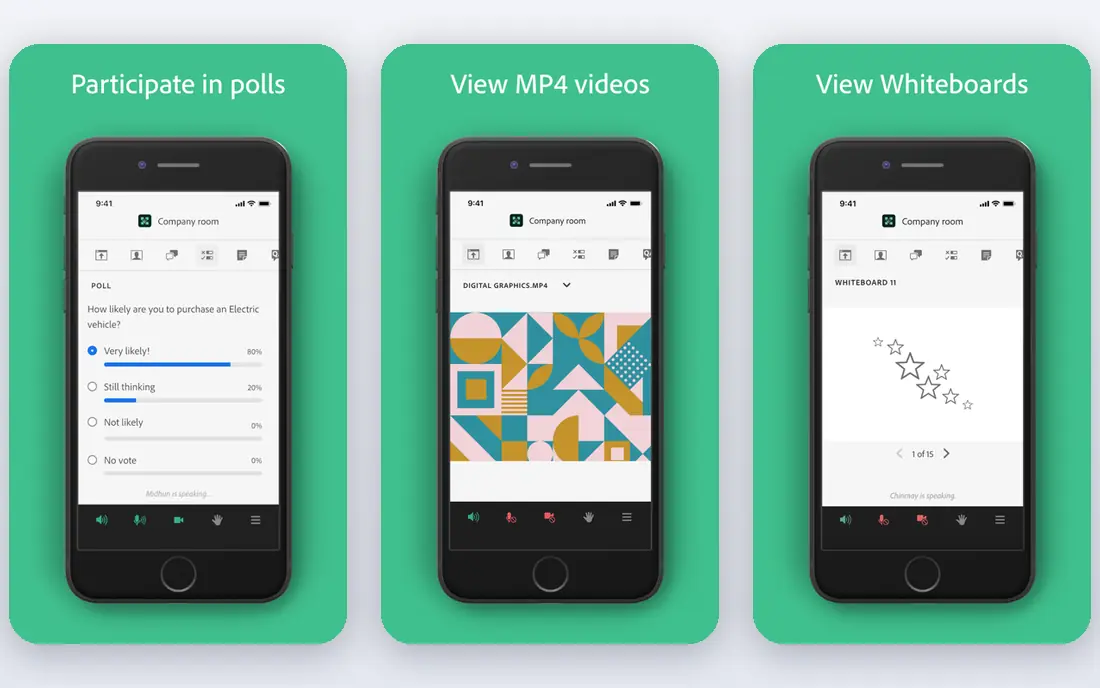
Adobe Marketo Engage is the enterprise standard for B2B marketing automation, built for long, multi-step buying journeys across email, web, events, and sales outreach. Adobe sells it in four packages, Growth, Select, Prime, and Ultimate, and every package leads to a Get pricing button rather than a published number. Growth includes 10 users and 20,000 API calls a day, while Select, Prime, and Ultimate each include 25 users and 50,000 API calls a day, with AI credit allowances of 100,000 for Growth, 250,000 for Select, and 500,000 for Prime and Ultimate.
The higher packages add the features revenue teams ask for most, including advanced reporting on Select, target account management and predictive audiences on Prime, and Marketo Measure attribution on Ultimate. A sandbox is available only from Prime upward. Marketo fits when your database is large, your sales cycle runs for months, and you have a marketing operations owner who can manage scoring, programs, and CRM sync.
- Deep lead scoring and nurture for long B2B sales cycles
- Native CRM integrations for major sales platforms
- Adobe publishes no list price, so budgeting needs a sales quote
- Setup often takes months and needs specialist admin skills
6sense
Ideal for: Intent-based account targeting
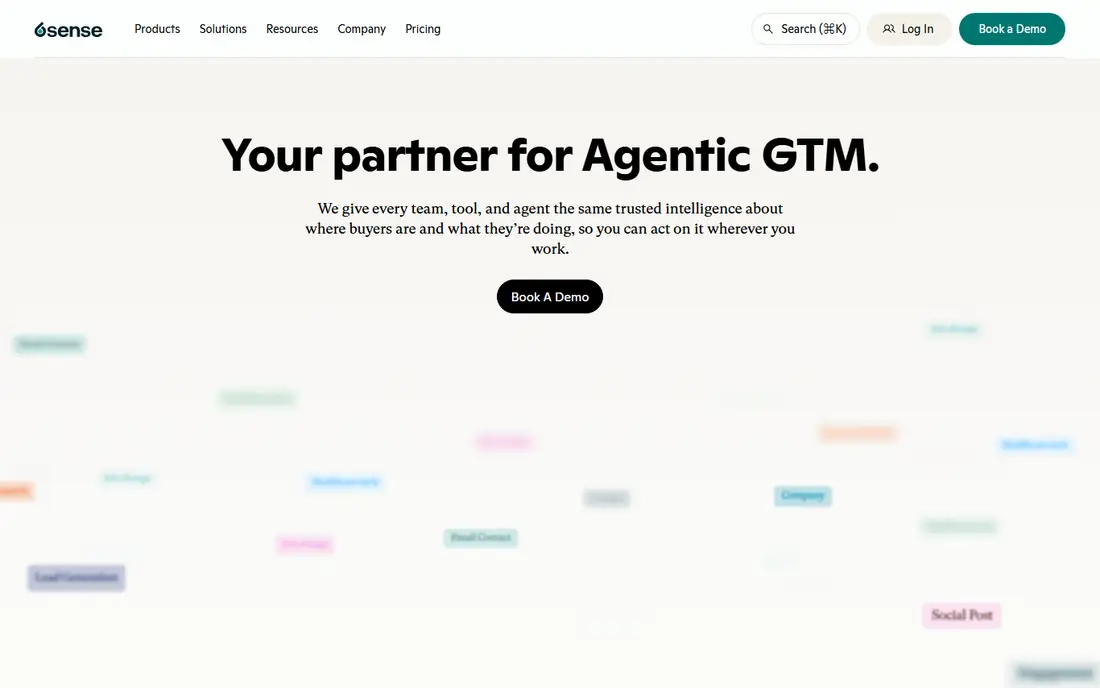
6sense is a revenue marketing platform built around intent data, predictive scoring, and account orchestration, and it is designed for teams that sell to a defined list of accounts rather than chasing every lead. Its pricing page, checked on 12 November 2026, shows no dollar amounts and asks buyers to talk with the sales team. Revenue Marketing covers advertising to in-market accounts, segments that update as behavior changes, Intelligent Workflows, and RevvyAI, a conversational AI for go-to-market questions.
Sales Intelligence adds company and contact data, recommended contacts, and AI insights drawn from CRM, marketing automation, and intent data, while 6sense Intelligence sells the underlying datasets on their own. Add-ons include AI Email, a sandbox, professional services, segment syncs, the Bombora Topic Pack, credits, predictive models, and advanced security. Pricing is set by volume band per seat, credit, record, or conversation, and new customers get a test environment during onboarding. The platform earns its cost only when sales and marketing act on the scores together.
- Predictive account scoring based on intent and buying signals
- Segments update as buyer behavior changes
- No published price, so every deal is a custom annual quote
- Data credits do not carry over between periods
Demandbase
Ideal for: Unified ABM suite
Demandbase One is an account-based go-to-market platform that puts advertising, marketing, sales, and data on one account record, so both teams work from the same list of accounts and the same buying signals. Its pricing page, checked on 12 November 2026, describes a platform fee that covers the essential software and services, plus a flat fee per user, and it gives no dollar amounts. Advertising can be a starting place, and Data solutions can be bought on their own.
The core idea is simple: identify in-market accounts, prioritize the buying groups inside them, activate coordinated programs across channels, and measure which programs create pipeline. Demandbase also offers a named agent layer called Agentbase, plus website personalization and sales intelligence. The trade-off is scope, because a team that only needs email nurture or only needs advertising will find a large suite with a platform fee, a per-user fee, and separate media spend. Ask for a scoped quote that separates the platform fee, user fees, onboarding, and media spend.
- Sales and marketing share one account record
- Built-in B2B advertising and website personalization
- No published price, with a platform fee plus a flat fee per user
- Advertising spend is billed separately from the platform fee
Salesforce Marketing Cloud Account Engagement
Ideal for: Salesforce-first B2B teams
Salesforce Marketing Cloud Account Engagement, the product formerly called Pardot, is the B2B marketing automation tool for teams that already run sales on Salesforce CRM. Prospect activity, lead scores, and campaign history appear on the same records your sales team already uses. Growth+ starts at $1,250 per org per month billed annually and includes 10,000 contacts, Plus+ costs $2,750 per org per month, Advanced+ costs $4,400 per org per month, and Premium+ costs $15,000 per org per month with 75,000 contacts.
Every edition now includes Account Engagement+, which gives access to Marketing Cloud Next features such as Agentforce campaign creation and multichannel journeys, but those features use Data 360 credits, Einstein Request Credits, and Messaging Credits billed on top. Extra contacts cost $100 per 10,000 per month. The platform also needs Salesforce Enterprise or Unlimited Edition, so a team on a lower CRM edition must upgrade first.
- Built on Salesforce CRM, so prospect data sits with sales records
- Lead scoring and grading use native CRM objects
- Requires Salesforce Enterprise or Unlimited Edition CRM
- Marketing Cloud Next features need extra Data 360 and messaging credits
RollWorks
Ideal for: Mid-market ABM advertising
RollWorks is now sold as AdRoll ABM, after NextRoll folded the RollWorks brand back into AdRoll in August 2025, and the rollworks.com homepage now loads the AdRoll ABM page. The platform connects account-based buyer intelligence to multi-channel advertising, so a mid-market team can target a list of accounts, watch buying signals, and run ads to the people inside those accounts from one place. Its homepage describes a base of 2.6 billion digital identities and 92 million contacts, plus an ABM Command Center that tracks buyer signals and recommends next steps.
A free entry tier covers account identification and basic website visitor insights, so you can test the data before a sales conversation. The ABM tiers for advertising and full marketing orchestration are sales-quoted, and the current AdRoll pricing page lists no dollar amounts for those tiers. Connected TV campaigns carry a $10,000 per month minimum budget. RollWorks fits a mid-market B2B team that wants account advertising without the enterprise contract size of 6sense or Demandbase.
- Account-based advertising and buyer insights in one place
- Bundled audiences, integrations, and measurement with no extra fees for those items
- ABM tiers are sales-quoted with no published price
- Connected TV campaigns need a $10,000 per month minimum budget
Metadata.io
Ideal for: Automated B2B campaign execution
Metadata.io is a demand generation and ABM execution platform that builds audiences, landing pages, and ad creatives, then runs and optimizes campaigns across 12 channels, including LinkedIn, Meta, Google, Reddit, ChatGPT Ads, display, connected TV, out-of-home, and audio. The team sets goals, budgets, and approval rules, and the platform handles setup, testing, and budget shifts inside those controls. Its MetaMatch identity graph matches personal identities to corporate profiles, which is how it targets B2B buyers on consumer channels.
Metadata.io does not publish list prices, and its pricing page asks buyers to request a quote, with fees scoped by the amount of media managed and the number of channels and integrations in use. Ad media is billed separately by the ad networks, so the platform fee is only part of the total program cost. The platform makes most sense for teams with a large monthly advertising budget, because the optimization engine needs enough spend and conversions to learn which audiences and creatives create pipeline.
- Campaigns run across 12 channels from one product
- Optimizers shift budget toward pipeline goals automatically
- No published price, with fees tied to managed ad spend
- Needs meaningful monthly ad spend before the automation shows its value
Attribution
Ideal for: Multi-touch revenue attribution
Attribution is a multi-touch attribution tool that ties every marketing touchpoint to cost and revenue, so a team can see which channels create customers and which ones only claim credit. Its pricing page, checked on 12 November 2026, lists three plans with every feature included on each one. Pro costs $399 per month, or $335 per month billed annually, for up to 10,000 monthly tracked users, and it is built for HubSpot, Twilio Segment, and small Salesforce teams. The Shopify plan costs $199 per month, or $167 per month billed annually, for the same limit, and Custom pricing applies above 10,000 monthly tracked users.
Every plan includes five attribution models, first touch, last touch, linear, time decay, and position-based, plus media mix modeling, incrementality testing, a marketing profit and loss view by channel, cohort and CAC payback reports, and an MCP server for Claude and ChatGPT. Overage costs $10 per 1,000 monthly tracked users above the plan limit. Every self-serve plan starts with a 14-day free trial. Attribution fits a team that already spends on several channels and needs one shared answer for what each channel contributed.
- Every plan includes every feature, with five attribution models
- Prices by monthly tracked users, not by ad spend or revenue
- Data export and API access is an add-on quoted with the plan
- Optional onboarding costs $2,500 to $5,000
How we chose
We compared vendor pricing pages, product pages, and help documentation for each tool, and we opened every homepage listed in this guide on 12 November 2026 to confirm it loads. Prices in this guide come from the vendor pricing page where the vendor publishes one, and we mark a tool as quote only where the vendor hides the price behind a sales conversation. We did not run hands-on tests, and we did not invent prices, ratings, customer counts, or test results. We favored tools that connect marketing activity to pipeline and revenue, through attribution reports, account scoring, or CRM records, over tools that only report clicks and impressions. We also checked plan limits that change the real cost, such as contact limits, monthly tracked user limits, data credits, and onboarding fees.
What to check before you buy
Check your CRM first, because three tools in this guide assume a CRM is already in place, and the cost of adding or upgrading a CRM can exceed the marketing tool itself. Salesforce Account Engagement needs Salesforce Enterprise or Unlimited Edition, Marketo works best with a CRM sync in place, and HubSpot includes its own CRM. Next, check which attribution model each tool uses and whether it is included in the tier you plan to buy, since HubSpot keeps multi-touch revenue attribution on Enterprise, Marketo keeps Marketo Measure on Ultimate, and Attribution includes all five models on every plan.
Check the billing unit as well, because these tools charge in different ways. HubSpot charges per seat and per marketing contact tier, Salesforce charges per org with a contact limit, 6sense charges by volume band per seat, credit, record, or conversation, Demandbase charges a platform fee plus a flat fee per user, Metadata.io charges by managed ad spend, and Attribution charges by monthly tracked users. Ask each vendor for the price at your current volume and at double that volume, and ask what happens when you cross a limit mid-contract. Finally, ask about contract length, onboarding fees, and data export, because several tools in this guide use annual contracts.
| Team size and budget | Best starting point | Why it fits |
|---|---|---|
| Small team, under $500 per month | Attribution or HubSpot Starter | Published prices, a free trial or free plan, and no enterprise sales cycle |
| Mid-market team, $500 to $2,000 per month | HubSpot Professional or RollWorks | Automation plus CRM reporting, or account advertising with a free entry tier |
| Enterprise team, $2,000 per month and above | Marketo, 6sense, Demandbase, or Salesforce Account Engagement | Account scoring, attribution, and CRM depth at database scale |
| Heavy advertising spend, $30,000 per month and above | Metadata.io | Automated testing and budget shifts need large spend to learn from |
Frequently asked questions
What is a revenue marketing platform?
A revenue marketing platform connects marketing activity to pipeline and revenue, instead of only reporting clicks, opens, and form fills. It links campaigns, accounts, contacts, and deals in one system, so a team can see which programs created opportunities and which channels deserve more budget. Attribution, account scoring, and CRM records are the three features that separate it from a basic email tool.
Which revenue marketing platform is best for a small team?
HubSpot Marketing Hub is the best starting point for most small teams, because its free plan covers email, forms, and live chat, and Starter costs $20 per seat per month. Attribution is the best choice when the main gap is measurement, because it starts at $199 per month and includes every feature on every plan. Avoid the quote only enterprise tools until your database and budget justify an annual contract.
Why do so many revenue marketing tools hide their prices?
Enterprise revenue marketing tools price by database size, account volume, seats, data credits, or managed ad spend, so one list price would mislead most buyers. Vendors also bundle onboarding, data packs, and add-ons into each quote. The honest step is to ask for a scoped quote at your current volume, with onboarding, overage, and renewal terms written down before you sign.
Do I need a CRM before I buy one of these tools?
Most teams do, because revenue marketing only works when campaign data can join to contacts, accounts, and deals. HubSpot includes a CRM, so it works without a separate purchase. Salesforce Account Engagement needs Salesforce CRM, and Marketo, 6sense, Demandbase, and Attribution all connect to HubSpot or Salesforce. If you have no CRM yet, start with HubSpot and add a specialist tool later.
How long does it take to set up a revenue marketing platform?
Setup time ranges from under a day to several months, and it depends on data quality, CRM fit, and team size. Attribution reports setup in under a day for Segment users, and HubSpot Starter can run basic campaigns in a week. Marketo, 6sense, Demandbase, and Salesforce Account Engagement often need four to twelve weeks for CRM sync, scoring rules, account lists, and training.