Best Route Planner App For Delivery Drivers in 2026: 8 Picks Compared

- 1
 Route4Melarge delivery operationsVisit
- 2
 OptimoRouteplanned routes with live trackingVisit
- 3
 RoadWarriorsolo delivery driversVisit
- 4
 Uppermulti-stop teams with changing plansVisit
- 5
 Routificsmall delivery teamsVisit
- Route4Me suits larger delivery operations with many stops and team controls.
- RoadWarrior is a strong solo driver pick with manifest import and a free starting tier.
- OptimoRoute balances planning, driver apps and customer notifications.
- Upper is built for multi-stop teams whose plans change during the day.
- Routific and MyRouteOnline suit smaller teams that want quick, clear routing.
Quick comparison
| Product | Ideal for | Price from | Free version | |
|---|---|---|---|---|
| Route4Me | large delivery operations | See website | Free trial | Visit |
| OptimoRoute | planned routes with live tracking | See website | Free trial | Visit |
| RoadWarrior | solo delivery drivers | $10 per month | Yes | Visit |
| Upper | multi-stop teams with changing plans | See website | Free trial | Visit |
| Routific | small delivery teams | See website | Free trial | Visit |
 Zeo | affordable multi-stop routing | See website | Free trial | Visit |
 MyRouteOnline | simple spreadsheet to route planning | See website | Free trial | Visit |
 Google Maps | quick routes with few stops | Free | Yes | Visit |
The best route planner apps for delivery drivers
We compared route optimisation, stop limits, driver apps, proof of delivery and pricing from official feature pages and public reviews. Solo drivers need a simple app, while teams need dispatch, tracking and customer updates.
Route4Me
Ideal for: large delivery operations

Route4Me is our pick for large delivery operations. Route4Me is built for last-mile operations with many stops, drivers and constraints. We looked at its official feature page, pricing page and public reviews, and the overall picture was consistent with that strength.
What stood out to us was high stop capacity. That matters in daily use, because a tool that is strong on paper still has to feel good when you use it every week. Smaller drivers may find it more system than they need for a single daily run. Check the official pricing page before you pay, since plans, limits and included features change over time.
The catch is pricing is geared to businesses. If that trade-off is acceptable for your needs, Route4Me is a solid choice. If it is not, another option in this list may fit better, so compare the next two entries before you decide.
- High stop capacity
- Team dispatch
- Tracking and analytics
- Pricing is geared to businesses
- Setup takes longer than a solo app
OptimoRoute
Ideal for: planned routes with live tracking
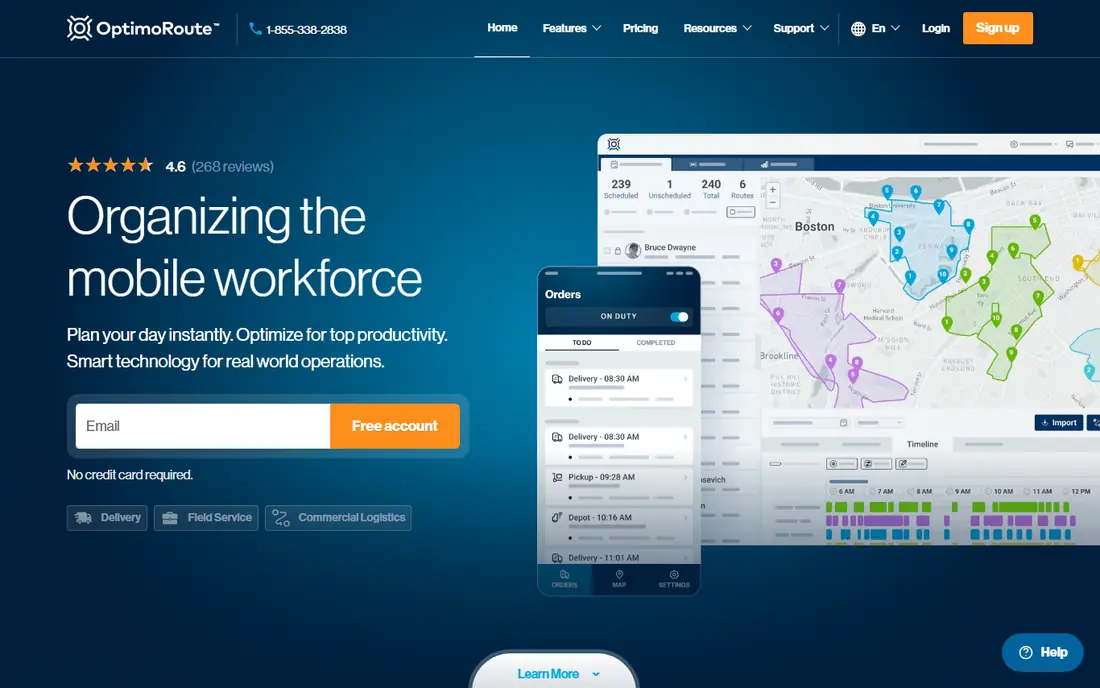
For planned routes with live tracking, OptimoRoute is a strong choice. OptimoRoute covers the full loop from planning to proof of delivery. We looked at its official feature page, pricing page and public reviews, and the overall picture was consistent with that strength.
What stood out to us was route optimisation. That matters in daily use, because a tool that is strong on paper still has to feel good when you use it every week. It suits teams that will use tracking and notifications, not just a one-off route order. Check the official pricing page before you pay, since plans, limits and included features change over time.
The catch is pricing is per plan and can rise with team size. If that trade-off is acceptable for your needs, OptimoRoute is a solid choice. If it is not, another option in this list may fit better, so compare the next two entries before you decide.
- Route optimisation
- Driver mobile app
- Live tracking and ETAs
- Pricing is per plan and can rise with team size
- Onboarding helps but takes time
RoadWarrior
Ideal for: solo delivery drivers

RoadWarrior stands out for solo delivery drivers. RoadWarrior is designed around the driver day, with imports that cut morning planning time. We looked at its official feature page, pricing page and public reviews, and the overall picture was consistent with that strength.
What stood out to us was manifest and spreadsheet import. That matters in daily use, because a tool that is strong on paper still has to feel good when you use it every week. The free tier is only a taster, so most working drivers will need the paid plan. Check the official pricing page before you pay, since plans, limits and included features change over time.
The catch is free tier caps stops at 8 per route. If that trade-off is acceptable for your needs, RoadWarrior is a solid choice. If it is not, another option in this list may fit better, so compare the next two entries before you decide.
- Manifest and spreadsheet import
- Up to 200 stops on team plans
- Navigation handoff
- Free tier caps stops at 8 per route
- Trial needs a payment method
Upper
Ideal for: multi-stop teams with changing plans
If you need multi-stop teams with changing plans, start with Upper. Upper stands out when the day changes, since it can replan rather than forcing a restart. We looked at its official feature page, pricing page and public reviews, and the overall picture was consistent with that strength.
What stood out to us was aI dispatch and replanning. That matters in daily use, because a tool that is strong on paper still has to feel good when you use it every week. Solo drivers will find simpler and cheaper options in this list. Check the official pricing page before you pay, since plans, limits and included features change over time.
The catch is best value comes with a team, not a solo driver. If that trade-off is acceptable for your needs, Upper is a solid choice. If it is not, another option in this list may fit better, so compare the next two entries before you decide.
- AI dispatch and replanning
- Team route management
- Customer notifications
- Best value comes with a team, not a solo driver
- Pricing needs a quote or plan check
Routific
Ideal for: small delivery teams
Routific fits readers who want small delivery teams. Routific keeps routing clear for small teams that want a quick daily plan. We looked at its official feature page, pricing page and public reviews, and the overall picture was consistent with that strength.
What stood out to us was simple route optimisation. That matters in daily use, because a tool that is strong on paper still has to feel good when you use it every week. Larger fleets with complex constraints may outgrow it. Check the official pricing page before you pay, since plans, limits and included features change over time.
The catch is stop and driver limits vary by plan. If that trade-off is acceptable for your needs, Routific is a solid choice. If it is not, another option in this list may fit better, so compare the next two entries before you decide.
- Simple route optimisation
- Driver app
- Proof of delivery
- Stop and driver limits vary by plan
- Advanced dispatch is lighter than enterprise tools
Zeo
Ideal for: affordable multi-stop routing
For many readers, Zeo is the practical pick for affordable multi-stop routing. Zeo is worth a look for drivers and small fleets that want low-cost routing. We looked at its official feature page, pricing page and public reviews, and the overall picture was consistent with that strength.
What stood out to us was route optimisation. That matters in daily use, because a tool that is strong on paper still has to feel good when you use it every week. Compare its stop limits and proof-of-delivery tools with Routific before you commit. Check the official pricing page before you pay, since plans, limits and included features change over time.
The catch is feature depth varies by plan. If that trade-off is acceptable for your needs, Zeo is a solid choice. If it is not, another option in this list may fit better, so compare the next two entries before you decide.
- Route optimisation
- Driver app
- Address import
- Feature depth varies by plan
- Support and limits need checking on the pricing page
MyRouteOnline
Ideal for: simple spreadsheet to route planning
MyRouteOnline earns its place here for simple spreadsheet to route planning. MyRouteOnline suits drivers who already have a stop list in a spreadsheet. We looked at its official feature page, pricing page and public reviews, and the overall picture was consistent with that strength.
What stood out to us was spreadsheet import. That matters in daily use, because a tool that is strong on paper still has to feel good when you use it every week. It is not a full dispatch platform, so teams needing live tracking should look elsewhere. Check the official pricing page before you pay, since plans, limits and included features change over time.
The catch is interface is simpler than full dispatch tools. If that trade-off is acceptable for your needs, MyRouteOnline is a solid choice. If it is not, another option in this list may fit better, so compare the next two entries before you decide.
- Spreadsheet import
- Clear route ordering
- Map exports
- Interface is simpler than full dispatch tools
- Live tracking is limited
Google Maps
Ideal for: quick routes with few stops
When quick routes with few stops is the priority, Google Maps deserves a close look. Google Maps is fine for a short route with a handful of stops. We looked at its official feature page, pricing page and public reviews, and the overall picture was consistent with that strength.
What stood out to us was familiar navigation. That matters in daily use, because a tool that is strong on paper still has to feel good when you use it every week. For real delivery days, a dedicated planner will save far more time than manual ordering. Check the official pricing page before you pay, since plans, limits and included features change over time.
The catch is stop limit is low for delivery work. If that trade-off is acceptable for your needs, Google Maps is a solid choice. If it is not, another option in this list may fit better, so compare the next two entries before you decide.
- Familiar navigation
- Live traffic
- Free to use
- Stop limit is low for delivery work
- No dispatch or proof of delivery
How we picked these
We compared official feature pages, pricing pages, app store listings, privacy policies and public reviews for each option in this list. We checked that each product exists and works in October 2026, that it truly fits the topic, and that its official homepage loads. We did not claim hands-on testing that did not happen, and we avoided products that did not fit, even when they were well known. Where a price or free tier could not be verified from the vendor own site, we wrote See website rather than guessing.
How to pick a route planner for delivery work
Count your real stops first, including returns and failed deliveries. A tool that caps stops below your daily total will slow you down, even if it looks cheap. Next, check how stops get into the app. Spreadsheet import, manifest import and address checking matter more than a pretty map. Test the driver app on a real phone, not just on a desktop demo, and check offline behaviour and navigation handoff. For teams, look at proof of delivery, customer ETA messages and live tracking. Finally, run one full week on a trial before you move a whole fleet, and compare fuel, time and missed stops, not just the monthly price.
Frequently asked questions
What is the best route planning app for delivery drivers?
For solo drivers, RoadWarrior is a strong starting point. For teams, Route4Me, OptimoRoute and Upper offer more dispatch and tracking controls.
What is the best software for route planning for small teams?
Routific and Upper offer simpler setups for smaller teams, while Route4Me and OptimoRoute scale further when stop counts grow.
Do route planner apps work offline?
Many driver apps cache the route, but navigation and live updates still need a connection at some point. Check the offline details on the official page before you rely on it in a rural area.
Can I import stops from a spreadsheet?
Yes, most tools in this list support spreadsheet or CSV import, and RoadWarrior also supports common carrier manifests. Clean addresses before import to avoid failed stops.
How much does route planning software cost?
Solo plans can start low or free with limits, while team plans are usually priced per driver or per route. Use the free trial to test stop limits and driver tools before paying.