Best Running Apps for Beginners in 2026: 8 Apps Compared

- 1
 Nike Run ClubFree guided runs and plansVisit
- 2
 Couch to 5KAbsolute beginnersVisit
- 3
 StravaSocial motivationVisit
- 4
 RunkeeperSimple tracking with plansVisit
- 5
 MapMyRunRoute discoveryVisit
- Nike Run Club is the best free all-round pick for beginners, with guided runs and training plans at no cost and no premium tier.
- Couch to 5K apps are the best first step for absolute beginners, thanks to a gentle nine-week walk-run plan.
- Strava is the best pick once you want social motivation, segments and a feed of friends' runs.
- Runkeeper and MapMyRun suit beginners who want simple tracking with optional paid plans for deeper coaching.
- Start with one app for at least two weeks before judging it, and build slowly: three runs a week with rest days beats a fast start that ends in injury.
Quick comparison
| Product | Ideal for | Price from | Free version | |
|---|---|---|---|---|
| Nike Run Club | Free guided runs and plans | Free | Yes | Visit |
| Couch to 5K | Absolute beginners | Free | Yes | Visit |
| Strava | Social motivation | Free | Yes | Visit |
| Runkeeper | Simple tracking with plans | Free | Yes | Visit |
| MapMyRun | Route discovery | Free | Yes | Visit |
 Adidas Running | Multi-sport tracking | Free | Yes | Visit |
 Zombies, Run! | Story-driven motivation | Free | Yes | Visit |
 Runna | Personalized paid plans | See website | No | Visit |
The best running apps for beginners
These eight apps cover guided coaching, walk-run plans, social running and personalized training. We compared official app listings, pricing pages and public reviews, focusing on what a beginner actually gets free.
Nike Run Club
Ideal for: Free guided runs and plans
Nike Run Club is our pick for most beginners because it removes cost from the decision entirely. There is no subscription and no gated feature: GPS tracking, guided audio runs, achievements and training plans from 5K to marathon are all free. The guided runs, led by coaches, give structure to early sessions without making them feel like a test.
The honest limit is the starting level. Its beginner plans are run plans rather than walk-run plans, so a true couch-to-5K starter may find the first sessions hard. Pair it with a walk-run app for the first weeks, then move to Nike Run Club when you can run for several minutes at a time.
- Completely free, no premium tier
- Guided runs from real coaches
- Plans from 5K to marathon
- Social features are thinner than Strava
- Plans assume you can already run a little
Couch to 5K
Ideal for: Absolute beginners
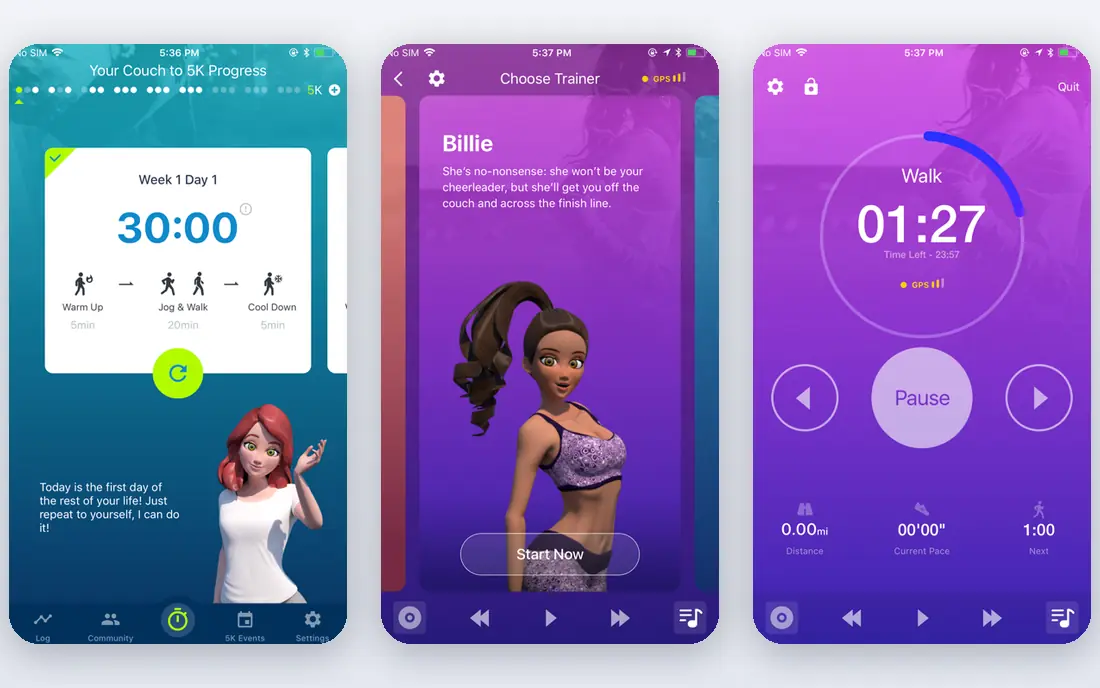
Couch to 5K, from the NHS, is the best first step for someone who has not run before. The nine-week plan alternates walking and running in short intervals, building gradually to a full 5K, with audio coaching telling you when to walk and when to run. It is free, simple and proven by millions of finishers.
The weekly jumps can feel steep, and completion rates are modest, so slow the plan down if a week feels too hard: repeat a week rather than quitting. Once you finish, move to Nike Run Club or Strava for the next goal, since Couch to 5K offers little beyond the first 5K.
- Gentle nine-week walk-run plan
- Free
- Simple audio coaching
- Weekly jumps can feel steep
- Little beyond the 5K finish
Strava
Ideal for: Social motivation
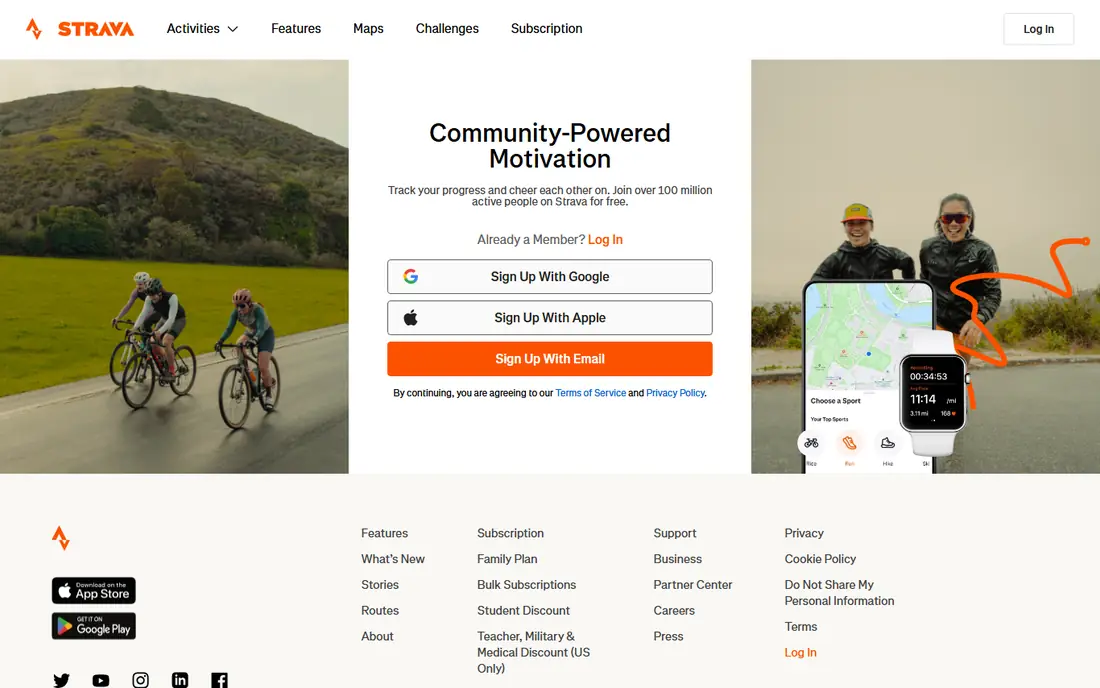
Strava is the app to open once running has become a habit and you want company. The social feed, kudos and segment leaderboards turn solo runs into a shared activity, and route discovery helps you find safe, popular paths near home. Basic tracking, the feed and top segment rankings are free.
Advanced analytics, full leaderboards and training tools sit behind a subscription at $11.99 per month or $79.99 per year. Beginners do not need those features yet, so start free and pay only when a specific stat matters to your training. For motivation, though, the free social layer is hard to beat.
- Strong social feed and segments
- Free GPS tracking
- Route discovery
- Advanced stats sit behind a subscription at $11.99 per month or $79.99 per year
Runkeeper
Ideal for: Simple tracking with plans
Runkeeper is a dependable middle ground for beginners who want simple tracking with the option of structured plans later. Free GPS tracking covers pace, distance and history, while guided workouts add coaching cues. Runkeeper Go, at $9.99 per month or $39.99 per year, adds personalized plans and deeper insights.
It lacks Strava's social pull and Nike's free coaching depth, but it is steady and easy to use. If you want an app that tracks well, stays out of the way and grows with you through a paid tier, Runkeeper is a solid choice.
- Reliable free GPS tracking
- Guided workouts
- Optional Runkeeper Go plans
- Paid tier at $9.99 per month or $39.99 per year
- Interface feels dated to some users
MapMyRun
Ideal for: Route discovery
MapMyRun, from Under Armour, shines at routes. Its mapping tools and large library of user-created routes help beginners find flat, safe and interesting paths instead of repeating the same loop. GPS tracking, audio coaching and basic stats are free, with a premium tier adding ad-free use and deeper analysis.
The free version carries ads, and the interface can feel busy compared with Nike Run Club. If route discovery matters to you, for example when you travel or want to explore, MapMyRun earns its place. If you run the same route daily, a simpler tracker may suit you better.
- Excellent route mapping
- Large route library
- Audio coaching
- Free version includes ads
- Premium features need a subscription
Adidas Running
Ideal for: Multi-sport tracking
Adidas Running, formerly Runtastic, suits beginners who do more than run. It tracks cycling, hiking, walking and other activities alongside running, with voice coaching and weekly stats. Sync with Apple Health and wearables works well, and the free tier covers the basics.
Ads appear in the free version, and premium is only sold inside the app, which makes pricing less transparent. For a multi-sport beginner who wants one tracker for everything, it is a good fit. For running-only beginners, Nike Run Club or Strava is simpler.
- Tracks running plus cycling, hiking and more
- Voice coaching
- Wearable sync
- Ads in the free version
- Premium only purchasable in-app
Zombies, Run!
Ideal for: Story-driven motivation
Zombies, Run! is the motivation pick for beginners who find plain running boring. An audio story unfolds as you run, with missions, characters and zombie chases that give you a reason to head out the door. The base app is free to download, with in-app purchases for extra content, and a separate 5K training version wraps the story around an eight-week plan.
The story can distract from pacing awareness, and it will not replace structured coaching. If boredom is what keeps you off the road, though, this app solves the real problem, and that matters more than any stat.
- Immersive audio story
- Makes runs fun
- Free to start with in-app purchases
- Story can distract from pacing
- 5K training version is a separate app
Runna
Ideal for: Personalized paid plans
Runna is the paid upgrade for beginners who want a plan that adapts to their life. It builds personalized training around your goal, schedule and fitness, adjusts when you miss sessions, and adds strength and mobility work that free apps often skip. Support for Apple Watch, Garmin, Fitbit and Coros is broad.
The catch is cost: since June 2026, beginner plans are part of the paid subscription, with only sample workouts free. That makes Runna a next step rather than a first step. Finish Couch to 5K first, then consider Runna when you want a structured, adaptive plan for a 10K or half marathon.
- Personalized, adaptive plans
- Watch and wearable support
- Strength and mobility content
- Paid subscription with only sample workouts free
- Beginner plans sit behind the paywall
How we picked these
We compared official app listings, pricing pages and public reviews for running apps available in the United States in October 2026. We favored apps with a real free tier or a genuinely free core, a beginner-friendly plan or coaching, and a working GPS tracker, and we left out apps that require a specific watch or a treadmill to function.
What to check before you start running with an app
Start with your fitness level, honestly. If you cannot run for five minutes yet, begin with Couch to 5K and its walk-run intervals. If you can run for ten minutes, Nike Run Club's beginner plans are a good next step. Starting too hard is the most common beginner mistake, and it leads to soreness, injury and quitting.
Then run three times a week with rest days between sessions, and keep most runs at a pace where you can talk in short sentences. That conversational pace builds the aerobic base that makes faster running possible later. Add a short strength session twice a week when you can, since strong legs and hips prevent many beginner injuries.
Finally, pick one app and stick with it for two weeks before judging it. Switching apps every few days breaks your history and your habit. Check that the app works with your phone and watch, test GPS accuracy on your usual route, and set a reminder for your run days, since the best app is the one that gets you out the door.
Frequently asked questions
What is the best free running app for beginners?
Nike Run Club is the best fully free running app, with guided runs and training plans at no cost. Couch to 5K is better for absolute beginners who need a walk-run plan, and it is also free.
Do I need a smartwatch to use a running app?
No, most running apps use your phone's GPS and work well without a watch. A watch adds convenience and heart-rate data, but it is not required to track distance, pace or training progress.
How often should a beginner run?
Three runs per week with rest days between sessions is a good starting point. That schedule builds fitness while giving your body time to recover, which matters more than running every day at the start.
Is Strava free?
Yes, Strava's basic features, including GPS tracking, the social feed and basic stats, are free. Advanced analytics and full segment leaderboards require a subscription at $11.99 per month or $79.99 per year.
Can a running app help me finish a 5K?
Yes, Couch to 5K is designed exactly for that, with a nine-week walk-run plan. Nike Run Club also offers 5K plans, and Runna provides personalized paid plans for runners who want more structure.