Xactly leads the list, best for incentive compensation and quota planning. Alternatives: Workday Adaptive Planning for finance, workforce, and operations planning, and Pigment for integrated business planning with agentic AI. The full list of 6 tools follows, with prices and free plan facts.
If you are comparing sales & ops planning software for enterprise, this page covers 6 tools in one place: what each is best for, what it costs to start, whether it has a free plan, and the main limit to know about.
Key takeaways
Xactly sits first on this list: incentive compensation and quota planning.
No starting price is shown for any of the 6 tools, Xactly and Varicent included, so plan time for sales calls.
Varicent is the one to check for revenue and sales performance planning.
Xactly, Varicent and the 4 others all need a premium plan or a trial, since no free plan is listed.
Best for: Incentive compensation and quota planning
Xactly is designed for incentive compensation and quota planning. Teams should confirm that compensation data feeds are accurate; if wide operational planning is the goal, a general product suits better.
Xactly does not show a starting price in this comparison, so check the vendor site for current pricing. Xactly does not include a free plan.
Downsides: Specialized instead of general planning.
Best for: Finance, workforce, and operations planning
In short, Workday Adaptive Planning is for finance, workforce, and operations planning. Adaptive from Workday is enterprise planning software that links finance, workforce, and operations data to support AI-driven planning and quicker decisions.
Also, results rely on the quality and availability of connected data, and organizations outside the Workday ecosystem should weigh integration effort carefully. Pick it when cross-department planning alignment is the priority instead of specialized revenue modeling. Workday Adaptive Planning shows no starting price here, so confirm the cost on the vendor site. As for free access: Not stated.
The main drawbacks: Depth relies on connected data quality.
Best for: Integrated business planning with agentic AI
Think of Pigment for integrated business planning with agentic AI. Pigment describes itself as agentic AI for enterprise business planning, offering a system to analyze, model.
Plan so teams can prepare for a set of outcomes. From a buyer's view, choose it when a unified, AI-forward planning experience matters more than legacy integration depth. Pigment does not show a starting price in this comparison, so check the vendor site for current pricing. On free options: Not stated.
Watch-outs: Newer system with an expanding footprint.
Best for: Integrated EPM across finance and operations
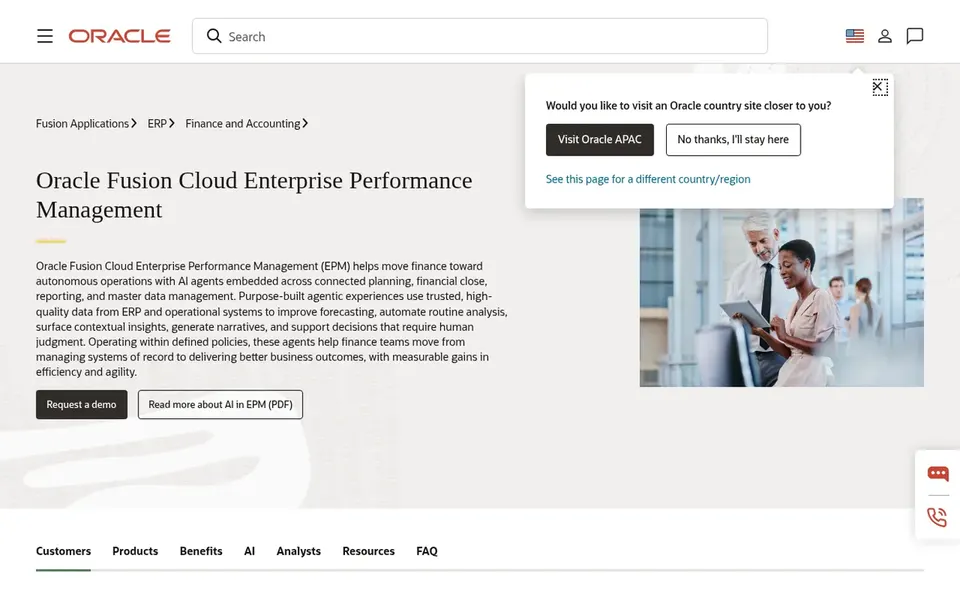
Oracle Fusion Cloud EPM is aimed squarely at integrated EPM across finance and operations. If your priority is a light sales planning model, a focused system may be quicker to stand up.
Where it is weaker: Overlap with other Oracle modules needs planning.
More specifically, the suite spans plenty of functions, so configuration and governance effort can be substantial, and teams should map which modules they actually need. Also, Oracle Fusion Cloud EPM is an enterprise performance management suite that embeds AI agents for planning, financial close, reporting, tax, and enterprise data management. Check the vendor site for Oracle Fusion Cloud EPM pricing; none is listed in this comparison. Free options: Not stated.
What works well: Wide enterprise performance scope.
Best for: Cross-functional scenario planning at scale
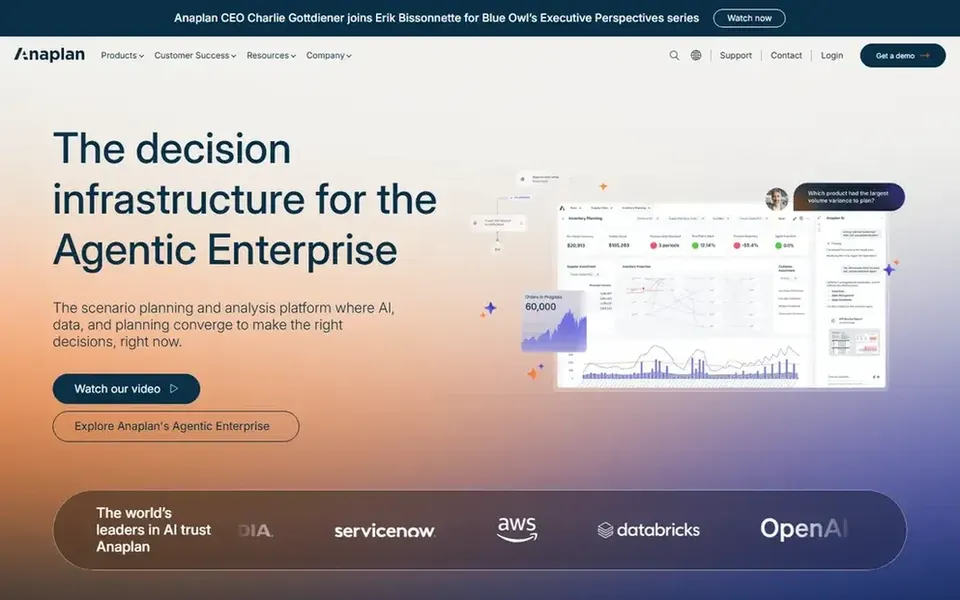
Anaplan was built for cross-functional scenario planning at scale. It suits enterprise organizations that require to model several planning scenarios across sales, finance, and operations and want a shared system for decisions instead of isolated spreadsheets.
Pricing for Anaplan is not stated here, so ask the vendor for current figures. Free access: Not stated.
The main drawbacks: Large deployments need governance planning.
For revenue and sales performance planning, Varicent is a natural candidate. Varicent supplies sales and revenue performance software built to drive high performance and maximize revenue using vital data, insights, and tools.
Honest limits: Narrower than full corporate planning suites.
This comparison lists no price for Varicent; ask the vendor. Trial and free access: Not stated.
Request quotes from Xactly, Varicent and the others; the list shows no fixed prices.
Read the limits listed for Xactly first: specialized instead of general planning.
Check whether Workday Adaptive Planning bills monthly or annually, and what cancelling early costs.
Confirm that Xactly connects to the apps your team already uses, on the plan you would actually buy.
Ask Varicent how an export works before you move any records in; an easy exit lowers the risk.
How we picked
Ainotely used vendor pricing pages and product documentation as the base, then compared plans, free access and documented limits for 6 tools. Seat minimums, billing terms and add-ons can move the real cost, so the starting prices here are a guide and not a quote. Tools are placed by general fit for sales & ops planning software for enterprise, with price clarity and free access as tie-breakers. A different team can reasonably rank them differently.
Every price and plan detail on this page comes from the vendors’ own websites. We did not run hands-on tests unless the text says so, and we do not publish star ratings or review scores. See how we score and our disclosure.
Keep your shortlist in one place
Paste prices, trial dates and notes from this guide into Ainotely, our AI note app. It files them into a topic and pulls out tasks like “cancel trial by Friday”. Free 7-day trial, no card needed.
How are the tools for sales & ops planning software for enterprise ordered?
Xactly sits first and Varicent last because the order follows typical fit for sales & ops planning software for enterprise, then price clarity and free access. It is a judgement call, so read each profile for fit and limits.
How long should an enterprise planning rollout take?
Timelines vary with scope, data readiness, and integration complexity, so ask vendors for a phased plan tied to your priorities. Starting with one planning process and expanding cuts risk.
What should enterprise teams look for in sales and ops planning software?
Prioritize cross-functional modeling, integration with existing ERP and CRM systems, and governance over sensitive data. Also confirm that the product supports the scenario planning cadence your teams actually run.
Does any tool for sales & ops planning software for enterprise here have a free plan?
A permanent free plan is not offered by Xactly, Varicent or the other tools here. Plan a short evaluation period instead.
Is Xactly the right pick for everyone comparing sales & ops planning software for enterprise?
No single tool suits every team. Xactly comes first because it fits incentive compensation and quota planning, while Workday Adaptive Planning suits finance, workforce, and operations planning and Pigment suits integrated business planning with agentic AI. Match the tool to your own size, budget and workflow before deciding.
Can these platforms replace spreadsheets entirely?
Most are built to move core planning cycles off spreadsheets, but adoption relies on model design and training. Teams frequently keep spreadsheets for ad hoc analysis whereas centralizing governed plans in the platform.