Best Sales Intelligence Tools for B2B Sales Teams in 2026: 8 Tools Compared

- ZoomInfo remains the deepest enterprise database, but its price and contract terms suit larger teams best.
- Apollo offers the best value for small and mid-size teams, combining data, sequences and analytics in one tool.
- Cognism leads for European data and compliance, while Lusha suits quick prospecting with a browser extension.
- Clay stands out for enrichment and workflow automation, turning raw data into targeted outreach lists.
Quick comparison
| Product | Ideal for | Price from | Free version | |
|---|---|---|---|---|
 ZoomInfo | Enterprise data depth | See website | No | Visit |
 Apollo.io | Value for growing sales teams | See website | Yes | Visit |
 Cognism | European data and compliance | See website | No | Visit |
 Lusha | Quick prospecting from LinkedIn | See website | Yes | Visit |
 Clearbit (HubSpot) | Enrichment inside HubSpot | See website | No | Visit |
 Hunter | Email finding and verification | See website | Yes | Visit |
 LeadIQ | LinkedIn prospecting and capture | See website | Yes | Visit |
 Clay | Enrichment workflows and automation | See website | Free trial | Visit |
The best sales intelligence tools for B2B sales teams
Sales intelligence tools give B2B teams accurate contact and company data, buying signals and outreach workflows, so reps spend time selling instead of hunting for emails. The eight tools below are the established options in 2026, and they differ in data coverage, accuracy, compliance and price. We compared official product pages, pricing pages and documentation.
ZoomInfo
Ideal for: Enterprise data depth
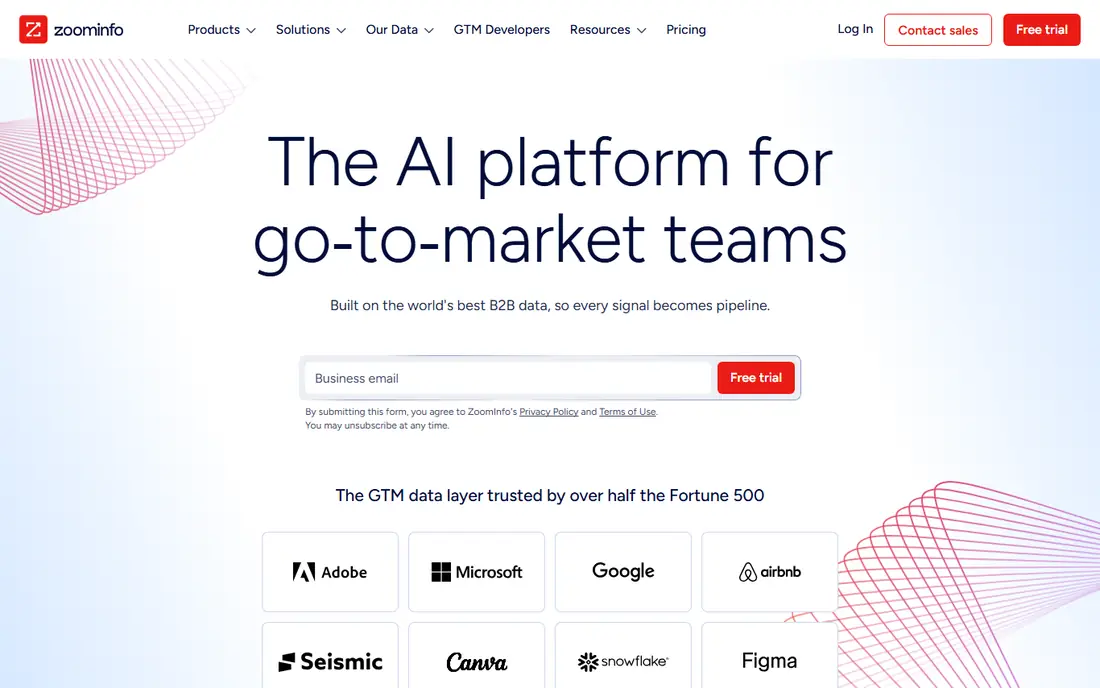
ZoomInfo is the enterprise standard for B2B data, with a large database of contacts and companies, intent signals that flag buyers researching topics, and technographic data on the tools companies use. Its integrations push data into CRMs and sales engagement tools cleanly.
Pricing is enterprise and contract based, which puts it out of reach for many small teams, and data accuracy varies by industry and region, so verify key contacts before outreach. For a large team that lives on data volume, ZoomInfo remains the benchmark.
- Very large B2B database with intent signals
- Strong company and technographic data
- Good CRM integrations
- Enterprise pricing and contracts
- Accuracy varies by segment and region
Apollo.io
Ideal for: Value for growing sales teams
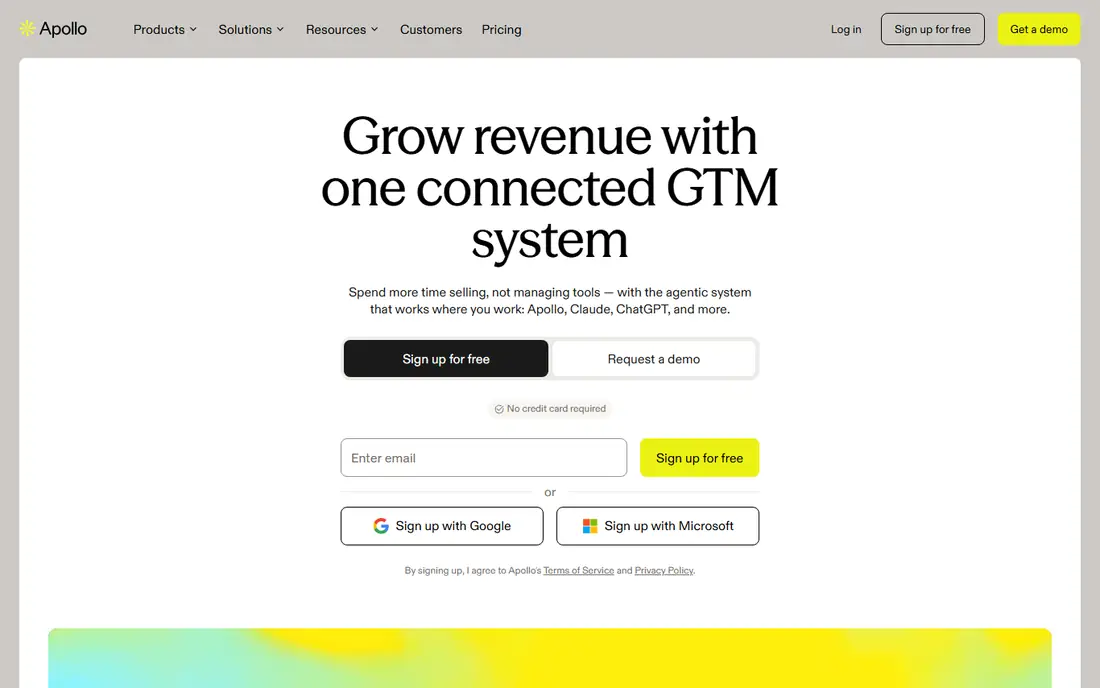
Apollo combines a large contact database with sequences, call tools and analytics in one platform, so a small sales team can prospect, email and track results without buying three tools. Its free plan lets teams test data quality on their own market before paying.
Data accuracy varies by segment, as with every database, and the most powerful features sit on higher plans. For a growing B2B team that wants one affordable tool for prospecting and outreach, Apollo is the best value on this list.
- Large database plus sequences and analytics
- Free plan to start
- Good value per contact
- Data accuracy varies
- Advanced features need higher plans
Cognism
Ideal for: European data and compliance
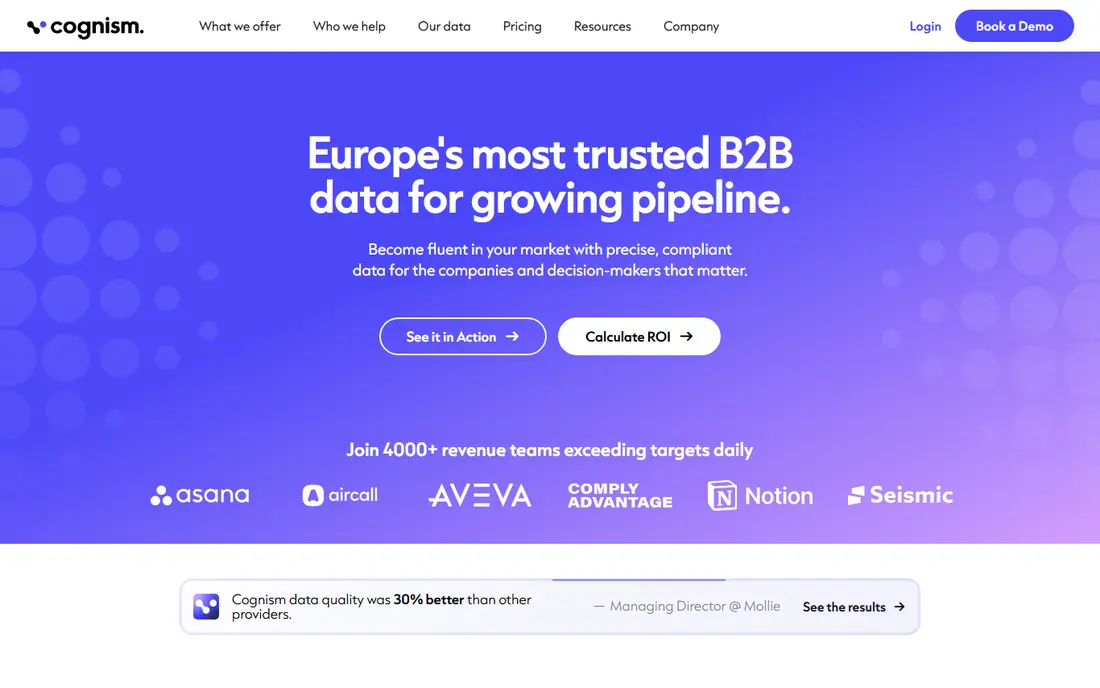
Cognism is the leading choice for European prospecting, with strong coverage, phone-verified mobiles and a compliance-first approach to GDPR that matters for teams emailing and calling across Europe. Its intent data and signals help reps prioritize accounts showing buying behavior.
Pricing is quoted and enterprise-oriented, and US depth trails ZoomInfo. For a team selling into Europe, Cognism's compliance and coverage make it the safer and often more accurate pick.
- Strong European coverage with GDPR focus
- Phone-verified mobile numbers
- Good intent and signal data
- Enterprise pricing is quoted
- Less US depth than ZoomInfo
Lusha
Ideal for: Quick prospecting from LinkedIn
Lusha is the quickest prospecting tool for individual reps: its browser extension shows contact details while browsing LinkedIn and company sites, with credit-based pricing that is easy to understand. It suits recruiters and sales reps who prospect account by account.
Heavy users burn credits fast, and Lusha is a data tool rather than a full outreach platform, so teams often pair it with a sequencer. For fast, accurate-enough contact lookup, Lusha is a practical and popular choice.
- Browser extension reveals contacts on LinkedIn
- Easy credit-based pricing
- Good for individual prospecting
- Credit limits can frustrate heavy users
- Less of a full sales platform than Apollo
Clearbit (HubSpot)
Ideal for: Enrichment inside HubSpot
Clearbit, now part of HubSpot, enriches leads and accounts with firmographic and technographic data, powering routing, scoring and personalization inside HubSpot. Its data quality for company enrichment is a strength, especially for inbound teams.
As a HubSpot product, its best value comes inside that ecosystem, and pricing is quoted. For a HubSpot team that wants clean, enriched records without manual research, Clearbit is the natural fit.
- Strong company and contact enrichment
- Tight HubSpot integration
- Good for routing and scoring
- Now part of HubSpot, so best value inside that ecosystem
- Pricing is quoted
Hunter
Ideal for: Email finding and verification
Hunter finds professional email addresses for people and companies, with domain search that lists addresses behind a company website and verification that checks whether an address is deliverable. Its free plan lets reps test it quickly, and the browser extension adds lookup to browsing.
Hunter is email-focused rather than a full contact database, so teams pair it with a broader tool for phone numbers and company data. For a team that mainly needs accurate emails for outreach, Hunter is a useful and affordable tool.
- Finds and verifies professional email addresses
- Domain search for whole companies
- Free plan to start
- Email-focused, not a full contact database
- Verification credits limit heavy use
LeadIQ
Ideal for: LinkedIn prospecting and capture
LeadIQ captures contact data from LinkedIn profiles and company pages in one click, syncing to CRMs and sales engagement tools so reps build lists without manual entry. Its team features and integrations suit outbound teams that prospect heavily on LinkedIn.
Credit-based pricing limits heavy use on lower plans, and database depth trails ZoomInfo. For a LinkedIn-first outbound team, LeadIQ is a focused and effective tool.
- Captures contacts from LinkedIn in one click
- Syncs with CRMs and sequencers
- Good team features
- Credit-based pricing
- Less database depth than ZoomInfo
Clay
Ideal for: Enrichment workflows and automation
Clay is different from a database: it is a workflow tool that pulls data from many providers, enriches it with AI research, and builds highly targeted prospect lists with custom columns and scoring. Growth and RevOps teams use it to turn a raw account list into a prioritized outreach list.
The learning curve is real, and pricing scales with enrichment credits, so heavy use costs money. For a team that wants precision targeting rather than bulk lists, Clay is the most powerful tool on this list.
A further discipline is data hygiene after purchase. Set rules for deduplication, bounce handling and record updates, and review data quality monthly by measuring bounce rates and meeting rates by source. A database that is never cleaned decays quickly as people change jobs, and dirty data wastes rep time and damages sender reputation.
- Combines many data providers in one workflow
- Powerful enrichment and AI research
- Great for targeted lists
- Learning curve for workflow building
- Pricing scales with enrichment volume
How we picked these
We compared official product pages, pricing pages and documentation, focusing on database coverage, contact accuracy, compliance, integrations and outreach features. We favored tools that are actively sold today and transparent about credit or contract models.
We also stress verification: no database is fully accurate, and the best teams verify key contacts and test data on their own market during a trial before committing to a contract.
How to buy sales data without wasting budget
Test data on your market, not on a demo list. During a trial, pull contacts for your actual target titles, industries and regions, and measure how many emails bounce and how many phones connect. A database that shines for US tech may be weak for European manufacturing, and only your test reveals that.
Compare total cost per usable contact
Contract price means little without accuracy. Divide total cost by contacts that are correct and reachable, not by total records delivered. A cheaper database with high bounce rates costs more per meeting booked than a pricier one with clean data.
Check compliance for every region you contact
GDPR, CCPA and other rules govern how you source and use personal data, and enforcement is real. Prefer vendors with clear compliance documentation, and confirm your outreach process, including opt-outs and legal basis, matches the rules for each region.
Pair data with a workflow, not just a list
Data alone does not book meetings. Decide how lists flow into your CRM and sequencer, who verifies contacts, and how bounces and replies are handled. Tools like Apollo and Clay help here by combining data with workflow, while pure databases need a sequencer alongside.
Frequently asked questions
What is the best sales intelligence tool for B2B?
ZoomInfo leads for enterprise depth, Apollo offers the best value for growing teams, Cognism leads for Europe, and Clay leads for enrichment workflows. The best pick depends on your market, size and budget.
Is ZoomInfo worth the price?
For large teams that use data daily across many reps, ZoomInfo's depth and intent signals often justify the cost. Smaller teams usually get better value from Apollo or Lusha, since ZoomInfo contracts are enterprise priced.
How accurate is sales intelligence data?
Accuracy varies by vendor, industry and region, and no database is perfect. Expect some bounces and wrong numbers, verify key contacts, and test each vendor on your own market during a trial before signing.
What is the difference between Apollo and ZoomInfo?
Apollo combines data with sequences and analytics at a lower price, suiting growing teams. ZoomInfo offers deeper enterprise data and intent signals at a higher contract price, suiting larger teams with heavier data needs.
Do sales intelligence tools comply with GDPR?
Reputable vendors document their GDPR approach, and Cognism is especially compliance-focused for Europe. Compliance also depends on your outreach process, so confirm legal basis, opt-outs and data handling for each region you contact.
How often should sales data be cleaned?
Review bounce rates and data accuracy monthly, refresh key accounts quarterly, and remove or update records that bounce repeatedly. Clean data protects email deliverability and keeps reps focused on reachable prospects.