For connected data and outreach system, Apollo.io is where this list starts. Listed starting prices: Hunter from $34 per month. Look at UpLead for verified B2B contact data, and at Lusha for buyer ranking and decision mapping. All 5 tools are compared below on price, free plan and limits.
Ainotely compared 5 sales intelligence tools for SMB owners. The goal is a practical shortlist: published prices, free plan facts, best-fit use cases and honest limits for every entry.
Key takeaways
Apollo.io takes the first slot, best suited to connected data and outreach system.
Hunter suits finding and verifying emails.
The main caution on ZoomInfo SalesOS: system breadth can overwhelm small teams.
Only Hunter offers a free plan among these 5 tools.
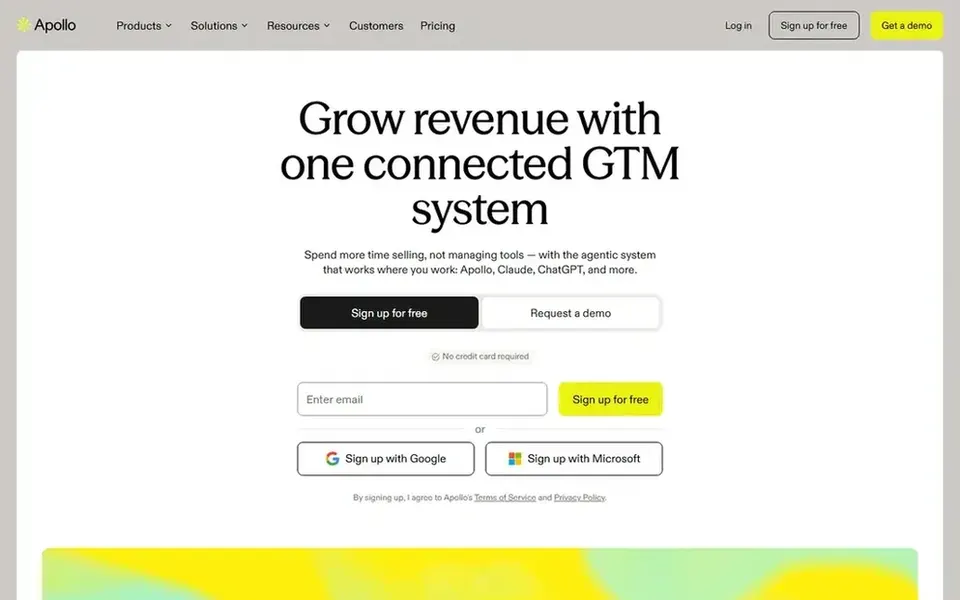
Apollo.io is designed for connected data and outreach system. Review how much of the workflow you will actually use before committing. More specifically, Apollo.io describes itself as an AI sales system rebuilt as one connected go-to-market system, bringing data, intelligence, and execution together.
Downsides: Breadth may take time to learn.
It tends to fit teams that are ready to run a repeatable outbound motion instead of occasional contact lookups. A connected system can carry a ramp-up time, and owners who only need verified emails may find it more than necessary. Apollo.io does not show a starting price in this comparison, so check the vendor site for current pricing. As for free access: Free trial.
UpLead makes the most sense for verified B2B contact data. UpLead gives you a B2B database and business contact data with built-in email verification, positioning accuracy as its central promise. As for the details, owners seeking a single system for the whole go-to-market motion should compare broader systems.
In practice, choose UpLead when verified contact data is the priority. For everyday use, UpLead centers on data instead of a full execution layer. So teams wanting integrated outreach and intelligence may need extra tools. UpLead shows no starting price here, so confirm the cost on the vendor site. Trial and free access: Not stated.
Reasons to shortlist it: Live verified B2B database. Where it falls short: Less emphasis on AI sales workflows.
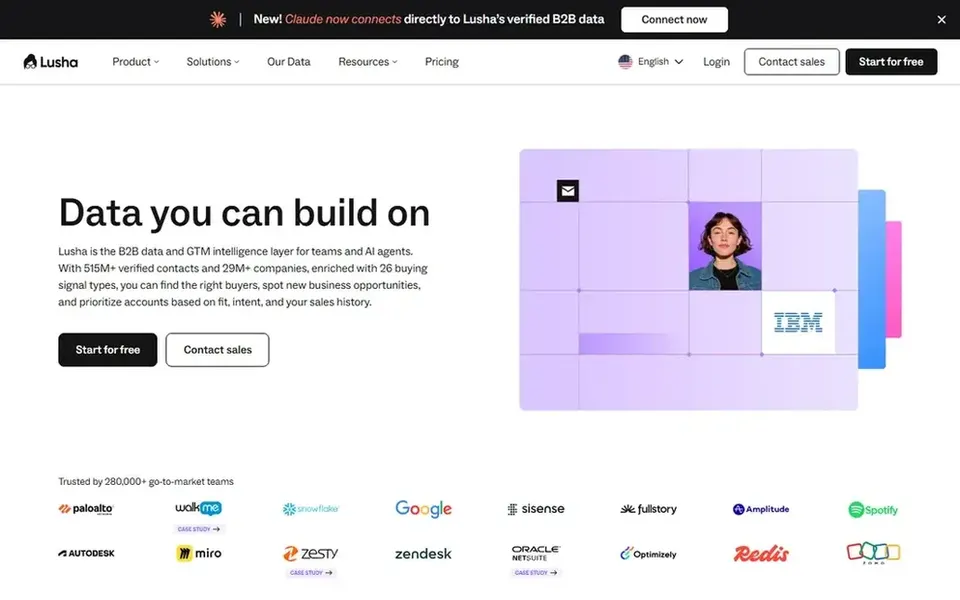
Lusha is a good fit for buyer ranking and decision mapping. It ranks your likeliest buyers, maps who decides, and flags the signal to act on, and it is available in the workspace, in typical AI assistants, and through an API.
Owners who just need a list of addresses may find the intelligence layer beyond their needs. Pricing for Lusha is not stated here, so ask the vendor for current figures. Trial and free access: Not stated.
Trade-offs to know: Best value comes from regular use.
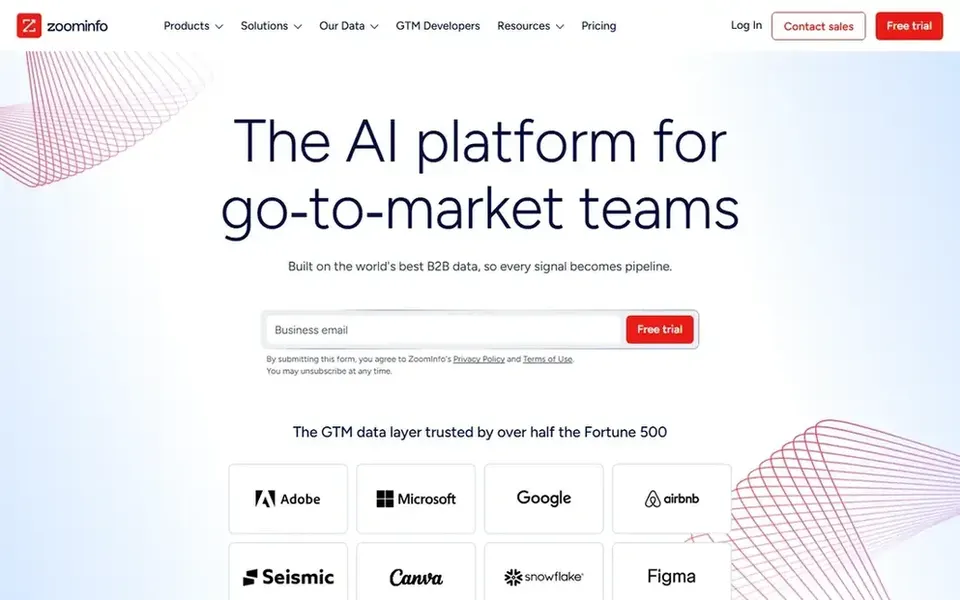
ZoomInfo SalesOS is designed for wide go-to-market data and AI. It spans lead generation, prospecting, market intelligence, and account-based marketing in one place. For everyday use, consider ZoomInfo when an integrated go-to-market product matters more than a single-purpose utility.
Worth adding: businesses that chiefly need email finding or light enrichment may prefer a narrower tool. The product is wide, which can mean more configuration than a lean team wants. ZoomInfo SalesOS does not show a starting price in this comparison, so check the vendor site for current pricing. Free access: Free trial.
Where it is weaker: System breadth can overwhelm small teams.
Think of Hunter for finding and verifying emails. Hunter is not a full sales intelligence suite, so account ranking and intent signals are restricted compared to broader systems.
What to check first: Narrower than full sales intelligence suites.
It fits small teams running targeted outreach without a complicated data operation. Price to start with Hunter: $34 per month. Hunter offers a free plan.
Confirm the entry price on the vendor page. For Apollo.io, UpLead, Lusha and ZoomInfo SalesOS that means a quote rather than a fixed price.
Look at the free plan from Hunter closely: its caps decide whether it is usable for real work.
Run a trial of Apollo.io and ZoomInfo SalesOS with real work before paying for a year; your own workflow is the best test.
Before choosing Apollo.io, weigh its main limit: breadth may take time to learn.
Ask whether Apollo.io integrates with your current software, and whether that comes standard or as an add-on.
Let daily users try Lusha on real work; their feedback beats any feature checklist.
How we picked
Ainotely used vendor pricing pages and product documentation as the base, then compared plans, free access and documented limits for 5 tools. Seat minimums, billing terms and add-ons can move the real cost, so the starting prices here are a guide and not a quote. The ranking is editorial: typical fit first, then clear pricing, then free access. If your needs are unusual, read the profiles rather than relying on position. This applies to all 5 sales intelligence tools for SMB owners options compared here.
Every price and plan detail on this page comes from the vendors’ own websites. We did not run hands-on tests unless the text says so, and we do not publish star ratings or review scores. See how we score and our disclosure.
Keep your shortlist in one place
Paste prices, trial dates and notes from this guide into Ainotely, our AI note app. It files them into a topic and pulls out tasks like “cancel trial by Friday”. Free 7-day trial, no card needed.
Often, yes. Hunter has a free plan and Apollo.io and ZoomInfo SalesOS offer a free trial. Use your own data and a real task during the test, and check what the free tier or trial limits before you rely on it. All 5 picks in this sales intelligence tools for SMB owners comparison show their pricing, free plan details and main limits on the cards above.
Do these tools publish their prices?
Not all of them. Apollo.io, UpLead, Lusha and ZoomInfo SalesOS publish no starting price, so expect a quote request for those. The rest, Hunter included, show a starting price, though seats and billing terms still change the final cost.
Is a full product or a single-purpose tool better for a small business?
A single-purpose tool for example Hunter is simpler to adopt when email discovery is the primary gap. Match the scope to your process maturity and available admin time.
Which options for sales intelligence tools for SMB owners have a free plan?
Hunter is the only tool in this list with a free plan. Free plans usually cap users, projects or features, so check the limits on the vendor page. Several others offer a trial instead. For the full picture, the cards above cover all 5 entries of this sales intelligence tools for SMB owners list, including price, free plan and limits.
How can SMB owners judge data quality before buying?
Run a small pilot and compare results against contacts you already know are accurate. Confirm compliance details on the vendor site before you begin outreach.
What should a SMB owner look for in sales intelligence software?
Start with the job you need done, whether that is finding verified emails, enriching CRM records, or prioritizing accounts. A focused tool commonly beats a wide system for a small team.