Our first pick is LogicGate, best for enterprise risk and compliance applications. Listed starting prices: Secureframe from $7,500 a year. Workiva fits unified reporting and assurance; Secureframe fits compliance automation with expert support. Prices, free plans and limits for all 5 tools follow.
This Ainotely guide covers 5 security audit management for fintechs. Each profile lists a starting price, free plan details, strengths and drawbacks, so you can drop poor fits quickly.
Key takeaways
LogicGate takes the first slot, best suited to enterprise risk and compliance applications.
Neither LogicGate nor AuditBoard, nor any of the other 3 tools, has a permanent free plan; trials and quotes are the norm.
Secureframe comes with a trade-off: depth varies by framework.
No starting price is published for LogicGate, Workiva, Vanta and AuditBoard; expect a quote.
Best for: Enterprise risk and compliance applications
LogicGate is a good fit for enterprise risk and compliance applications. LogicGate describes itself as an AI-powered GRC system with plenty of applications for enterprise risk, external risk, cyber risk, and compliance management.
More specifically, confirm which applications match your audit scope and how they plug into existing systems. LogicGate is oriented toward enterprise risk and compliance, so smaller fintechs may find configuration effort significant. This comparison lists no price for LogicGate; ask the vendor. Free access: Not stated.
What to check first: Enterprise focus may exceed small teams.
In short, Workiva is for unified reporting and assurance. For fintechs, it suits where security audit work links to financial reporting, risk oversight, and assurance across teams that require consistent, governed data in one place.
Also, scope the modules you need and confirm how audit workflows map to your processes. Workiva shows no starting price here, so confirm the cost on the vendor site. Free plan details: Not stated.
Where it falls short: Wide product may need scoping.
Best for: Compliance automation with expert support
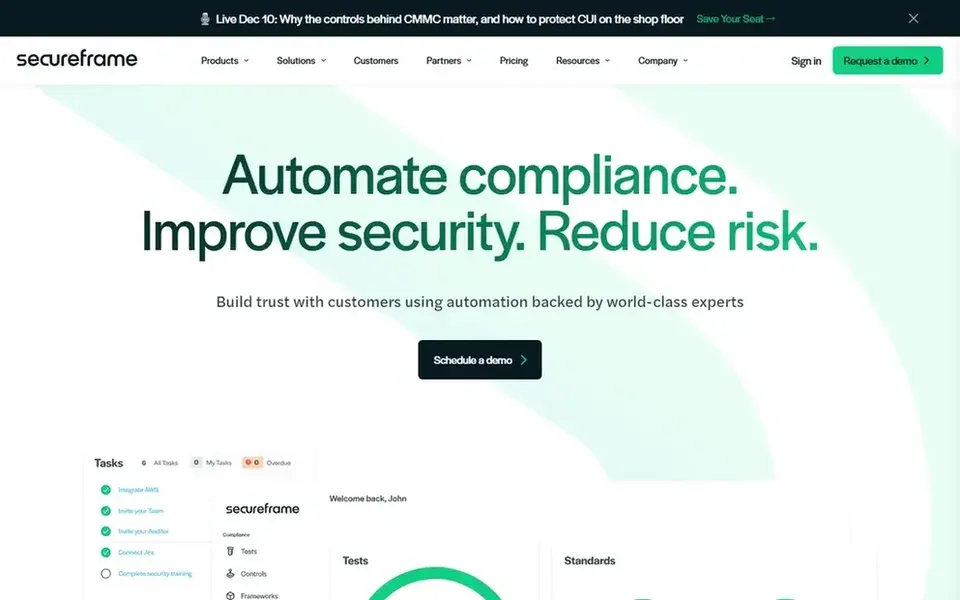
Secureframe is designed for compliance automation with expert support. Secureframe helps teams get compliant, mitigate risk, and build trust with customers using automation backed by experts.
Check framework coverage and integration fit against your environment. Secureframe is built around compliance and trust, so fintechs needing broad internal audit management may find it less complete. What you pay to start with Secureframe: $7,500 per year. Free options: Not stated.
Best for: Automatic compliance certification and monitoring
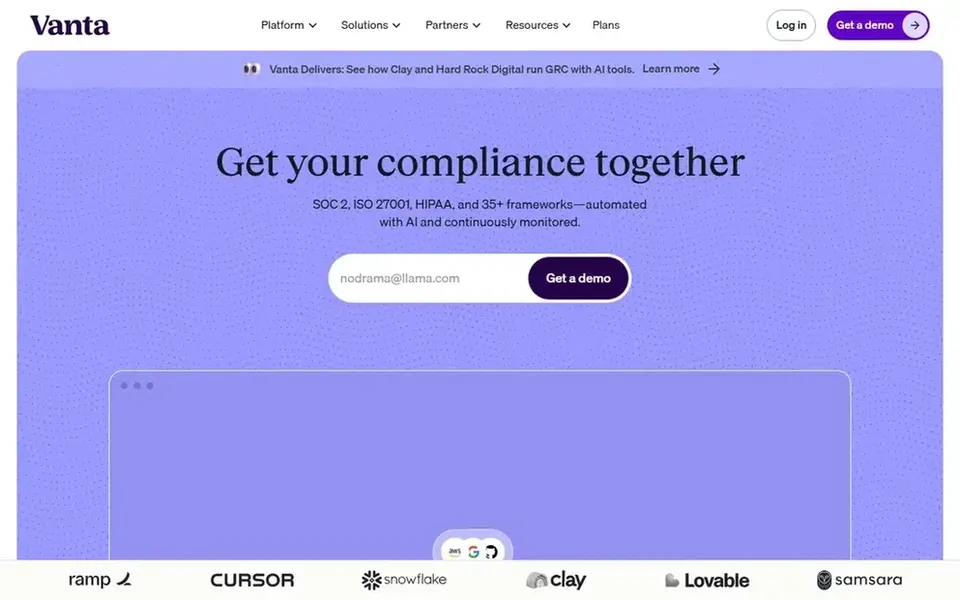
Vanta makes the most sense for automated compliance certification and monitoring. Vanta centers on compliance automation, so fintechs with complicated internal audit programs may need extra GRC depth.
Confirm which frameworks and integrations match your stack before committing. Vanta does not show a starting price in this comparison, so check the vendor site for current pricing. Trial and free access: Not stated.
Drawbacks to consider: Deep audit workflows may need other tools.
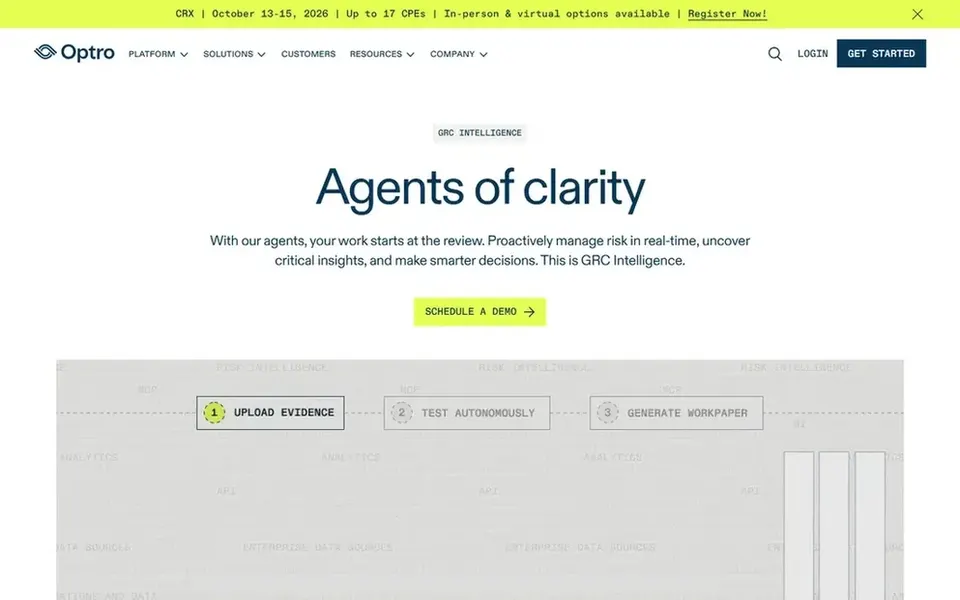
AuditBoard targets GRC system of record and audit. AuditBoard presents itself as a GRC intelligence system, a trusted system of record that powers an intelligent system of action and transforms risk into opportunity.
Points against: Setup needs planning.
If your primary goal is quick certification automation instead of a GRC system of record, a compliance-focused tool may be a better starting point. This comparison lists no price for AuditBoard; ask the vendor. Free access: Not stated.
Confirm the entry price on the vendor page. For LogicGate, Workiva, Vanta and AuditBoard that means a quote rather than a fixed price.
Before choosing LogicGate, weigh its main limit: may be complicated to configure.
Compare total cost, not headline price: for LogicGate, add extra seats, add-ons and any usage-based charges.
Run a one or two week pilot of Vanta with the people who will use it every day.
Ask Workiva which support channels and response times come with the plan you would buy.
How we picked
Each tool was reviewed on what its vendor publishes: price, plan limits, core features and stated drawbacks. We did not run hands-on tests. Plan names, prices and limits change often. Treat the figures here as a starting point and verify them with the vendor. The sequence is a judgement call: typical use case first, then pricing transparency, then free access. Use the profiles to check fit. This applies to all 5 security audit management for fintechs options compared here.
Every price and plan detail on this page comes from the vendors’ own websites. We did not run hands-on tests unless the text says so, and we do not publish star ratings or review scores. See how we score and our disclosure.
Keep your shortlist in one place
Paste prices, trial dates and notes from this guide into Ainotely, our AI note app. It files them into a topic and pulls out tasks like “cancel trial by Friday”. Free 7-day trial, no card needed.
Not by default. None of the tools, from LogicGate to AuditBoard, lists a free plan or a free trial here, so ask each vendor for a demo before committing.
Is LogicGate the right pick for everyone comparing security audit management for fintechs?
No single tool suits every team. LogicGate comes first because it fits enterprise risk and compliance applications, while Workiva suits unified reporting and assurance and Secureframe suits compliance automation with expert support. Match the tool to your own size, budget and workflow before deciding.
Does any tool for security audit management for fintechs here have a free plan?
A permanent free plan is not offered by LogicGate, AuditBoard or the other tools here. Plan a short evaluation period instead.
Do these tools publish their prices?
Not all of them. LogicGate, Workiva, Vanta and AuditBoard publish no starting price, so expect a quote request for those. The rest, Secureframe included, show a starting price, though seats and billing terms still change the final cost.
Is compliance automation enough for a fintech audit?
Compliance automation helps with certification and monitoring, but internal audit and risk programs may need broader GRC capabilities. Consider whether you need a system of record for risk and controls alongside certification support.