This list puts Lakera Guard first for protecting generative AI inputs and outputs. Alternatives: HiddenLayer for end-to-end model and AI threat protection, and Microsoft Defender for Cloud for Cloud-native application and workload protection. Details, prices and limits for the rest of the 5 tools are below.
Short on time? The summary and table above give the quick view of 5 security practices for AI workflow platforms, and the profiles that follow give the detail behind each entry.
Key takeaways
Number one here is Lakera Guard, a fit for protecting generative AI inputs and outputs.
For connecting code, cloud, and runtime risk, Wiz is worth a look.
Pricing across the list, from Lakera Guard to Wiz, is by quote only.
Lakera Guard, Wiz and the 3 others all need a premium plan or a trial, since no free plan is listed.
Best for: Protecting generative AI inputs and outputs
Lakera Guard is aimed squarely at protecting generative AI inputs and outputs. Organizations early in GenAI deployment frequently start here since the risk surface is closest to the product experience.
What to check first: Needs integration into AI application flows.
From a buyer's view, pick a broader cloud security system when infrastructure visibility is the primary gap. Lakera Guard shows no starting price here, so confirm the cost on the vendor site. Free plan details: Not stated.
Best for: End-to-end model and AI threat protection
HiddenLayer is a good fit for end-to-end model and AI threat protection. It suits organizations that treat models as first-class assets and want dedicated protection instead of relying only on general cloud controls.
Security teams responsible for model integrity and adversarial risk will find the focus handy when AI workflows are central to the business. Pricing for HiddenLayer is not stated here, so ask the vendor for current figures. Trial and free access: Not stated.
The main drawbacks: Specialized focus needs security team buy-in.
Best for: Cloud-native application and workload protection
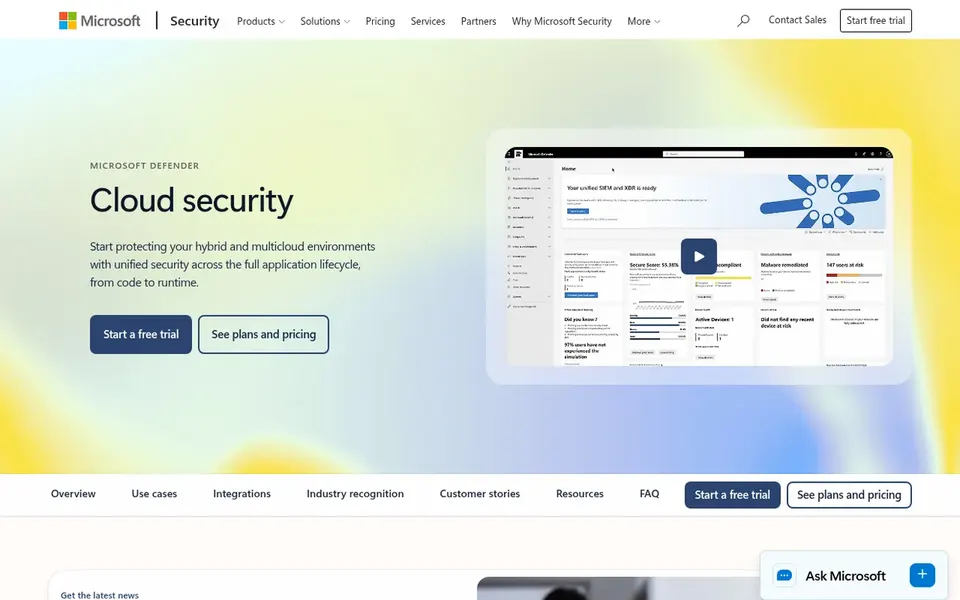
Microsoft Defender for Cloud targets Cloud-native application and workload protection. Microsoft Defender for Cloud is a security option and CNAPP that guards cloud-native application development across multicloud and hybrid environments.
Watch-outs: Wide scope can need tuning.
From a buyer's view, teams building AI workflows on managed cloud services can use it to bring posture management and workload protection under one operational roof, which cuts the number of consoles security staff must watch. Also, treat it as the infrastructure and cloud layer of a layered program. Microsoft Defender for Cloud shows no starting price here, so confirm the cost on the vendor site. As for free access: Not stated.
Best for: Code-to-cloud visibility and threat detection
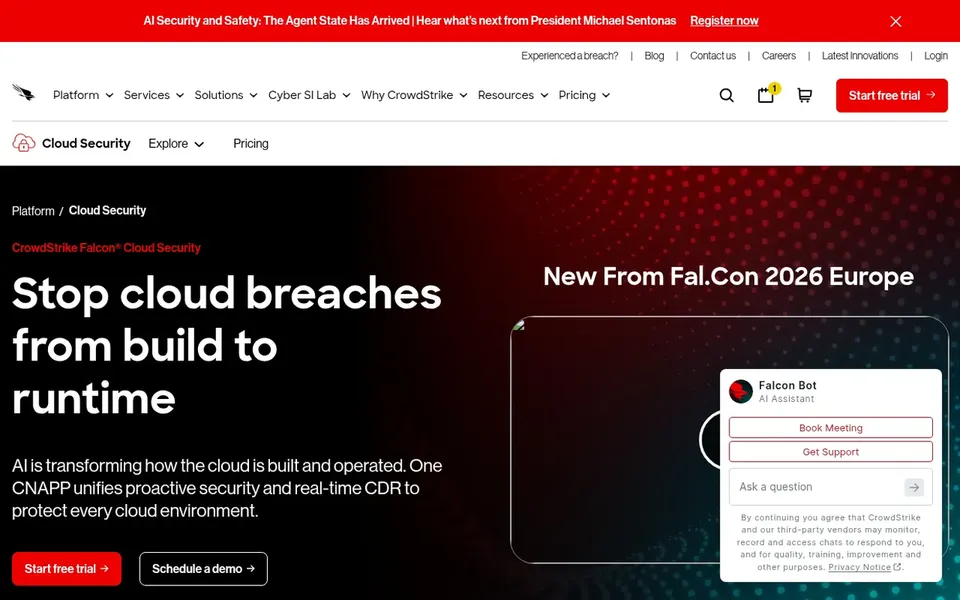
Pick CrowdStrike Falcon Cloud Security if this describes you: code-to-cloud visibility and threat detection. CrowdStrike Falcon Cloud Security is positioned to see and secure everything across clouds, applications, and data. For everyday use, choose a specialized AI security product when prompt-level and model-level protection is the priority.
For AI workflow systems, that means visibility into the infrastructure and services that host models and pipelines, plus detection coverage that security operations teams can act on. It is not a substitute for application-layer guardrails on model inputs and outputs. Pricing for CrowdStrike Falcon Cloud Security is not stated here, so ask the vendor for current figures. Free plan details: Not stated.
Limits to weigh: Requires cloud asset inventory discipline.
Best for: Connecting code, cloud, and runtime risk
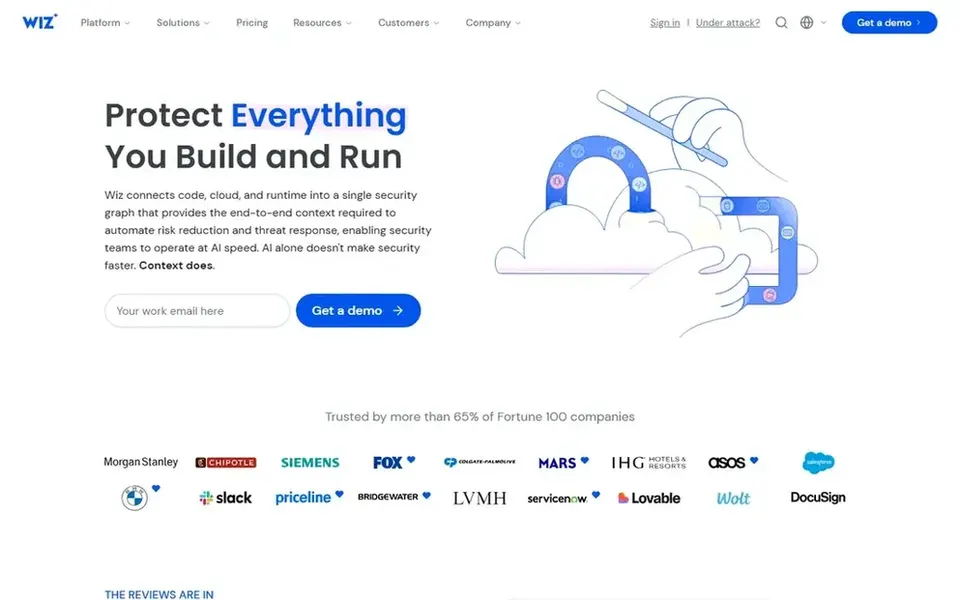
Wiz makes the most sense for connecting code, cloud, and runtime risk. Wiz links code, cloud, and runtime into one agentic cybersecurity product, aiming to prevent risk and detect threats across every cloud and AI layer.
What to check first: Needs wide environment visibility to shine.
Highlights: Includes cloud and AI layers. The product's value grows with the breadth of environments connected, so partial adoption limits what it can correlate. Worth adding: for AI workflow systems, that linkage helps teams trace an exposed model endpoint or misconfigured pipeline back to the code and identity that created it. No starting price is listed for Wiz here; confirm pricing on the vendor site. Free plan details: Not stated.
Request quotes from Lakera Guard, Wiz and the others; the list shows no fixed prices.
Before choosing Lakera Guard, weigh its main limit: narrower scope than cloud systems.
Ask Microsoft Defender for Cloud how an export works before you move any records in; an easy exit lowers the risk.
Find out what support CrowdStrike Falcon Cloud Security includes on your plan, and whether onboarding help costs extra.
List the apps you already depend on and check that Lakera Guard supports each one on the plan you would buy.
How we picked
The comparison looks at four things: starting price, free access, how well the feature set matches security practices for AI workflow platforms, and the main limit of each tool. Treat prices as a snapshot: vendors change plans often, so check the vendor site for the figure that applies today. Order on the page follows fit for the typical buyer first, then price transparency and free access. Your own requirements should decide the final pick.
Every price and plan detail on this page comes from the vendors’ own websites. We did not run hands-on tests unless the text says so, and we do not publish star ratings or review scores. See how we score and our disclosure.
Keep your shortlist in one place
Paste prices, trial dates and notes from this guide into Ainotely, our AI note app. It files them into a topic and pulls out tasks like “cancel trial by Friday”. Free 7-day trial, no card needed.
What security practices matter most for AI workflow platforms?
Start with asset inventory so you know which models, agents, and pipelines exist, then apply cloud posture controls, application-layer guardrails, and model threat detection. Identity and data flow controls tie these layers together.
Can I try these options before paying?
Not by default. None of the tools, from Lakera Guard to Wiz, lists a free plan or a free trial here, so ask each vendor for a demo before committing.
Does any tool for security practices for AI workflow platforms here have a free plan?
A permanent free plan is not offered by Lakera Guard, Wiz or the other tools here. Plan a short evaluation period instead.
How should we evaluate these tools before buying?
Confirm documented features on vendor sites, test integration with your cloud accounts and application flows, and check governance reporting against compliance needs. Weigh continuing tuning effort, since security value relies on operational follow-through.
Do these tools publish their prices?
No. None of the tools, from Lakera Guard to Wiz, shows a fixed starting price here, so budget time for quotes.
Is Lakera Guard the right pick for everyone comparing security practices for AI workflow platforms?
No single tool suits every team. Lakera Guard comes first because it fits protecting generative AI inputs and outputs, while HiddenLayer suits end-to-end model and AI threat protection and Microsoft Defender for Cloud suits Cloud-native application and workload protection. Match the tool to your own size, budget and workflow before deciding.