Top 5 Self Publishing Platforms for 2026, Compared

- 1
 PublishDriveSubscription-based broad distributionVisit
- 2
 LuluPrint variety and direct printingVisit
- 3
 Kindle Direct PublishingAmazon sales and Kindle UnlimitedVisit
- 4
 Draft2DigitalSimple broad ebook distributionVisit
- 5
 SmashwordsDirect ebook sales with couponsVisit
- PublishDrive takes the first slot, best suited to subscription-based broad distribution.
- For the cheapest start, look at PublishDrive: $13.99/month.
- What to know about Draft2Digital first: 10% commission on every sale.
- Free plans exist at 5 of 5 tools (PublishDrive, Lulu, Kindle Direct Publishing, Draft2Digital, Smashwords).
Direct answer
If you need subscription-based wide distribution, PublishDrive is the first tool to look at here. Lulu is the stronger choice for print variety and direct printing, while Kindle Direct Publishing suits Amazon sales and Kindle Unlimited. The other 2 tools in the list cover narrower or pricier cases.
Quick comparison
| Product | Ideal for | Price from | Free version | |
|---|---|---|---|---|
| PublishDrive | Subscription-based broad distribution | $13.99/month (Starter, billed annually) | Yes | Visit |
| Lulu | Print variety and direct printing | Free (print costs per book) | Yes | Visit |
| Kindle Direct Publishing | Amazon sales and Kindle Unlimited | Free | Yes | Visit |
| Draft2Digital | Simple broad ebook distribution | $20 one-time activation; ~10% of retail per sale | Yes | Visit |
| Smashwords | Direct ebook sales with coupons | Free | Yes | Visit |
5 self publishing platforms in detail
Ainotely compared 5 self publishing platforms. The goal is a practical shortlist: published prices, free plan facts, best-fit use cases and honest limits for every entry.
PublishDrive
Ideal for: Subscription-based broad distribution
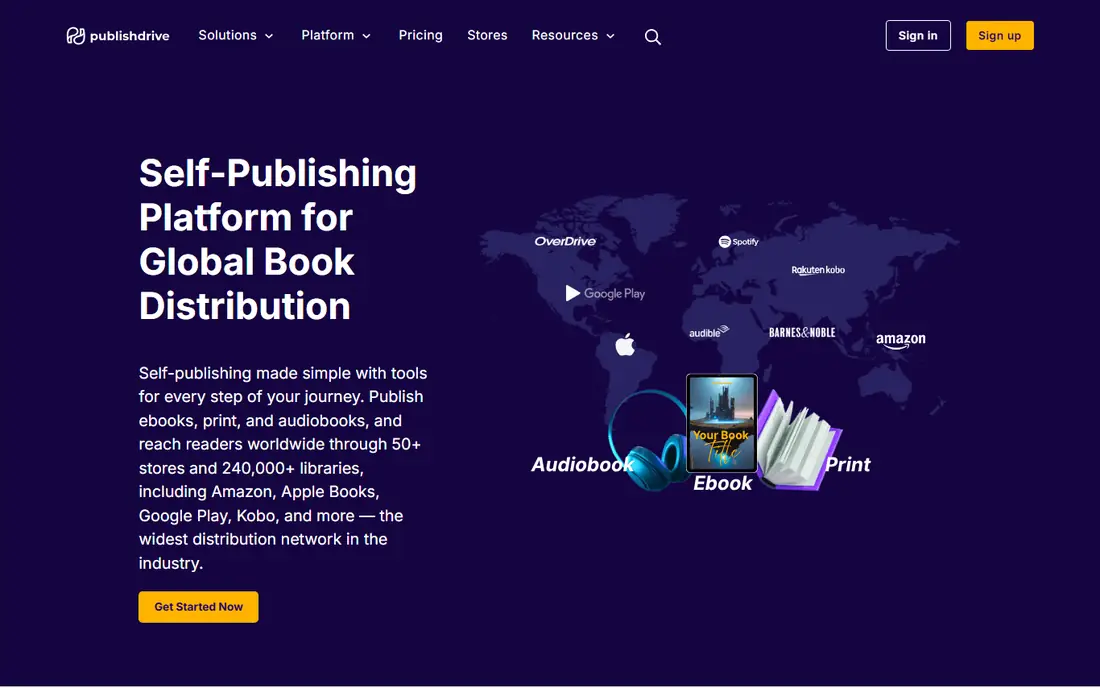
PublishDrive is aimed squarely at subscription-based broad distribution. PublishDrive flips the aggregator model: rather than a commission on every sale, you pay a flat subscription and keep 100% of net royalties. Worth adding: included marketing tools like Amazon ad management, an AI publishing assistant, and review copies add value beyond distribution.
Watch-outs: Fixed fee hurts slow sellers.
From a buyer's view, the math favors volume: an author earning $2,000 per month keeps the full amount minus a fixed subscription, where a 10% commission aggregator would take $200. The main limit is the fixed cost: new authors with slow sales pay more in subscriptions than they would in commissions. The starting price for PublishDrive: $13.99/month. A free plan is available with PublishDrive.
- 400+ keeps and 240,000 libraries
- Keep 100% of net royalties
- Subscription costs money before you sell
Lulu
Ideal for: Print variety and direct printing
Pick Lulu if this describes you: print variety and direct printing. Lulu, in business since 2002, is the print-on-demand generalist: beyond standard paperbacks and hardcovers it produces photo books, cookbooks, yearbooks, magazines, calendars, and notebooks, all printed on demand through a global network.
Honest limits: Weaker retail distribution.
For everyday use, the product shines for nonstandard projects: a photographer selling a premium photo book, a company printing branded notebooks, or a creator selling straight through Shopify with Lulu handling fulfillment to over 200 countries. Authors keep 80% on print and 90% on ebooks sold through Lulu's bookstore. Lulu cost at the entry level: Free. Lulu includes a free tier.
- Huge range of print formats including photo books and calendars
- Global print network
- $4.99 ebook distribution fee
Kindle Direct Publishing
Ideal for: Amazon sales and Kindle Unlimited
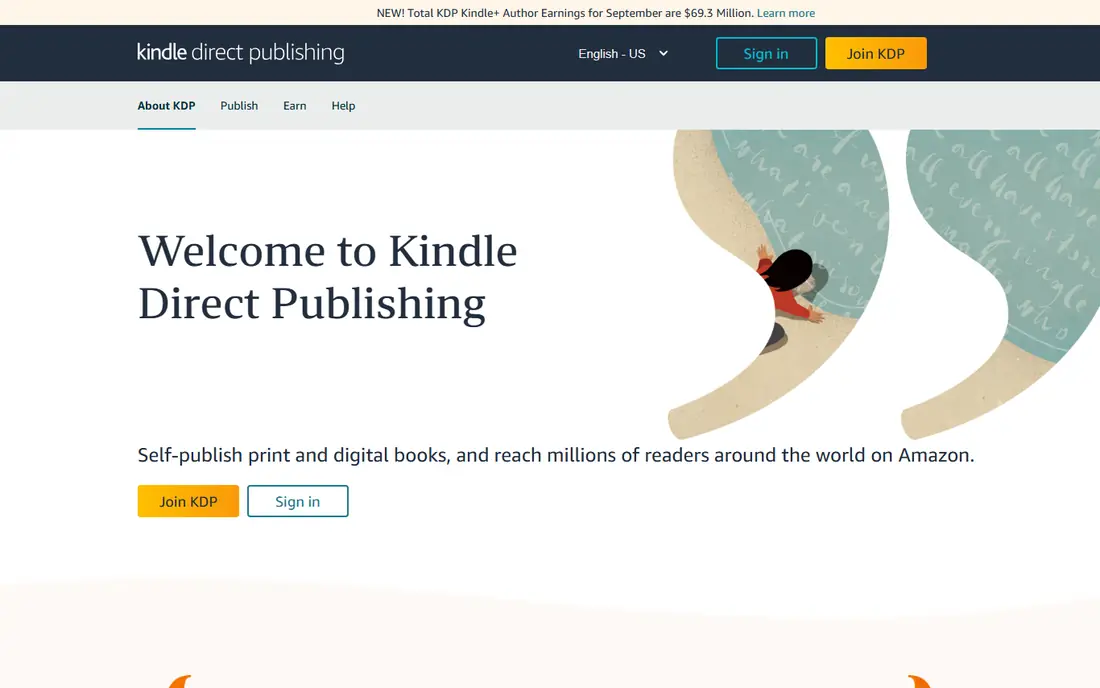
Kindle Direct Publishing is aimed squarely at Amazon sales and Kindle Unlimited. Amazon's Kindle Direct Publishing is where most self-published authors start, since Amazon sells most of the ebooks in the US. For everyday use, either way, skipping KDP entirely means skipping Amazon, which few authors can afford.
Drawbacks to consider: Exclusivity required for KDP Select.
Publishing is free: upload your manuscript and include, set your price, and earn up to 70% royalties on ebooks priced $2.99 to $12.99 (the 70% band expanded in July 2026) or 35% outside that band, and up to 60% on print books minus printing costs. From a buyer's view, for genre fiction, KU income commonly exceeds direct sales. Also, authors who go broad skip Select and distribute everywhere. On top of that, the main limit is the exclusivity trade: KDP Select means your ebook cannot be sold anywhere else during enrollment. On cost, Kindle Direct Publishing starts like this: Free. Free access exists with Kindle Direct Publishing.
- Up to 70% ebook royalties
- Enormous built-in audience
- Amazon-only reach
Draft2Digital
Ideal for: Simple broad ebook distribution
Pick Draft2Digital if this describes you: simple wide ebook distribution. It has operated since 2012 and merged with Smashwords. In practice, the pricing model is commission-based: a $20 one-time account activation fee (added to combat spam and AI content farms), then approximately 10% of the retail price on each sale, which leaves authors around 60% of list price on an usual $4.99 ebook.
For everyday use, print-on-demand paperbacks are available too. Accounts earning under $100 per year pay a $12 annual maintenance fee. Starting cost for Draft2Digital: $20 one-time activation. A free plan is available with Draft2Digital.
Honest limits: No editing or design services.
- Free formatting and ISBN
- One dashboard for a dozen-plus retailers
- 10% commission on every sale
Smashwords
Ideal for: Direct ebook sales with coupons
Think of Smashwords for direct ebook sales with coupons. The catches: there is no print choice, so paperback authors need another product, and the store's audience is a fraction of Amazon's. Smashwords, operating since 2008, is the original indie ebook system, now part of the Draft2Digital family: new publishing runs through D2D accounts whereas the Smashwords Store remains a leading retailer of indie ebooks.
The marketing tools set it apart: unlimited custom coupons for price promotions, preorder support, the famous Smashwords sales events, and author alerts that notify readers of new releases. Direct sales on the store pay 75% of list on books priced $2.99 and up, with no delivery fees. Smashwords pricing: Free. Smashwords offers a free plan.
Downsides: Distribution now runs through Draft2Digital.
- Coupon and presale marketing tools
- 75% list royalties on the Smashwords store
- No print books
How we built this list
The comparison looks at four things: starting price, free access, how well the feature set matches self publishing platforms, and the main limit of each tool. Prices and plan limits come from vendor pages and can change, so confirm them on the vendor site before you buy. Tools are placed by general fit for self publishing platforms, with price clarity and free access as tie-breakers. A different team can reasonably rank them differently.
Pre-purchase checklist
- Prices are a starting point; PublishDrive shows $13.99/month to start, so verify what your seat count would cost.
- Read the fine print on the free plans from PublishDrive, Lulu, Kindle Direct Publishing and others; seat, project and feature caps differ.
- Before choosing PublishDrive, weigh its main limit: subscription costs money before you sell.
- Run a one or two week pilot of Draft2Digital with the people who will use it every day.
- Price Lulu for your actual team size; headline prices rarely include add-ons or overage.
Frequently asked questions
Which self publishing platforms have a free plan?
On this list, PublishDrive, Lulu, Kindle Direct Publishing, Draft2Digital and Smashwords include a free plan. Caps on seats, usage or features are common, so test the free plan against your real workload.
Do I need my own ISBN?
Not necessarily: KDP, Draft2Digital, and B&N Press offer free ISBNs, but those ISBNs tie the edition to that system. Buy your own ISBN if you want full control and broad print distribution under one identifier.
How are the self publishing platforms ordered?
PublishDrive sits first and Smashwords last because the order follows typical fit for self publishing platforms, then price clarity and free access. It is a judgement call, so read each profile for fit and limits.
What is the best self-publishing platform for beginners?
For most readers this guide would start with PublishDrive, built for subscription-based broad distribution. Lulu is the alternative for print variety and direct printing, and Kindle Direct Publishing for Amazon sales and Kindle Unlimited. The right answer depends on budget and workflow.
Can I publish the same book on several platforms?
Yes, with one exception: KDP Select needs Amazon exclusivity for ebooks during each 90-day enrollment. Print books and non-Select ebooks can be everywhere simultaneously.
What is the cheapest option for self publishing platforms in this list?
On published monthly entry prices, PublishDrive is the lowest here at $13.99/month. Entry price is only part of the cost, because seats, add-ons and billing terms can change the total.