Best Self service analytics tools in 2026: 8 Compared

- 1
 Tableauvisual analytics for teamsVisit
- 2
 Microsoft Power BIanalytics in Microsoft 365Visit
- 3
 Looker Studiofree dashboards from Google dataVisit
- 4
 Metabaseopen source self service BIVisit
- 5
 Sisenseembedded and team analyticsVisit
- Our pick for most readers is Tableau, because it fits best self service analytics tools directly and covers the core need without unnecessary extras.
- Microsoft Power BI is the strongest alternative when analytics in Microsoft 365 matters more than a single all purpose choice, so compare it side by side with our pick.
- Pricing varies widely across this list, so check the official pricing page before you commit, and treat any figure marked See website as quote based or usage based.
- The best choice depends on your budget, your team size, and how often you will use it, which is why we list 8 options for best self service analytics tools rather than a single winner for everyone.
Quick comparison
| Product | Ideal for | Price from | Free version | |
|---|---|---|---|---|
| Tableau | visual analytics for teams | See website | Free trial | Visit |
| Microsoft Power BI | analytics in Microsoft 365 | See website | Yes | Visit |
| Looker Studio | free dashboards from Google data | See website | Yes | Visit |
| Metabase | open source self service BI | See website | Yes | Visit |
| Sisense | embedded and team analytics | See website | Free trial | Visit |
 Domo | business dashboards and apps | See website | Free trial | Visit |
 Qlik Sense | associative data exploration | See website | Free trial | Visit |
 ThoughtSpot | search driven analytics | See website | Free trial | Visit |
The best self service analytics tools
We compared official feature pages, pricing pages, app store listings where relevant, privacy policies, and public reviews for best self service analytics tools. The 8 options below cover the main ways readers approach this topic, from well known leaders to smaller specialists worth considering.
Tableau
Ideal for: visual analytics for teams
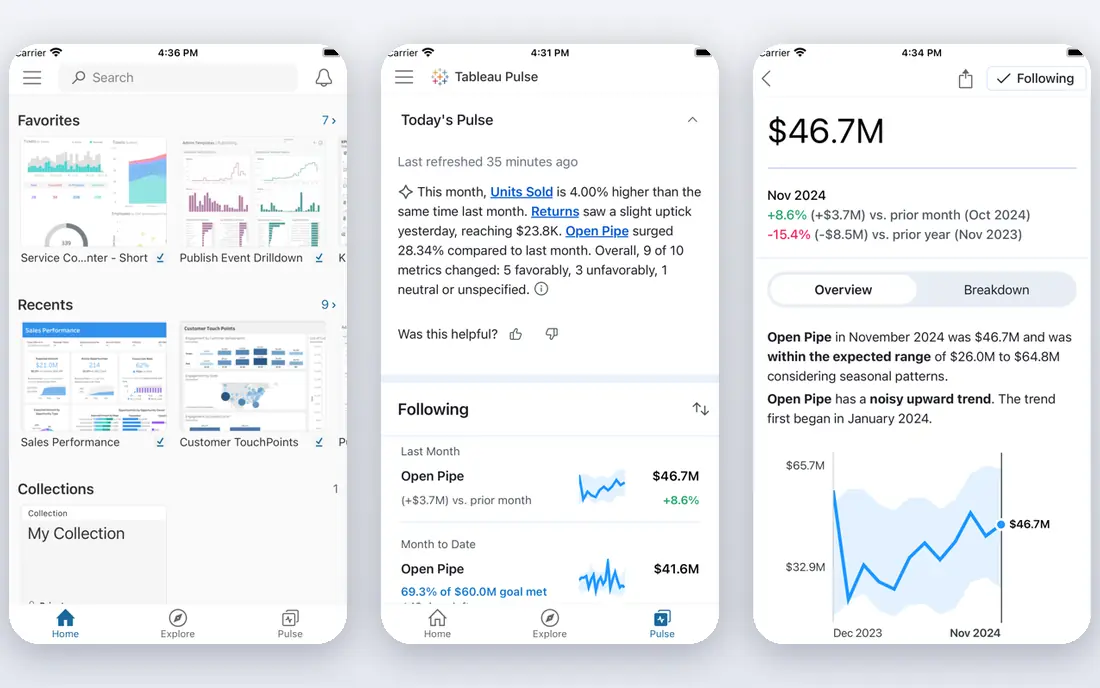
For readers whose main need is visual analytics for teams, Tableau is worth a close look. It is aimed at that use case first, which keeps the decision clearer than a general tool that tries to cover everything. That focus matters in daily use, because it affects cost, setup time, and how much help you need from the provider. On the plus side, it offers strong visual dashboards and wide data connectors. Those points matter in daily use, because they affect setup time, ongoing cost, and how much support you need from the provider. It also offers large community. The limits to weigh are pricing is high for small teams and learning curve for advanced work. If either one clashes with how you work, another option on this list may fit better. Our view is to weigh those limits against the strengths above, and to check the official pricing page before you commit, since plans change.
- Strong visual dashboards
- Wide data connectors
- Large community
- Pricing is high for small teams
- Learning curve for advanced work
Microsoft Power BI
Ideal for: analytics in Microsoft 365
Microsoft Power BI stands out first for analytics in Microsoft 365, and that focus shapes the whole experience. It is aimed at that use case first, which keeps the decision clearer than a general tool that tries to cover everything. That focus matters in daily use, because it affects cost, setup time, and how much help you need from the provider. On the plus side, it offers free desktop tool and strong Excel integration. Those points matter in daily use, because they affect setup time, ongoing cost, and how much support you need from the provider. It also offers good Microsoft pricing. The limits to weigh are full sharing needs paid licences and best inside Microsoft tools. If either one clashes with how you work, another option on this list may fit better. Our view is to weigh those limits against the strengths above, and to check the official pricing page before you commit, since plans change.
- Free desktop tool
- Strong Excel integration
- Good Microsoft pricing
- Full sharing needs paid licences
- Best inside Microsoft tools
Looker Studio
Ideal for: free dashboards from Google data
If free dashboards from Google data is your priority, Looker Studio deserves a place on your shortlist. It is aimed at that use case first, which keeps the decision clearer than a general tool that tries to cover everything. That focus matters in daily use, because it affects cost, setup time, and how much help you need from the provider. On the plus side, it offers free for core use and google data connectors. Those points matter in daily use, because they affect setup time, ongoing cost, and how much support you need from the provider. It also offers easy sharing. The limits to weigh are advanced modelling needs Looker and connector range is narrower. If either one clashes with how you work, another option on this list may fit better. Our view is to weigh those limits against the strengths above, and to check the official pricing page before you commit, since plans change.
- Free for core use
- Google data connectors
- Easy sharing
- Advanced modelling needs Looker
- Connector range is narrower
Metabase
Ideal for: open source self service BI
We put Metabase on this list mainly for open source self service BI, where it covers the basics well. It is aimed at that use case first, which keeps the decision clearer than a general tool that tries to cover everything. That focus matters in daily use, because it affects cost, setup time, and how much help you need from the provider. On the plus side, it offers open source option and simple question builder. Those points matter in daily use, because they affect setup time, ongoing cost, and how much support you need from the provider. It also offers self hosting choice. The limits to weigh are advanced features need paid plans and setup needs technical skill for self hosting. If either one clashes with how you work, another option on this list may fit better. Our view is to weigh those limits against the strengths above, and to check the official pricing page before you commit, since plans change.
- Open source option
- Simple question builder
- Self hosting choice
- Advanced features need paid plans
- Setup needs technical skill for self hosting
Sisense
Ideal for: embedded and team analytics
For readers whose main need is embedded and team analytics, Sisense is worth a close look. It is aimed at that use case first, which keeps the decision clearer than a general tool that tries to cover everything. That focus matters in daily use, because it affects cost, setup time, and how much help you need from the provider. On the plus side, it offers strong embedded analytics and good data preparation. Those points matter in daily use, because they affect setup time, ongoing cost, and how much support you need from the provider. It also offers aI assisted insights. The limits to weigh are pricing is quote based and smaller teams may find it costly. If either one clashes with how you work, another option on this list may fit better. Our view is to weigh those limits against the strengths above, and to check the official pricing page before you commit, since plans change.
- Strong embedded analytics
- Good data preparation
- AI assisted insights
- Pricing is quote based
- Smaller teams may find it costly
Domo
Ideal for: business dashboards and apps
Domo stands out first for business dashboards and apps, and that focus shapes the whole experience. It is aimed at that use case first, which keeps the decision clearer than a general tool that tries to cover everything. That focus matters in daily use, because it affects cost, setup time, and how much help you need from the provider. On the plus side, it offers many connectors and mobile dashboards. Those points matter in daily use, because they affect setup time, ongoing cost, and how much support you need from the provider. It also offers app building tools. The limits to weigh are pricing is aimed at larger teams and learning curve for new users. If either one clashes with how you work, another option on this list may fit better. Our view is to weigh those limits against the strengths above, and to check the official pricing page before you commit, since plans change.
- Many connectors
- Mobile dashboards
- App building tools
- Pricing is aimed at larger teams
- Learning curve for new users
Qlik Sense
Ideal for: associative data exploration
If associative data exploration is your priority, Qlik Sense deserves a place on your shortlist. It is aimed at that use case first, which keeps the decision clearer than a general tool that tries to cover everything. That focus matters in daily use, because it affects cost, setup time, and how much help you need from the provider. On the plus side, it offers associative exploration and strong data handling. Those points matter in daily use, because they affect setup time, ongoing cost, and how much support you need from the provider. It also offers good governance. The limits to weigh are interface takes learning and pricing varies by deployment. If either one clashes with how you work, another option on this list may fit better. Our view is to weigh those limits against the strengths above, and to check the official pricing page before you commit, since plans change.
- Associative exploration
- Strong data handling
- Good governance
- Interface takes learning
- Pricing varies by deployment
ThoughtSpot
Ideal for: search driven analytics
We put ThoughtSpot on this list mainly for search driven analytics, where it covers the basics well. It is aimed at that use case first, which keeps the decision clearer than a general tool that tries to cover everything. That focus matters in daily use, because it affects cost, setup time, and how much help you need from the provider. On the plus side, it offers search style questions and aI assisted insights. Those points matter in daily use, because they affect setup time, ongoing cost, and how much support you need from the provider. It also offers cloud based. The limits to weigh are pricing is quote based and data prep needs care for best results. If either one clashes with how you work, another option on this list may fit better. Our view is to weigh those limits against the strengths above, and to check the official pricing page before you commit, since plans change.
- Search style questions
- AI assisted insights
- Cloud based
- Pricing is quote based
- Data prep needs care for best results
How we picked these
We started with products and services that exist and work in October 2026 and that truly fit best self service analytics tools, then we compared their official feature pages, pricing pages, app store listings where relevant, privacy policies, and public reviews. We left out options that did not fit the topic, even when they were popular elsewhere, and we marked prices as See website whenever the vendor did not publish a simple starting price we could verify. We mixed well known leaders with smaller specialists, because the best known name is not always the best fit for a particular budget, team size, or use case. We did not claim hands-on testing we did not do. Instead, we weighed published features, pricing, limits, and reported problems, and we kept the honest weakness of each option next to its strengths so readers can judge the trade off for themselves.
What to check before you choose
Start with the job you actually need done, not the longest feature list. Write down your budget, how often you will use the service, who else needs access, and what must work on day one. Then match that short list against two or three options here, rather than comparing all eight in full detail at once. Check the total cost, not just the headline price. Look for setup fees, per user charges, usage limits, renewal prices, and cancellation terms on the official pricing page. A low starting price can still be costly if the plan you need sits two tiers higher, and a higher price can be fair value if it removes a separate tool you already pay for. - Total cost over a full year, including renewal pricing and add ons. - Limits that matter to you, such as users, volume, storage, or locations covered. - Support hours and channels, and whether help is included or charged extra. - Contract length, cancellation terms, and what happens to your data if you leave. Finally, confirm availability for your location and your situation before you pay. Some services vary by state, country, or plan, and some offers depend on eligibility checks. A quick check of the official terms page now saves a refund request later, and it keeps the choice grounded in what you will actually receive.
Frequently asked questions
Which self service analytics tools is best for most people?
Our pick for most readers is Tableau, because it covers the core need for best self service analytics tools without unnecessary extras. That said, the right pick depends on your budget and how often you will use it, so compare our pick with Microsoft Power BI before you decide. Both are strong, and they suit different priorities.
How much do self service analytics tools cost?
Prices vary widely across this list, and several vendors use quote based or usage based pricing, which is why some entries say See website. Check the official pricing page for the plan that matches your volume and team size, and add up renewal prices and add ons before you compare totals.
Is there a free self service analytics tools option?
Yes. Microsoft Power BI, Looker Studio, Metabase offer a free tier, although free tiers usually limit features, volume, or support, so check what is included before you rely on one.
How do I choose between these self service analytics tools?
Start with your must have features, your budget, and how often you will use the service, then narrow the list to two or three options that meet those needs. Read the strengths and limits for each one, check the official pricing page, and use a trial or a small first order when one is offered.
Can I switch self service analytics tools later?
In most cases, yes, but switching can take time if you have data, settings, or a contract tied to your current choice. Check contract length, export options, and cancellation terms before you sign up, and keep a copy of your data where the service allows it.