Shortlist: 6 Best Senior Living CRM Software Options for 2026

- Number one here is Eldermark, a fit for value clinical-plus-revenue system.
- For post-acute and senior living EHR plus CRM, MatrixCare is worth a look.
- One limit worth knowing about Eldermark: full system beyond NEXT Clinical and eMAR is quoted.
- Neither Eldermark nor MatrixCare, nor any of the other 4 tools, has a permanent free plan; trials and quotes are the norm.
Direct answer
Eldermark comes first here, mainly for value clinical-plus-revenue product. Look at Glennis for revenue and reservations management, and at Aline for large operators wanting one unified suite. The other 3 tools in the list cover narrower or pricier cases.
Quick comparison
| Product | Ideal for | Price from | Free version | |
|---|---|---|---|---|
 Eldermark | Value clinical-plus-revenue product | 295 dollars per community a month | No | Visit |
 Glennis | Revenue and reservations management | Quote | No | Visit |
 Aline | Large operators wanting one unified suite | 499 dollars a month | No | Visit |
 Yardi Senior Living | Operators already running Yardi Voyager | 300 dollars per community per month | No | Visit |
 Move-N | Census-focused product for small operators | 100 dollars per month | No | Visit |
 MatrixCare | Post-acute and senior living EHR plus CRM | 35 dollars per user per month | No | Visit |
The best senior living CRM software
Ainotely put together this guide to senior living CRM software for readers who want a clear shortlist without reading every vendor page. It compares 6 tools on starting price, free plans, who each one suits and where each one falls short.
Eldermark
Ideal for: Value clinical-plus-revenue product
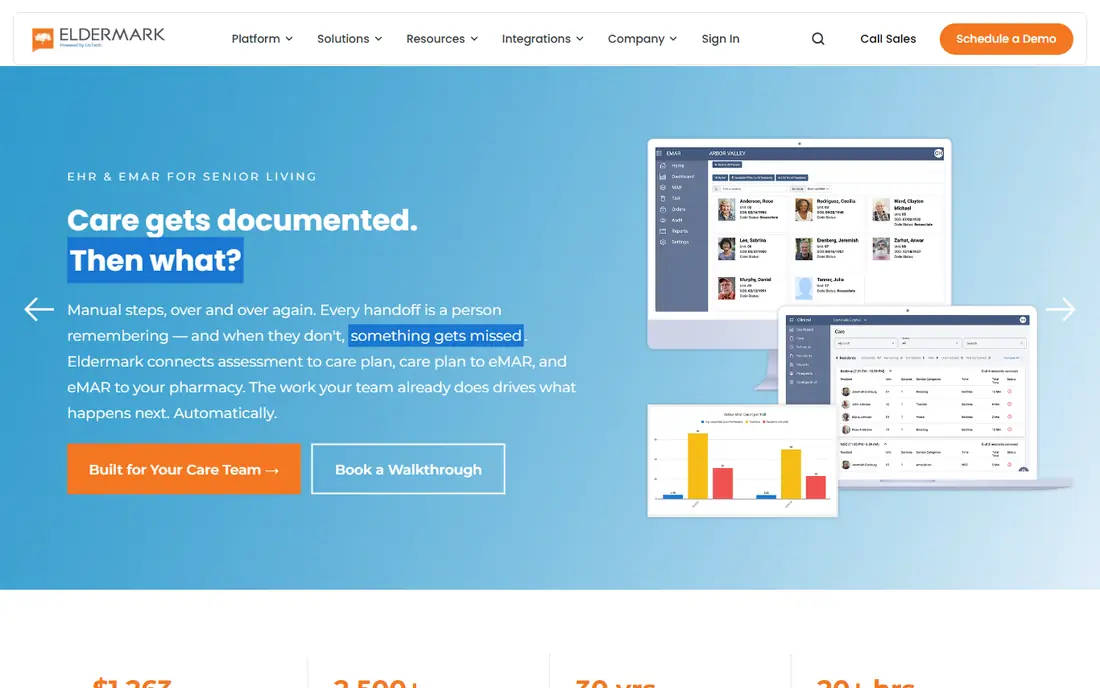
Eldermark was built for value clinical-plus-revenue product. The full cost relies on community count and size, and the full system beyond NEXT Clinical and eMAR is quoted through sales.
NEXT Clinical and eMAR opens at 295 dollars per community a month with flat-rate pricing, no enterprise minimums, and no per-module extras. What you pay to start with Eldermark: 295 dollars per community per month. Eldermark has no free tier.
Where it falls short: Full system beyond NEXT Clinical and eMAR is quoted.
- Lowest published per-community price here
- Analytics tied together
- No free trial
Glennis
Ideal for: Revenue and reservations management
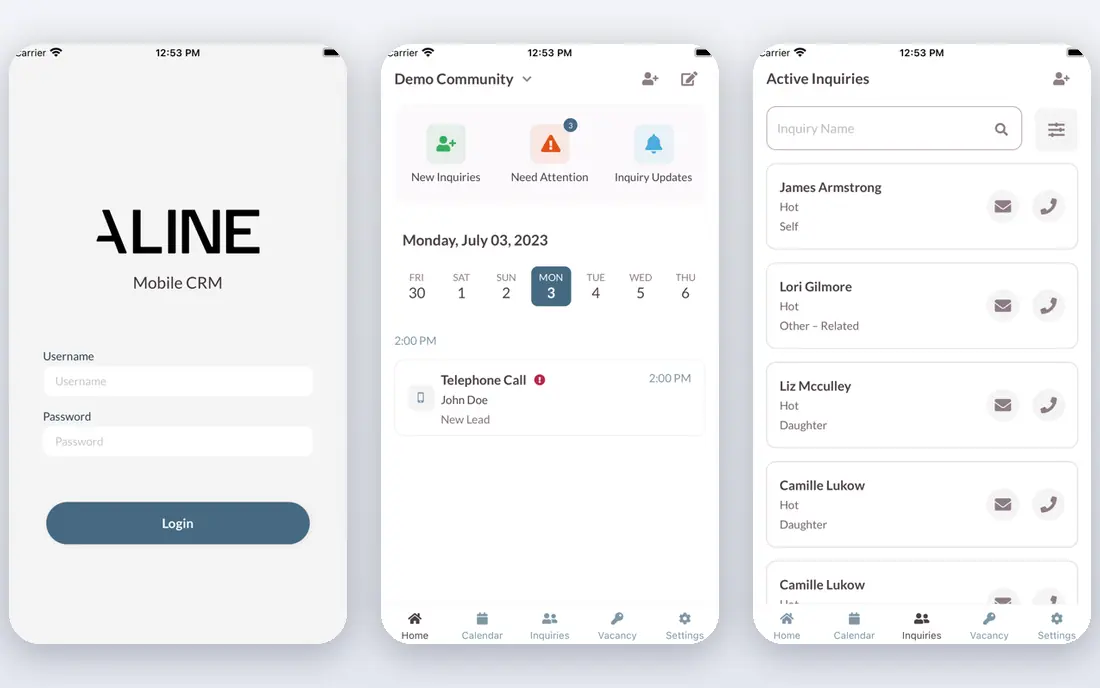
Glennis targets revenue and reservations management. Glennis Solutions supplies a thorough, completely integrated cloud-based software suite for managing a senior housing business, and it is the revenue and reservations half of the Aline family.
Where it falls short: Quote-only pricing with no published rates.
In practice, pricing is quote-based with no published rates. Glennis sells by quote instead of a published price. Glennis has no free plan.
- Only time-tested thorough suite for senior housing business management
- Integrates with Enquire and Sherpa
- Part of Aline since 2022, so the roadmap is shared
Aline
Ideal for: Large operators wanting one unified suite
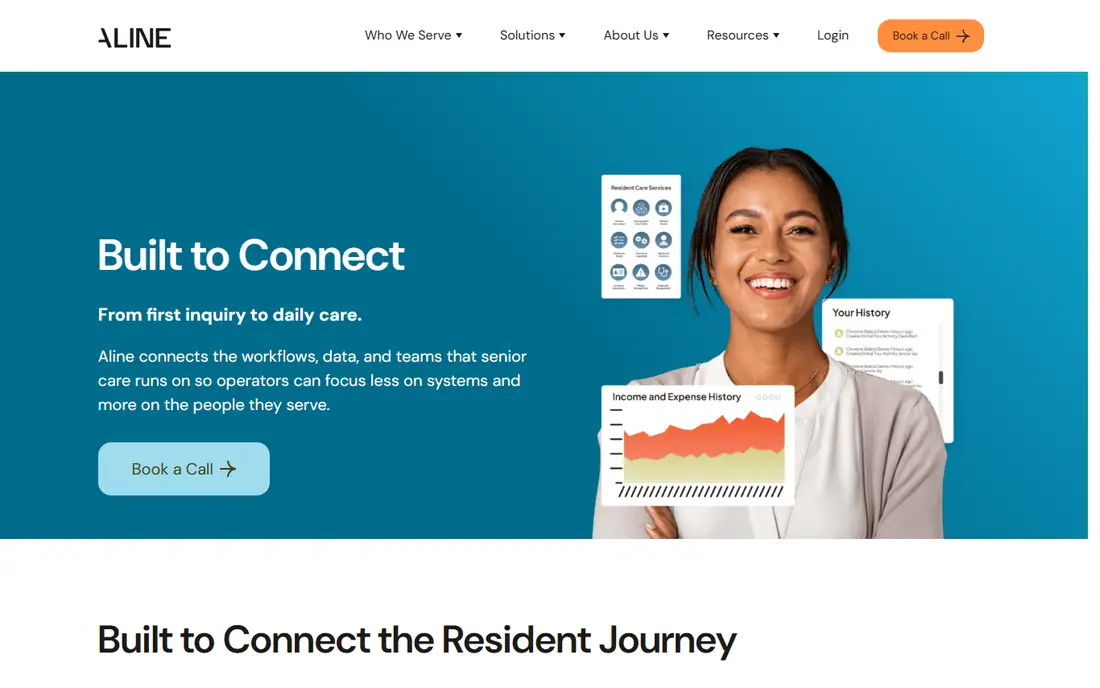
Aline was built for large operators wanting one unified suite. The combined company serves more than 50 of the largest 150 senior housing operators and more than 800 customers, representing 5,700 communities.
Drawbacks to consider: Breadth means a longer rollout than a standalone CRM.
Price to start with Aline: 499 dollars per month. Aline has no free tier.
- From CRM to billing and care
- Serves more than 800 customers across 5,700 communities
- Enterprise-shaped sale with implementation services
Yardi Senior Living
Ideal for: Operators already running Yardi Voyager
Yardi Senior Living makes the most sense for operators already running Yardi Voyager. The suite contains Yardi Voyager Senior Housing for community management and accounting, Yardi EHR and eMAR for clinical care.
Watch-outs: No published pricing.
The RentCafe Senior Living Portal for resident and family engagement. As for the details, the CRM makes the most sense when you already run Yardi Voyager. The starting price for Yardi Senior Living: 300 dollars per community per month. Yardi Senior Living has no permanent free option.
- Single-database architecture removes data silos between sales, operations, billing, clinical
- RentCafe marketing suite included
- Enterprise-shaped sale
Move-N
Ideal for: Census-focused product for small operators
Move-N is a good fit for Census-focused system for small operators. Move-N Software is an easy-to-use digital product that helps senior living communities build census, engage residents, and remove inefficiencies, with the stated goal of less turnover, improved census, and increased profitability. As for the details, buy Move-N when you run a small community and your bottleneck is census.
Points against: No published trial.
Beyond that, the pitch is built on the economics of the category: Move-N reports that 75 percent of consumers start their search online, that a senior housing lead costs 431 dollars on average, and that conversion drops sharply when an inquirer gets no response within five minutes. In daily use, quick lead response is the core job, and Move-N is designed around it. Entry price for Move-N: 100 dollars per month. Move-N does not include a free plan.
- Lowest starting price in this guide
- Census-first design with resident engagement tools
- Narrower feature set than the all-in-one suites
MatrixCare
Ideal for: Post-acute and senior living EHR plus CRM
MatrixCare serves post-acute and senior living EHR plus CRM. The product covers home health and hospice documentation and scheduling, interoperability and data exchange, and financial and billing workflows. On top of that, industry benchmarks put small agencies at 1,500 to 3,500 dollars per month and medium agencies at 3,500 to 8,000 dollars per month.
More specifically, upgrade fees when moving between patient levels are a reported downside. For everyday use, external analysts put pricing at 35 dollars per user a month and 300 dollars per facility a month, with a 300 dollar monthly minimum per care setting and a one-time implementation fee. Entry price for MatrixCare: 35 dollars per user per month. MatrixCare has no free tier.
Where it is weaker: No vendor-published pricing.
- Capable interoperability and revenue cycle tools
- Full-spectrum EHR for post-acute
- Implementation alone is estimated at 5,000 dollars or more
How to choose senior living CRM software
Check five things before you sign. In daily use, third, move-in workflow: confirm the tool carries a prospect from deposit to reservation to admission without leaving the system, and whether it plugs into your reservations system.
What to expect to pay for senior living CRM software
Take a five-community operator. On Eldermark NEXT Clinical and eMAR at 295 dollars per community a month the bill is 1,475 dollars per month or 17,700 dollars a year. That spans clinical and eMAR instead of the full sales CRM.
On top of that, on Yardi Senior CRM as an add-on at 300 to 800 dollars per community a month the bill is 1,500 to 4,000 dollars per month, on top of the Yardi Voyager license. In daily use, the pricing unit is the trap. MatrixCare prices per user plus per facility.
What senior living CRM software means for a team
A senior living CRM tracks the journey from first inquiry to move-in: leads, tours, follow-ups, deposits, reservations, and admissions, plus the referral sources and families involved at each step. The best tools tie that sales pipeline to care and billing, so a move-in flows into assessments and invoices without retyping. Industry guides put usual CRM budgets at 400 to 1,200 dollars per community a month, and multi-site operators commonly negotiate volume discounts of 20 to 30 percent.
Our selection method
Pricing pages, product documentation and feature lists were the main sources, and every entry carries at least one honest drawback. Prices and plan limits come from vendor pages and can change, so confirm them on the vendor site before you buy. Tools are placed by general fit for senior living CRM software, with price clarity and free access as tie-breakers. A different team can reasonably rank them differently.
Pre-purchase checklist
- Ask Glennis for a written quote, since no starting price is shown.
- Read the limits listed for Eldermark first: full system beyond NEXT Clinical and eMAR is quoted.
- Ask Eldermark about contract length, onboarding fees and user minimums before you sign.
- Price MatrixCare for your actual team size; headline prices rarely include add-ons or overage.
- Confirm the exact Move-N plan that includes your must-have features.
Frequently asked questions
How are the tools for senior living CRM software ordered?
Eldermark sits first and MatrixCare last because the order follows typical fit for senior living CRM software, then price clarity and free access. It is a judgement call, so read each profile for fit and limits.
Is Eldermark the right pick for everyone comparing senior living CRM software?
No single tool suits every team. Eldermark comes first because it fits value clinical-plus-revenue platform, while Glennis suits revenue and reservations management and Aline suits large operators wanting one unified suite. Match the tool to your own size, budget and workflow before deciding.
Do these tools publish their prices?
Not all of them. Glennis publishes no starting price, so expect a quote request for it. The rest, Eldermark included, show a starting price, though seats and billing terms still change the final cost.
Can I try these options before paying?
Not by default. None of the tools, from Eldermark to MatrixCare, lists a free plan or a free trial here, so ask each vendor for a demo before committing.