Best SEO Platforms for Car Review Websites in 2026: 8 Platforms Compared

- Car review sites need strong keyword research for model names, trims, and comparison queries, plus technical audits for large image-heavy pages.
- Semrush and Ahrefs give the broadest keyword and backlink data, while Surfer and Frase help tune individual review articles.
- Local visibility matters for dealer-linked content, which is where BrightLocal adds value that general tools do not cover as deeply.
- Screaming Frog is the most practical choice for crawling thousands of model and review pages to find broken links and thin content.
- Our pick for most car review sites is Semrush, because it covers research, audits, rank tracking, and local listings in one subscription.
Quick comparison
| Product | Ideal for | Price from | Free version | |
|---|---|---|---|---|
 Semrush | All-round SEO for review sites | See website | Free trial | Visit |
 Ahrefs | Backlinks and competitor research | See website | No | Visit |
 Moz Pro | Rank tracking and guidance | See website | Free trial | Visit |
 Surfer | On-page optimization for reviews | See website | No | Visit |
 Frase | Content briefs and outlines | See website | Free trial | Visit |
 BrightLocal | Local search for dealers | See website | Free trial | Visit |
 SE Ranking | Affordable rank tracking | See website | Free trial | Visit |
 Screaming Frog SEO Spider | Technical site crawls | See website | Yes | Visit |
The best SEO platforms for car review websites
Car review content lives or dies on search. Buyers search for exact models, trims, prices, and head-to-head comparisons, and the sites that answer those queries clearly tend to win the click. The platforms below were compared on keyword data, technical auditing, content tools, and local search features.
Semrush
Ideal for: All-round SEO for review sites
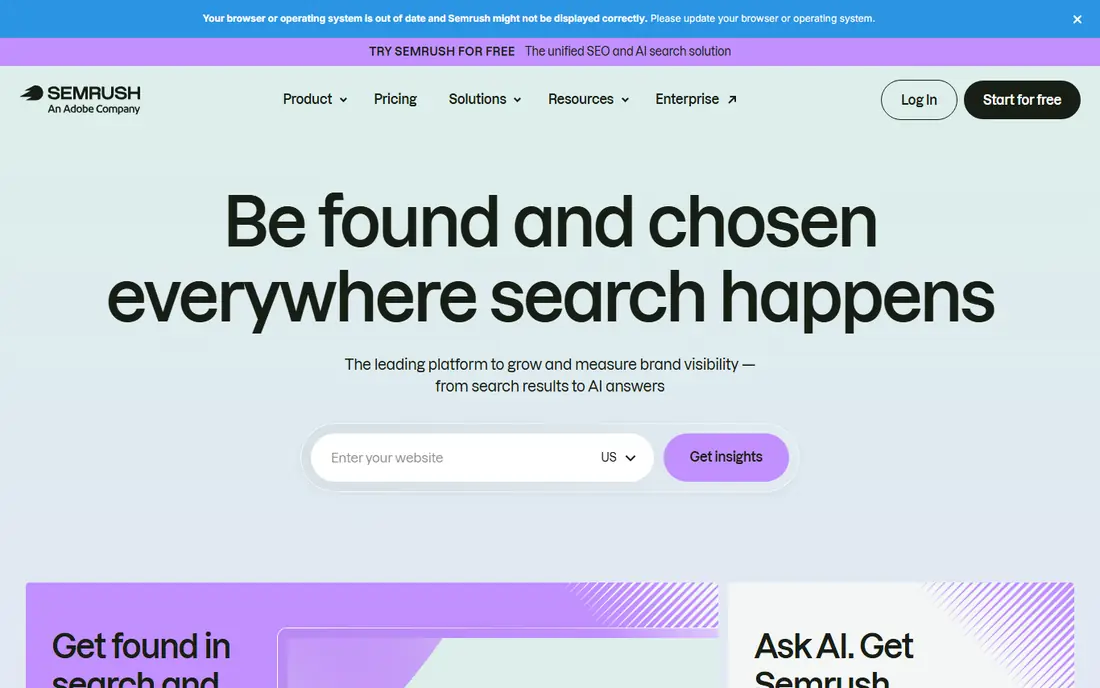
Semrush works well for car review sites because it covers the whole workflow in one place. A team can research which model and comparison terms buyers actually search, check how rival review sites rank for them, and audit a large catalog of pages for speed, duplicate content, and broken links. Its position tracking also makes it easy to watch rankings for high-value terms such as a specific model year or a versus query.
The trade-off is scope. Semrush packs in advertising, social, and AI visibility tools that a small review blog may never open, and that breadth shows up in the price. Still, for a site publishing reviews every week, having research, audits, and tracking under one login saves real time compared with stitching together separate tools.
- Very large keyword database
- Site audit and rank tracking included
- Local listing tools for dealer content
- Pricing can climb for larger teams
- The full toolkit takes time to learn
Ahrefs
Ideal for: Backlinks and competitor research
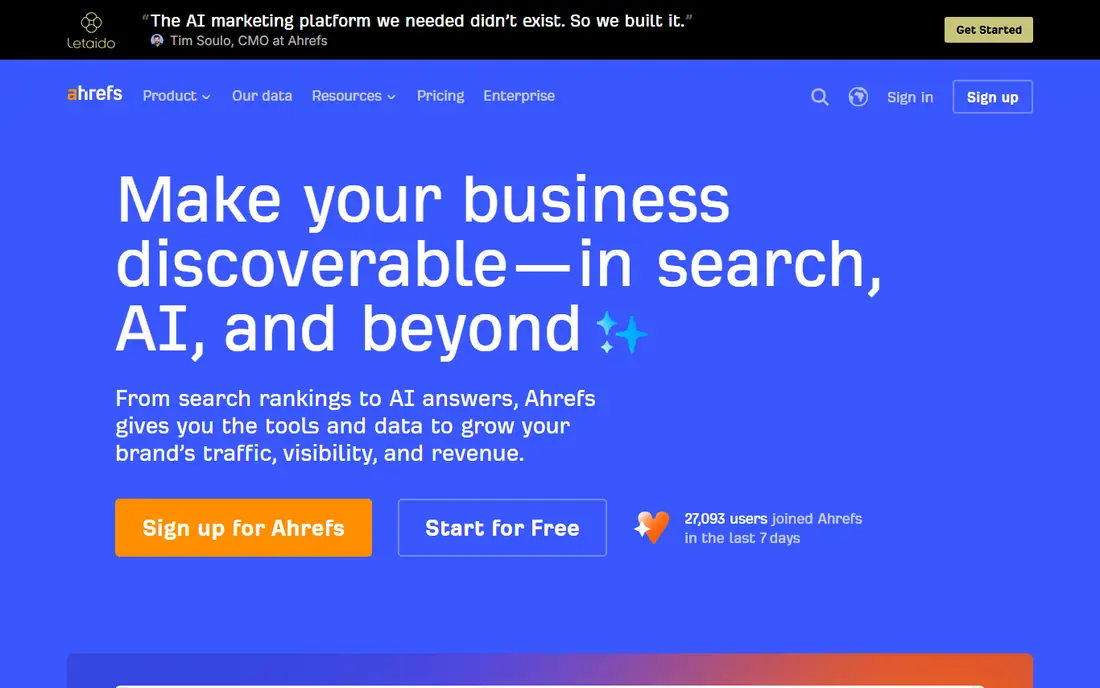
Ahrefs is the tool we would reach for first when studying competitors. Its backlink data shows which sites link to rival reviews, and its content gap reports reveal the comparison and model terms those rivals rank for that your site does not. For a car review site, that gap view is practical: it turns a vague goal like "cover more SUVs" into a concrete list of missing pages.
The catch is cost and access. Ahrefs does not offer a free plan, and its entry tier limits how much data a team can pull each month. Sites that publish at high volume may need a higher plan. Even so, the depth of its link and keyword data makes it a strong second tool or a primary choice for teams focused on earning links.
- Strong backlink index
- Clear competitor content gaps
- Reliable rank tracking
- No free plan
- Some features sit on higher tiers
Moz Pro
Ideal for: Rank tracking and guidance
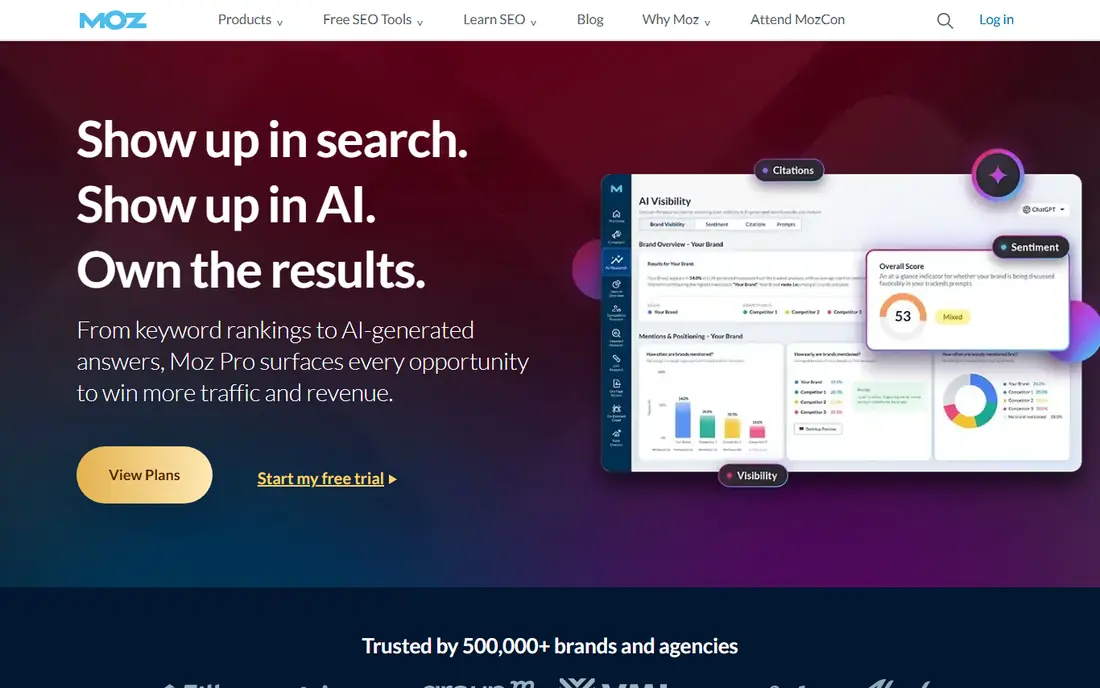
Moz Pro suits smaller review teams that want clear guidance without a steep learning curve. Its rank tracking and site crawl reports flag the issues that matter most, such as missing titles on new model pages or slow pages, and its learning hub explains fixes in plain language. That matters when the person handling SEO also writes or edits reviews.
Moz Pro is less compelling for deep competitive research. Its keyword and link data, while useful, do not match the depth of the two leaders above. For a growing review site, though, it is a sensible, friendlier starting point, and its trial lets a team test it against real pages before paying.
- Approachable interface
- Helpful learning resources
- Solid rank tracking
- Keyword database feels smaller than Semrush or Ahrefs
- Fewer advanced content tools
Surfer
Ideal for: On-page optimization for reviews
Surfer focuses on one job: making an individual review page as strong as possible for its target query. Paste in a draft about a new electric SUV and it scores the page against top-ranking rivals, suggesting terms, headings, and structure that the page is missing. For review sites, where dozens of articles compete on similar terms, that page-level view is genuinely useful.
Surfer is not a full SEO suite. It will not track your backlinks or replace a site audit tool, so most teams pair it with something else. Its pricing is also tied to how many articles you optimize, which can add up for high-volume publishers. Used as a content companion rather than a sole platform, it earns its place.
- Data-backed content scoring
- Clear term suggestions for articles
- Audit feature for older posts
- Needs a separate tool for backlinks and rank tracking
- Per-article costs add up
Frase
Ideal for: Content briefs and outlines
Frase helps review teams plan articles before writing. It pulls the questions buyers ask about a car, the headings rival reviews use, and the facts a brief should cover, then turns that into an outline a writer can follow. For a site covering many models, that structure keeps reviews consistent and helps writers avoid missing the specs readers compare.
Its optimization scoring is lighter than Surfer, and it does not handle technical audits or link data. Think of Frase as a planning tool: strong at the brief stage, best combined with a platform that tracks rankings and site health after publication.
- Fast research briefs from top results
- Outline builder for writers
- Question research for FAQ sections
- Optimization depth is lighter than Surfer
- Best paired with a rank tracker
BrightLocal
Ideal for: Local search for dealers
BrightLocal matters when a car review site also serves local intent, such as dealer pages, regional buying guides, or "near me" queries. It tracks local rankings, manages business listings across directories, and monitors reviews in one dashboard. A review site that partners with dealers or runs local inventory content will feel the benefit quickly.
For a purely national editorial site, BrightLocal adds less. It is a specialist, not a replacement for keyword research or technical audits. Used alongside a general platform, it covers the local angle that general tools treat as an afterthought.
- Local rank tracking
- Citation and listing management
- Review monitoring
- Not a general SEO suite
- Limited value for national-only content
SE Ranking
Ideal for: Affordable rank tracking
SE Ranking is a solid value pick for review sites watching many model keywords on a budget. Its rank tracker handles large keyword lists, its audit catches common technical problems, and its reports work well for teams that share results with clients or partners. Smaller publishers often find it covers the daily essentials without the price of the biggest platforms.
The compromise is data depth. Its keyword and backlink databases are not as large as Semrush or Ahrefs, so competitive research takes more cross-checking. For tracking and auditing, though, it is dependable, and its trial makes it easy to compare against a current tool.
- Good value rank tracking
- Site audit included
- White-label reports for agencies
- Keyword database smaller than the leaders
- Backlink data less deep
Screaming Frog SEO Spider
Ideal for: Technical site crawls
Screaming Frog is a desktop crawler that maps a whole site page by page. For a car review site with thousands of model, trim, and comparison pages, that crawl reveals broken links, duplicate titles, redirect chains, and thin pages that a dashboard summary might miss. The free version covers smaller sites, which makes it an easy first step for technical checks.
It is a specialist tool with a learning curve. The output is detailed and technical, and it does not track rankings or research keywords. Pair it with a cloud platform for ongoing monitoring, and use Screaming Frog when you need a thorough, hands-on audit before a redesign or a big content push.
- Deep crawl data for large sites
- Free version for smaller crawls
- Finds broken links and duplicate pages
- Desktop software, not a cloud dashboard
- Raw data needs SEO knowledge to interpret
How we picked these
We compared official feature pages, pricing pages, and app listings for general SEO platforms, looking for tools that handle the specific needs of car review sites: large keyword lists around models and comparisons, technical audits for image-heavy pages, content optimization, and local search. We favored platforms that are actively maintained and widely used by publishers, and we noted where a tool is a specialist that pairs well with a broader suite rather than replacing it.
What to check before you pay
Start with the size of your site and the work you actually do each week. A blog publishing two reviews a month needs rank tracking and a content tool more than an enterprise audit suite, while a large catalog site needs crawl depth and local features. Use free trials on real pages, not demo data, and compare how each tool reports the same set of model keywords.
Check how pricing scales with users, tracked keywords, and crawled pages, since those limits decide the real monthly cost. Also confirm that the tool covers your target markets and languages if you publish for more than one country. Finally, look at reporting: if you share results with a team or a partner, clear scheduled reports save time every month.
Frequently asked questions
Which SEO platform is best for a new car review site?
Semrush or SE Ranking are good starting points, since both combine keyword research, audits, and rank tracking. A new site should pick one primary platform, learn it well, and add a content tool such as Surfer or Frase only when article optimization becomes a bottleneck.
Do car review sites need local SEO tools?
They do if they publish dealer pages, regional guides, or inventory-linked content. BrightLocal covers local rankings and listings in a way general platforms do not. A national-only editorial site can skip it and focus on keyword and technical tools.
How important are backlinks for car review sites?
Backlinks still matter, because review queries are competitive and authority helps pages rank. Ahrefs gives the clearest view of who links to rival reviews. Earning links through original testing data, comparison tools, and genuinely useful guides tends to work better than buying links.
Can one tool handle keyword research, audits, and content optimization?
Semrush comes closest to covering all three, but most serious teams still pair a primary platform with a specialist. A common setup is Semrush or Ahrefs for research and tracking, plus Surfer or Frase for article-level optimization and Screaming Frog for deep technical crawls.
How often should a car review site run a technical audit?
A full crawl once a month is a sensible baseline, with quick checks after template changes, redesigns, or large publishing pushes. Large sites with frequent updates benefit from automated audit alerts so broken pages do not sit unnoticed for weeks.