Best SEO Tracking Software in 2026: 8 Tools Compared

- 1
 SE RankingBest overall valueVisit
- 2
 AccuRankerLarge agencies and speedVisit
- 3
 SemrushFull SEO suite plus trackingVisit
- 4
 AhrefsBacklink-led SEO teamsVisit
- 5
 NightwatchLocal and AI search trackingVisit
- SE Ranking is the best rank tracker for most teams, with 2,000 keywords tracked daily from $103.20 per month on annual billing.
- AccuRanker suits agencies with large keyword sets, fast on-demand refreshes and strong API access.
- Semrush and Ahrefs make sense when you also need a full SEO suite, not just rank tracking.
- Mangools SERPWatcher is the cheapest paid option for beginners, while Google Search Console is the free baseline every site should use.
- Price per keyword at your real volume, not the headline plan price, since a cheap plan with few keywords can cost more per keyword than a larger plan.
Quick comparison
| Product | Ideal for | Price from | Free version | |
|---|---|---|---|---|
| SE Ranking | Best overall value | $103.20 per month | Free trial | Visit |
| AccuRanker | Large agencies and speed | $224 per month | Free trial | Visit |
| Semrush | Full SEO suite plus tracking | $117.33 per month | Yes | Visit |
| Ahrefs | Backlink-led SEO teams | $129 per month | Yes | Visit |
| Nightwatch | Local and AI search tracking | See website | Free trial | Visit |
 Wincher | Simple daily tracking | $49 per month | Free trial | Visit |
 Mangools | Cheapest paid option | $29.90 per month | Yes | Visit |
 Google Search Console | Free first-party baseline | Free | Yes | Visit |
The best seo tracking software
These eight tools cover dedicated rank tracking, full SEO suites and a free baseline. We compared official pricing pages, feature pages and public reviews, focusing on keyword limits, update frequency and the cost per keyword at realistic volumes.
SE Ranking
Ideal for: Best overall value
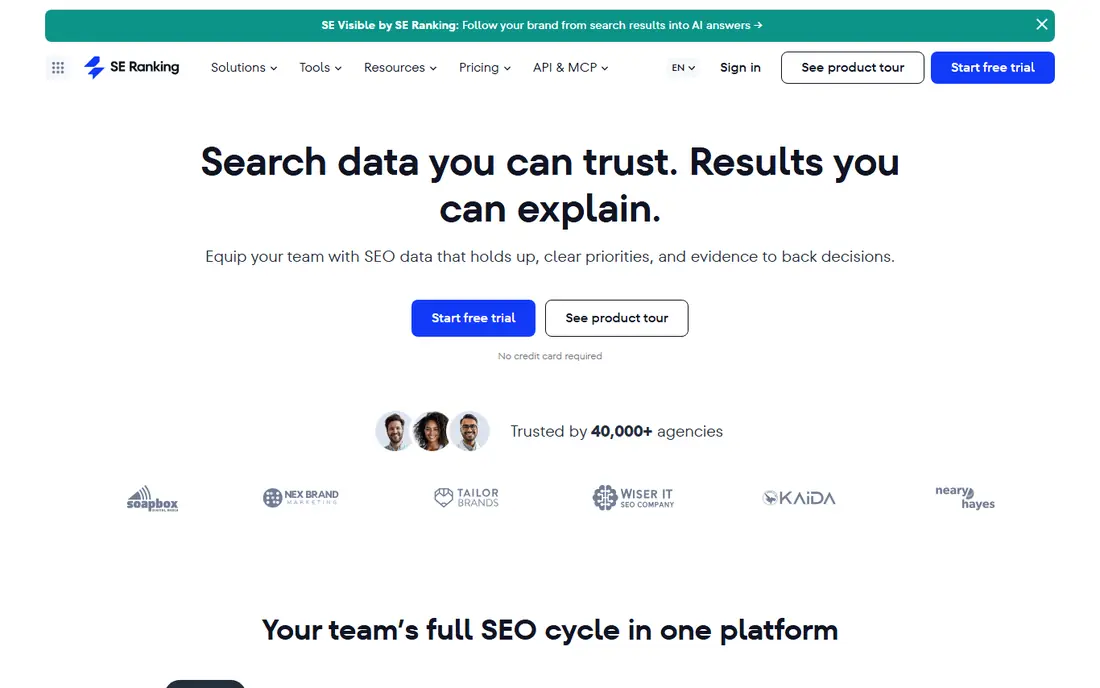
SE Ranking is the best rank tracker for most teams in 2026. Its Core plan tracks 2,000 keywords daily, with site audits, keyword research, backlink checks and AI search tracking in the same plan, which removes the need for a second tool for many teams. That combination at $103.20 per month on annual billing is the strongest value in this list.
There is no permanent free plan, only a 14-day trial with no card required. For a freelancer, small agency or in-house team that needs daily tracking plus a suite, SE Ranking is the first tool to trial.
- 2,000 keywords tracked daily on Core
- Audits and research in the same plan
- AI search tracking included
- Core costs $129 per month monthly, $103.20 on annual billing
- No permanent free plan
AccuRanker
Ideal for: Large agencies and speed
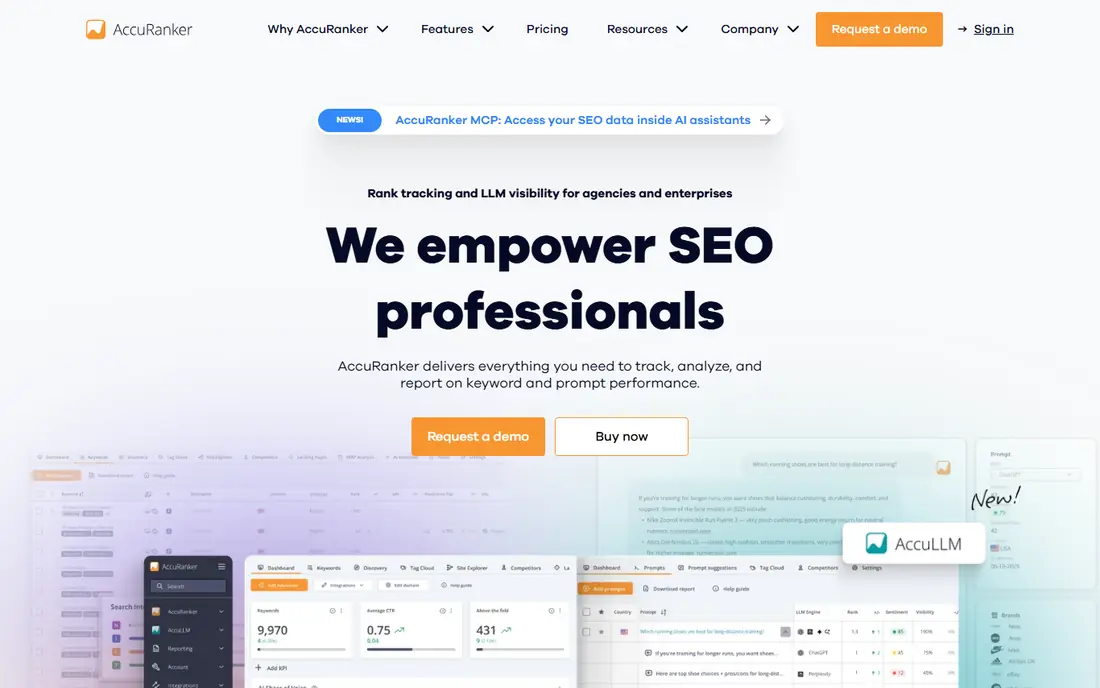
AccuRanker is the pick for agencies where rank data speed and accuracy are the priority. It refreshes rankings on demand, tracks large keyword sets with tagging and segmentation, and offers API access for reporting and dashboards. Professional plans start at $224 per month on annual billing for 2,000 keywords, with larger tiers for bigger sets.
Small sites will find it expensive, and there is no permanent free plan, only a 14-day trial. For an agency reporting to many clients with fresh data needs, AccuRanker's speed justifies the price.
- Fast on-demand refreshes
- Large keyword sets
- Tagging and API access
- Daily updates
- Professional from $224 per month on annual billing
- Pricey for small sites
Semrush
Ideal for: Full SEO suite plus tracking
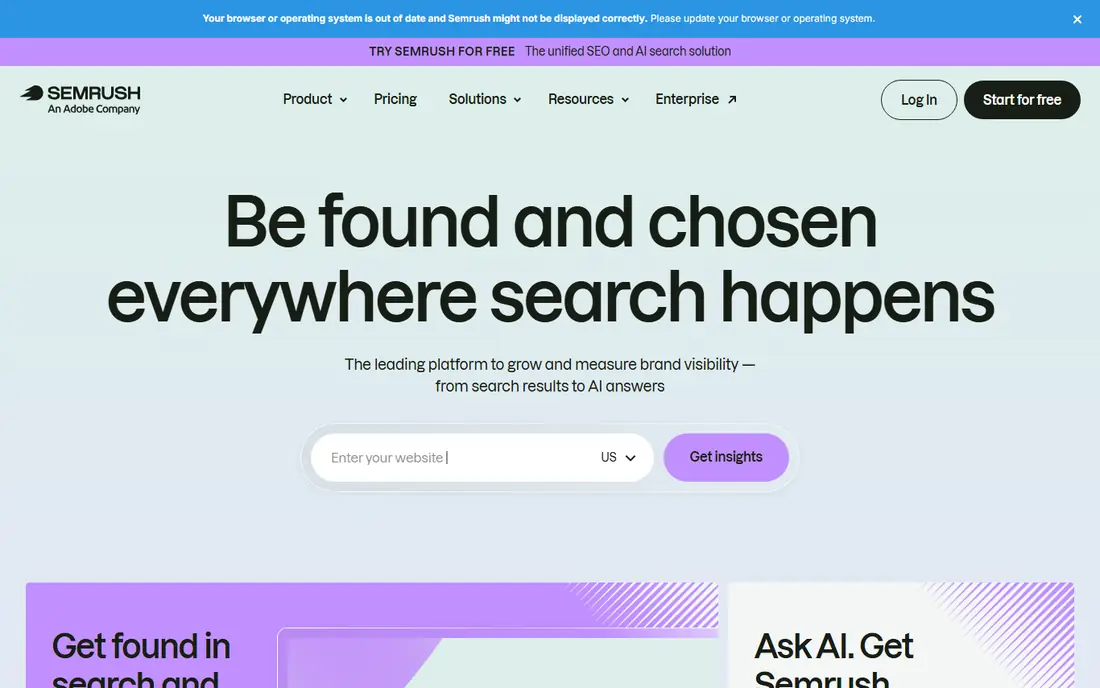
Semrush suits teams that want rank tracking inside a full SEO toolkit. Position Tracking covers 500 keywords daily on the entry plan, alongside keyword research, site audits, backlink analysis and competitive intelligence, plus newer AI visibility features. A limited free account and a 7-day trial let you test before paying.
The entry keyword limit is low for the price, so large trackers should compare SE Ranking or AccuRanker. For a team that uses the suite daily, though, Semrush's breadth makes the tracking effectively part of a larger toolset.
- Position Tracking plus research, audits and competitive data
- Daily updates
- AI visibility features
- SEO plan at $139 per month monthly, $117.33 on annual billing
- Only 500 keywords on the entry plan
Ahrefs
Ideal for: Backlink-led SEO teams
Ahrefs is the backlink-led choice in this list. Its Rank Tracker sits alongside the industry's most-cited backlink index, keyword research and site audit tools, which suits teams whose SEO work centers on links and content gaps. Lite costs $129 per month for 750 tracked keywords, while a Starter plan from $29 per month covers a smaller set, and Webmaster Tools are free for verified sites you own.
Rank updates are weekly on standard plans, with daily options on higher tiers, so teams needing daily data should check the tier. For a backlink-focused team, Ahrefs' data depth is the deciding factor.
- Strong backlink and research data
- Rank Tracker for owned sites
- Starter plan from $29 per month
- Lite at $129 per month covers 750 keywords
- Updates weekly on standard plans
Nightwatch
Ideal for: Local and AI search tracking
Nightwatch suits teams that need local precision plus AI search visibility. It tracks rankings down to ZIP level, covers AI surfaces such as ChatGPT, AI Overviews and AI Mode, and offers unlimited seats, which helps agencies with many users. Starter pricing is listed around 79 euros per month on annual billing for 500 keywords, with daily and on-demand updates.
Pricing varies by plan and region, so confirm at checkout, and there is no permanent free plan, only a 14-day trial. For a local SEO agency or a team tracking AI visibility, Nightwatch's combination is distinctive.
- ZIP-level local tracking
- AI search tracking for ChatGPT and AI Overviews
- Unlimited seats
- Starter around 79 euros per month on annual billing
- Pricing varies by plan
Wincher
Ideal for: Simple daily tracking
Wincher is the simple, focused tracker for site owners and small agencies that want daily rankings without suite bloat. Basic plans start at $49 per month for 500 keywords across 10 websites, with daily updates and straightforward reports. That clarity suits teams that check rankings daily and act on them, without needing research and audit tools in the same login.
Teams that also need audits and research will need a second tool. For pure rank tracking at a moderate price, Wincher is a clean, dependable choice.
- Simple daily tracking
- 500 keywords and 10 websites on Basic
- Unlimited sites on some views
- Fewer suite features than SE Ranking or Semrush
- No permanent free plan
Mangools
Ideal for: Cheapest paid option
Mangools, with its SERPWatcher tool, is the cheapest paid option for beginners, bloggers and small sites. Basic plans cost $29.90 per month on annual billing for 200 tracked keywords, alongside keyword research, SERP analysis and backlink tools in the same suite. A limited free plan lets you test the interface before paying.
Weekly updates on Basic are a real limit for teams that react to daily movement, with daily updates reserved for higher tiers. For a small site that checks rankings weekly and wants a friendly, low-cost suite, Mangools is the best entry point.
- Lowest paid price in this list
- SERPWatcher plus research tools
- Beginner-friendly
- Basic covers 200 keywords with weekly updates
- Daily updates need the Agency tier
Google Search Console
Ideal for: Free first-party baseline
Google Search Console is the free baseline every site should use, regardless of which paid tracker you choose. It shows the actual queries, clicks, impressions and positions Google reports for your own site, with indexing and performance data no third-party tool can match. It costs nothing and covers verified sites you own.
Data is delayed by about two days, and it does not track competitors or AI search surfaces. Use it as the ground truth for your own site, and pair it with a paid tracker for competitor and AI visibility. No SEO tracking setup is complete without it.
- Completely free
- First-party data from Google
- Shows queries, clicks and impressions
- Data delayed by about two days
- No competitor tracking
- No AI visibility
How we picked these
We compared official pricing pages, feature pages and public reviews for SEO tracking tools available in October 2026. We favored tools with a working trial or free tier, current pricing and a real user base, and we weighed keyword limits, update frequency, local and AI coverage, and cost per keyword, since those decide the true value at your volume.
What to check before you choose SEO tracking software
Start with your keyword math. Count how many keywords you actually track, multiply by locations and devices, since tracking 100 keywords in three cities on desktop and mobile uses 600 keyword slots. That total, not your keyword list length, decides which plan you need and what it costs per keyword.
Then check update frequency against your workflow. Daily tracking suits agencies and competitive niches where rankings move fast, while weekly tracking suits small sites that act monthly. Paying for daily data you check monthly wastes money, while weekly data frustrates a team that reacts daily.
Finally, test reporting with a real client or stakeholder. Build a report for one site, check whether it shows the locations, devices and SERP features you need, and confirm white-label options if you report to clients. A tracker whose reports you must rebuild by hand in a spreadsheet has only done half the job.
Frequently asked questions
What is the best SEO tracking software?
SE Ranking is the best overall value for most teams, with 2,000 daily-tracked keywords and a suite included. AccuRanker suits large agencies, while Semrush and Ahrefs suit teams that also need full SEO suites.
Is there free SEO tracking software?
Yes, Google Search Console is completely free for sites you own, and Ahrefs Webmaster Tools and Mangools offer limited free access. Paid trackers add competitor tracking, local precision and AI visibility that free tools lack.
How many keywords should I track?
Track the keywords that drive revenue or sign-ups, plus close variants, across your key locations and devices. Remember that each location and device multiplies your keyword count, so count slots, not just keywords.
What is AI search tracking?
AI search tracking measures your brand's visibility in AI answers from tools such as ChatGPT, Gemini, Perplexity and Google AI Overviews, alongside classic rankings. SE Ranking, Nightwatch and AccuRanker now include AI visibility features.
How often should rankings update?
Daily updates suit agencies and competitive niches, while weekly updates suit small sites that act monthly. Choose the frequency that matches how often you actually check and act on ranking changes.