Best service for real-time cloud monitoring in 2026: 8 Options Compared

- 1
 Datadogcloud teams that want live infrastructure viewsVisit
- 2
 New Relicapplication teams tracking performance liveVisit
- 3
 Dynatracelarge enterprises with complex cloudsVisit
- 4
 Grafana Cloudteams that already use Grafana dashboardsVisit
- 5
 LogicMonitorhybrid cloud and on premises teamsVisit
- Our pick for most readers depends on budget and scale, so compare the starting price and free plan for best service for real-time cloud monitoring before you commit.
- The strongest options for best service for real-time cloud monitoring are clear about what is included, what costs extra, and how support works.
- For best service for real-time cloud monitoring, a short trial or a free tier is the safest way to check fit before a long contract.
- Check official pricing pages, because plans and limits for best service for real-time cloud monitoring change during the year.
Quick comparison
| Product | Ideal for | Price from | Free version | |
|---|---|---|---|---|
| Datadog | cloud teams that want live infrastructure views | See website | See website | Visit |
| New Relic | application teams tracking performance live | See website | See website | Visit |
| Dynatrace | large enterprises with complex clouds | See website | See website | Visit |
| Grafana Cloud | teams that already use Grafana dashboards | See website | See website | Visit |
| LogicMonitor | hybrid cloud and on premises teams | See website | See website | Visit |
 Site24x7 | small and midsize teams on a budget | See website | See website | Visit |
 Splunk Observability Cloud | teams already using Splunk for logs | See website | See website | Visit |
 SolarWinds Observability | teams using SolarWinds monitoring already | See website | See website | Visit |
The best service for real-time cloud monitoring
We compared official feature pages, pricing pages, app store listings, privacy policies, and public reviews to build this list for best service for real-time cloud monitoring. The options below cover different budgets and needs, so use the comparison table to narrow the list, then read the write up for the two or three options that fit your situation best.
Datadog
Ideal for: cloud teams that want live infrastructure views
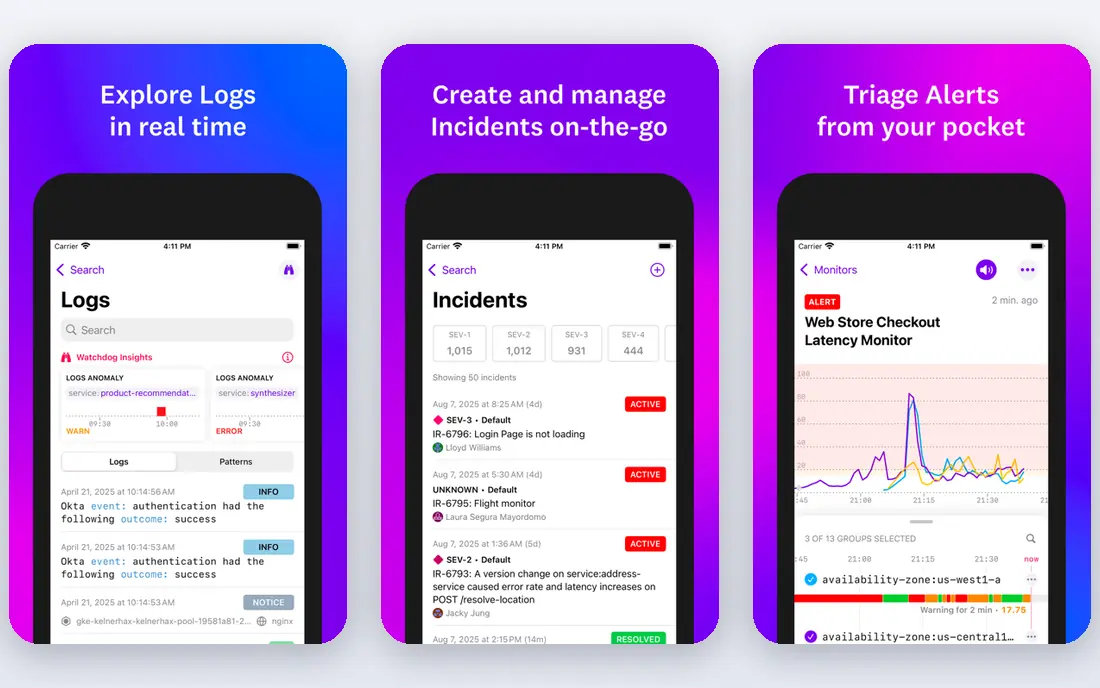
For readers comparing best service for real-time cloud monitoring, Datadog stands out first because it is built for cloud teams that want live infrastructure views. Datadog is built for cloud teams that want live infrastructure views, and its main strength is that live metrics, logs, and traces in one platform. We weighed that strength against its limits on official feature and pricing pages. For many readers, that balance is why it earns a place here, even though no option suits every buyer.
The honest catch is that costs can rise with data volume. Before you buy, check current plan details on the official site, confirm any free plan or trial, and test the core task you need most. If that task feels awkward in a trial, move to the next option rather than hoping a paid plan will fix it.
- Live metrics, logs, and traces in one platform
- Clear official feature and pricing pages
- Fits cloud teams that want live infrastructure views
- Costs can rise with data volume
- Pricing and limits should be confirmed on the official site
New Relic
Ideal for: application teams tracking performance live
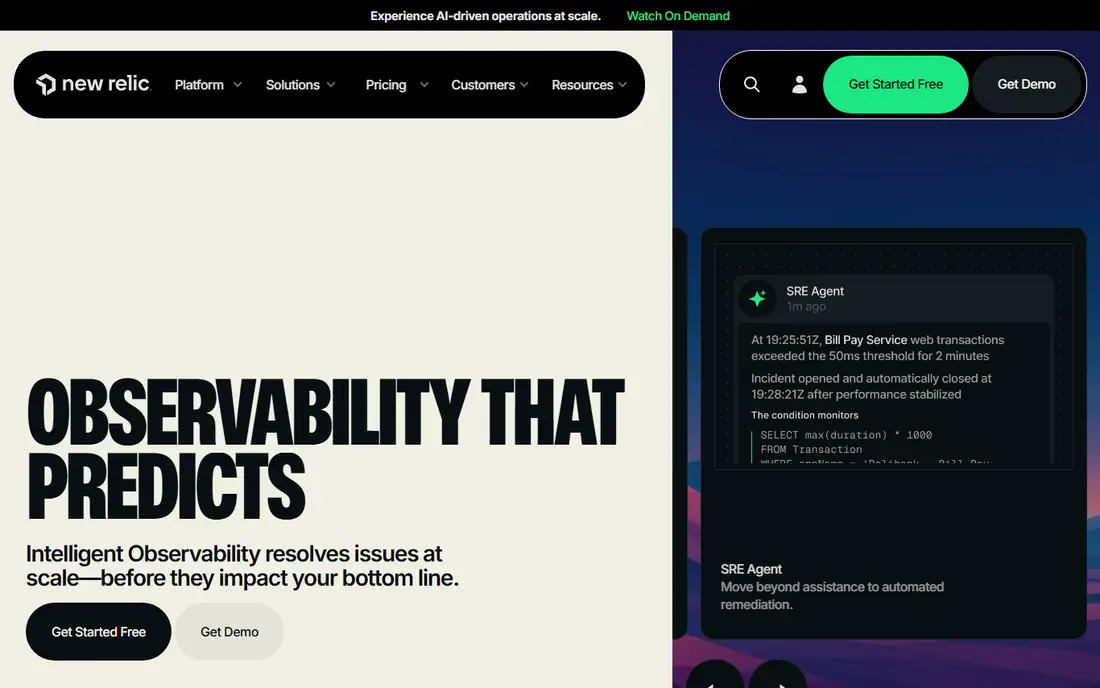
If your main need is application teams tracking performance live, New Relic deserves a close look. New Relic is built for application teams tracking performance live, and its main strength is that full stack observability with live dashboards. We weighed that strength against its limits on official feature and pricing pages. For many readers, that balance is why it earns a place here, even though no option suits every buyer.
The honest catch is that pricing complexity needs care at scale. Before you buy, check current plan details on the official site, confirm any free plan or trial, and test the core task you need most. If that task feels awkward in a trial, move to the next option rather than hoping a paid plan will fix it.
- Full stack observability with live dashboards
- Clear official feature and pricing pages
- Fits application teams tracking performance live
- Pricing complexity needs care at scale
- Pricing and limits should be confirmed on the official site
Dynatrace
Ideal for: large enterprises with complex clouds
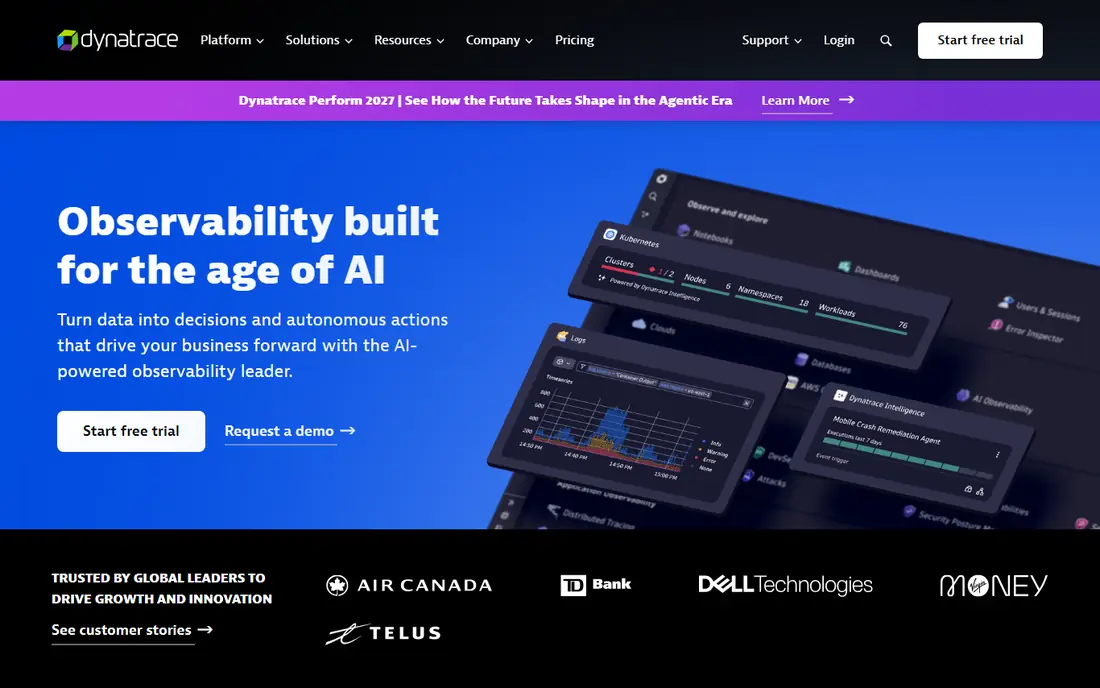
Among the options here, Dynatrace fits large enterprises with complex clouds particularly well. Dynatrace is built for large enterprises with complex clouds, and its main strength is that aI assisted observability across cloud and apps. We weighed that strength against its limits on official feature and pricing pages. For many readers, that balance is why it earns a place here, even though no option suits every buyer.
The honest catch is that it is priced for enterprise budgets. Before you buy, check current plan details on the official site, confirm any free plan or trial, and test the core task you need most. If that task feels awkward in a trial, move to the next option rather than hoping a paid plan will fix it.
- AI assisted observability across cloud and apps
- Clear official feature and pricing pages
- Fits large enterprises with complex clouds
- It is priced for enterprise budgets
- Pricing and limits should be confirmed on the official site
Grafana Cloud
Ideal for: teams that already use Grafana dashboards
Start with Grafana Cloud when teams that already use Grafana dashboards is the priority. Grafana Cloud is built for teams that already use Grafana dashboards, and its main strength is that hosted Grafana, metrics, logs, and traces. We weighed that strength against its limits on official feature and pricing pages. For many readers, that balance is why it earns a place here, even though no option suits every buyer.
The honest catch is that setup still needs Grafana knowledge. Before you buy, check current plan details on the official site, confirm any free plan or trial, and test the core task you need most. If that task feels awkward in a trial, move to the next option rather than hoping a paid plan will fix it.
- Hosted Grafana, metrics, logs, and traces
- Clear official feature and pricing pages
- Fits teams that already use Grafana dashboards
- Setup still needs Grafana knowledge
- Pricing and limits should be confirmed on the official site
LogicMonitor
Ideal for: hybrid cloud and on premises teams
For hybrid cloud and on premises teams, LogicMonitor is a practical place to begin. LogicMonitor is built for hybrid cloud and on premises teams, and its main strength is that live monitoring across cloud, network, and servers. We weighed that strength against its limits on official feature and pricing pages. For many readers, that balance is why it earns a place here, even though no option suits every buyer.
The honest catch is that pricing is quoted rather than listed simply. Before you buy, check current plan details on the official site, confirm any free plan or trial, and test the core task you need most. If that task feels awkward in a trial, move to the next option rather than hoping a paid plan will fix it.
- Live monitoring across cloud, network, and servers
- Clear official feature and pricing pages
- Fits hybrid cloud and on premises teams
- Pricing is quoted rather than listed simply
- Pricing and limits should be confirmed on the official site
Site24x7
Ideal for: small and midsize teams on a budget
Readers focused on small and midsize teams on a budget will find Site24x7 a strong candidate. Site24x7 is built for small and midsize teams on a budget, and its main strength is that broad monitoring at a lower price point. We weighed that strength against its limits on official feature and pricing pages. For many readers, that balance is why it earns a place here, even though no option suits every buyer.
The honest catch is that the interface can feel crowded. Before you buy, check current plan details on the official site, confirm any free plan or trial, and test the core task you need most. If that task feels awkward in a trial, move to the next option rather than hoping a paid plan will fix it.
- Broad monitoring at a lower price point
- Clear official feature and pricing pages
- Fits small and midsize teams on a budget
- The interface can feel crowded
- Pricing and limits should be confirmed on the official site
Splunk Observability Cloud
Ideal for: teams already using Splunk for logs
When teams already using Splunk for logs matters most, Splunk Observability Cloud is worth shortlisting. Splunk Observability Cloud is built for teams already using Splunk for logs, and its main strength is that observability linked to Splunk log data. We weighed that strength against its limits on official feature and pricing pages. For many readers, that balance is why it earns a place here, even though no option suits every buyer.
The honest catch is that costs can grow with data ingestion. Before you buy, check current plan details on the official site, confirm any free plan or trial, and test the core task you need most. If that task feels awkward in a trial, move to the next option rather than hoping a paid plan will fix it.
- Observability linked to Splunk log data
- Clear official feature and pricing pages
- Fits teams already using Splunk for logs
- Costs can grow with data ingestion
- Pricing and limits should be confirmed on the official site
SolarWinds Observability
Ideal for: teams using SolarWinds monitoring already
A shortlist for teams using SolarWinds monitoring already should include SolarWinds Observability. SolarWinds Observability is built for teams using SolarWinds monitoring already, and its main strength is that cloud observability with familiar SolarWinds workflows. We weighed that strength against its limits on official feature and pricing pages. For many readers, that balance is why it earns a place here, even though no option suits every buyer.
The honest catch is that it suits existing SolarWinds users best. Before you buy, check current plan details on the official site, confirm any free plan or trial, and test the core task you need most. If that task feels awkward in a trial, move to the next option rather than hoping a paid plan will fix it.
- Cloud observability with familiar SolarWinds workflows
- Clear official feature and pricing pages
- Fits teams using SolarWinds monitoring already
- It suits existing SolarWinds users best
- Pricing and limits should be confirmed on the official site
How we picked these
We picked these options for best service for real-time cloud monitoring by comparing official feature pages, pricing pages, app store listings, privacy policies, and public reviews. We did not claim hands-on testing that did not happen. Instead, we focused on whether each option truly fits the topic, whether its pricing is clear, and whether its strengths and limits are easy to find on its own site.
We also favoured options with clear support and documentation, and we left out products that did not fit the topic, even when they are well known in a nearby category. Prices change, so the safest step is to confirm the current plan on the vendor site before you pay. That method keeps this list useful for ordinary buyers, not only for specialists.
What real time cloud monitoring should show
Start by writing down the one job you need best service for real-time cloud monitoring to do well, then judge every option on that job first. Price matters, but a low price is poor value if the tool misses that core job, and a high price is hard to justify if you only use a small part of the product. Look at setup time, support options, and how easy it is to leave, because switching costs are part of the real price.
Next, check limits that are easy to miss, such as user seats, storage, locations, or monthly allowances, and ask whether those limits fit your normal use, not only your lightest week. Read the privacy and security pages when the product will hold customer or business data, and confirm who can see that data and how it is stored.
Questions to ask before you pay
Ask what is included in the base price, what triggers an upgrade, and how support works when something goes wrong. Ask how long setup takes, whether you can export your data, and what happens at renewal. The answers to those questions often separate a good fit from a costly mistake, and they are worth getting in writing for business purchases.
Frequently asked questions
What is real time cloud monitoring?
For best service for real-time cloud monitoring, the short answer depends on your budget, your team size, and how often you will use the product. Start with the options in this list that match your main need, check their official pricing and free plan details, and try one before committing to a long term plan. That simple check prevents most bad purchases in this category.
How is observability different from monitoring?
For best service for real-time cloud monitoring, the short answer depends on your budget, your team size, and how often you will use the product. Start with the options in this list that match your main need, check their official pricing and free plan details, and try one before committing to a long term plan. That simple check prevents most bad purchases in this category.
How fast should alerts arrive?
For best service for real-time cloud monitoring, the short answer depends on your budget, your team size, and how often you will use the product. Start with the options in this list that match your main need, check their official pricing and free plan details, and try one before committing to a long term plan. That simple check prevents most bad purchases in this category.
Do I need logs, metrics, and traces?
For best service for real-time cloud monitoring, the short answer depends on your budget, your team size, and how often you will use the product. Start with the options in this list that match your main need, check their official pricing and free plan details, and try one before committing to a long term plan. That simple check prevents most bad purchases in this category.
How much does cloud monitoring cost?
For best service for real-time cloud monitoring, the short answer depends on your budget, your team size, and how often you will use the product. Start with the options in this list that match your main need, check their official pricing and free plan details, and try one before committing to a long term plan. That simple check prevents most bad purchases in this category.