Best Shopify Apps for Reviews in 2026: 8 Apps Compared

- Judge.me is our pick for value, with unlimited review collection and a clear 15 dollar per month full plan.
- Loox leads for photo and video reviews that show products in real customers' hands.
- Yotpo, Stamped, and Okendo suit growing brands that want reviews plus loyalty, referrals, and quizzes in one platform.
- Fera and Ryviu cover smaller stores well, with free plans and simple setup for fast social proof.
Quick comparison
| Product | Ideal for | Price from | Free version | |
|---|---|---|---|---|
 Judge.me | Best value reviews | $15 per month | Yes | Visit |
 Loox | Photo and video reviews | See website | No | Visit |
 Yotpo | Reviews plus loyalty | See website | No | Visit |
 Stamped | Reviews, loyalty, and repeat | See website | No | Visit |
 Okendo | Customer marketing platform | $19 per month | No | Visit |
 REVIEWS.io | Reviews plus reputation tools | See website | Free trial | Visit |
 Fera | Simple trusted reviews | See website | Yes | Visit |
 Ryviu | Free plan and review imports | See website | Yes | Visit |
The best shopify apps for reviews
We compared official feature pages, pricing pages, and app store listings to find review apps that collect, display, and syndicate reviews without slowing your store down.
Judge.me
Ideal for: Best value reviews
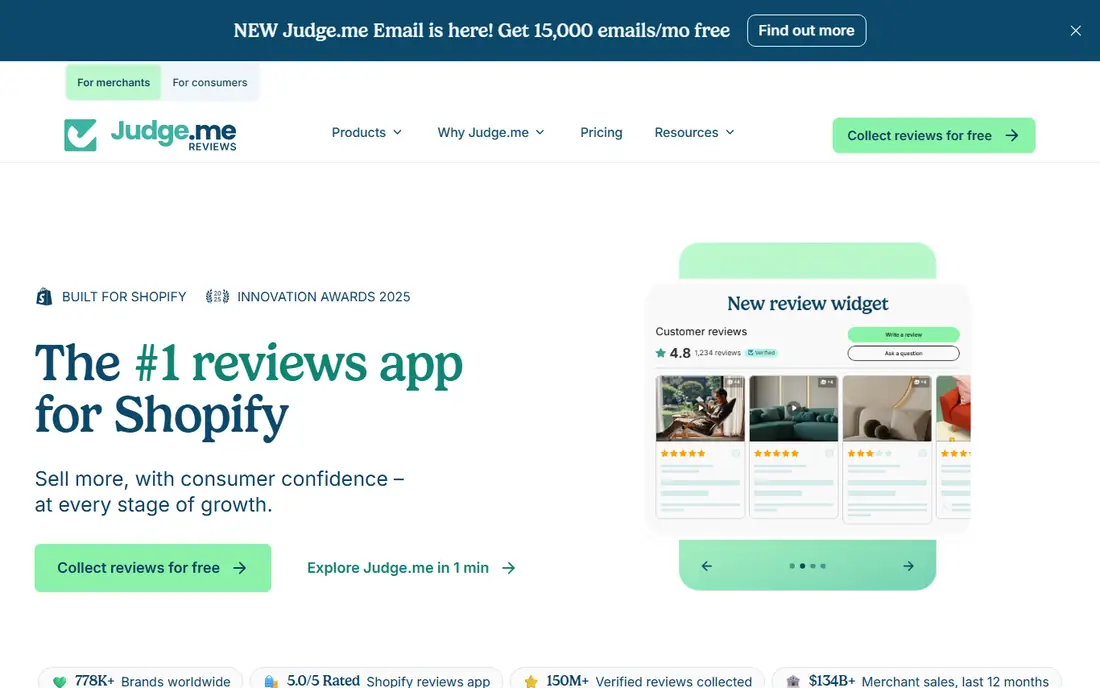
Judge.me is the most-reviewed reviews app on Shopify for good reason. It collects unlimited product and store reviews, displays them in 16 widgets, and syndicates ratings to Google Shopping, rich snippets, TikTok Shop, Meta Shop, and the Shop app. AI summaries help shoppers decide fast, and replies plus translation cover international stores.
Pricing is refreshingly plain: free to start, with everything at 15 dollars per month. For most Shopify stores, Judge.me is our pick for the best mix of price, features, and scale.
- Unlimited review collection
- AI summaries and replies
- Syndication to Google and social shops
- Design customization is solid but less flashy than visual-first rivals
Loox
Ideal for: Photo and video reviews
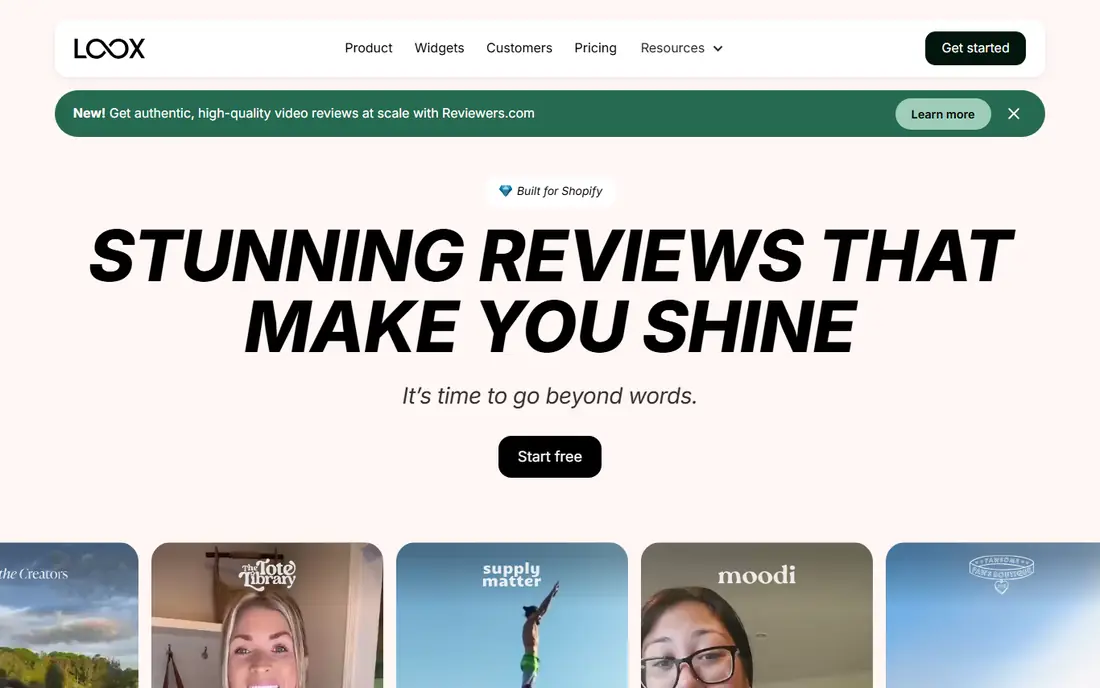
Loox is built around one idea: reviews with photos and videos sell better than text alone. It times requests and incentives to maximize visual submissions, then displays them in widgets that match your brand from homepage to checkout. AI sorts top reviews, highlights persuasive phrases, and translates for international shoppers.
There is no permanent free plan, so budget for a subscription from the start. For fashion, beauty, home, and other visual categories, Loox is our pick for the most persuasive review displays.
- Visual reviews with photo and video
- Smart request timing
- Referrals and discounts built in
- No permanent free plan
- Visual focus may be more than simple stores need
Yotpo
Ideal for: Reviews plus loyalty
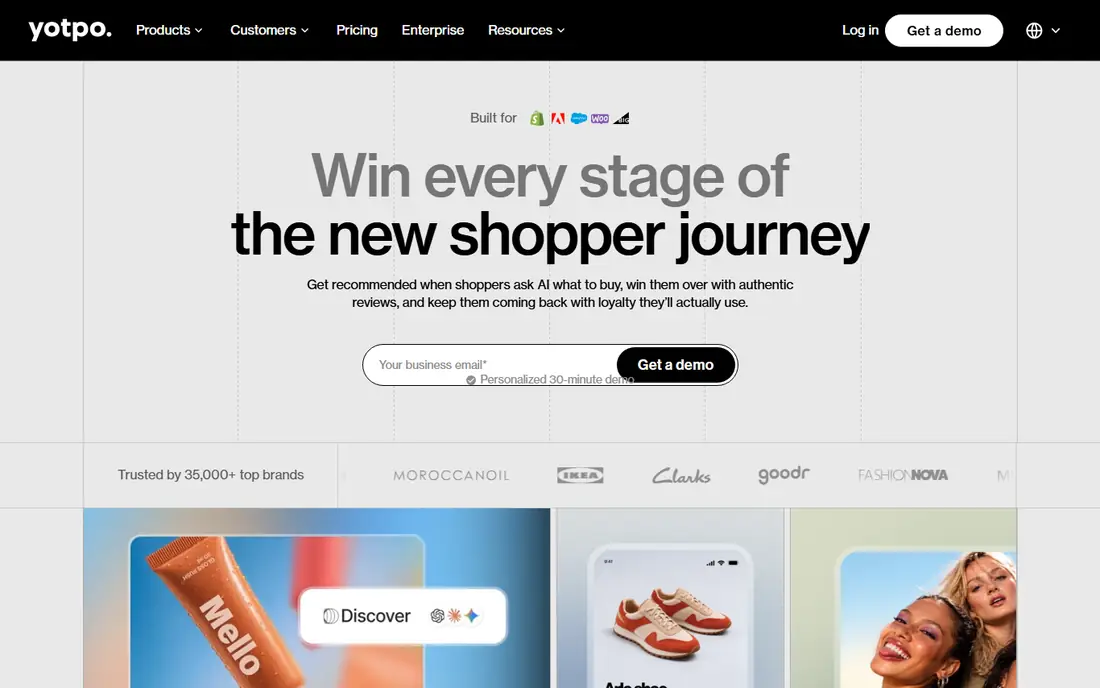
Yotpo goes beyond reviews into loyalty, referrals, and AI visibility, helping brands turn reviewers into repeat buyers. Reviews feed AI summaries and insights, while loyalty rewards keep top reviewers coming back. With over 180 integrations, it fits into most marketing stacks.
Pricing is quoted and the platform suits growing and larger brands more than new stores. If you want reviews as part of a wider retention strategy, Yotpo is a strong platform pick.
- Reviews, loyalty, and referrals in one platform
- AI summaries
- Wide integrations
- Pricing is quoted
- Platform breadth suits larger brands
Stamped
Ideal for: Reviews, loyalty, and repeat
Stamped connects reviews with loyalty and repeat purchase automation, so a review becomes one step in a longer customer journey. Brands can reward reviewers, trigger replenishment flows at the right moment, and use review data in merchandising. Integrations cover Google, Meta, Klaviyo, and other core tools.
Like Yotpo, it is priced by quote and aimed at growing brands. For stores focused on repeat revenue, Stamped ties reviews to retention better than most single-purpose apps.
- Connected reviews, loyalty, and repeat flows
- Strong retention focus
- Many integrations
- Pricing is quoted
- Breadth may be more than small stores need
Okendo
Ideal for: Customer marketing platform
Okendo calls itself a customer marketing platform, and reviews are one part of a wider toolkit that includes quizzes, surveys, loyalty, and referrals. Quizzes give product recommendations that convert browsers, while surveys collect the insights behind purchases. Plans start at 19 dollars per month.
The breadth means setup takes more thought than a reviews-only app. For Shopify brands that want reviews, quizzes, and loyalty in one place at a clear starting price, Okendo is a good value pick.
- Reviews plus quizzes, surveys, loyalty, and referrals
- Plans from 19 dollars per month
- Strong Shopify focus
- Broader platform takes longer to set up
- Entry plan limits some features
REVIEWS.io
Ideal for: Reviews plus reputation tools
REVIEWS.io covers both company reviews about your business and product reviews about what you sell, which helps stores that sell on trust as much as on products. Video reviews, custom invitation flows, a reputation manager, and AI replies round out a complete toolkit. Reviews you collect are yours to export, which matters if you ever switch platforms.
Plans are based on invitation volume with a 14-day free trial, so check costs against your order volume. For brands that want reputation management alongside product reviews, REVIEWS.io is a solid choice.
- Company and product reviews
- Video reviews
- Reputation manager and AI replies
- Pricing varies by invitation volume
- 14-day trial is short for slow seasons
Fera
Ideal for: Simple trusted reviews
Fera focuses on reviews shoppers trust, with photo and video at the top of widgets, reviewer verification, and imports from Facebook, Google, and Etsy. Setup is no-code and quick, with widgets that look good out of the box and moderation tools for what appears on your site. A free plan lets small stores start without cost.
Its ecosystem is smaller than the biggest platforms, and advanced features sit on paid plans. For stores that want simple, trustworthy reviews without complexity, Fera is an easy recommendation.
- Photo and video reviews
- Verification features
- Easy no-code setup
- Works on Shopify, Wix, and BigCommerce
- Smaller ecosystem than Yotpo or Judge.me
- Advanced features need paid plans
Ryviu
Ideal for: Free plan and review imports
Ryviu helps new and growing stores build social proof fast, with review importing alongside collection and display. A free plan makes it accessible for stores just starting out, and support for both Shopify and WooCommerce suits sellers on more than one platform.
Premium platforms offer deeper loyalty, analytics, and automation. For a store that needs credible reviews quickly on a tight budget, Ryviu is a practical starting point, with care needed to moderate imported reviews.
- Free plan available
- Review importing for new stores
- Works with Shopify and WooCommerce
- Less depth than premium platforms
- Import-heavy approach needs moderation care
How we picked these
We compared official feature pages, pricing pages, and app store listings, and we checked that every homepage loads and belongs to the product named. We favored apps with verified review collection, flexible widgets, and syndication to search and social channels. We did not claim hands-on testing, and we left prices as "See website" where the vendor does not publish a clear starting price.
What to check before you choose
Start with collection, not display. A beautiful widget means nothing without reviews, so check request timing, reminders, incentives, and import options. Photo and video requests need extra care, since customers need a reason to share media.
Next, check where reviews appear. Product pages matter most, but Google stars, Shop app listings, and social shops extend trust to new shoppers. Confirm syndication for the channels you actually sell on.
Finally, watch total cost as you grow. Some apps price by orders or invitations, so a cheap starter plan can rise fast. Compare your monthly order volume against each pricing page before you commit.
Before you commit to one option, spend a short trial period with your top two choices from this list. Use each one for a real task from your own work or daily routine, not just a demo, and note where you get stuck, what feels slow, and which features you actually open twice. Check the official pricing page again at that point, since free plans and paid tiers change, and confirm that the plan you need covers the users, projects, or devices you will use. Read the privacy and support pages too, especially for tools that hold personal or work data, and confirm how to export your work if you later switch. A tool that fits your routine in a two-week trial is a far better choice than a more powerful option you avoid opening, so let daily use, not a feature list alone, decide your final pick for best shopify apps for reviews.
Frequently asked questions
What is the best Shopify reviews app overall?
Judge.me is our pick for most stores, thanks to unlimited collection, AI features, and a clear 15 dollar per month full plan. Loox leads for visual categories, while Yotpo, Stamped, and Okendo suit brands wanting loyalty too.
Is there a free Shopify reviews app?
Yes, Judge.me, Fera, and Ryviu offer free plans, though limits vary. Free plans suit new stores, while growing stores usually need a paid plan for volume and features.
How do I get more product reviews?
Send requests at the right time after delivery, keep the form short, and add one reminder. Incentives and photo requests help, but keep them honest and never pay only for positive reviews.
Can I import reviews from another platform?
Yes, several apps here support imports, including Judge.me, Fera, and Ryviu. Check format support and moderation tools, since imported reviews still need to meet platform rules.
Do review apps help with Google stars?
Yes, many apps syndicate verified reviews to Google Shopping and support rich snippets for seller ratings. Confirm Google integration on the app's page, since eligibility rules vary.
How do I pick between the free and paid plans in this list?
Start with the free plan or trial for any best shopify apps for reviews option that offers one, and use it for at least two weeks on real tasks. Upgrade only when you hit a clear limit, such as a missing feature, a user cap, or a storage limit, rather than paying on day one for features you may never use. Compare the paid tier against the next option in this list as well, since a different tool's free plan may already cover what the first tool charges for.