Best SIEM Platforms for Modern Security Operations

- 1
 Splunk Enterprise SecurityLarge enterprises with big log volumesVisit
- 2
 Microsoft SentinelAzure and Microsoft 365 shopsVisit
- 3
 IBM QRadar SIEMRegulated enterprises with on-premises needsVisit
- 4
 Elastic SecurityEngineering-led teams wanting published per-GB pricingVisit
- 5
 LogRhythm SIEMSelf-hosted SIEM with strong compliance reportingVisit
- Six of the eight platforms in this guide publish no price, so expect a quote for Splunk Enterprise Security, IBM QRadar SIEM, LogRhythm SIEM, Securonix, Google Security Operations, and Sumo Logic Cloud SIEM.
- Microsoft Sentinel is the clearest on price, at $4.30 per GB ingested on pay-as-you-go in East US, and Elastic Security publishes a serverless rate from $0.09 per GB ingested.
- Cloud-native SIEMs such as Sentinel, Google Security Operations, and Sumo Logic suit teams that want no infrastructure to run, while Splunk, QRadar, and LogRhythm suit teams that need self-managed or on-premises deployment.
- Behaviour analytics and user and entity behaviour analytics now sit at the centre of modern SIEM, with Elastic, Securonix, Google Security Operations, and LogRhythm all building it into their platforms.
- Detection rule limits, retention periods, and ingest metering differ widely, so model your daily log volume before you shortlist, and ask for a written quote based on that volume.
Quick comparison
| Product | Ideal for | Price from | Free version | |
|---|---|---|---|---|
| Splunk Enterprise Security | Large enterprises with big log volumes | quote only | No | Visit |
| Microsoft Sentinel | Azure and Microsoft 365 shops | $4.30 per GB ingested (pay-as-you-go) | Free trial (31 days) | Visit |
| IBM QRadar SIEM | Regulated enterprises with on-premises needs | quote only | No | Visit |
| Elastic Security | Engineering-led teams wanting published per-GB pricing | $0.09 per GB ingested | Free trial (14 days) | Visit |
| LogRhythm SIEM | Self-hosted SIEM with strong compliance reporting | quote only | No | Visit |
 Securonix | Enterprise teams wanting UEBA and predictable spend | quote only | No | Visit |
 Google Security Operations | Google Cloud teams wanting fast search at scale | quote only | No | Visit |
 Sumo Logic Cloud SIEM | Cloud-native teams combining logs and security | quote only | Yes | Visit |
The best SIEM platforms for modern security operations
Splunk Enterprise Security
Ideal for: Large enterprises with big log volumes
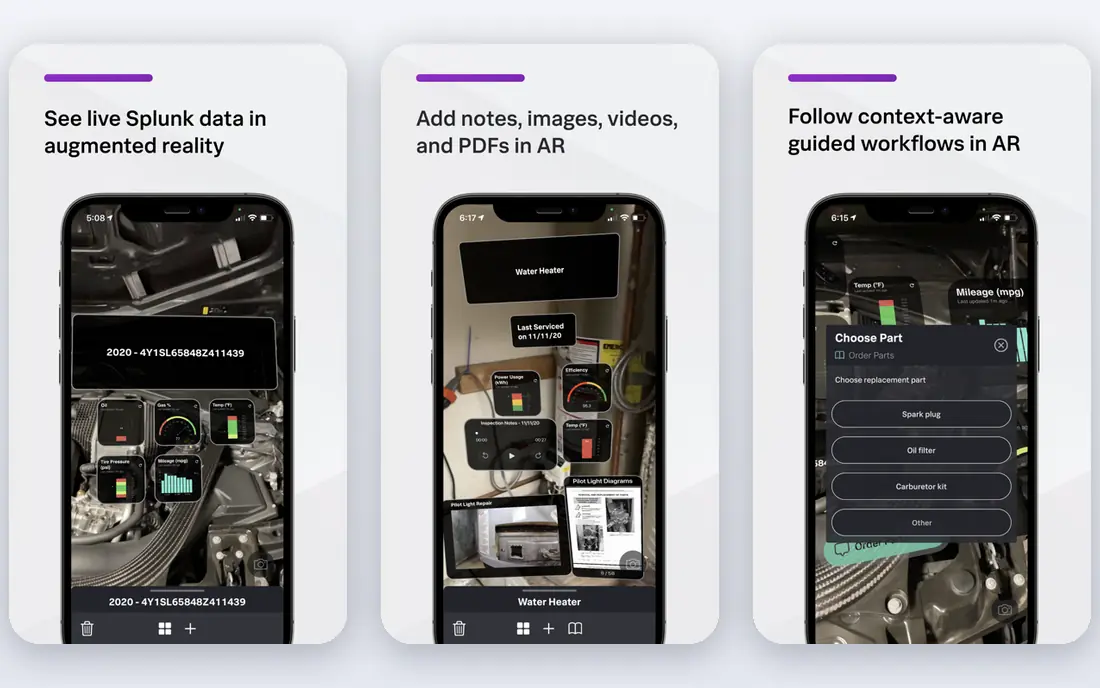
Splunk Enterprise Security is the SIEM layer that runs on Splunk Cloud Platform or Splunk Enterprise, and it is one of the most widely deployed SIEMs in large organisations. It brings SIEM, SOAR, user and entity behaviour analytics, threat intelligence, and detection engineering into one platform, with Essentials for human-led defence and Premier adding autonomous response and automated threat analysis.
The trade-off is cost and complexity. Splunk publishes no price for Enterprise Security, and both editions lead to a quote on the vendor pricing page. You also need the underlying Splunk platform licence, so the total bill covers platform plus SIEM. Pricing can use activity-based, workload, or ingest models, and the right model depends on how much data you ingest and how much you search. Teams that already run Splunk for log management often find Enterprise Security the natural next step, while teams starting fresh should get a written quote based on daily ingest volume.
- Deep search and correlation across huge log volumes
- Two editions, Essentials and Premier, cover SIEM, SOAR, UEBA, and threat intelligence
- Needs a separate Splunk platform licence underneath it
- Pricing across activity-based, workload, and ingest models is hard to forecast before a quote
Microsoft Sentinel
Ideal for: Azure and Microsoft 365 shops
Microsoft Sentinel is Microsoft cloud-native SIEM, built on Azure Log Analytics, and it is the natural SIEM for organisations that already run Microsoft 365, Entra ID, and Defender. It ingests data from Microsoft sources and hundreds of third-party connectors, applies analytics rules and threat intelligence, and gives analysts investigation graphs, notebooks, and automation playbooks. A data lake tier handles high-volume, low-value logs such as firewall and proxy data at a lower cost, while the analytics tier holds high-value security data for real-time detection.
Pricing is the clearest in this guide. Microsoft lists pay-as-you-go at $4.30 per GB ingested in East US, with commitment tiers from 100 GB a day at $296 a day, and a 50 GB a day promotional tier in public preview until 31 December 2026. The first 90 days of analytics tier retention are included. The main risk is volume, because every GB counts, so plan which sources go to the analytics tier and which go to the data lake before you switch it on.
- Cloud-native SIEM with no infrastructure to run
- Published per-GB pricing and commitment tiers that cut the rate by up to 52 percent
- The bill grows with every GB ingested, so noisy sources need filtering
- Related Azure services such as Logic Apps and Machine Learning bill separately
IBM QRadar SIEM
Ideal for: Regulated enterprises with on-premises needs
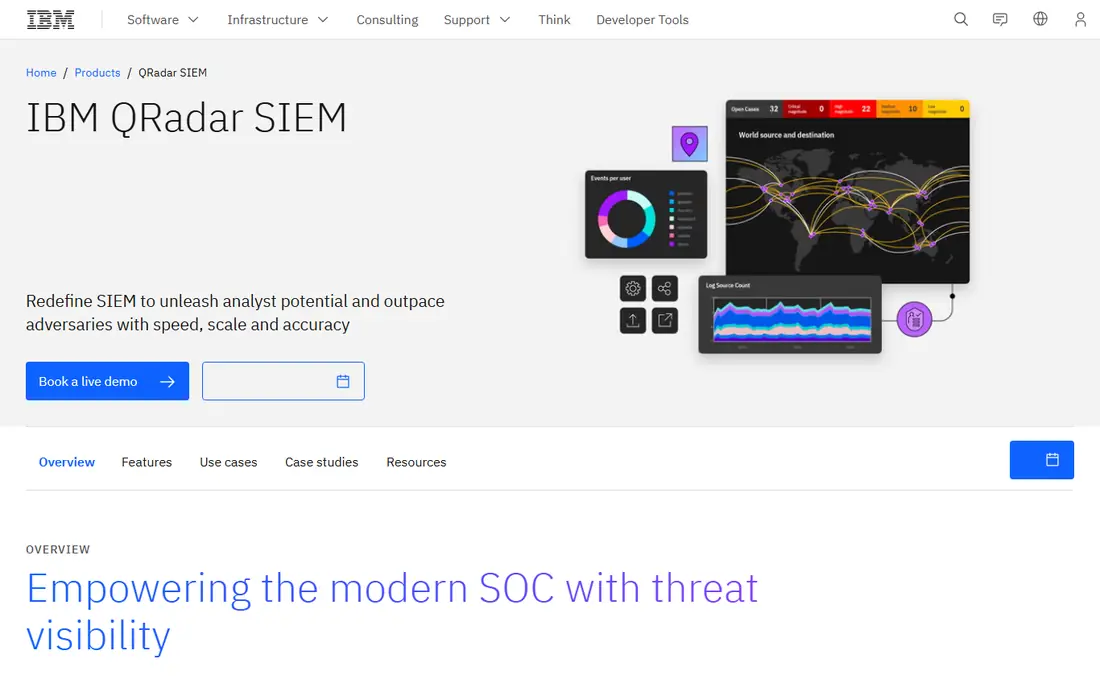
IBM QRadar SIEM is a long-standing enterprise SIEM that collects log events and network flows, correlates them into offences, and adds user behaviour analytics to flag insider threats and compromised accounts. It suits regulated industries and large enterprises with complex estates, because it supports hardware appliances, virtual appliances, and managed service deployment, and it covers a wide range of data sources out of the box. The Enterprise model licenses by Managed Virtual Server count and allows unlimited log events, while the Usage model licenses by Events per Second and Flows per Minute.
IBM publishes no dollar price for QRadar SIEM, so the platform is quote only, and buyers should ask for pricing under both licensing models to see which fits their estate. The vendor pricing page confirms the two models and the choice of subscription or perpetual licensing for on-premises deployments. On-premises control is a strength for teams with strict data residency rules, but it also means the buyer manages appliances, upgrades, and capacity planning.
- Broad data source support across logs, flows, and cloud data
- User behaviour analytics and offence management built in
- No published price, and EPS and Flows per Minute licensing makes cost hard to predict
- On-premises deployment needs appliance management
Elastic Security
Ideal for: Engineering-led teams wanting published per-GB pricing
Elastic Security is the SIEM built on Elasticsearch, and it suits engineering-led teams that want fast search, open integrations, and a price they can model before the first sales call. On Elastic Cloud Serverless, Security Analytics Essentials covers traditional SIEM needs, with prebuilt detection rules, machine learning, triage and hunting workflows, threat intelligence integration, and endpoint protection. Security Analytics Complete adds entity analytics and UEBA, threat intelligence management, the Elastic AI Assistant, and agentic workflow automation.
The vendor pricing page lists Essentials ingest from $0.09 per GB and retention from $0.017 per GB per month, with Complete at $0.11 per GB ingested and $0.019 per GB retained per month. Since 23 March 2026, Elastic charges no per-endpoint fees on serverless, so the bill follows data volume. Self-managed Elastic is free to download, with the Enterprise subscription sold by quote.
- Published serverless rates from $0.09 per GB ingested, with no per-endpoint fees
- Self-managed deployment suits air-gapped environments
- Ingest plus retention charges add up at high volume
- Advanced analytics and the AI Assistant sit in the Complete tier, not Essentials
LogRhythm SIEM
Ideal for: Self-hosted SIEM with strong compliance reporting
LogRhythm SIEM, now part of Exabeam, is a self-hosted SIEM built for teams that want to keep data inside their own data centre or private cloud. It ingests and normalises telemetry from nearly 1,000 prebuilt sources, applies more than 1,100 prebuilt correlation rules mapped to MITRE ATT&CK and compliance mandates, and adds LogRhythm Intelligence for behavioural analytics. The unified threat detection, investigation, and response workbench gives analysts repeatable workflows and an in-place OpenSearch migration path for drilling from events to raw logs.
Compliance is the clearest strength. Prebuilt dashboards cover ISO 27001, PCI DSS, GDPR, HIPAA, SOX, NIST CSF, NIST 800-53, NIST 800-171, CIS Controls, and COBIT, which suits healthcare, finance, and government teams. The product page states that pricing is by software subscription or perpetual licence, with a True Unlimited Data Platform model, and that buyers should contact a sales representative for details. Teams that need a cloud-native SIEM should look at Exabeam New-Scale Fusion instead.
- More than 1,100 prebuilt correlation rules mapped to MITRE ATT&CK
- Audit-ready compliance reporting across many frameworks
- Self-hosted only, with no cloud-native option
- Pricing is by quote, with no published starting figure
Securonix
Ideal for: Enterprise teams wanting UEBA and predictable spend
Securonix is a cloud-native SIEM and security analytics platform that combines SIEM, user and entity behaviour analytics, SOAR, and threat intelligence in one software-as-a-service platform. It has a long history in financial services and healthcare, where behaviour analytics matter for catching insider threats and subtle attacks that rule-based detection misses. The vendor positions its pricing around measurable SOC outcomes such as analyst productivity, investigation throughput, and response speed, rather than charging equally for every gigabyte of data.
That outcome-based model is attractive if your main problem is alert volume and analyst time, but it also means there is no published rate to model before a sales conversation. Securonix does not publish pricing, and it lists no free plan or free trial, so buyers start with a demo request. Ask for the quote to name the SIEM, UEBA, SOAR, and retention components separately, and ask how long-term retention is priced, because Securonix includes long-term retention in its platform pitch.
- Cloud-native SIEM with UEBA, SOAR, and threat intelligence in one platform
- Pricing tied to SOC outcomes rather than raw data volume
- No published price and no free plan or trial listed, so evaluation starts with a demo request
- Enterprise positioning means a high entry cost
Google Security Operations
Ideal for: Google Cloud teams wanting fast search at scale
Google Security Operations, formerly Chronicle, is Google cloud-native SecOps platform, combining SIEM, SOAR, and threat intelligence in one console. It is built for speed at scale, with fast search across large volumes of security telemetry, threat-centric case management, and automatic entity stitching during investigations. The platform includes curated detections maintained by Google threat researchers, custom detection authoring in YARA-L, data pipeline management for routing and filtering telemetry, and SOAR playbooks across more than 300 integrations.
Pricing is quote only. Google sells Standard, Enterprise, and Enterprise Plus packages, priced on ingestion, and every package on the product page says contact sales for pricing. Standard includes base SIEM and SOAR, 12 months of hot retention, more than 700 parsers, and 300 plus SOAR integrations, with a detection engine capped at 1,000 single-event and 75 multi-event rules. Enterprise adds UEBA, curated threat intelligence, and Gemini assistance, while Enterprise Plus adds applied threat intelligence from Mandiant and VirusTotal.
- Very fast search across huge telemetry volumes, with 12 months of hot retention included
- Curated detections and Gemini AI assistance built in
- All three packages say contact sales for pricing
- Standard caps the detection engine at 1,000 single-event and 75 multi-event rules
Sumo Logic Cloud SIEM
Ideal for: Cloud-native teams combining logs and security
Sumo Logic Cloud SIEM is the security layer of the Sumo Logic platform, which combines log analytics, metrics, and security monitoring in one cloud-native service. It suits cloud-native DevOps and SecOps teams that want one place for logs, metrics, and security events, with native integrations for AWS, Azure, Google Cloud, and Kubernetes. The SIEM includes an insight rules engine with more than 900 out-of-the-box rules, entity timelines and relationship graphs, UEBA behavioural models, MITRE ATT&CK coverage, and Cloud SOAR playbooks for automated response.
The pricing page shows Enterprise Suite as the SIEM-led package, with unlimited users and SIEM log ingest as a separate product variable, but it publishes no dollar price, so the platform is quote only. Sumo Logic licenses by credits, with tiered and Flex options, and SIEM-bound data is metered separately from the standard credit pool, so ask for that line item in writing. A free plan exists for small-scale use, which gives teams a way to test the query language and dashboards before committing. That trial period also lets a small team check query speed and dashboard quality against real cloud logs.
- Cloud-native platform covering log analytics, metrics, and SIEM in one place
- Free plan gives small teams a no-cost start
- SIEM ingest is metered separately from standard credits, which complicates cost planning
- No dollar price appears on the vendor pricing page
How we chose
We compared vendor pricing pages, product pages, and documentation for all eight platforms on 11 November 2026. We checked which vendors publish a price and which ask for a quote, and we marked every unpublished price as quote only rather than repeating third-party estimates as fact. We compared SIEM features that matter to a modern security operations centre: log and flow collection, correlation and detection rules, behaviour analytics, threat intelligence, SOAR automation, deployment options, retention, and search speed. We did not run hands-on tests, ingest test logs, or negotiate quotes, so feature claims here come from vendor documentation.
What to check before you buy
Check your daily ingest volume first, because most SIEM bills follow data volume, and a noisy source can double the bill. Ask each vendor to price your real volume, with your retention period, and to name the metering unit in writing, whether GB ingested, Events per Second, Managed Virtual Servers, or credits. Check which sources are included and which cost extra, and ask whether the data lake or a lower tier can hold low-value logs at a lower rate. Confirm detection content, including how many prebuilt rules ship, whether threat intelligence is included or an add-on, and whether behaviour analytics needs a higher tier. Check deployment fit, because a cloud-native SIEM removes infrastructure work, while a self-hosted SIEM keeps data inside your perimeter. Confirm retention, data residency, and export options, and run a proof of value on your own logs before you sign.
| Team size and budget | Best fit | Why | Watch out | | 1 to 10 people, under $25,000 a year | Elastic Security, Sumo Logic Cloud SIEM | Published per-GB rates or a free plan, with fast onboarding | Elastic retention charges add up; Sumo SIEM ingest is metered separately | | 10 to 50 people, $25,000 to $100,000 a year | Microsoft Sentinel, LogRhythm SIEM | Clear per-GB pricing or strong compliance reporting for regulated teams | Sentinel bills grow with volume; LogRhythm is self-hosted only | | 50 to 200 people, $100,000 to $250,000 a year | Google Security Operations, Securonix | Fast search at scale or UEBA-led detection for larger SOCs | Both are quote only, so budget needs a sales conversation | | 200 or more people, over $250,000 a year | Splunk Enterprise Security, IBM QRadar SIEM | Proven enterprise SIEM depth and broad data source support | Both need a platform or appliance base, and pricing is by quote |
Frequently asked questions
What is a SIEM platform?
A SIEM platform collects logs and security events from servers, endpoints, cloud services, identity systems, and network devices, then normalises, correlates, and analyses that data to detect threats. It gives analysts one console for alerts, investigation, and response, and it keeps the underlying data for audit, compliance, and forensic review.
Which SIEM is best for a small security team?
Microsoft Sentinel and Elastic Security suit small teams, because Sentinel publishes a per-GB price and offers a 31-day trial, while Elastic publishes serverless rates from $0.09 per GB ingested. Sumo Logic also offers a free plan. The right pick depends on your cloud mix, your daily log volume, and whether your team wants a vendor-run service.
Do I need a separate SOAR tool with a modern SIEM?
Most platforms in this guide include SOAR or automation already, including Splunk Enterprise Security Premier, Sentinel playbooks, Google Security Operations, Securonix, and Sumo Logic Cloud SOAR. Check whether automation is included in your tier, because some vendors gate SOAR or UEBA behind a higher edition, and confirm which integrations your playbooks need.
How much does a SIEM cost?
Only two vendors here publish a starting rate: Sentinel at $4.30 per GB ingested on pay-as-you-go in East US, and Elastic Security from $0.09 per GB ingested on serverless. The other six are quote only. Always get a written quote based on your daily ingest volume, retention period, and user count before you budget.
Can a SIEM replace my endpoint detection and response tool?
No, a SIEM complements endpoint detection and response rather than replacing it. The endpoint tool detects and contains threats on the device, while the SIEM correlates those alerts with identity, cloud, and network data to show the full attack. Several platforms in this guide, including Elastic and Splunk, bundle endpoint protection with the SIEM.
Sources
- https://www.splunk.com/en_us/products/pricing.html
- https://azure.microsoft.com/en-in/pricing/details/azure-sentinel/
- https://www.ibm.com/products/qradar-siem/pricing
- https://www.elastic.co/pricing/serverless-security
- https://www.exabeam.com/platform/logrhythm-siem/
- https://www.securonix.com/resources/security-economics-designed-for-outcomes/
- https://cloud.google.com/security/products/security-operations
- https://www.sumologic.com/pricing