8 Best Small Business Bookkeeping Software for Clean Books

- 1
 QuickBooks OnlineWidest accountant support and a full feature setVisit
- 2
 XeroMulti-currency accounting and advisor collaborationVisit
- 3
 FreshBooksService businesses that send many invoicesVisit
- 4
 WaveFree accounting for freelancers and solopreneursVisit
- 5
 Zoho BooksA free plan with automation and multi-currencyVisit
- QuickBooks Online is the best overall pick, with the widest accountant support and a deep feature set.
- Xero suits businesses that want strong multi-currency and advisor support at a mid-range price.
- Wave and Zoho Books are the best free starting points for freelancers and micro businesses.
- Bench is the pick if you want a human bookkeeper to do the work instead of software alone.
- FreshBooks suits service businesses that invoice heavily, while Kashoo suits owners who want simple accounting.
- Sage suits growing businesses that need a heavier finance platform, though its small-business pricing is quote-based.
- Always check whether a plan includes payroll, invoicing limits, and accountant access before buying.
Quick comparison
| Product | Ideal for | Price from | Free version | |
|---|---|---|---|---|
| QuickBooks Online | Widest accountant support and a full feature set | See website | No | Visit |
| Xero | Multi-currency accounting and advisor collaboration | $27 per month | No | Visit |
| FreshBooks | Service businesses that send many invoices | See website | No | Visit |
| Wave | Free accounting for freelancers and solopreneurs | Free to use | Yes | Visit |
| Zoho Books | A free plan with automation and multi-currency | Free to use | Yes | Visit |
 Bench | Done-for-you bookkeeping by a dedicated bookkeeper | $199 per month | No | Visit |
 Sage | Growing businesses that need a heavier finance platform | See website | No | Visit |
 Kashoo | Simple accounting for sole proprietors and self-employed owners | See website | No | Visit |
The best small business bookkeeping software
QuickBooks Online
Ideal for: Widest accountant support and a full feature set
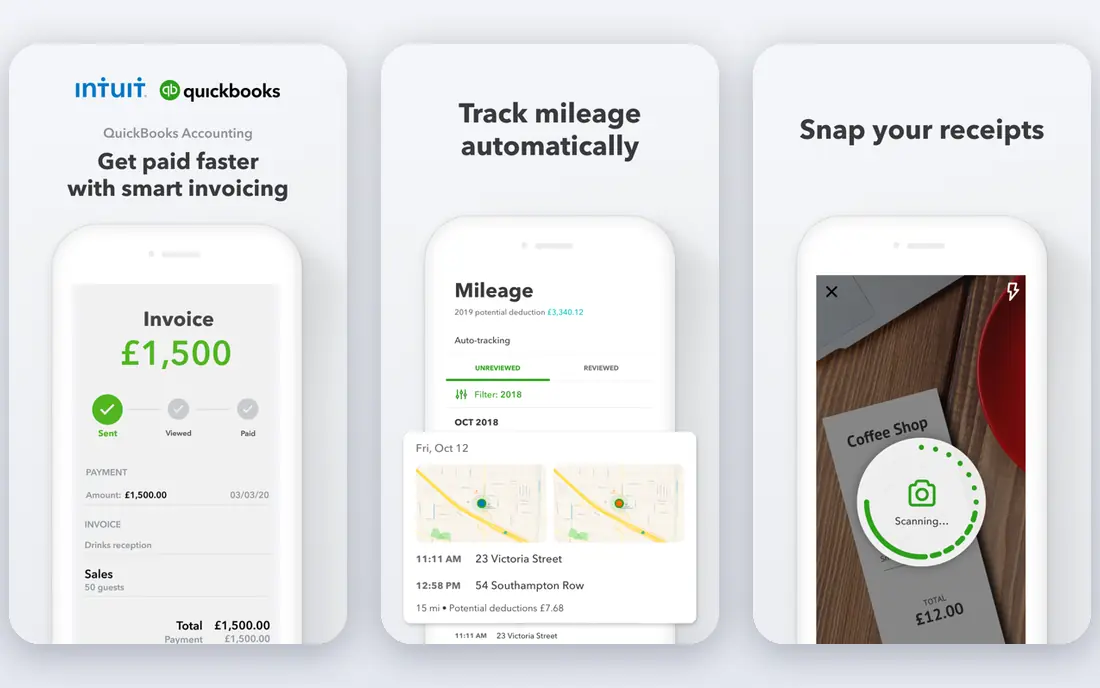
QuickBooks Online is the most widely used small-business accounting platform in the United States, and that popularity is itself a feature: most accountants know it, most apps connect to it, and most bookkeepers can step into it without training. It covers invoicing, expenses, bank reconciliation, reports, and add-ons for payroll and payments.
QuickBooks is our top pick because it removes friction when you hire help. Your accountant can take over the books, your bank feeds sync automatically, and the platform scales from a solo freelancer to a multi-employee company. Check the current plan prices on its site before buying, since offers change often.
- Huge accountant network, invoicing and expenses, payroll add-ons, more than 800 integrations, bank feeds
- Pricing varies by plan and offer, advanced features need higher tiers, learning curve for new owners
Xero
Ideal for: Multi-currency accounting and advisor collaboration
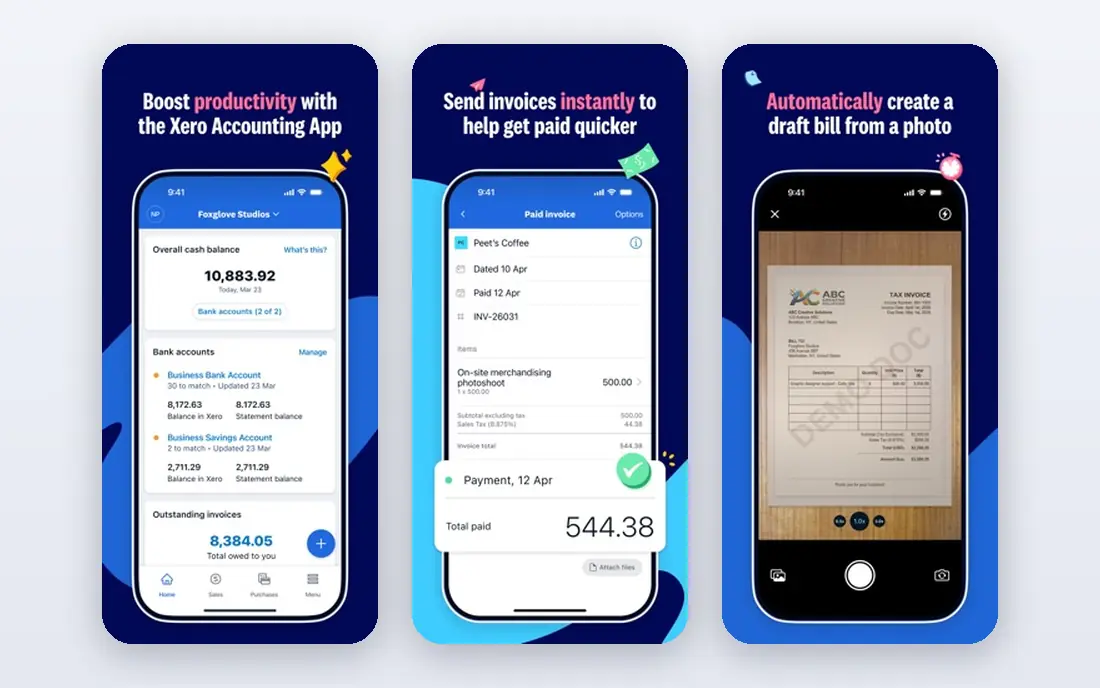
Xero is a cloud accounting platform built for small businesses, with invoicing, bank reconciliation, reports, and a network of accountants and bookkeepers who work in the platform. Its Early plan costs $27 per month after an introductory period, while Growing and Established plans add dashboards, budgeting, and multi-currency.
Xero suits owners who work with an advisor or sell internationally. The dashboard is easy to read, the bank feeds are reliable, and the advisor tools make collaboration simple. Watch the invoice and bill limits on the entry plan if you bill often.
- Clean dashboard, multi-currency on higher plans, strong advisor network, smart document capture, bank reconciliation
- Entry plan limits invoices and bills, payroll is an add-on in some regions, intro pricing rises after six months
FreshBooks
Ideal for: Service businesses that send many invoices
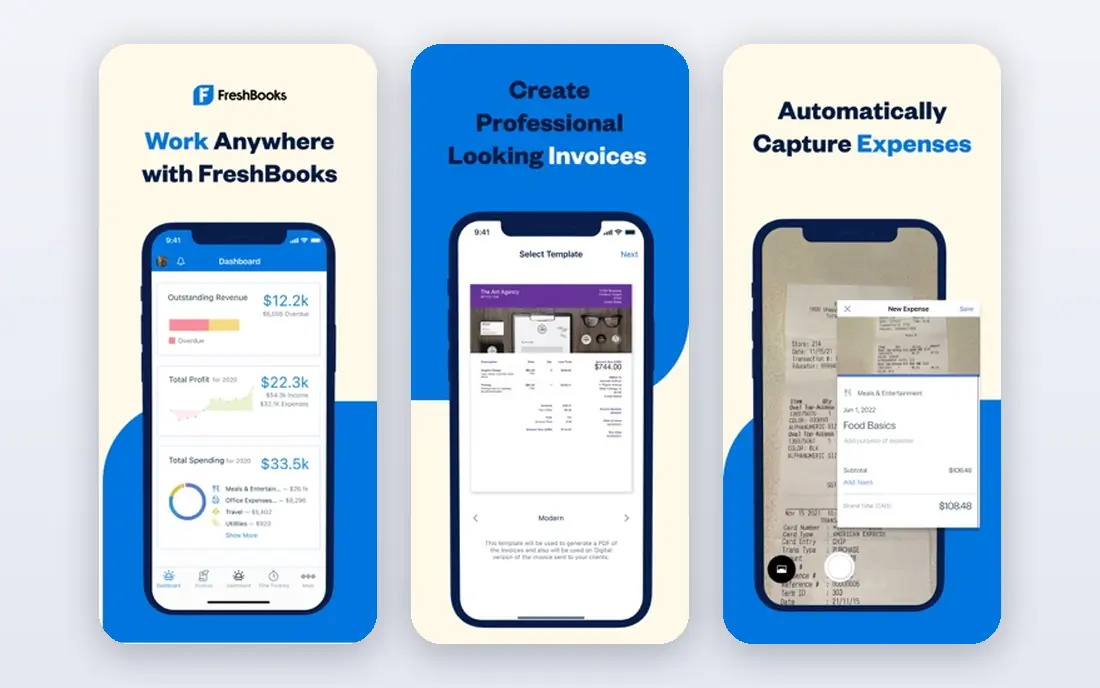
FreshBooks is an invoicing and accounting platform aimed at freelancers and service businesses, with professional invoices, expense tracking, time tracking, and a client portal. It reports more than 500,000 small businesses have used it, and its app store connects to tools like Stripe, Square, and Zapier.
FreshBooks is the best choice if invoicing is your main job: invoices look professional, payment reminders are automatic, and clients can pay online. If you need deep inventory or multi-entity accounting, a heavier platform may fit better.
- Clean invoicing, expense tracking, time tracking, client portal, more than 100 app integrations
- Accounting depth is lighter than QuickBooks or Xero, pricing varies by offer, some features need higher plans
Wave
Ideal for: Free accounting for freelancers and solopreneurs
Wave is a free accounting platform for small businesses, covering invoicing, accounting, and payments in one web-based system, with a mobile app for managing invoices on the go. Its servers use 256-bit SSL encryption, and it is a PCI-DSS Level 1 service provider for payment handling.
Wave is our pick for owners on a tight budget: the core accounting is genuinely free, and you only pay for add-ons like payroll or card payments. It suits freelancers and solopreneurs who need clean books without a monthly subscription.
- Free accounting and invoicing, bank connections, mobile app, paid add-ons for payroll and payments
- Fewer advanced features than paid rivals, support is lighter on the free plan, some features are US and Canada focused
Zoho Books
Ideal for: A free plan with automation and multi-currency
Zoho Books is an online accounting platform with invoicing, payments, banking, tax, reports, and inventory, plus automation workflows and a mobile app. Its free plan covers solopreneurs and micro businesses, while paid plans start at $15 per month billed annually and rise to $240 per month for advanced business intelligence.
Zoho Books stands out for value: the free plan is usable, not a demo, and the paid tiers add real depth, including multi-currency and project tracking. It is a strong choice if you already use other Zoho tools, since the suite shares data well.
- Free plan for micro businesses, paid plans from $15 per month, multi-currency, automation workflows, mobile apps
- Free plan has limits, some features need higher tiers, interface takes time to learn
Bench
Ideal for: Done-for-you bookkeeping by a dedicated bookkeeper
Bench is different from the rest of this list: instead of software you run yourself, you get a dedicated bookkeeper who does your books each month, with a simple online portal to view your financials. Its Bookkeeping Light plan costs $199 per month for businesses with $250,000 or less in annual revenue, while full bookkeeping costs $399 per month and bookkeeping plus tax costs $649 per month.
Bench suits owners who hate bookkeeping and can afford to hand it off. You still review the books, but the reconciliation and categorization are done for you, and catch-up is free with an annual plan. If you prefer to control every entry yourself, choose software instead.
- Dedicated bookkeeper, monthly books and year-end financials, tax filing add-ons, catch-up service, QuickBooks support
- Pricier than software alone, less hands-on control, monthly plans need a commitment for some bundles
Sage
Ideal for: Growing businesses that need a heavier finance platform
Sage is a finance software company whose flagship platform, Sage Intacct, serves scaling and mid-sized teams with automated multi-entity accounting, real-time visibility, and built-in audit trails. Its homepage focuses on finance teams rather than solo owners, and pricing is by request rather than published list prices.
Sage belongs on this list for businesses outgrowing a simple tool: if you run multiple entities, need approval workflows, or want a faster close, Sage has the depth. For a solo freelancer, it is more than you need, so start with a lighter tool and move up when the complexity demands it.
- Deep finance features, multi-entity support, audit trails, AI automation, strong industry coverage
- Pricing is quote-based for the main platform, heavier than a small business needs, setup takes longer
Kashoo
Ideal for: Simple accounting for sole proprietors and self-employed owners
Kashoo is a simple online accounting tool for sole proprietors and self-employed owners, with bank transaction imports, invoicing, expense and bill tracking, sales tax, projects, and multi-currency. It offers unlimited users at no extra cost, so your accountant and bookkeeper can access the same books, and a 14-day free trial with no credit card required.
Kashoo suits owners who want accounting that stays out of the way: the interface is plain, the features cover the basics well, and unlimited users make collaboration cheap. Check the current price on its site, since the homepage does not list it.
- Simple interface, bank feeds via Plaid, unlimited users, multi-currency, receipt uploads, 14-day free trial
- Smaller ecosystem than QuickBooks or Xero, pricing not shown on the homepage, fewer integrations
How we picked these
We compared official homepages, feature pages, and pricing pages for bookkeeping software live in October 2026. We favored tools with real bank feeds, invoicing, reports, and accountant access, and we included both do-it-yourself software and a done-for-you service. We kept only products whose official homepages we could load and confirm, and we used only prices shown on those pages; where a price was not shown, we wrote "See website" rather than guessing. We did not claim hands-on testing, and we treated vendor claims about time saved or user counts as claims, not verified results.
Choosing the right bookkeeping software
Start with how you work, not with the feature list. If you send many invoices to clients, FreshBooks or Wave will feel natural. If you work with an accountant, QuickBooks or Xero will make their life easier, since both have large advisor networks. If you hate bookkeeping entirely, Bench removes the job from your plate, though at a higher monthly cost.
Check the details that cause surprise bills. Entry plans often limit invoice counts, bill counts, or users, and payroll is usually an add-on. Multi-currency, inventory, and project tracking often sit on higher tiers, so map your needs before you commit. Free plans are real for Wave and Zoho Books, but read their limits to make sure your business fits.
Finally, plan for tax time from day one. Connect your bank accounts, photograph receipts as you go, and reconcile monthly rather than once a year. Clean monthly books make tax filing cheaper and faster, whichever tool you choose, and they give you a clear view of cash flow when decisions matter.
Frequently asked questions
What is the best small business bookkeeping software?
QuickBooks Online is our top pick for most small businesses, thanks to its accountant network, integrations, and feature depth. Wave is the best free option, while Bench is best if you want a human to do the books.
Is there free bookkeeping software for small businesses?
Yes. Wave offers free accounting and invoicing, and Zoho Books has a free plan for solopreneurs and micro businesses. Both charge for add-ons like payroll or payment processing, so check what your business needs beyond the free core.
Do I still need an accountant if I use bookkeeping software?
Software handles recording and reports, but an accountant adds judgment on taxes, deductions, and structure. Most tools on this list let you invite your accountant, and QuickBooks and Xero have large advisor networks to help you find one.
What is the difference between Bench and other bookkeeping software?
Bench is a service, not just software: a dedicated bookkeeper does your books each month, while tools like QuickBooks, Xero, and Wave give you software to do it yourself. Bench costs more, but it saves the time you would spend on reconciliation.
Can bookkeeping software handle payroll?
Most platforms offer payroll as an add-on or through a partner, including QuickBooks, Xero, Wave, and Zoho Books. Check whether payroll is included in your plan or priced separately, and whether it covers your state or region.
How much does small business bookkeeping software cost?
Prices range from free for Wave and the Zoho Books free plan, to $27 per month for Xero Early, $15 per month for Zoho Books Standard, and $199 per month for Bench Light. Heavier platforms like Sage are priced by quote, so check current prices before buying.