Best Small Business Computer Security Software in 2026: 7 Tools Compared

- 1
 Norton Small BusinessSimple business protectionVisit
- 2
 BitdefenderBusiness endpoint protectionVisit
- 3
 AvastFree start for small firmsVisit
- 4
 MalwarebytesSmall office device plansVisit
- 5
 CrowdStrike Falcon GoNext-gen endpoint protectionVisit
- Small business security software should cover antivirus, ransomware, phishing, web protection, and device management in one console.
- Norton, Bitdefender, Avast, Malwarebytes, and ESET suit small firms that want simple, affordable device protection.
- CrowdStrike Falcon Go and Sophos suit firms that want stronger endpoint detection, response, and managed defense.
- Our pick for most small businesses is a tool with central management, automatic updates, and clear alerts, tested on all device types.
Quick comparison
| Product | Ideal for | Price from | Free version | |
|---|---|---|---|---|
| Norton Small Business | Simple business protection | See website | Free trial | Visit |
| Bitdefender | Business endpoint protection | See website | Free trial | Visit |
| Avast | Free start for small firms | Free | Yes | Visit |
| Malwarebytes | Small office device plans | See website | Free trial | Visit |
| CrowdStrike Falcon Go | Next-gen endpoint protection | $59.99 per device per year | Free trial | Visit |
 Sophos | Managed endpoint defense | See website | Free trial | Visit |
 ESET PROTECT | Lightweight business protection | See website | Free trial | Visit |
The best small business computer security software
Small businesses face the same phishing, ransomware, and malware threats as large firms, but with fewer IT staff to manage them. Good security software therefore needs to be easy to deploy, update, and monitor from one console, with alerts that a non-specialist can act on. The best tool balances protection strength against admin time and cost per device.
We compared official product pages for security software used in the US, looking at antivirus, ransomware defense, phishing and web protection, device control, central management, and pricing. The list below covers simple suites and stronger endpoint platforms, so firms can match protection to risk and staff capacity.
Norton Small Business
Ideal for: Simple business protection
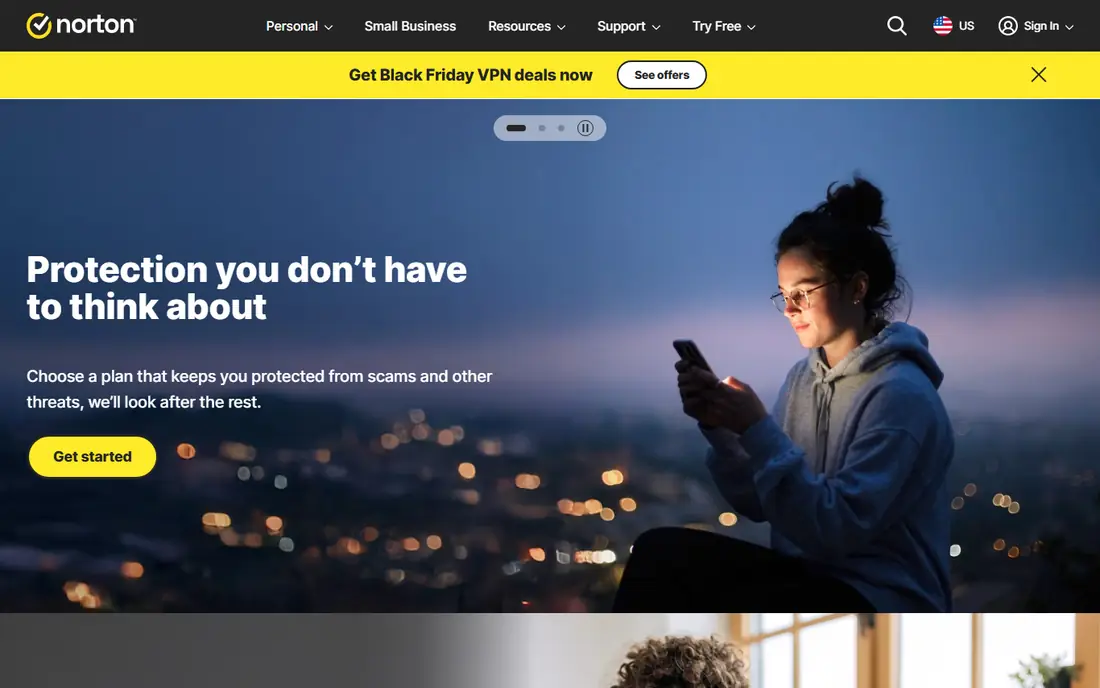
Norton offers device and privacy protection through Norton 360 plans, plus a dedicated Norton Small Business offering for protecting business devices and customer data. Its homepage highlights antivirus, malware, ransomware, and hacking protection, scam protection, VPN, dark web monitoring, password manager, and cloud backup across consumer plans, with a 60-day money-back guarantee. For a very small firm without IT staff, Norton's familiar setup and consumer-style plans are easy to start with.
The trade-off is business depth. Small business plans and central management vary by device count and tier, and firms needing endpoint detection and response should compare CrowdStrike or Sophos. Check device limits and renewal prices before buying. For simple, familiar small business protection, Norton is a solid pick.
- Familiar antivirus, scam, and privacy protection
- Small business plans
- VPN and password manager in consumer plans
- Business plan details vary by size
- Advanced endpoint detection needs higher tiers
- Renewal prices rise
Bitdefender
Ideal for: Business endpoint protection

Bitdefender provides cybersecurity for consumers, small businesses, and enterprises, with GravityZone as its business platform and GravityZone PHASR for dynamic, personalized hardening that reduces attack surface. Its homepage stresses threat prevention, detection, and response with leading efficacy, performance, and ease of use for small and medium businesses, plus recognition from analyst firms and independent testing organizations. That range lets a small firm start simple and grow into managed services.
The catch is plan selection. Bitdefender offers several business tiers, so buyers should confirm which features, such as EDR or managed detection, their plan includes. Console setup also takes some learning. For small businesses that want proven endpoint protection with room to grow, Bitdefender is a strong choice.
- Small business and enterprise options
- GravityZone platform
- Strong independent test recognition
- Plan choice can confuse
- Advanced features need higher tiers
- Console learning curve for some admins
Avast
Ideal for: Free start for small firms

Avast One offers a free start with antivirus, scam spotting, malware and ransomware blocking, cleanup, and breach alerts, plus paid plans that add VPN, AntiTrack, scam call and SMS blocking, Wi-Fi checks, and premium cleanup. Its homepage stresses starting free and adding protection as needed across PC, Mac, Android, and iOS, with top-product recognition from AV-Test and SE Labs in 2026. For a micro-business or freelancer, that free start makes Avast an easy first layer.
The trade-off is business management. Avast suits individual devices well, but firms with many endpoints and compliance needs should compare Bitdefender, ESET, CrowdStrike, or Sophos for central control. Paid plan prices and renewal terms should be checked. For a free, simple start, Avast is a practical pick.
- Free antivirus start
- Scam, malware, and ransomware protection
- VPN and privacy tools on paid plans
- Business management is thinner than endpoint platforms
- Paid plans needed for full features
- Upsell prompts on free tier
Malwarebytes
Ideal for: Small office device plans
Malwarebytes offers all-in-one protection from malware, viruses, scams, and online threats, with small business plans covering 3 devices for sole proprietors, 10 for boutique businesses, and 20 for small offices. Its homepage highlights advanced antivirus against malware and ransomware, protection from malicious websites and scams, Wi-Fi privacy, ad blocking, and coverage for PCs, Macs, Androids, and iPhones, plus a 60-day money-back guarantee on annual plans. Scam Guard and VPN add privacy and scam-checking layers.
The catch is enterprise depth. Malwarebytes suits small offices well, but firms needing full EDR, threat hunting, or managed response should compare CrowdStrike or Sophos. Device-tier pricing should be confirmed for exact counts. For small offices that want simple, strong device protection, Malwarebytes is an excellent pick.
- Small business plans for 3, 10, or 20 devices
- Strong anti-malware and web protection
- Scam guard and VPN options
- Business console is simpler than enterprise EDR
- Pricing by device tier
- Advanced identity features are paid
CrowdStrike Falcon Go
Ideal for: Next-gen endpoint protection
CrowdStrike Falcon Go is the small business bundle of the Falcon platform, offering next-gen antivirus, device control for USB and removable media, mobile device protection, and firewall management in higher bundles. Its homepage lists Falcon Go at $59.99 per device billed annually, or $7.99 per device billed monthly, with a free trial and no credit card required, plus Falcon Pro and Enterprise tiers that add firewall management, endpoint detection and response, and threat hunting. That clear per-device pricing helps small firms budget.
The trade-off is tiering. Falcon Go covers core antivirus and device control, while full EDR and managed hunting sit on higher tiers or Falcon Complete. Firms that want managed response should compare Sophos MDR or Falcon Complete. For small firms that want enterprise-grade endpoint protection at a clear price, Falcon Go is a strong pick.
- Next-gen antivirus with device and mobile control
- Cloud console
- Clear per-device pricing for small firms
- Higher tiers needed for full EDR and threat hunting
- Enterprise platform feel
- Support scope varies by bundle
Sophos
Ideal for: Managed endpoint defense
Sophos offers cyber resilience through Sophos Fusion, a defense system covering endpoint, firewall, mobile threats, and managed detection and response, with prevention designed to block threats upfront and reduce investigation time. Its homepage highlights recognition as a customers' choice vendor for endpoint, firewalls, mobile threats, and MDR, with more than 625,000 customers worldwide. That breadth suits small firms that want endpoint plus firewall and managed response from one vendor.
The catch is pricing and scope. Sophos pricing is generally by quote and module, so small firms should confirm which endpoint and MDR features their plan includes. Very small firms may prefer simpler suites such as Norton, Avast, or Malwarebytes. For firms that want managed defense depth, Sophos is a leading choice.
- Endpoint, firewall, mobile, and MDR in one defense system
- Prevention-first approach
- Broad customer base
- Pricing by quote
- Suite breadth needs module choice
- Implementation for larger setups takes planning
ESET PROTECT
Ideal for: Lightweight business protection
ESET PROTECT is the business platform from ESET, with a Core tier offering next-gen antivirus for computers, servers, mobiles, and cloud VMs, plus firewall, web, and device control, AI-powered threat analysis, and full disk encryption. Its homepage also highlights a light system footprint so employee PCs run smoothly, plus add-on packages for email and Microsoft 365 or Google Workspace protection and automated vulnerability discovery and patching. That lightweight design suits firms with older hardware or many endpoints.
The trade-off is tier choice. ESET offers several PROTECT tiers and add-ons, so buyers should map needs for email protection, patching, and response features. For small businesses that want strong protection without slowing devices, ESET PROTECT is a solid pick.
- Light system footprint
- Next-gen antivirus with firewall, web, and device control
- Email and patching add-ons
- Console and tiers need care to choose
- Advanced threat analysis is cloud-based
- Support scope varies by plan
How we picked these
We compared official product pages for security software used in the US, looking at antivirus, ransomware defense, phishing and web protection, device control, central management, and pricing. We favored tools with clear small business plans or per-device pricing over consumer-only products, and we kept a range from free starters to managed endpoint platforms. We also favored vendors with current homepages and active development in 2026.
We did not test these tools against live malware, and we did not review private contracts. Pricing, trial terms, and feature scope can change, so check the vendor site and trial each tool on your own devices before buying.
What to check before you choose
Start with device and account coverage. List every PC, Mac, phone, server, and shared device, then confirm the plan covers each type and counts personal devices used for work. Gaps in coverage are the most common small business security failure.
Next, test central management and alerts. Install on a few devices, check how updates, scans, and threats appear in the console, and confirm who gets alerts and how they act on them. A tool that only alerts on each device will miss threats when staff are away.
Finally, check phishing and backup basics. Security software helps, but staff training, multi-factor authentication, and backups matter as much. Confirm the tool's phishing, web, and ransomware features, then pair it with backups and MFA for accounts that hold business data.
Frequently asked questions
What is the best security software for a small business?
Bitdefender, ESET PROTECT, and CrowdStrike Falcon Go suit firms that want managed endpoint protection, while Norton, Avast, and Malwarebytes suit smaller firms that want simpler device protection. The best pick depends on device count, IT skill, and risk.
Is free antivirus enough for a small business?
Free antivirus helps on single devices, but businesses with customer data, multiple staff, or compliance duties should use a paid business plan with central management, web and phishing protection, and ransomware defense.
How much does small business security software cost?
Costs vary by device count and tier: CrowdStrike Falcon Go lists $59.99 per device per year, while other vendors price by plan and device tier. Ask for totals that include all devices, servers, and support.
Do I need endpoint detection and response?
Firms with sensitive data, remote staff, or regulatory duties benefit from EDR or managed detection, such as CrowdStrike Pro or Sophos MDR. Smaller, lower-risk firms may start with strong antivirus and upgrade as needs grow.
How do I manage security across many devices?
Choose a tool with a cloud console for deployment, updates, policies, and alerts, and assign one person or provider to review alerts weekly. Central management matters more than any single feature once device counts grow.