Best small hotel management software in 2026: 8 Options Compared

- 1
 Cloudbedssmall hotels and hostelsVisit
- 2
 Little Hoteliersmall properties and bed and breakfastsVisit
- 3
 Mewsmodern independent hotelsVisit
- 4
 SiteMinderproperties selling on many channelsVisit
- 5
 RoomRaccoonindependent hotels and B and BsVisit
- Cloudbeds is our pick for most readers focused on small hotels and hostels, thanks to its reservations, channel management, and a booking engine in one system.
- Pricing varies widely across this list, so check the plan you would actually buy rather than the headline price, and confirm what is included before you commit.
- Free plans and free trials are available for several options here, including SiteMinder and RoomRaccoon, but limits on users, usage, or features differ by vendor.
- Integration with tools you already use matters as much as any single feature, since a tool that does not connect well creates manual work every week.
- Run a trial with your real data and your real workflow before you pay, because a demo rarely shows the rough edges you will meet daily.
Quick comparison
| Product | Ideal for | Price from | Free version | |
|---|---|---|---|---|
| Cloudbeds | small hotels and hostels | See website | See website | Visit |
| Little Hotelier | small properties and bed and breakfasts | See website | Free trial | Visit |
| Mews | modern independent hotels | See website | See website | Visit |
| SiteMinder | properties selling on many channels | See website | Free trial | Visit |
| RoomRaccoon | independent hotels and B and Bs | See website | Free trial | Visit |
 eZee Absolute | small hotels wanting a full suite | See website | Free trial | Visit |
 HotelRunner | small properties wanting distribution | See website | See website | Visit |
 WebRezPro | small hotels and inns | See website | See website | Visit |
The best Best small hotel management software
Small hotels need the same basics as large ones, reservations, housekeeping, and channel rates, but with a small team. We compared official feature pages, pricing, and channel tools to find systems that a small property can actually run day to day.
Cloudbeds
Ideal for: small hotels and hostels
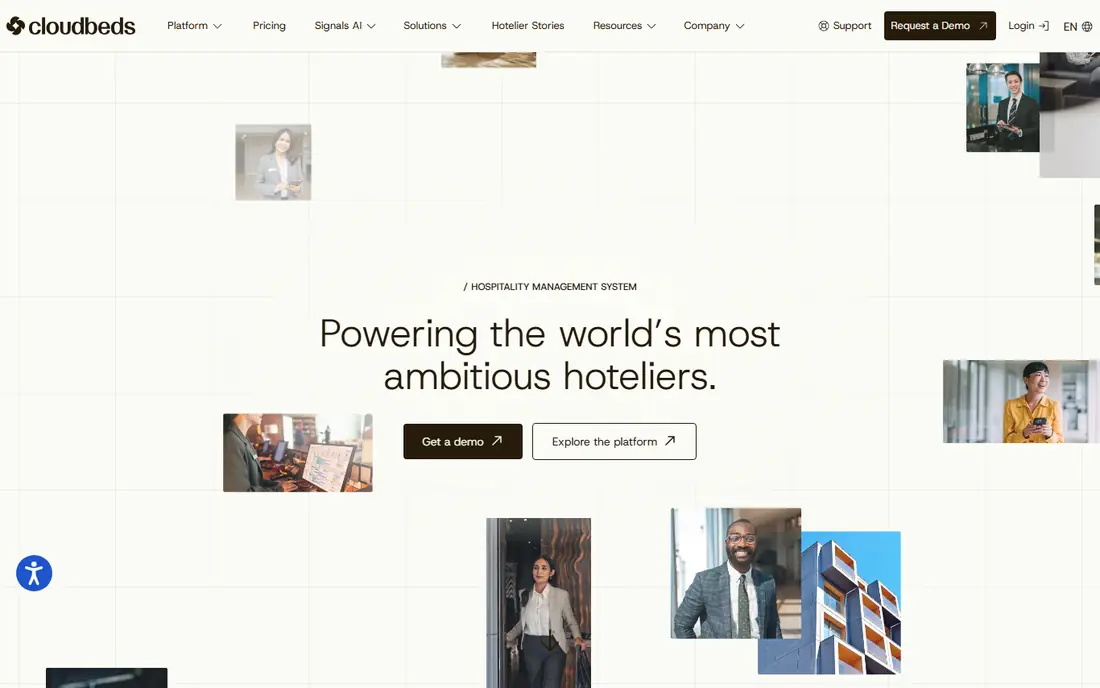
For teams focused on small hotels and hostels, Cloudbeds is a natural place to start. The vendor describes reservations, channel management, and a booking engine in one system, and that focus shows in how the product is organized: the core workflow is easy to find, and the settings that matter for small hotels and hostels are not buried under unrelated features. We compared official feature pages, pricing pages, and public reviews to place it here, rather than relying on marketing claims alone.
The honest catch: add-ons can raise the monthly cost. That does not rule it out, but it does mean you should test the exact workflow you will use daily, not just the demo path. Pricing also deserves a second look: check what is included in the plan you would actually buy, and what costs extra.
- Reservations, channel management, and a booking engine in one system
- Fits small hotels and hostels well
- Public documentation and pricing information available from the vendor
- Add-ons can raise the monthly cost
- Setup and learning time vary by team size
Little Hotelier
Ideal for: small properties and bed and breakfasts
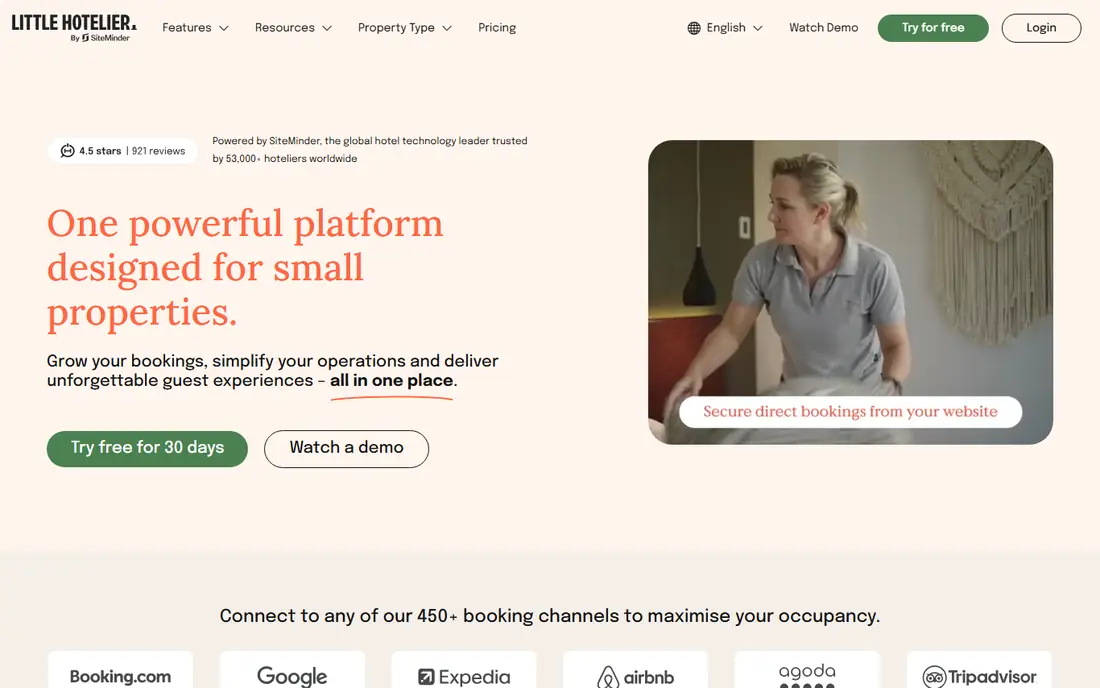
Little Hotelier stands out for small properties and bed and breakfasts, thanks to a clear focus on a simpler property system with channel connections for small teams. The vendor describes a simpler property system with channel connections for small teams, and that focus shows in how the product is organized: the core workflow is easy to find, and the settings that matter for small properties and bed and breakfasts are not buried under unrelated features. We compared official feature pages, pricing pages, and public reviews to place it here, rather than relying on marketing claims alone.
On the downside: larger hotels may outgrow it. We would still shortlist it for small properties and bed and breakfasts, but only after a trial with real data and real users. Also confirm support hours and onboarding help, since those matter more than a polished sales demo once the tool is live.
- A simpler property system with channel connections for small teams
- Fits small properties and bed and breakfasts well
- Public documentation and pricing information available from the vendor
- Larger hotels may outgrow it
- Setup and learning time vary by team size
Mews
Ideal for: modern independent hotels
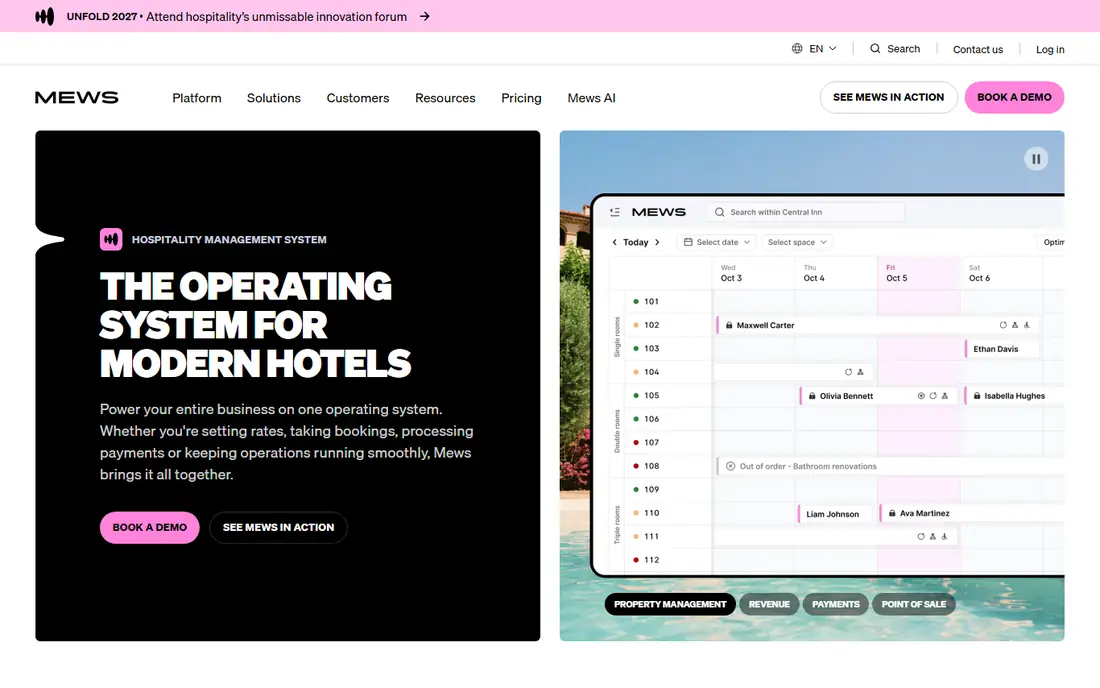
If modern independent hotels is your main need, Mews deserves a close look. The vendor describes cloud property management with automation and payments, and that focus shows in how the product is organized: the core workflow is easy to find, and the settings that matter for modern independent hotels are not buried under unrelated features. We compared official feature pages, pricing pages, and public reviews to place it here, rather than relying on marketing claims alone.
The trade-off: pricing is quote based. For many teams that is acceptable, especially if the core workflow fits well. Just confirm the total cost, including any add-ons, before you compare it with simpler or cheaper rivals.
- Cloud property management with automation and payments
- Fits modern independent hotels well
- Public documentation and pricing information available from the vendor
- Pricing is quote based
- Setup and learning time vary by team size
SiteMinder
Ideal for: properties selling on many channels
SiteMinder takes a practical approach to properties selling on many channels. The vendor describes channel management and a booking engine for wider distribution, and that focus shows in how the product is organized: the core workflow is easy to find, and the settings that matter for properties selling on many channels are not buried under unrelated features. We compared official feature pages, pricing pages, and public reviews to place it here, rather than relying on marketing claims alone.
The downside here: full property tools may need partner products. That matters most if your team is large or your use case is complex, so run a pilot before a full rollout. A short pilot with your own data will show if the strengths outweigh that weakness for you.
- Channel management and a booking engine for wider distribution
- Fits properties selling on many channels well
- Public documentation and pricing information available from the vendor
- Full property tools may need partner products
- Setup and learning time vary by team size
RoomRaccoon
Ideal for: independent hotels and B and Bs
Among the options here, RoomRaccoon is the one built most directly around independent hotels and B and Bs. The vendor describes property management, channel manager, and booking engine in one place, and that focus shows in how the product is organized: the core workflow is easy to find, and the settings that matter for independent hotels and B and Bs are not buried under unrelated features. We compared official feature pages, pricing pages, and public reviews to place it here, rather than relying on marketing claims alone.
The honest catch: support hours vary by region. That does not rule it out, but it does mean you should test the exact workflow you will use daily, not just the demo path. Pricing also deserves a second look: check what is included in the plan you would actually buy, and what costs extra.
- Property management, channel manager, and booking engine in one place
- Fits independent hotels and B and Bs well
- Public documentation and pricing information available from the vendor
- Support hours vary by region
- Setup and learning time vary by team size
eZee Absolute
Ideal for: small hotels wanting a full suite
For small hotels wanting a full suite, eZee Absolute offers a straightforward path. The vendor describes front desk, housekeeping, and channel tools for hotels, and that focus shows in how the product is organized: the core workflow is easy to find, and the settings that matter for small hotels wanting a full suite are not buried under unrelated features. We compared official feature pages, pricing pages, and public reviews to place it here, rather than relying on marketing claims alone.
On the downside: the interface takes time to learn. We would still shortlist it for small hotels wanting a full suite, but only after a trial with real data and real users. Also confirm support hours and onboarding help, since those matter more than a polished sales demo once the tool is live.
- Front desk, housekeeping, and channel tools for hotels
- Fits small hotels wanting a full suite well
- Public documentation and pricing information available from the vendor
- The interface takes time to learn
- Setup and learning time vary by team size
HotelRunner
Ideal for: small properties wanting distribution
HotelRunner earns its place here for small properties wanting distribution. The vendor describes channel management and direct booking tools for independent properties, and that focus shows in how the product is organized: the core workflow is easy to find, and the settings that matter for small properties wanting distribution are not buried under unrelated features. We compared official feature pages, pricing pages, and public reviews to place it here, rather than relying on marketing claims alone.
The trade-off: feature depth varies by plan. For many teams that is acceptable, especially if the core workflow fits well. Just confirm the total cost, including any add-ons, before you compare it with simpler or cheaper rivals.
- Channel management and direct booking tools for independent properties
- Fits small properties wanting distribution well
- Public documentation and pricing information available from the vendor
- Feature depth varies by plan
- Setup and learning time vary by team size
WebRezPro
Ideal for: small hotels and inns
When small hotels and inns matters most, WebRezPro is worth comparing first. The vendor describes cloud property management with booking and housekeeping tools, and that focus shows in how the product is organized: the core workflow is easy to find, and the settings that matter for small hotels and inns are not buried under unrelated features. We compared official feature pages, pricing pages, and public reviews to place it here, rather than relying on marketing claims alone.
The downside here: the design is practical rather than flashy. That matters most if your team is large or your use case is complex, so run a pilot before a full rollout. A short pilot with your own data will show if the strengths outweigh that weakness for you.
- Cloud property management with booking and housekeeping tools
- Fits small hotels and inns well
- Public documentation and pricing information available from the vendor
- The design is practical rather than flashy
- Setup and learning time vary by team size
How we picked these
We compared official feature pages, pricing pages, app store listings, privacy policies, and public reviews for each product in this list. We only included products that exist and work in October 2026 and that truly fit the topic, and we left out products that were discontinued, narrowly focused on a different use, or impossible to verify from the vendor site. Where we could not verify a price or free plan from the vendor, we wrote See website rather than guessing.
Our picks balance well known leaders with strong smaller options, so the list is useful if you want a safe default, and also if you want a specialist tool. We also weighed who each product is really for, what it does best, and where it falls short, and we say so plainly in each write-up.
What to check before you choose
List your channels first: direct bookings, online travel agencies, and phone bookings all need to stay in sync to avoid double bookings. Check housekeeping workflows, payment handling, and reporting, since those are daily tasks rather than occasional ones. Ask about onboarding help and support hours, because a problem at check-in cannot wait until morning. Also confirm the total cost, including channel fees and payment processing, before judging a plan price.
Also think about the people who will use the tool every day, not just the person buying it. A tool that staff avoid will not deliver value, no matter how strong its feature list looks. Ask for a trial that covers your busiest realistic week, and involve the team members who will live with the choice. Check contract terms too: notice periods, data export options, and what happens to your data if you cancel are easy to ignore during a trial and painful to discover later.
Finally, compare total cost over a year, not just the monthly headline price. Add implementation help, training, extra users, and any per-unit fees, then compare that yearly total across your shortlist. The cheapest headline price is not always the cheapest year, and the most expensive option is not always the best fit for a smaller team.
Frequently asked questions
How does best hotel management software for small hotels compare?
Best hotel management software for small hotels covers much of the same ground as best small hotel management software, so the same shortlist applies, with the choice depending on your team size and budget. Start with Cloudbeds for a broad fit, then compare Little Hotelier and Mews on the specific workflow that matters most to you. A trial with your real data will settle the comparison faster than reading more reviews.
Is there a free small hotel management software option?
Yes, several options here offer a free plan or a free trial, including SiteMinder, but free plans usually limit users, usage, or advanced features. Read the free plan terms carefully and test the exact features you need, since a free plan that blocks a core workflow is not a real saving. If the free tier fits, it is a sensible way to start.
How much does small hotel management software cost?
Costs vary widely in this category, from free plans to quote based enterprise pricing, so the honest answer depends on your team size and needs. Use See website where we could not verify a current price, and ask vendors for a quote at your exact user count. Compare yearly totals, including add-ons, rather than monthly headline prices.
How do I switch to a new small hotel management software tool?
Plan the switch around data migration, training, and a overlap period where both tools run if possible. Export your existing data early, test the import with a small sample, and train the team before the old tool is switched off. Ask the new vendor what migration help is included, since that support varies a lot.
What should I check before buying small hotel management software?
Check fit for your core workflow, integration with tools you already use, pricing at your real scale, and support quality during a trial. Confirm security and privacy practices too, especially if the tool handles customer or financial data. The right choice is the one your team will actually use every day, not the one with the longest feature list.