Best SOC 2 Compliance Automation Tools in 2026: 8 Tools Compared

- Vanta and Drata lead for SOC 2 automation, with Vanta suiting mainstream SaaS startups and Drata suiting engineering-led, multi-framework teams.
- Secureframe, Sprinto, and Scytale suit teams that want guided setup, lower starting cost, or expert support alongside automation.
- Thoropass and Strike Graph bundle audit or pricing transparency into the offer, while Hyperproof suits mid-market teams managing many frameworks.
- A compliance platform does not issue a SOC 2 report: an independent auditor does, so budget for audit fees on top of platform costs.
Quick comparison
| Product | Ideal for | Price from | Free version | |
|---|---|---|---|---|
 Vanta | Mainstream SaaS SOC 2 | See website | No | Visit |
 Drata | Engineering-led multi-framework | See website | No | Visit |
 Secureframe | Guided compliance setup | See website | No | Visit |
 Sprinto | Budget-conscious startups | See website | No | Visit |
 Scytale | Expert-supported compliance | See website | No | Visit |
 Thoropass | Platform plus audit bundle | See website | No | Visit |
 Hyperproof | Mid-market multi-framework | See website | No | Visit |
 Strike Graph | Transparent pricing | See website | No | Visit |
The best soc 2 compliance automation tools
SOC 2 compliance automation tools connect to cloud, identity, HR, and code systems, collect evidence continuously, map controls to SOC 2 criteria, and prepare audit packages, replacing manual spreadsheets for much of the work. They do not replace an auditor, but they make audits faster and less painful. We compared official feature pages, pricing pages, and public reviews, focusing on integrations, evidence automation, multi-framework support, and audit readiness.
Vanta
Ideal for: Mainstream SaaS SOC 2
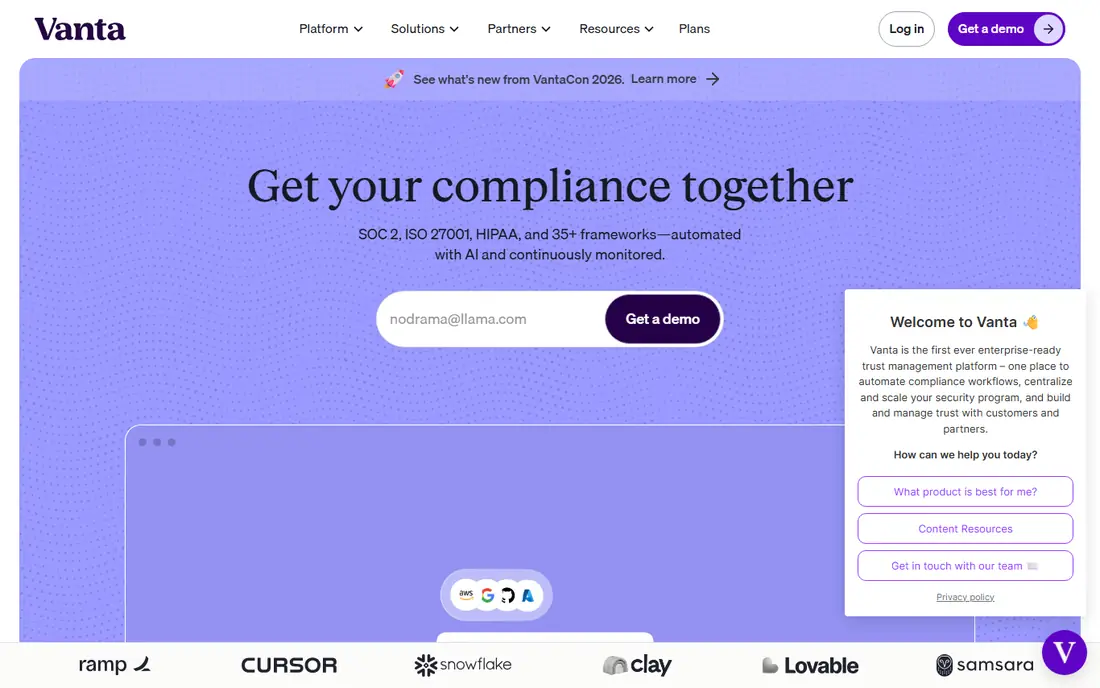
Vanta is the most widely used SOC 2 automation platform for SaaS startups, with broad integrations to cloud, identity, HR, and code tools, continuous evidence collection, and controls mapped to SOC 2 and other frameworks. Its auditor familiarity helps, since many auditors already know Vanta evidence formats, and its trust center and security questionnaire tools help close enterprise deals. For a mainstream SaaS team racing to a first SOC 2 report, Vanta is a strong default.
Pricing rises with headcount, frameworks, and add-ons, and audit fees are separate, so total first-year cost exceeds the platform price alone. For mainstream SaaS SOC 2, Vanta is our pick.
- Broad integrations and auditor familiarity
- Fast first audit path
- Trust center and questionnaire tools
- Pricing rises with headcount and frameworks
- Audit fees are separate
Drata
Ideal for: Engineering-led multi-framework
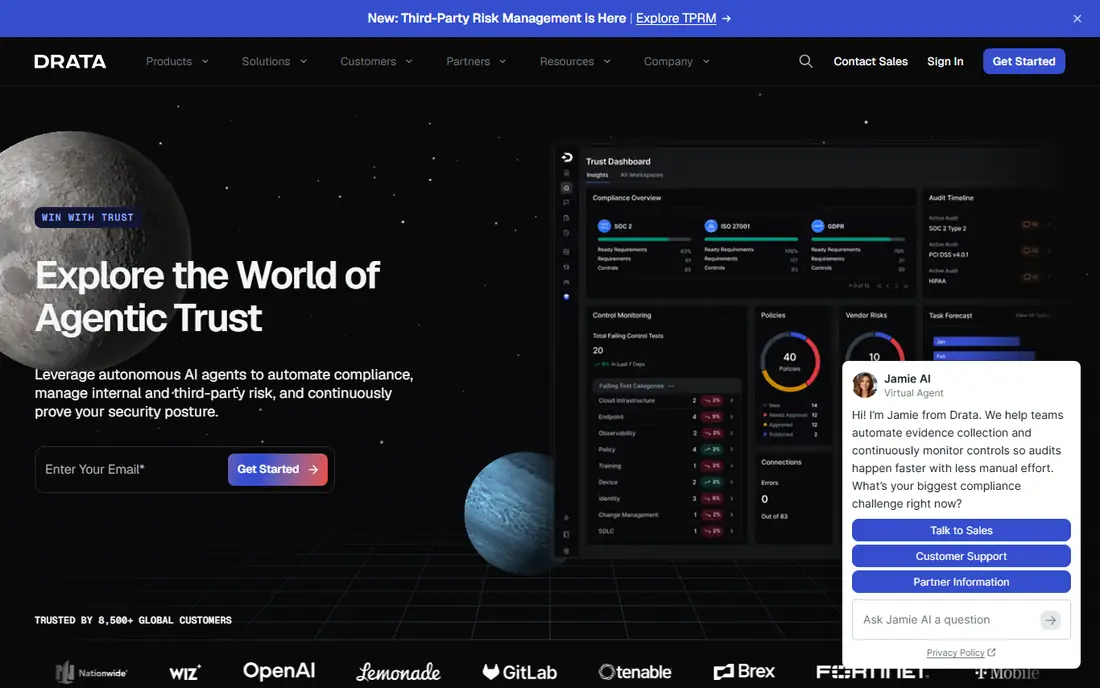
Drata offers SOC 2 automation with deep integrations, real-time control monitoring, and multi-framework support for teams pursuing SOC 2 alongside ISO 27001, HIPAA, and other standards. Its engineering-led approach suits teams with custom tooling and complex infrastructure, since automation and API coverage are strong. Evidence collection and control tracking update continuously rather than only at audit time.
Pricing rises with organization size and frameworks, and audit fees are separate. For engineering-led teams planning multiple frameworks, Drata is a leading choice.
- Deep automation and real-time evidence
- Strong multi-framework support
- Good for engineering teams
- Pricing rises with size and frameworks
- Audit fees are separate
Secureframe
Ideal for: Guided compliance setup
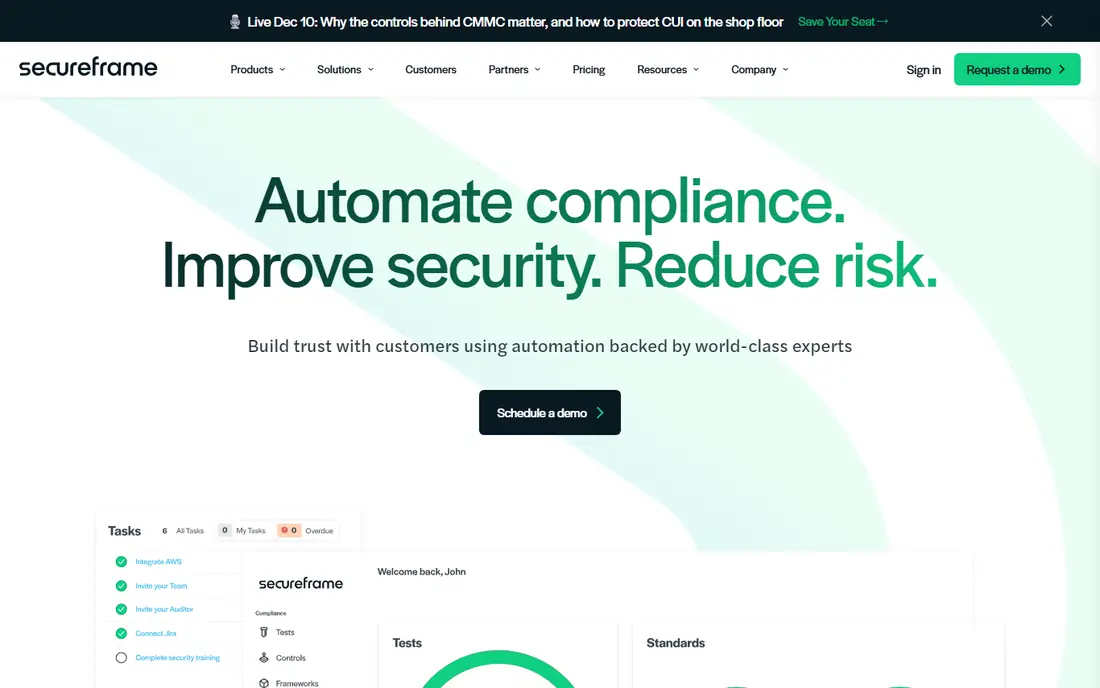
Secureframe combines compliance automation with guided setup, policy templates, and compliance expertise, helping first-time SOC 2 teams move faster without hiring a dedicated compliance lead. Its platform covers SOC 2 and other frameworks, with integrations, evidence collection, and audit preparation tools. That guidance is valuable for small teams doing compliance for the first time.
Pricing rises with frameworks and company size, and audit fees are separate. For teams that want guided SOC 2 setup, Secureframe is a strong option.
- Guided setup with compliance expertise
- Policy templates
- Multi-framework support
- Pricing rises with frameworks
- Audit fees are separate
Sprinto
Ideal for: Budget-conscious startups
Sprinto positions itself as a lower-cost compliance automation platform for startups, with streamlined SOC 2 workflows, integrations, evidence collection, and multi-framework support. That value appeals to early-stage teams that need SOC 2 to close deals but cannot justify enterprise platform pricing. Setup is designed to be faster for first-time audits.
Brand presence is smaller than Vanta or Drata, so buyers should check auditor familiarity and integration coverage for their stack. Pricing varies by size and framework. For budget-conscious startups, Sprinto is a practical pick.
- Lower starting cost for startups
- Streamlined first SOC 2 path
- Multi-framework support
- Smaller brand than Vanta or Drata
- Pricing varies by size and framework
Scytale
Ideal for: Expert-supported compliance
Scytale combines compliance automation with expert support, offering playbooks, audit collaboration, and auditor matching to guide teams from kickoff to attestation and renewal. That expert layer suits teams that want hands-on help, not just software, especially for a first SOC 2 audit. Multi-framework support covers SOC 2 alongside other standards.
Pricing is quote-based, and the service model varies by engagement, so buyers should confirm what expert time is included. For teams that want expert-supported SOC 2, Scytale is a strong choice.
- Compliance experts included
- Audit collaboration and matching
- Multi-framework playbooks
- Pricing by quote
- Service model varies by engagement
Thoropass
Ideal for: Platform plus audit bundle
Thoropass bundles its compliance automation platform with an audit engagement through an affiliated firm, so teams buy software and audit from one vendor. That single-vendor model simplifies budgeting and coordination for first-time SOC 2 audits, since platform and auditor work from the same evidence. It suits startups that want a clear path to attestation without managing separate vendors.
Bundling limits auditor choice, since the audit comes from the affiliated firm, and bundle pricing should be compared with separate platform plus auditor costs. For teams that want one vendor for platform and audit, Thoropass is a distinctive choice.
- Bundles platform with audit through affiliated firm
- Single vendor for software and audit
- Good for first audits
- Audit bundling limits auditor choice
- Pricing is bundle-based
Hyperproof
Ideal for: Mid-market multi-framework
Hyperproof is a compliance operations platform for mid-market teams managing many frameworks, with controls, evidence, risk registers, and task management in one system. Its breadth suits organizations that need SOC 2 alongside ISO, HIPAA, PCI, and internal controls, with reporting that shows compliance posture across frameworks. That multi-framework view is its main strength.
Pricing is quote-based, and setting up many frameworks takes effort. For mid-market teams with broad compliance needs, Hyperproof is a capable platform.
- Broad framework coverage
- Risk registers and task management
- Good for mid-market teams
- Pricing by quote
- Setup effort for many frameworks
Strike Graph
Ideal for: Transparent pricing
Strike Graph offers compliance automation with a published, predictable pricing approach and audit support through an affiliated firm, aimed at startups and mid-size teams that want clear costs. Its streamlined SOC 2 path suits first-time audits, with evidence collection and control tracking for core frameworks. Transparent pricing is a welcome contrast to quote-only rivals.
Strike Graph is smaller than Vanta or Drata, and framework breadth is narrower, so multi-framework teams should check coverage. For teams that value pricing transparency, Strike Graph is a refreshing option.
- Published pricing approach
- Audit through affiliated firm
- Streamlined SOC 2 path
- Smaller vendor than Vanta or Drata
- Framework breadth is narrower
How we picked these
We compared official feature pages, pricing pages, and public reviews for platforms that automate SOC 2 evidence collection, control mapping, and audit preparation, not generic project tools or audit firms alone. We looked at integrations, continuous monitoring, multi-framework support, auditor familiarity, and whether audit is bundled or separate. Pricing for most is quote-based and varies with headcount and frameworks, so we marked those accordingly.
What to check before you choose a SOC 2 automation tool
Start with your stack integrations. Confirm direct integrations for your cloud provider, identity provider, HR system, and code host, since a platform that only sort of integrates will leave you uploading evidence manually. Ask for a demo using your actual tools, not sample data, and check how evidence freshness and control failures are surfaced.
Next, model total first-year cost: platform fees, per-framework fees, implementation, and auditor fees, since audit is separate for most vendors except Thoropass and Strike Graph bundles. Ask about year-two pricing, since framework and headcount growth can raise costs sharply. Finally, confirm auditor familiarity: ask your auditor which platforms they work with most, since evidence format familiarity can shorten audit time and cost.
Also plan for renewal from the start, since SOC 2 Type II is an ongoing commitment, not a one-time project. Check how the platform handles continuous monitoring, evidence retention, and control changes between audits, so year two is smoother than year one. A tool that only helps at audit time will leave gaps during the year, while continuous monitoring keeps controls ready and reduces last-minute audit stress.
Frequently asked questions
What is SOC 2?
SOC 2 is a framework for managing customer data based on Trust Services Criteria, including security, availability, processing integrity, confidentiality, and privacy. A SOC 2 report, issued by an independent auditor, shows that a company's controls meet those criteria over a period.
Does SOC 2 software give me a SOC 2 report?
No, compliance automation software prepares evidence and controls, but only an independent CPA firm can issue a SOC 2 report after an audit. Budget for audit fees separately, except where a vendor such as Thoropass bundles the audit.
How long does SOC 2 take with automation?
First audits often take a few months of active work with automation, compared with longer manual efforts, though timing depends on control gaps, scope, and auditor availability. Type I reports cover a point in time, while Type II reports cover a period, usually several months.
How much does SOC 2 automation cost?
Platform pricing is usually quote-based and varies with headcount, frameworks, and features, with startup tiers often starting in the low thousands per year and enterprise costs much higher. Add audit fees, which are separate for most vendors, to get total first-year cost.
Can one platform handle SOC 2 and ISO 27001?
Yes, most tools in this list, including Drata, Vanta, Secureframe, and Hyperproof, support multiple frameworks with shared controls mapped across standards. That shared mapping saves work when pursuing several frameworks, since one control can satisfy multiple requirements.