Shortlist: 7 Best Social Commerce Platforms for 2026

- 1
 WooCommerceWordPress store owners who want to own the entire stackVisit
- 2
 ShopifyBrands that want a store plus social channels in one placeVisit
- 3
 TikTok ShopSellers ready to sell through video and live streamsVisit
- 4
 WhatnotSellers of collectibles, trading cards, fashion and niche goods via live auctionVisit
- 5
 EcwidSmall companies adding a store to an existing website or social pageVisit
- WooCommerce takes the first slot, best suited to WordPress store owners who want to own the entire stack.
- Ecwid has the lowest monthly starting price in this list: $25 per month.
- A free plan is available from 4 of the 7 tools: WooCommerce, TikTok Shop, Whatnot, Ecwid.
- The main caution on TikTok Shop: Referral fee rises for some categories.
- BigCommerce fits established brands selling on numerous channels at once.
Direct answer
Start with WooCommerce if you need WordPress store owners who want to own the entire stack. Shopify fits brands that want a store plus social channels in one place; TikTok Shop fits sellers ready to sell through video and live streams. All 7 tools are compared below on price, free plan and limits.
Quick comparison
| Product | Ideal for | Price from | Free version | |
|---|---|---|---|---|
| WooCommerce | WordPress store owners who want to own the entire stack | Free (extensions vary) | Yes | Visit |
| Shopify | Brands that want a store plus social channels in one place | $29 a month (billed yearly) | Free trial (3 days) | Visit |
| TikTok Shop | Sellers ready to sell through video and live streams | Free (6% referral fee on most categories) | Yes | Visit |
| Whatnot | Sellers of collectibles, trading cards, fashion and niche goods via live auction | Free (commission per sale) | Yes | Visit |
| Ecwid | Small companies adding a store to an existing website or social page | $25 a month (billed yearly) | Yes | Visit |
 CommentSold | Boutiques and retailers selling through live video | See website | Free trial | Visit |
 BigCommerce | Established brands selling on numerous channels at once | $29 a month (billed yearly) | Free trial (15 days) | Visit |
Social Commerce Platforms, one by one
Choosing social commerce platforms usually comes down to price, fit and limits. This Ainotely guide sets 7 tools side by side on those three points, with the facts kept short and checkable.
WooCommerce
Ideal for: WordPress store owners who want to own the entire stack
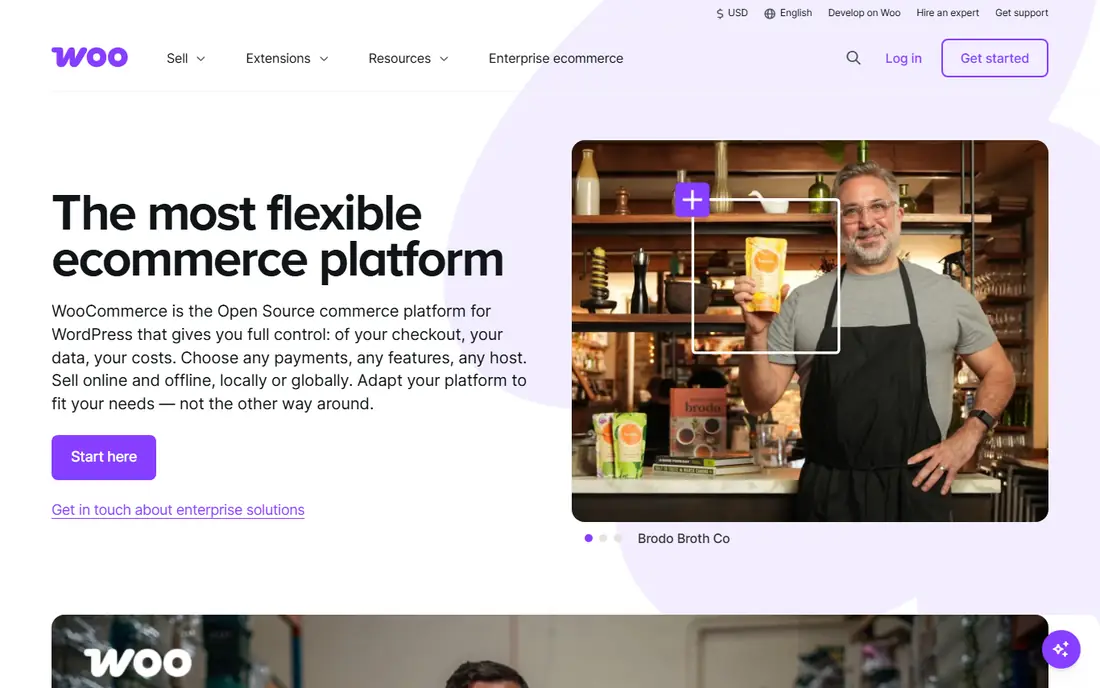
For WordPress store owners who want to own the entire stack, WooCommerce is a natural candidate. For everyday use, since the code is open, a developer can build exactly the checkout flow a social campaign needs. Beyond that, a small shop on shared hosting can run cheaply, whereas a high-traffic store may spend more on hosting and premium extensions than a Shopify subscription would cost.
More specifically, the freedom cuts both ways. WooCommerce turns any WordPress site into a store, and its social commerce story runs through extensions and integrations. WooCommerce starts at: Free. WooCommerce includes a free tier.
Watch-outs: You run hosting, security and updates.
- No monthly product fee
- Core plugin is free and open source
- Costs shift to extensions and hosting
Shopify
Ideal for: Brands that want a store plus social channels in one place

Shopify is designed for brands that want a store plus social channels in one place. Shopify treats social channels as sales channels instead of side projects. In practice, the Basic plan opens at $29 a month on annual billing.
What to check first: Transaction fees except when you use Shopify Payments.
Best features of Shopify: Huge app store. The apps that make social selling work well frequently add $10 to $40 each a month. Still, for keeps that sell on their site and social at the same time, Shopify is the most complete choice. For everyday use, the cost structure needs attention. What you pay to start with Shopify: $29 per month. On free options: Free trial (3 days).
- Direct integrations with TikTok, Instagram
- Steady checkout
- Monthly cost plus app subscriptions add up
TikTok Shop
Ideal for: Sellers ready to sell through video and live streams

TikTok Shop serves sellers ready to sell through video and live streams. Opening a TikTok Shop costs nothing, and there is no follower minimum, which makes it one of the lowest-barrier ways to start social selling. Worth adding: the trade-off is that TikTok takes a referral fee on every sale, usually around 6% for most categories.
The system sets strict shipping and content rules. The seller center walks you through identity verification, listing products, and linking a TikTok account so videos and live streams can carry product tags. The starting price for TikTok Shop: Free. Free access exists with TikTok Shop.
The main drawbacks: Referral fee rises for some categories.
- Built-in audience of buyers
- No setup fees
- Heavy dependence on one product
Whatnot
Ideal for: Sellers of collectibles, trading cards, fashion and niche goods via live auction
Where Whatnot fits: sellers of collectibles, trading cards, fashion and niche goods via live auction. Whatnot is a marketplace first and a system second. As for the details, the main limit is gatekeeping.
You apply to sell, and approval relies on your category and track record. In daily use, for the right product types, though, the conversion rates of live auctions are hard to match anywhere else. In daily use, sellers run live auction presents inside the app to an audience that arrived specifically to buy, which is a very different dynamic from posting shoppable content to followers. Joining is free, and the company takes a commission plus payment processing on each sale. On cost, Whatnot starts like this: Free. Whatnot includes a free tier.
Where it falls short: Seller application required.
- Auction format drives urgency
- Buyer protection included
- Commission plus processing fees on every sale
Ecwid
Ideal for: Small companies adding a store to an existing website or social page
Choose Ecwid for small firms adding a store to an existing website or social page. Premium plans add more products, discount tools, and marketplace connections like Amazon.
Drawbacks to consider: Design customization is restricted compared with full systems.
As for the details, Ecwid (now part of Lightspeed) is the light entry point. Ecwid cost at the entry level: $25 per month. Free access exists with Ecwid.
- Sells on Facebook and Instagram
- Free plan available
- Product limits on lower levels
CommentSold
Ideal for: Boutiques and retailers selling through live video
Where CommentSold fits: boutiques and retailers selling through live video. The main limit is pricing, which needs a quote and is targeted at firms already doing meaningful volume.
Where it falls short: Pricing is custom and opaque.
In practice, a brand selling a handful of items a week will not get the same value from it as a boutique running five live presents. Pricing for CommentSold is not stated here, so ask the vendor for current figures. Free plan details: Free trial.
- Purpose-built for live selling
- Automatic invoicing and cart holds
- A good match for apparel and lifestyle retail
BigCommerce
Ideal for: Established brands selling on numerous channels at once
Where BigCommerce fits: established brands selling on plenty of channels at once. But for a mid-sized brand already doing $100K-plus per year and selling across multiple channels, the open API and catalog controls make it a capable pick.
Starting cost for BigCommerce: $29 per month. Free plan details: Free trial (15 days).
Points against: Fewer free themes than Shopify.
- Capable B2B features
- No transaction fees on any plan
- Smaller app ecosystem
Selection criteria
Each tool was reviewed on what its vendor publishes: price, plan limits, core features and stated drawbacks. We did not run hands-on tests. Where a price is missing, the vendor does not list one publicly or ties it to a quote. Always confirm before budgeting. Tools are placed by general fit for social commerce platforms, with price clarity and free access as tie-breakers. A different team can reasonably rank them differently.
Questions to settle before buying
- Ask CommentSold for a written quote, since no starting price is shown.
- Read the fine print on the free plans from WooCommerce, TikTok Shop, Whatnot and Ecwid; seat, project and feature caps differ.
- Take the trial from Shopify, CommentSold and BigCommerce and push a live task through it before you pay.
- Read the limits listed for WooCommerce first: you run hosting, security and updates.
- A short pilot of WooCommerce with your real workflow tells you more than a feature table.
- Confirm that Ecwid connects to the apps your team already uses, on the plan you would actually buy.
Frequently asked questions
What is the cheapest option for social commerce platforms in this list?
On published monthly entry prices, Ecwid is the lowest here at $25 per month. Entry price is only part of the cost, because seats, add-ons and billing terms can change the total.
Do I need a website to sell on social media?
Not always. But owning a store on a system like Shopify or WooCommerce provides you customer data, branding control. A fallback if a social channel changes its rules.
Which options for social commerce platforms have a free plan?
WooCommerce, TikTok Shop, Whatnot and Ecwid offer a free plan in this list. Free plans usually cap users, projects or features, so check the limits on the vendor page. Several others offer a trial instead.
Can I try these options before paying?
Often, yes. WooCommerce, TikTok Shop, Whatnot and Ecwid have a free plan and Shopify, CommentSold and BigCommerce offer a free trial. Use your own data and a real task during the test, and check what the free tier or trial limits before you rely on it.
Is WooCommerce the right pick for everyone comparing social commerce platforms?
No single tool suits every team. WooCommerce comes first because it fits WordPress store owners who want to own the whole stack, while Shopify suits brands that want a store plus social channels in one place and TikTok Shop suits sellers ready to sell through video and live streams. Match the tool to your own size, budget and workflow before deciding.
How long does it take to set up a social commerce store?
A TikTok Shop can be live within days once verification clears. Adding Ecwid to an existing site takes hours. A full Shopify or BigCommerce build with social channels connected normally takes one to three weeks for a small catalog.