Best Software for Accounting Automation and Integrations in 2026: 8 Tools Compared

- 1
 QuickBooks OnlineSmall businesses wanting broad automationVisit
- 2
 XeroSmall businesses wanting clean automationVisit
- 3
 Sage IntacctGrowing companies needing multi-entity accountingVisit
- 4
 NetSuiteCompanies wanting ERP plus accountingVisit
- 5
 FreshBooksFreelancers and service businessesVisit
- QuickBooks Online is our first suggestion for most buyers, because its balance of features, pricing clarity, and support is hard to beat for the topic at hand.
- Xero suits buyers who want a lower starting price or a simpler setup, while Sage Intacct fits teams that need more depth in one specific area.
- Prices and free tiers vary widely, so check the vendor pricing page for the plan that includes the features you actually need, rather than judging by the headline price alone.
- Run a trial with your own data and your own workflow before you pay for a year, since setup effort and day-to-day ease only show up in real use.
Quick comparison
| Product | Ideal for | Price from | Free version | |
|---|---|---|---|---|
| QuickBooks Online | Small businesses wanting broad automation | See website | Free trial | Visit |
| Xero | Small businesses wanting clean automation | See website | Free trial | Visit |
| Sage Intacct | Growing companies needing multi-entity accounting | See website | No | Visit |
| NetSuite | Companies wanting ERP plus accounting | See website | No | Visit |
| FreshBooks | Freelancers and service businesses | See website | Free trial | Visit |
 Zoho Books | Businesses already using Zoho apps | See website | Yes | Visit |
 Wave | Very small businesses on a tight budget | Free | Yes | Visit |
 BILL | Businesses automating bill pay and receivables | See website | Free trial | Visit |
The best software for accounting automation and integrations
These eight accounting platforms automate invoicing, bank feeds, expense capture, and reporting, and connect with the payroll, CRM, and ecommerce tools around them. We compared official feature pages, pricing pages, app-store listings, privacy policies, and public reviews to sort out where each option earns its place.
QuickBooks Online
Ideal for: Small businesses wanting broad automation

QuickBooks Online is the default small-business accounting pick for automation and integrations. Its bank feeds, invoicing, and huge app ecosystem cover most small-business needs, and accountants know it well. For most buyers, the deciding factor is not the longest feature list but the fit with daily work, the total price, and how much setup the team can handle. The catch is pricing tiers: useful automation sits on higher plans, and the interface can feel busy. If that trade-off fits your budget and your tolerance for setup, it is worth a trial before you commit the whole team. For a finance team, automation only counts if it reduces manual entry and errors without hiding what happened to the numbers.
- Broad automation with bank feeds and invoicing
- Huge integration ecosystem
- Familiar to accountants
- Pricing rises with features
- Interface can feel busy
Xero
Ideal for: Small businesses wanting clean automation
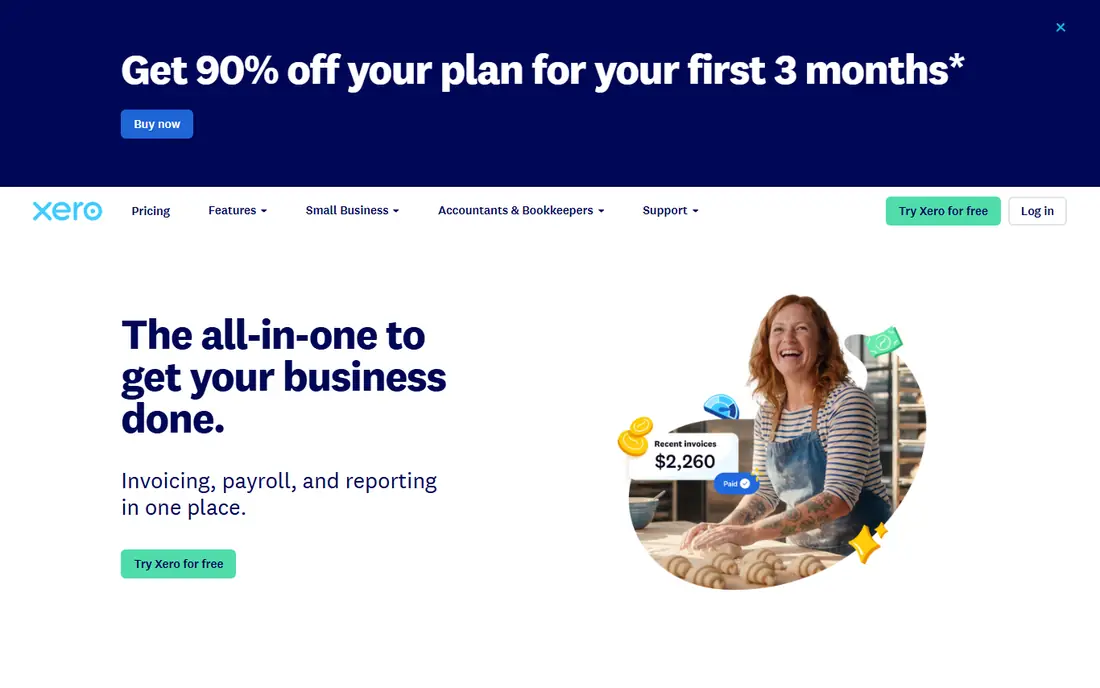
Xero suits small businesses that want clean, modern accounting automation. Its bank reconciliation and invoicing are smooth, and its app marketplace covers many integrations. A tool that looks strong on a pricing page can still disappoint if onboarding is slow, support is thin, or the plan that holds the needed feature sits two tiers up. The catch is payroll: coverage is limited in some regions, and support is mainly online. Put it on a shortlist if its strengths match your main use case, and test it with real data during the trial period. For a finance team, automation only counts if it reduces manual entry and errors without hiding what happened to the numbers.
- Clean bank reconciliation
- Good invoicing
- Strong app marketplace
- Payroll limited in some regions
- Support is mainly online
Sage Intacct
Ideal for: Growing companies needing multi-entity accounting
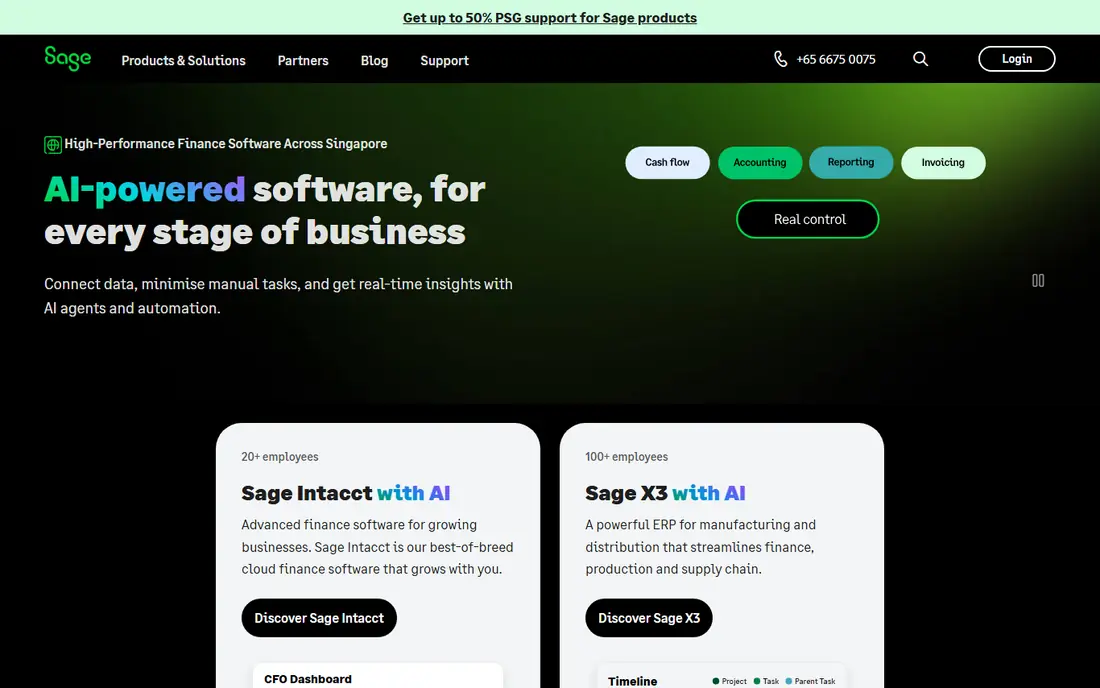
Sage Intacct fits growing companies with multi-entity or complex reporting needs. Its dimensional accounting and automation handle complexity that overwhelms small-business tools. We gave extra weight to clear pricing, honest limits, and products that explain what happens to your data when you leave. The catch is weight: enterprise pricing and implementation time suit larger firms better. It earns a place on the shortlist when its main strength lines up with the job you will ask it to do every week. For a finance team, automation only counts if it reduces manual entry and errors without hiding what happened to the numbers.
- Strong multi-entity and dimensional accounting
- Good automation
- Strong reporting
- Enterprise pricing
- Implementation takes time
NetSuite
Ideal for: Companies wanting ERP plus accounting
NetSuite is the ERP pick for companies that have outgrown standalone accounting. Its accounting sits inside a full ERP with inventory, CRM, and ecommerce, with strong automation. For most buyers, the deciding factor is not the longest feature list but the fit with daily work, the total price, and how much setup the team can handle. The catch is implementation: deployment is a major project, and pricing is enterprise-level. Try it first with a small group, so you learn how it behaves before you roll it out more widely. For a finance team, automation only counts if it reduces manual entry and errors without hiding what happened to the numbers.
- Full ERP with accounting, inventory, and CRM
- Strong automation
- Oracle backing
- Enterprise pricing
- Implementation is a major project
FreshBooks
Ideal for: Freelancers and service businesses
FreshBooks suits freelancers and service businesses that live on invoicing. Its invoicing, time tracking, and expense capture are easy and fast to use daily. A tool that looks strong on a pricing page can still disappoint if onboarding is slow, support is thin, or the plan that holds the needed feature sits two tiers up. The catch is depth: inventory and complex accounting needs will outgrow it. If that trade-off fits your budget and your tolerance for setup, it is worth a trial before you commit the whole team. For a finance team, automation only counts if it reduces manual entry and errors without hiding what happened to the numbers.
- Easy invoicing and time tracking
- Good expense capture
- Simple to learn
- Less depth for inventory or complex accounting
- Pricing scales
Zoho Books
Ideal for: Businesses already using Zoho apps
Zoho Books is the value pick, especially for businesses already in the Zoho ecosystem. Its automation covers invoicing, bank feeds, and expenses at a low price, with a free plan for small volumes. We gave extra weight to clear pricing, honest limits, and products that explain what happens to your data when you leave. The catch is network: fewer accountants know it than QuickBooks, and some features are region-limited. Put it on a shortlist if its strengths match your main use case, and test it with real data during the trial period. For a finance team, automation only counts if it reduces manual entry and errors without hiding what happened to the numbers.
- Good automation at low cost
- Zoho ecosystem integration
- Free plan for small volumes
- Smaller accountant network than QuickBooks
- Some features region-limited
Wave
Ideal for: Very small businesses on a tight budget
Wave is the free starting point for very small businesses and sole traders. Its accounting and invoicing cost nothing to start, which is hard to beat for a new business. For most buyers, the deciding factor is not the longest feature list but the fit with daily work, the total price, and how much setup the team can handle. The catch is depth: payroll and payment processing are paid add-ons, and advanced features are limited. It earns a place on the shortlist when its main strength lines up with the job you will ask it to do every week. For a finance team, automation only counts if it reduces manual entry and errors without hiding what happened to the numbers.
- Free accounting and invoicing
- Simple bank connections
- Easy to start
- Payroll and payments are paid add-ons
- Limited advanced features
BILL
Ideal for: Businesses automating bill pay and receivables
BILL, formerly Bill.com, specialises in automating accounts payable and receivable. Its approval workflows and payment automation cut bill-pay time sharply for finance teams. A tool that looks strong on a pricing page can still disappoint if onboarding is slow, support is thin, or the plan that holds the needed feature sits two tiers up. The catch is positioning: it works best alongside an accounting system, not as a replacement for one. Try it first with a small group, so you learn how it behaves before you roll it out more widely. For a finance team, automation only counts if it reduces manual entry and errors without hiding what happened to the numbers.
- Strong AP and AR automation
- Approval workflows
- Integrates with major accounting tools
- Pricing per user and volume
- Best alongside an accounting system
How we picked these
We started from the vendor's own feature and pricing pages, then checked app-store listings and public reviews for signs of trouble, such as slow support, confusing pricing, or features that only appear on higher plans. Products that no longer exist, that had no working official homepage, or that did not truly fit the topic were left out, even when they were well known in a nearby category. We also weighed who each product is built for. A strong enterprise tool can be a poor pick for a small team, and a simple free tool can be a poor pick for a regulated workplace. The list below mixes well-known leaders with smaller options, so you can match the pick to your size, budget, and tolerance for setup work.
How to choose accounting automation software
Map your current manual work first: invoicing, bill pay, expenses, reconciliation, and reporting. The best tool automates the tasks that eat most hours, not just the ones that look impressive in a demo. Check integrations with your bank, payroll, CRM, and ecommerce stack. A tool with weak bank feeds or a missing payroll link will leave manual work in place.
Shortlist checklist
- Write down the two or three jobs the tool must do every week, and test exactly those jobs in the trial.
- Check the total price for your team size, including any add-ons, seats, or usage charges that sit outside the headline plan.
- Ask how you export your data, what happens at cancellation, and how support responds when something breaks.
- Confirm privacy, security, and compliance terms fit your workplace rules before you move real customer or staff data into the tool. Trial with a real month of transactions, including messy ones, and check how easily an accountant can review and correct automated entries.
Frequently asked questions
What should I look for first when comparing best software for accounting automation and integrations?
Start with the job you need done most often, then check whether the plan you can afford includes it. Look at total price for your team size, setup effort, and how data can be exported. A trial with real work will tell you more than a feature list, so test the exact workflow you will use every week.
Is there a good free option for best software for accounting automation and integrations?
Some products on this list offer a free plan or a free trial, but free plans usually limit seats, storage, or advanced features. Check the free plan line for each product above, and treat a free tier as a way to test fit rather than a promise that it will cover a growing team.
How much should I expect to pay?
Pricing varies by seats, usage, and plan tier, and several vendors on this list only publish custom quotes. Use the starting price column as a guide, then get a written quote for your team size before you budget. Watch for add-ons that are charged separately from the headline plan.
Can I switch later if I pick the wrong one?
In most cases yes, but switching costs time and effort, especially if your data is hard to export. Before you buy, confirm export options and contract length, and keep a copy of your data in a format you control. A short initial term lowers the risk of being stuck with a poor fit.
How do I know a vendor is trustworthy?
Look for clear pricing, a readable privacy policy, security documentation, and responsive support. Check recent public reviews for repeated complaints about billing or support, and prefer vendors that explain data handling in plain language rather than hiding it in vague terms.