Medrio EDC is the first pick on this list for quicker, more accurate trial research. Listed starting prices: OpenClinica from $750 a month. Florence eBinders is the stronger choice for remote site document and administration workflows, while Castor EDC suits AI-assisted data capture with human oversight. The remaining 2 options are covered below with prices and limits.
Choosing software for clinical trial documentation usually comes down to price, fit and limits. This Ainotely guide sets 5 tools side by side on those three points, with the facts kept short and checkable.
Key takeaways
Top of the list is Medrio EDC, which targets quicker, more accurate trial research.
Neither Medrio EDC nor Veeva Vault Clinical, nor any of the other 3 tools, has a permanent free plan; trials and quotes are the norm.
Veeva Vault Clinical suits full clinical documentation for sponsors and sites.
The cheapest monthly starting price in the list is $750 per month, offered by OpenClinica.
The main caution on OpenClinica: may be complicated to configure.
Full clinical documentation for sponsors and sites
See website
Requires vendor demo for specifics
The 5 picks in detail
ME
#1
Medrio EDC
Best for: Quicker, more accurate trial research
Medrio EDC was built for quicker, more accurate trial research. This product is a good match for organizations seeking a focused EDC option that emphasizes speed and data accuracy without the complexity of a full clinical product.
Where it is weaker: Details need a demo.
No starting price is listed for Medrio EDC here; confirm pricing on the vendor site. Free access: Not stated.
Best for: Remote site document and administration workflows
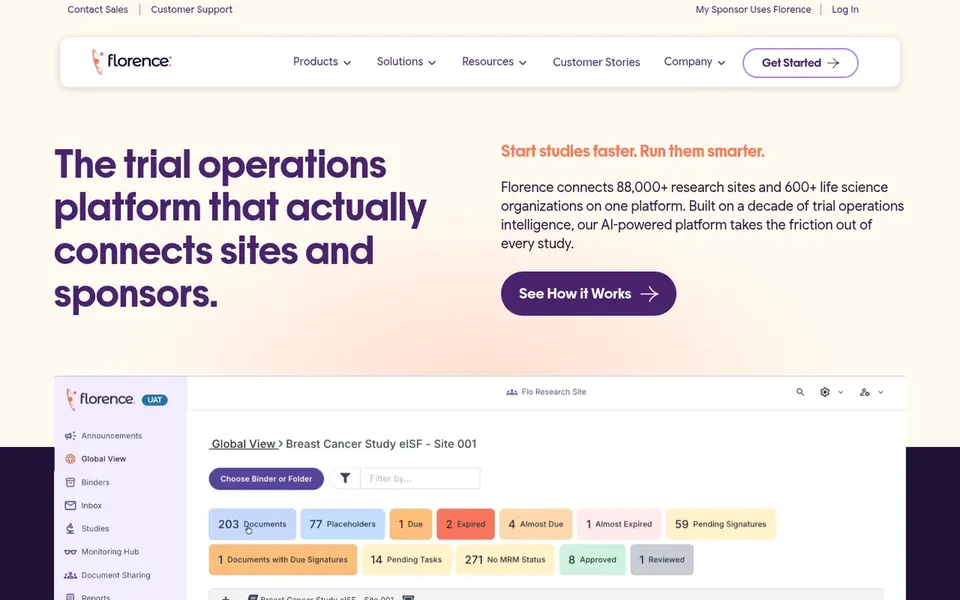
Florence eBinders makes the most sense for remote site document and administration workflows. This tool is a strong match for research sites and organizations that require to handle regulatory binders and site documents efficiently in a remote or hybrid environment.
Where it falls short: Restricted to site documentation.
As for the details, whereas capable for site documents, Florence eBinders may not offer the full suite of electronic data capture or patient-reported outcomes that some trials need. Check the vendor site for Florence eBinders pricing; none is listed in this comparison. As for free access: Not stated.
Best for: AI-assisted data capture with human oversight
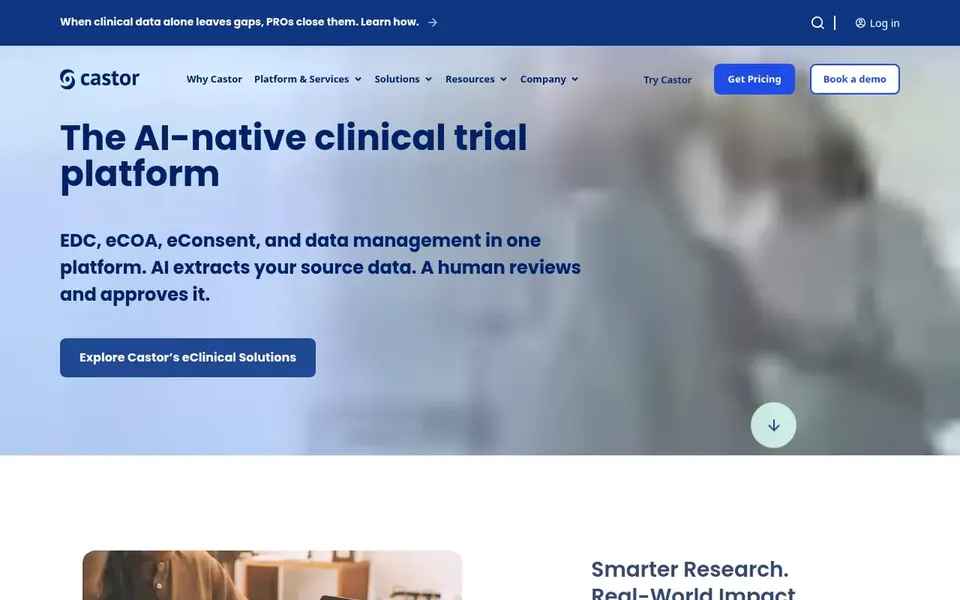
Pick Castor EDC if this describes you: AI-assisted data capture with human oversight. Castor EDC is an AI-native clinical trial platform that uses AI to extract data whereas a human approves every value. It spans EDC, eCOA/ePRO, eConsent, and Catalyst, making it a good match for trials that prioritize efficient data capture and patient-centered tools.
More specifically, Castor EDC is centered on data capture and patient input instead of full site document management. Also, the AI features may need extra training. Pricing for Castor EDC is not stated here, so ask the vendor for current figures. As for free access: Not stated.
Drawbacks to consider: May need training for AI features.
Best for: Wide trial technology suite including EDC and eConsent
OpenClinica is a good fit for wide trial technology suite including EDC and eConsent. The breadth of OpenClinica's offerings may need significant configuration and training. If you need a more straightforward, focused option for site documents, Florence eBinders might be more appropriate.
Honest limits: May be complicated to configure.
Also, OpenClinica supplies a source for clinical trial technology including eSource, EDC, ePRO, eConsent, eCOA, randomization, reporting, and rescue study services. It supplies a wide suite of tools to support several aspects of clinical trials, making it right for organizations that require an integrated system for data capture, patient input, and study management. For AI-native data capture, Castor EDC could be a better fit. Starting cost for OpenClinica: $750 per month. On free options: Free trial.
Best for: Full clinical documentation for sponsors and sites
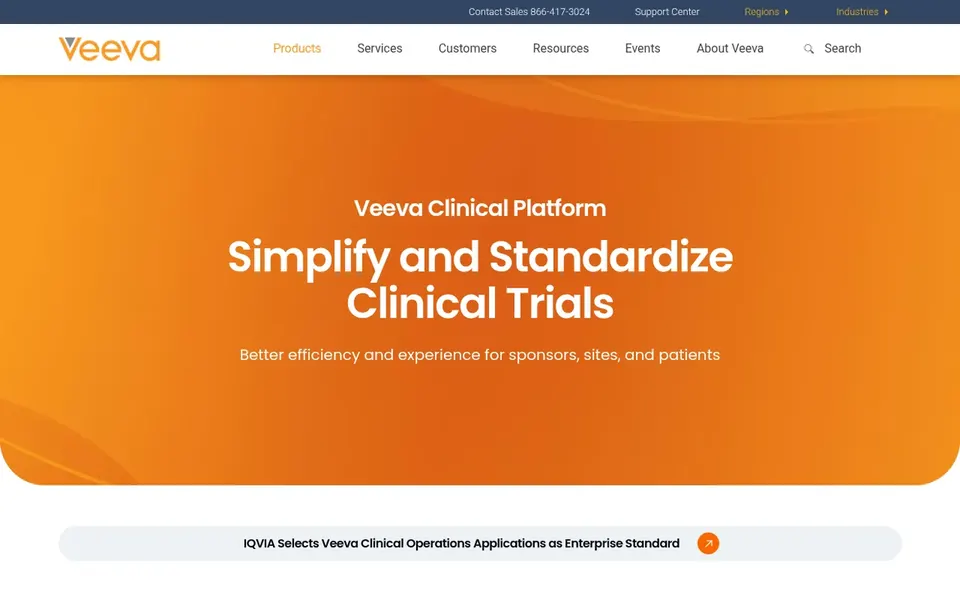
For thorough clinical documentation for sponsors and sites, Veeva Vault Clinical is a natural candidate. Veeva Vault Clinical is a product meant to boost clinical research by supplying a complete option for patients, research sites, and trial sponsors. It centralizes clinical documentation and workflows, making it a good match for organizations that require a unified system to run trial processes and documentation across several stakeholders.
More specifically, if you primarily need site document management, a focused tool like Florence eBinders might be a better fit. In daily use, the product may be more than needed for smaller trials or teams seeking a straightforward documentation tool. Its breadth can need implementation effort. Veeva Vault Clinical does not show a starting price in this comparison, so check the vendor site for current pricing. Free plan details: Not stated.
Points against: May be complicated for small studies.
Confirm the entry price on the vendor page. For Medrio EDC, Florence eBinders, Castor EDC and Veeva Vault Clinical that means a quote rather than a fixed price.
Run a trial of OpenClinica with real work before paying for a year; your own workflow is the best test.
Read the limits listed for Medrio EDC first: details need a demo.
Ask whether Medrio EDC integrates with your current software, and whether that comes standard or as an add-on.
Look at the renewal terms for Castor EDC: auto-renewal, notice periods and price changes can matter more than the first-year price.
How we picked
Ainotely used vendor pricing pages and product documentation as the base, then compared plans, free access and documented limits for 5 tools. Seat minimums, billing terms and add-ons can move the real cost, so the starting prices here are a guide and not a quote. The ranking is editorial: typical fit first, then clear pricing, then free access. If your needs are unusual, read the profiles rather than relying on position. The same method was used for each of the 5 software for clinical trial documentation picks on this page.
Every price and plan detail on this page comes from the vendors’ own websites. We did not run hands-on tests unless the text says so, and we do not publish star ratings or review scores. See how we score and our disclosure.
Keep your shortlist in one place
Paste prices, trial dates and notes from this guide into Ainotely, our AI note app. It files them into a topic and pulls out tasks like “cancel trial by Friday”. Free 7-day trial, no card needed.
What is the best software for clinical trial documentation?
Medrio EDC is the pick this page puts first, mainly for quicker, more accurate trial research. If your situation differs, Florence eBinders suits remote site document and administration workflows, and Castor EDC suits AI-assisted data capture with human oversight. Compare price and limits before you decide.
Can I try these tools before paying?
Often, yes. OpenClinica offers a free trial. Use your own data and a real task during the test, and check what the free tier or trial limits before you rely on it. For the full picture, the cards above cover all 5 entries of this software for clinical trial documentation list, including price, free plan and limits.
How are the tools for software for clinical trial documentation ordered?
Medrio EDC sits first and Veeva Vault Clinical last because the order follows typical fit for software for clinical trial documentation, then price clarity and free access. It is a judgement call, so read each profile for fit and limits.
Are these tools compliant with regulatory requirements?
Most clinical trial software is built to support compliance with regulations like 21 CFR Part 11 and GDPR. That said, you should confirm specific compliance features and validation support straight with each vendor.
Do these tools publish their prices?
Not all of them. Medrio EDC, Florence eBinders, Castor EDC and Veeva Vault Clinical publish no starting price, so expect a quote request for those. The rest, OpenClinica included, show a starting price, though seats and billing terms still change the final cost.
Can these tools connect with each other?
Integration capabilities vary by tool. Some products, like Veeva Vault Clinical and OpenClinica, offer wide suites that may cut the need for several systems.